Desktop Table Saw
CN → US| HS编码 | 关税税率 | 原产国 | 目的国 | 文档 |
|---|---|---|---|---|
| 8465910078 | 38.0% | CN | US | 官方文档 |
| 8465910091 | 38.0% | CN | US | 官方文档 |
| 8467220020 | 10.0% | CN | US | 官方文档 |
| 8201906000 | 35.0% | CN | US | 官方文档 |
| 8465910078 | 38.0% | CN | US | 官方文档 |
商品图片
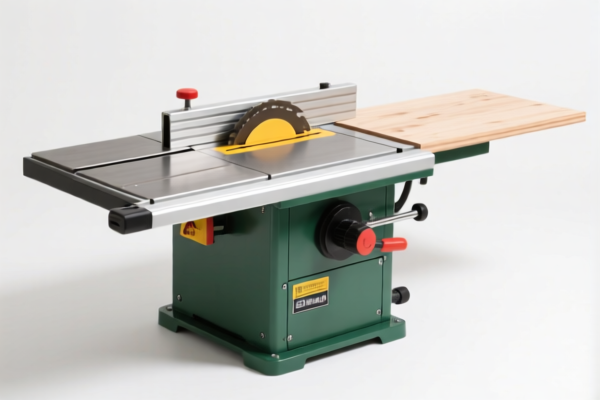
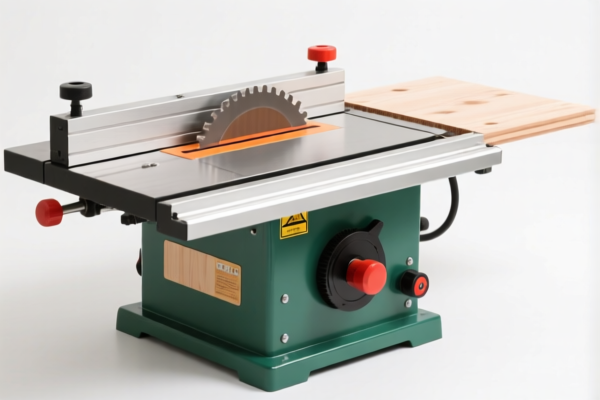
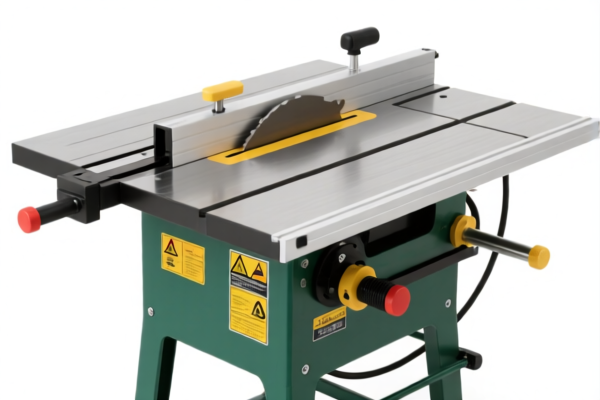
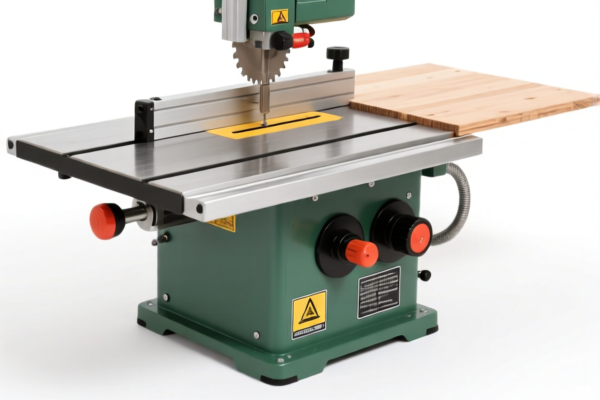
AI分析
🪚 Desktop Table Saw (Portable Table Saw)
🌐 HS Code Reference & Customs Clearance Guide | 2026 Latest Tariff Analysis | Professional Clearance Strategy
📌 1. Product Definition & Classification: Do You Really Understand "Table Saws"?
A Desktop Table Saw is a versatile woodworking tool featuring a circular blade mounted on an arbor that is driven by an electric motor. The blade protrudes through the surface of a table, which provides support for the material, usually wood, being cut.
In international trade, the classification depends heavily on how it is powered and its specific functional design:
- Powered Hand Tools (8467): If the saw has a built-in motor and is designed to be handheld or placed on a desk/table but functions primarily as a portable, electrically powered tool.
- Woodworking Machinery (8465): If the unit is a stationary machine, even if compact/desktop-sized, designed for industrial or heavy-duty processing of wood with fixed tables and feed mechanisms.
⚠️ Key Distinction Point:
- If it is a compact, electrically powered circular saw with a small table attachment, often used for home DIY or light professional work → Typically classified under 8467 (Power-driven hand tools).
- If it is a stationary woodworking machine with a rigid table, fence system, and higher power output, designed for precise woodworking → Typically classified under 8465 (Woodworking machinery).
📦 2. HS Code Classification Details (2026 Latest Tariff Authority Comparison)
| HS Code | Product Description | Application Scenario | Power Source/Type |
|---|---|---|---|
8201.90.60.00 |
Hand tools, agricultural/gardening/forestry (Saws) | Non-powered hand saws, manual circular saws. Not applicable to electric table saws. | ❌ Manual |
8465.91.00.78 |
Woodworking machinery, other | Compact stationary table saws, heavy-duty desktop machines. | ⚡ Electric (Stationary) |
8465.91.00.91 |
Woodworking machinery, other (Fallback) | Non-specific sawing machines for wood processing. | ⚡ Electric (Stationary) |
8467.22.00.20 |
Power-driven hand tools, circular saws (Other) | Portable/Desktop electric table saws, DIY circular saws with table kits. | ⚡ Electric (Handheld/Portable) |
🔍 Important Reminder:
-8201.90.60.00is for manual hand tools. An electric desktop table saw CANNOT be classified here. Misclassification leads to severe penalties.
-8467.22.00.20is the most accurate for most commercial "Desktop Table Saws" because they are essentially power-driven circular saws with a table attachment, retaining the characteristics of a hand tool but mounted for stability.
-8465codes apply only if the machine is considered a stationary woodworking machine (heavy, fixed installation, industrial grade).
💰 3. 2026 Latest Tariff Rate Breakdown (Including Surcharges, Policy Add-ons)
✅ Applicable Country: United States (US)
✅ Origin: China (CN)
✅ Effective Date: From November 10, 2025 (Including subsequent imports)
🎯 1. 8201.90.60.00 —— Hand Tools (Misclassification Risk)
| Item | Content |
|---|---|
| Basic Rate | 0% (ad valorem) |
| USITC Surcharge | +25% (From USITC Footnote 9903.88.01) |
| Section 122 Tariff | +10% (Specific Section 122 levy) |
| Total Tax Rate | 35.0% |
| Tax Calculation | CIF Value × 35% |
| De Minimis Exemption | ❌ Not Eligible (deny_de_minimis) |
| Legal Basis Path | USITC:8201.90.60.00 → FOOTNOTE:9903.88.01 |
📌 Explanation:
- Although the base rate is 0%, the 25% USITC surcharge and 10% Section 122 tariff apply.
- CRITICAL WARNING: Electric table saws are NOT hand tools. Using this code is a clear misclassification. Customs may reject the entry, impose fines, or reclassify it, leading to delays. Do not use this code for electric saws.
🎯 2. 8465.91.00.78 / 8465.91.00.91 —— Woodworking Machinery
| Item | Content |
|---|---|
| Basic Rate | 3.0% |
| USITC Surcharge | +25% |
| Section 122 Tariff | +10% |
| Total Tax Rate | 38.0% |
| Tax Calculation | CIF Value × 38% |
| De Minimis Exemption | ❌ Not Eligible (deny_de_minimis) |
| Legal Basis Path | USITC:8465.91.00.78 → FOOTNOTE:9903.88.01 |
📌 Note:
- These codes are for stationary woodworking machines.
- If your "Desktop Table Saw" is a lightweight, portable unit with a simple table attachment, it should not be classified here.
- If it is a heavy-duty, industrial-grade desktop unit with a solid cast table and fence system, this classification may apply.
- Tax Impact: 38% is high. Ensure the product meets the definition of "woodworking machinery" (Section XIV, Note 3) to avoid disputes.
🎯 3. 8467.22.00.20 —— Power-Driven Circular Saws (Recommended for Most Desktop Saws)
| Item | Content |
|---|---|
| Basic Rate | 0.0% |
| USITC Surcharge | 0.0% |
| Section 122 Tariff | +10% |
| Total Tax Rate | 10.0% |
| Tax Calculation | CIF Value × 10% |
| De Minimis Exemption | ❌ Not Eligible (deny_de_minimis) |
| Legal Basis Path | USITC:8467.22.00.20 → Section 122 Rules |
📌 Key Advantage:
- This is the most cost-effective and accurate classification for most portable/desktop electric table saws.
- It falls under 8467 (Power-driven hand tools), which are generally exempt from the 25% USITC surcharge (Section 301) if they meet specific criteria, but still subject to the 10% Section 122 tariff.
- Why 10%? The base rate is 0%, USITC surcharge is 0% (due to specific exclusion or classification nuance for certain hand tools), but Section 122 applies.
- CRITICAL: Ensure the product is marketed and described as a "Power-driven circular saw" with a table accessory, not a "stationary machine."📌 Clarification on Tax Detail from Data:
- The data shows8467.22.00.20has 0% Basic, 0% USITC, 10% Section 122.
- This is significantly cheaper than the 38% for machinery.
- Reason: Hand tools (8467) often have different tariff treatment compared to machinery (8465) under current trade policies.
🛠️ 4. Customs Clearance Practical Advice (Real-World Pitfall Guide)
✅ 1. Preparation Checklist (Must-Haves)
| Document | Required | Description |
|---|---|---|
| ✅ Product Specification Sheet | ✔️ | Must clearly state: "Electric Circular Saw with Table," power (W/V), max blade diameter. |
| ✅ Structural Diagrams | ✔️ | Show that the motor is handheld/portable in nature, with the table as an accessory. |
| ✅ Product Photos | ✔️ | Clear images of the motor, blade, and table. Label must include model and origin. |
| ✅ Commercial Invoice | ✔️ | Description: "Electric Desktop Table Saw, Model XYZ, 120V, for Wood Cutting." Avoid "Stationary Woodworking Machine" if it's portable. |
| ✅ Packing List | ✔️ | List the saw, motor, table, fence, and accessories together. |
| ✅ Third-Party Certification | ✔️ | UL/ETL (for safety), FCC (for emissions) if applicable. |
✅ 2. Declaration Tips (Key Mantras)
🔥 "Portability over Stationarity, Tool over Machine, Save 28%!"
| Scenario | Correct Declaration | Incorrect Practice |
|---|---|---|
| Lightweight Desktop Saw (Motor fits in hand, table is light) | 8467.22.00.20 (10% Tax) |
Classify as 8465 (38% Tax) → Overpay 28% |
| Heavy Industrial Desktop Machine (Fixed, cast iron table, high HP) | 8465.91.00.78 (38% Tax) |
Classify as 8467 (10% Tax) → Misclassification Risk |
| Manual Saw (No motor) | 8201.90.60.00 (35% Tax) |
Classify as Electric → Wrong Product Type |
📌 Key Strategy:
- Emphasize the portable nature of the motor.
- Describe the table as an accessory or support platform, not part of a stationary machine.
- Use keywords like "Portable," "Compact," "DIY," "Handheld-style" in the description.
✅ 3. Special Handling
| Situation | Handling Advice |
|---|---|
| OEM Custom Saws | Provide design specs showing the motor is a standard circular saw motor (like those used in handheld saws), just mounted on a table. |
| Table Saw with Vacuum Attachment | Declare the vacuum as an accessory. Do not separate the declaration unless necessary. |
| Used/Table Saw Parts | Blade: 8207.50.00.00 (if separate). Table: 8467.99.00.00 (part of tool). Motor: 8467.22.00.20. |
🌍 5. Global Market Clearance Comparison (2026 Latest)
| Country/Region | Recommended HS Code | Tax Rate (China Origin) | Certification Required | Notes |
|---|---|---|---|---|
| 🇺🇸 USA | 8467.22.00.20 |
10% (Total) | UL/ETL + FCC | Best option for portable saws. |
| 🇺🇸 USA | 8465.91.00.78 |
38% (Total) | UL/ETL | Only for heavy stationary machines. |
| 🇪🇺 EU | 8467.22.00.00 |
0-5% (Varies) | CE + Low Voltage | Generally lower taxes. |
| 🇨🇳 China | 8467.22.00.00 |
5-10% | CCC (if applicable) | Standard import duties. |
📌 Conclusion:
- USA: The difference between 10% and 38% is massive. Correct classification as a "hand tool" (8467) rather than "machinery" (8465) saves 28%.
- Avoid8201: It is for manual tools. Do not use it for electric saws.
📌 6. Common Mistakes & Pitfalls (Lessons Learned)
❌ Mistake 1: Classifying a portable electric table saw under 8465 (Machinery)
👉 Consequence: Pay 38% tax instead of 10%. Loss of $28 on every $100 of value.
❌ Mistake 2: Classifying an electric saw under 8201 (Hand Tools)
👉 Consequence: Customs Rejection. The product is electric, not manual. Fines and delays.
❌ Mistake 3: Describing the product as "Stationary Woodworking Machine"
👉 Consequence: Forces classification under 8465, triggering the 25% USITC surcharge.
❌ Mistake 4: Ignoring the Section 122 Tariff
👉 Consequence: Even under the best classification (8467), you still pay 10%. Plan your margins accordingly.
✅ Correct Practice:
"Electric Portable Desktop Table Saw, 120V, 15A, with Adjustable Fence and Miter Gauge, Model XYZ, UL Certified"
🎯 7. Conclusion: Precision in Classification, Precision in Profit!
🎯 Remember the Mantra:
🔹 "Motor is Handheld? Use 8467! (10%)"
🔹 "Motor is Fixed? Use 8465! (38%)"
🔹 "No Motor? Use 8201! (35%)"
🔹 "Don't Mix Up Hand vs. Machine!"
📌 Pro Tip:
- If your table saw is modular (motor can be detached and used handheld), emphasize this feature in documentation. It strengthens the case for 8467.
- Consider Advance Ruling from US Customs if the classification is ambiguous. It provides legal certainty for future shipments.
📣 Immediate Action:
📞 Contact your customs broker BEFORE shipping.
📄 Provide motor specs and table dimensions.
🚀 Save 28% Tax. Clear Smarter. Profit More.
✨ Professional Clearance Starts with Accurate Classification!
💼 Every Percent Counts in International Trade!
用户评价
关于 HS 编码归类
协调制度(HS)是由世界海关组织(WCO)制定的国际贸易商品分类标准。全球 200 多个国家采用 HS 系统作为海关关税、贸易统计和进出口监管的基础。
每个 HS 编码遵循以下层级结构:
- 章(2 位)——商品大类(例如:第 84 章:机器和机械设备)
- 品目(4 位)——章内的更具体分类
- 子目(6 位)——国际通用细分,所有 WCO 成员国统一使用
- 本国细分(8-10 位)——各国自行扩展的细分编码,如美国 HTSUS 10 位编码
正确的 HS 编码归类对于顺利通关、准确缴纳关税和遵守贸易法规至关重要。错误归类可能导致海关延误、多缴关税或罚款。
从CN进口到US时,适用的关税税率可能包括:
- 最惠国(MFN)税率——适用于 WTO 成员国的标准关税税率
- 普通税率——适用于无贸易协定国家
- 贸易救济关税——附加关税,如 301 条款(反倾销)、232 条款(国家安全)或反补贴税
本页内容仅供参考。如需正式归类,请咨询当地海关或持牌报关代理。