Desktop Table Saw
CN → US| HS Code | Tariff Rate | Origin | Destination | Doc |
|---|---|---|---|---|
| 8465910078 | 38.0% | CN | US | Official Doc |
| 8465910091 | 38.0% | CN | US | Official Doc |
| 8467220020 | 10.0% | CN | US | Official Doc |
| 8201906000 | 35.0% | CN | US | Official Doc |
| 8465910078 | 38.0% | CN | US | Official Doc |
Product Images
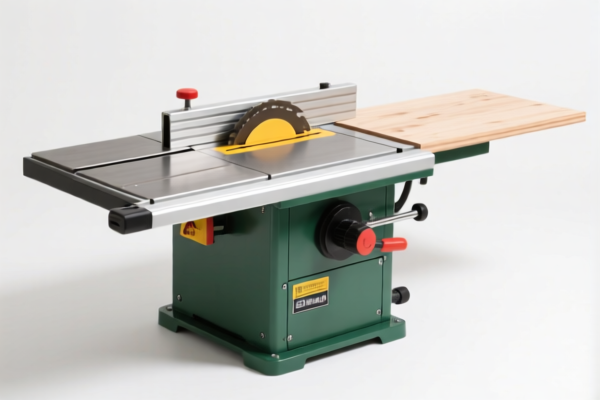
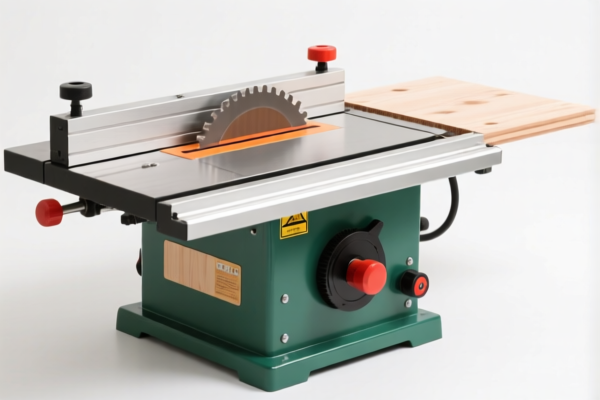
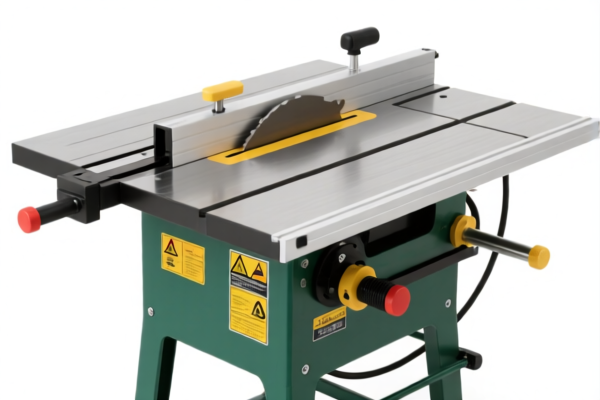
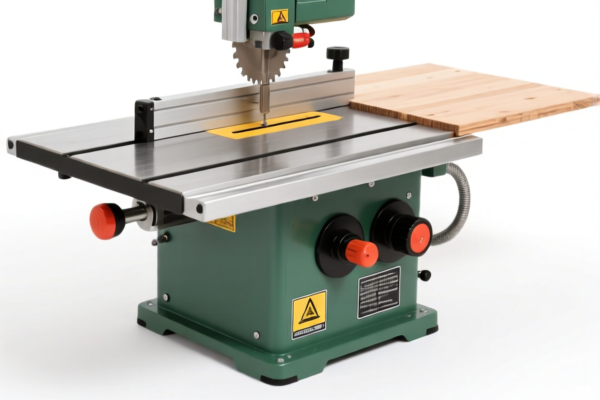
AI Analysis
🪚 Desktop Table Saw (Portable Table Saw)
🌐 HS Code Reference & Customs Clearance Guide | 2026 Latest Tariff Analysis | Professional Clearance Strategy
📌 1. Product Definition & Classification: Do You Really Understand "Table Saws"?
A Desktop Table Saw is a versatile woodworking tool featuring a circular blade mounted on an arbor that is driven by an electric motor. The blade protrudes through the surface of a table, which provides support for the material, usually wood, being cut.
In international trade, the classification depends heavily on how it is powered and its specific functional design:
- Powered Hand Tools (8467): If the saw has a built-in motor and is designed to be handheld or placed on a desk/table but functions primarily as a portable, electrically powered tool.
- Woodworking Machinery (8465): If the unit is a stationary machine, even if compact/desktop-sized, designed for industrial or heavy-duty processing of wood with fixed tables and feed mechanisms.
⚠️ Key Distinction Point:
- If it is a compact, electrically powered circular saw with a small table attachment, often used for home DIY or light professional work → Typically classified under 8467 (Power-driven hand tools).
- If it is a stationary woodworking machine with a rigid table, fence system, and higher power output, designed for precise woodworking → Typically classified under 8465 (Woodworking machinery).
📦 2. HS Code Classification Details (2026 Latest Tariff Authority Comparison)
| HS Code | Product Description | Application Scenario | Power Source/Type |
|---|---|---|---|
8201.90.60.00 |
Hand tools, agricultural/gardening/forestry (Saws) | Non-powered hand saws, manual circular saws. Not applicable to electric table saws. | ❌ Manual |
8465.91.00.78 |
Woodworking machinery, other | Compact stationary table saws, heavy-duty desktop machines. | ⚡ Electric (Stationary) |
8465.91.00.91 |
Woodworking machinery, other (Fallback) | Non-specific sawing machines for wood processing. | ⚡ Electric (Stationary) |
8467.22.00.20 |
Power-driven hand tools, circular saws (Other) | Portable/Desktop electric table saws, DIY circular saws with table kits. | ⚡ Electric (Handheld/Portable) |
🔍 Important Reminder:
-8201.90.60.00is for manual hand tools. An electric desktop table saw CANNOT be classified here. Misclassification leads to severe penalties.
-8467.22.00.20is the most accurate for most commercial "Desktop Table Saws" because they are essentially power-driven circular saws with a table attachment, retaining the characteristics of a hand tool but mounted for stability.
-8465codes apply only if the machine is considered a stationary woodworking machine (heavy, fixed installation, industrial grade).
💰 3. 2026 Latest Tariff Rate Breakdown (Including Surcharges, Policy Add-ons)
✅ Applicable Country: United States (US)
✅ Origin: China (CN)
✅ Effective Date: From November 10, 2025 (Including subsequent imports)
🎯 1. 8201.90.60.00 —— Hand Tools (Misclassification Risk)
| Item | Content |
|---|---|
| Basic Rate | 0% (ad valorem) |
| USITC Surcharge | +25% (From USITC Footnote 9903.88.01) |
| Section 122 Tariff | +10% (Specific Section 122 levy) |
| Total Tax Rate | 35.0% |
| Tax Calculation | CIF Value × 35% |
| De Minimis Exemption | ❌ Not Eligible (deny_de_minimis) |
| Legal Basis Path | USITC:8201.90.60.00 → FOOTNOTE:9903.88.01 |
📌 Explanation:
- Although the base rate is 0%, the 25% USITC surcharge and 10% Section 122 tariff apply.
- CRITICAL WARNING: Electric table saws are NOT hand tools. Using this code is a clear misclassification. Customs may reject the entry, impose fines, or reclassify it, leading to delays. Do not use this code for electric saws.
🎯 2. 8465.91.00.78 / 8465.91.00.91 —— Woodworking Machinery
| Item | Content |
|---|---|
| Basic Rate | 3.0% |
| USITC Surcharge | +25% |
| Section 122 Tariff | +10% |
| Total Tax Rate | 38.0% |
| Tax Calculation | CIF Value × 38% |
| De Minimis Exemption | ❌ Not Eligible (deny_de_minimis) |
| Legal Basis Path | USITC:8465.91.00.78 → FOOTNOTE:9903.88.01 |
📌 Note:
- These codes are for stationary woodworking machines.
- If your "Desktop Table Saw" is a lightweight, portable unit with a simple table attachment, it should not be classified here.
- If it is a heavy-duty, industrial-grade desktop unit with a solid cast table and fence system, this classification may apply.
- Tax Impact: 38% is high. Ensure the product meets the definition of "woodworking machinery" (Section XIV, Note 3) to avoid disputes.
🎯 3. 8467.22.00.20 —— Power-Driven Circular Saws (Recommended for Most Desktop Saws)
| Item | Content |
|---|---|
| Basic Rate | 0.0% |
| USITC Surcharge | 0.0% |
| Section 122 Tariff | +10% |
| Total Tax Rate | 10.0% |
| Tax Calculation | CIF Value × 10% |
| De Minimis Exemption | ❌ Not Eligible (deny_de_minimis) |
| Legal Basis Path | USITC:8467.22.00.20 → Section 122 Rules |
📌 Key Advantage:
- This is the most cost-effective and accurate classification for most portable/desktop electric table saws.
- It falls under 8467 (Power-driven hand tools), which are generally exempt from the 25% USITC surcharge (Section 301) if they meet specific criteria, but still subject to the 10% Section 122 tariff.
- Why 10%? The base rate is 0%, USITC surcharge is 0% (due to specific exclusion or classification nuance for certain hand tools), but Section 122 applies.
- CRITICAL: Ensure the product is marketed and described as a "Power-driven circular saw" with a table accessory, not a "stationary machine."📌 Clarification on Tax Detail from Data:
- The data shows8467.22.00.20has 0% Basic, 0% USITC, 10% Section 122.
- This is significantly cheaper than the 38% for machinery.
- Reason: Hand tools (8467) often have different tariff treatment compared to machinery (8465) under current trade policies.
🛠️ 4. Customs Clearance Practical Advice (Real-World Pitfall Guide)
✅ 1. Preparation Checklist (Must-Haves)
| Document | Required | Description |
|---|---|---|
| ✅ Product Specification Sheet | ✔️ | Must clearly state: "Electric Circular Saw with Table," power (W/V), max blade diameter. |
| ✅ Structural Diagrams | ✔️ | Show that the motor is handheld/portable in nature, with the table as an accessory. |
| ✅ Product Photos | ✔️ | Clear images of the motor, blade, and table. Label must include model and origin. |
| ✅ Commercial Invoice | ✔️ | Description: "Electric Desktop Table Saw, Model XYZ, 120V, for Wood Cutting." Avoid "Stationary Woodworking Machine" if it's portable. |
| ✅ Packing List | ✔️ | List the saw, motor, table, fence, and accessories together. |
| ✅ Third-Party Certification | ✔️ | UL/ETL (for safety), FCC (for emissions) if applicable. |
✅ 2. Declaration Tips (Key Mantras)
🔥 "Portability over Stationarity, Tool over Machine, Save 28%!"
| Scenario | Correct Declaration | Incorrect Practice |
|---|---|---|
| Lightweight Desktop Saw (Motor fits in hand, table is light) | 8467.22.00.20 (10% Tax) |
Classify as 8465 (38% Tax) → Overpay 28% |
| Heavy Industrial Desktop Machine (Fixed, cast iron table, high HP) | 8465.91.00.78 (38% Tax) |
Classify as 8467 (10% Tax) → Misclassification Risk |
| Manual Saw (No motor) | 8201.90.60.00 (35% Tax) |
Classify as Electric → Wrong Product Type |
📌 Key Strategy:
- Emphasize the portable nature of the motor.
- Describe the table as an accessory or support platform, not part of a stationary machine.
- Use keywords like "Portable," "Compact," "DIY," "Handheld-style" in the description.
✅ 3. Special Handling
| Situation | Handling Advice |
|---|---|
| OEM Custom Saws | Provide design specs showing the motor is a standard circular saw motor (like those used in handheld saws), just mounted on a table. |
| Table Saw with Vacuum Attachment | Declare the vacuum as an accessory. Do not separate the declaration unless necessary. |
| Used/Table Saw Parts | Blade: 8207.50.00.00 (if separate). Table: 8467.99.00.00 (part of tool). Motor: 8467.22.00.20. |
🌍 5. Global Market Clearance Comparison (2026 Latest)
| Country/Region | Recommended HS Code | Tax Rate (China Origin) | Certification Required | Notes |
|---|---|---|---|---|
| 🇺🇸 USA | 8467.22.00.20 |
10% (Total) | UL/ETL + FCC | Best option for portable saws. |
| 🇺🇸 USA | 8465.91.00.78 |
38% (Total) | UL/ETL | Only for heavy stationary machines. |
| 🇪🇺 EU | 8467.22.00.00 |
0-5% (Varies) | CE + Low Voltage | Generally lower taxes. |
| 🇨🇳 China | 8467.22.00.00 |
5-10% | CCC (if applicable) | Standard import duties. |
📌 Conclusion:
- USA: The difference between 10% and 38% is massive. Correct classification as a "hand tool" (8467) rather than "machinery" (8465) saves 28%.
- Avoid8201: It is for manual tools. Do not use it for electric saws.
📌 6. Common Mistakes & Pitfalls (Lessons Learned)
❌ Mistake 1: Classifying a portable electric table saw under 8465 (Machinery)
👉 Consequence: Pay 38% tax instead of 10%. Loss of $28 on every $100 of value.
❌ Mistake 2: Classifying an electric saw under 8201 (Hand Tools)
👉 Consequence: Customs Rejection. The product is electric, not manual. Fines and delays.
❌ Mistake 3: Describing the product as "Stationary Woodworking Machine"
👉 Consequence: Forces classification under 8465, triggering the 25% USITC surcharge.
❌ Mistake 4: Ignoring the Section 122 Tariff
👉 Consequence: Even under the best classification (8467), you still pay 10%. Plan your margins accordingly.
✅ Correct Practice:
"Electric Portable Desktop Table Saw, 120V, 15A, with Adjustable Fence and Miter Gauge, Model XYZ, UL Certified"
🎯 7. Conclusion: Precision in Classification, Precision in Profit!
🎯 Remember the Mantra:
🔹 "Motor is Handheld? Use 8467! (10%)"
🔹 "Motor is Fixed? Use 8465! (38%)"
🔹 "No Motor? Use 8201! (35%)"
🔹 "Don't Mix Up Hand vs. Machine!"
📌 Pro Tip:
- If your table saw is modular (motor can be detached and used handheld), emphasize this feature in documentation. It strengthens the case for 8467.
- Consider Advance Ruling from US Customs if the classification is ambiguous. It provides legal certainty for future shipments.
📣 Immediate Action:
📞 Contact your customs broker BEFORE shipping.
📄 Provide motor specs and table dimensions.
🚀 Save 28% Tax. Clear Smarter. Profit More.
✨ Professional Clearance Starts with Accurate Classification!
💼 Every Percent Counts in International Trade!
Customer Reviews
About HS Code Classification
The Harmonized System (HS) is an internationally standardized nomenclature developed by the World Customs Organization (WCO) to classify traded products. Over 200 countries use the HS system as the basis for customs tariffs, trade statistics, and import/export regulations.
Each HS code follows a hierarchical structure:
- Chapter (2 digits) — Broad category of goods (e.g., Chapter 84: Machinery and Mechanical Appliances)
- Heading (4 digits) — More specific grouping within the chapter
- Subheading (6 digits) — Internationally standardized breakdown, used by all WCO member countries
- National subdivisions (8-10 digits) — Country-specific extensions for further classification, such as US HTSUS 10-digit codes
Correct HS code classification is essential for smooth customs clearance, accurate duty payment, and compliance with trade regulations. Misclassification can lead to customs delays, overpayment of duties, or penalties.
When importing from CN to US, the applicable tariff rates may include:
- Most-Favored-Nation (MFN) rate — The standard duty rate applied to WTO members
- General rate — Applied to countries without trade agreements
- Trade remedy duties — Additional tariffs such as Section 301 (anti-dumping), Section 232 (national security), or countervailing duties
The information provided on this page is for reference purposes only. For official classification, please consult with your local customs authority or a licensed customs broker.