Diluent for Detection Kit
CN → US| HS编码 | 关税税率 | 原产国 | 目的国 | 文档 |
|---|---|---|---|---|
| 3824999330 | 40.0% | CN | US | 官方文档 |
| 3822190080 | 10.0% | CN | US | 官方文档 |
| 3006305000 | 10.0% | CN | US | 官方文档 |
| 3006301000 | 10.0% | CN | US | 官方文档 |
| 3822190030 | 10.0% | CN | US | 官方文档 |
商品图片
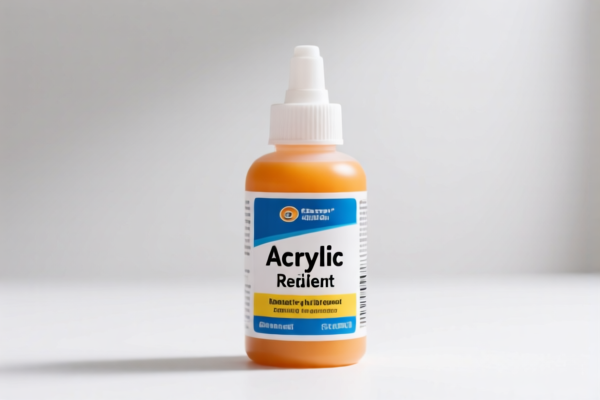


AI分析
🧪 Diluent for Detection Kit (试剂盒专用稀释液)
🌐 HS Code Reference & Customs Clearance Guide | 2026 Latest Tariff Analysis | Professional Level Clearance Strategy
📌 I. Product Definition & Classification: What Exactly is "Diluent"?
The Diluent for Detection Kit is a critical component in diagnostic and laboratory testing systems. It is not an active reagent but a chemical mixture/solution designed to maintain stability, adjust pH, or reduce viscosity for primary reagents.
In international trade, its classification hinges on its chemical nature and specific usage:
- Chemical Mixtures (Non-Medical): If it is a general-purpose buffer or saline solution used for general laboratory dilution without specific medical diagnostic claims, it often falls under Chapter 38.
- Medical Diagnostic Accessories: If it is exclusively packaged and marketed as an integral part of a specific medical diagnostic kit for patient use, it may be classified under Chapter 30 (Pharmaceutical Products).
⚠️ Key Distinction Point:
- If it is a general chemical buffer sold separately or as a general lab supply → HS 3824
- If it is specifically formulated for a diagnostic kit (e.g., X-ray contrast, serology, molecular diagnostics) → HS 3822 or HS 3006
📦 II. HS Code Classification Details (2026 Latest Tariff Authority Comparison)
| HS Code | Product Description | Applicable Scenario | Key Classification Logic |
|---|---|---|---|
3824.99.93.30 |
Diluent for Kits (Chemical Mixture) | General chemical mixed solutions used to support kit operations. | Primary Match for "Diluent". Classified as a prepared chemical mixture not specified elsewhere. |
3822.19.00.80 |
Diagnostic/Laboratory Reagent Kits | General diagnostic or laboratory reagents, no material conflict. | Used if the diluent is considered a "reagent" in a broad sense or part of a generic diagnostic setup. |
3006.30.50.00 |
Diagnostic Kits for Patient Use | Reagents intended for direct patient diagnosis. | If the diluent is strictly a component of a patient-use diagnostic kit (e.g., home test kits). |
3006.30.10.00 |
Diagnostic Reagents (X-Ray/Specific) | Reagents for X-ray examinations or specific diagnostic functions. | Specialized medical use cases. |
3822.19.00.30 |
Diagnostic Reagents (Antigen/Anti-serum) | Reagents containing antigens or antiserum. | If the diluent has specific biological interactions or is part of an immunoassay kit. |
🔍 Important Note:
- HS 3824.99.93.30 is the most precise fit for a "Diluent" specifically described as a chemical mixture for kits, as diluents themselves are often inert buffers rather than active diagnostic agents.
- HS 3006 items are generally for end-user medical diagnostics, which may attract different regulatory scrutiny (FDA/CE) compared to general lab chemicals.
💰 III. 2026 Latest Tariff Rate Detailed Explanation (Including Additional Taxes & Policy Surcharges)
✅ Applicable Country: United States (US)
✅ Country of Origin: China (CN)
✅ Effective Date: From November 10, 2025 (and subsequent imports)
🎯 1. 3824.99.93.30 —— Diluent for Kits (Chemical Mixture)
| Item | Content |
|---|---|
| Base Tariff Rate | 5.0% |
| Section 301 Additional Tariff | +25.0% |
| Section 122 Tariff (IEEPA) | +10.0% |
| Total Tax Rate | 40.0% |
| Tax Calculation | CIF Value × 40% |
| De Minimis Exemption | ❌ Not Eligible (Deny de minimis for Chinese goods under these sections) |
| Legal Basis Path | USITC:3824.99.93.30 → Section 301: Footnote 9903.88.01 → IEEPA: Section 122 |
📌 Explanation:
- "Base Tariff 5%": Standard Most Favored Nation (MFN) rate for prepared chemical products.
- "Section 301 Additional Tariff 25%": Imposed on specific Chinese chemical imports under the US Trade Representative’s list.
- "Section 122 Tariff 10%": A specific surcharge applied to certain Chinese goods under the International Emergency Economic Powers Act (IEEPA), effective from late 2025.
- Total 40%: This is a high tariff burden. Importers must account for this in pricing.
🎯 2. 3822.19.00.80 & 3006.30.xx Series —— Diagnostic Kits/Reagents
| Item | Content |
|---|---|
| Base Tariff Rate | 0.0% |
| Section 301 Additional Tariff | 0.0% |
| Section 122 Tariff (IEEPA) | +10.0% |
| Total Tax Rate | 10.0% |
| Tax Calculation | CIF Value × 10% |
| De Minimis Exemption | ❌ Not Eligible (Due to IEEPA Section 122) |
| Legal Basis Path | USITC:3822.19.00.80 / 3006.30.xx → IEEPA: Section 122 |
📌 Explanation:
- These codes benefit from zero base tariffs and no Section 301 additional tariff (as many diagnostic reagents are excluded from Section 301 lists).
- However, they are still subject to the 10% IEEPA Section 122 tariff.
- Cost Advantage: Compared to the 40% rate for general chemical diluents, classifying as a specific diagnostic reagent/kits component saves 30% in duties.
🛠️ IV. Customs Clearance Practical Suggestions (Combat Pitfalls Guide)
✅ 1. Required Documentation Checklist (All Inevitable)
| Document | Must Provide | Description |
|---|---|---|
| ✅ Product Specification Sheet | ✔️ | Must clearly state: "Diluent," "Buffer Solution," or "Diagnostic Reagent." Avoid vague terms like "Liquid." |
| ✅ Certificate of Analysis (COA) | ✔️ | Proves chemical composition, pH, sterility, and absence of prohibited substances. |
| ✅ Formula/Ingredients List | ✔️ | Critical for determining if it falls under HS 3824 (Chemical) or HS 3006 (Medical). |
| ✅ Commercial Invoice | ✔️ | Must describe item as "Diluent for Detection Kit" or "Diagnostic Reagent," not just "Chemical Liquid." |
| ✅ Packing List | ✔️ | Show if diluent is packed with the kit or separately. |
| ✅ Intended Use Statement | ✔️ | Explicitly state: "Used in laboratory diagnostics for [specific purpose]." |
| ✅ FDA Registration (if applicable) | ✔️ | If classified under HS 3006, FDA prior notice and facility registration may be required. |
✅ 2. Declaration Tips (Key Mantra)
🔥 “Chemical Mixture = 40%, Diagnostic Reagent = 10%”
| Scenario | Correct Declaration | Wrong Practice |
|---|---|---|
| General Buffer/Saline | 3824.99.93.30 (40%) |
❌ Try to force into 3006 without proof → Audit Risk |
| Specific Diagnostic Kit Component | 3822.19.00.80 or 3006.30.xx (10%) |
❌ Declare as generic chemical → Overpay 30% |
| Kit + Diluent Together | Declare Kit as Unit (if HS 3006) | ❌ Split into "Kit (HS 3006)" + "Diluent (HS 3824)" → Complex & Risky |
📌 Strategic Advice:
- If the diluent is exclusive to a specific diagnostic kit and has no other commercial use, strive for HS 3006 or HS 3822 to secure the 10% rate.
- Provide evidence that it is not a general-purpose lab chemical but a specialized reagent.
✅ 3. Special Cases Handling
| Situation | Handling Suggestion |
|---|---|
| Diluent contains biological agents | Must classify under HS 3822.19.00.30 (Antigen/Anti-serum) or 3006 due to bio-safety regulations. |
| Separate Sale vs. Kit Inclusion | If sold separately, HS 3824 is more likely. If sold only in a kit, argue for HS 3006/3822. |
| Origin Verification | Ensure Certificate of Origin (CO) states "China." IEEPA tariffs apply strictly to Chinese origin. |
| FDA Prior Notice | For food/drug/medical device related reagents (HS 3006), FDA Prior Notice is mandatory before arrival. |
🌍 V. Global Major Market Customs Comparison (2026 Latest)
| Country/Region | Recommended HS Code | Tariff | Certification Requirements | Notes |
|---|---|---|---|---|
| 🇺🇸 USA | 3824.99.93.30 / 3822.19.00.80 |
10% - 40% | FDA (if medical), IEEPA Compliance | High Tariff Volatility |
| 🇨🇳 China | 3824.99.93.30 |
5% - 10% | CIQ (Inspection & Quarantine) | No IEEPA tariffs |
| 🇪🇺 EU | 3822.00 / 3006 |
0% - 6% | CE Marking, REACH Registration | No Additional Surcharges |
| 🇬🇧 UK | 3822.00 / 3006 |
0% - 6% | UKCA Marking | Post-Brexit Rules Apply |
| 🇯🇵 Japan | 3822.00 / 3006 |
0% - 5% | PSE (if electrical kit), PMDA (if medical) | Low base tariffs |
📌 Conclusion:
- The US market is the most challenging due to IEEPA Section 122 and Section 301 tariffs.
- Classification Strategy is Critical: Choosing3822or3006over3824can save 30% in duties.
- EU/Asia markets offer significantly lower duty burdens but require strict REACH/PMDA compliance for chemical/medical substances.
📌 VI. Common Errors & Pitfall Guide (Lessons Learned)
❌ Error 1: Declaring a specialized diagnostic diluent as "General Chemical Liquid" under 3824.99.93.30
👉 Consequence: Paying 40% tariff instead of 10%. Massive cost increase.
❌ Error 2: Failing to provide FDA Prior Notice for HS 3006 items
👉 Consequence: Detention at US Border, return shipment, or destruction.
❌ Error 3: Ignoring the "Section 122" tariff even for diagnostic items
👉 Consequence: Assuming 0% tax because "Section 301 is 0%," leading to underpayment and penalties. Section 122 (10%) still applies!
✅ Correct Practice:
"Diluent for Diagnostic Kit, Chemical Buffer Solution, For Laboratory Use Only, Not for Human Injection, HS 3822.19.00.80, Origin: China"
🎯 VII. Conclusion: Professional Declaration, Save Time, Reduce Costs!
🎯 Remember the Mantra:
🔹 “Chemical Buffer = 40%, Diagnostic Reagent = 10%, Don’t Get Caught in the 30% Gap!”
🔹 “HS Code Determines Life or Death, 30% Difference Changes the Profit Margin!”
📌 Pro Tip:
If your diluent is critical for a specific diagnostic kit, consider bundling it with the main kit in the declaration (if legally permissible) or providing strong evidence of its exclusive diagnostic use to justify the 10% HS 3006/3822 classification.
Always apply for an Advance Ruling from US Customs and Border Protection (CBP) before shipment to lock in the HS Code and tariff rate.
📣 Immediate Action:
📞 Contact a Professional Customs Broker + Provide Product Formula + Request CBP Advance Ruling
🚀 Let your Detection Kit Diluents, Clear Customs Smoothly, Maximize Profit!
✨ Professional Clearance Starts with Precise Classification!
💼 Every Penny of Cost Deserves Accurate Calculation!
用户评价
关于 HS 编码归类
协调制度(HS)是由世界海关组织(WCO)制定的国际贸易商品分类标准。全球 200 多个国家采用 HS 系统作为海关关税、贸易统计和进出口监管的基础。
每个 HS 编码遵循以下层级结构:
- 章(2 位)——商品大类(例如:第 84 章:机器和机械设备)
- 品目(4 位)——章内的更具体分类
- 子目(6 位)——国际通用细分,所有 WCO 成员国统一使用
- 本国细分(8-10 位)——各国自行扩展的细分编码,如美国 HTSUS 10 位编码
正确的 HS 编码归类对于顺利通关、准确缴纳关税和遵守贸易法规至关重要。错误归类可能导致海关延误、多缴关税或罚款。
从CN进口到US时,适用的关税税率可能包括:
- 最惠国(MFN)税率——适用于 WTO 成员国的标准关税税率
- 普通税率——适用于无贸易协定国家
- 贸易救济关税——附加关税,如 301 条款(反倾销)、232 条款(国家安全)或反补贴税
本页内容仅供参考。如需正式归类,请咨询当地海关或持牌报关代理。