Diluent for Detection Kit
CN → US| HS Code | Tariff Rate | Origin | Destination | Doc |
|---|---|---|---|---|
| 3824999330 | 40.0% | CN | US | Official Doc |
| 3822190080 | 10.0% | CN | US | Official Doc |
| 3006305000 | 10.0% | CN | US | Official Doc |
| 3006301000 | 10.0% | CN | US | Official Doc |
| 3822190030 | 10.0% | CN | US | Official Doc |
Product Images
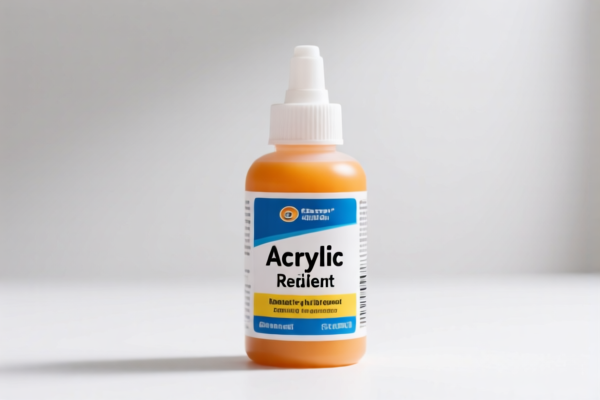


AI Analysis
🧪 Diluent for Detection Kit (试剂盒专用稀释液)
🌐 HS Code Reference & Customs Clearance Guide | 2026 Latest Tariff Analysis | Professional Level Clearance Strategy
📌 I. Product Definition & Classification: What Exactly is "Diluent"?
The Diluent for Detection Kit is a critical component in diagnostic and laboratory testing systems. It is not an active reagent but a chemical mixture/solution designed to maintain stability, adjust pH, or reduce viscosity for primary reagents.
In international trade, its classification hinges on its chemical nature and specific usage:
- Chemical Mixtures (Non-Medical): If it is a general-purpose buffer or saline solution used for general laboratory dilution without specific medical diagnostic claims, it often falls under Chapter 38.
- Medical Diagnostic Accessories: If it is exclusively packaged and marketed as an integral part of a specific medical diagnostic kit for patient use, it may be classified under Chapter 30 (Pharmaceutical Products).
⚠️ Key Distinction Point:
- If it is a general chemical buffer sold separately or as a general lab supply → HS 3824
- If it is specifically formulated for a diagnostic kit (e.g., X-ray contrast, serology, molecular diagnostics) → HS 3822 or HS 3006
📦 II. HS Code Classification Details (2026 Latest Tariff Authority Comparison)
| HS Code | Product Description | Applicable Scenario | Key Classification Logic |
|---|---|---|---|
3824.99.93.30 |
Diluent for Kits (Chemical Mixture) | General chemical mixed solutions used to support kit operations. | Primary Match for "Diluent". Classified as a prepared chemical mixture not specified elsewhere. |
3822.19.00.80 |
Diagnostic/Laboratory Reagent Kits | General diagnostic or laboratory reagents, no material conflict. | Used if the diluent is considered a "reagent" in a broad sense or part of a generic diagnostic setup. |
3006.30.50.00 |
Diagnostic Kits for Patient Use | Reagents intended for direct patient diagnosis. | If the diluent is strictly a component of a patient-use diagnostic kit (e.g., home test kits). |
3006.30.10.00 |
Diagnostic Reagents (X-Ray/Specific) | Reagents for X-ray examinations or specific diagnostic functions. | Specialized medical use cases. |
3822.19.00.30 |
Diagnostic Reagents (Antigen/Anti-serum) | Reagents containing antigens or antiserum. | If the diluent has specific biological interactions or is part of an immunoassay kit. |
🔍 Important Note:
- HS 3824.99.93.30 is the most precise fit for a "Diluent" specifically described as a chemical mixture for kits, as diluents themselves are often inert buffers rather than active diagnostic agents.
- HS 3006 items are generally for end-user medical diagnostics, which may attract different regulatory scrutiny (FDA/CE) compared to general lab chemicals.
💰 III. 2026 Latest Tariff Rate Detailed Explanation (Including Additional Taxes & Policy Surcharges)
✅ Applicable Country: United States (US)
✅ Country of Origin: China (CN)
✅ Effective Date: From November 10, 2025 (and subsequent imports)
🎯 1. 3824.99.93.30 —— Diluent for Kits (Chemical Mixture)
| Item | Content |
|---|---|
| Base Tariff Rate | 5.0% |
| Section 301 Additional Tariff | +25.0% |
| Section 122 Tariff (IEEPA) | +10.0% |
| Total Tax Rate | 40.0% |
| Tax Calculation | CIF Value × 40% |
| De Minimis Exemption | ❌ Not Eligible (Deny de minimis for Chinese goods under these sections) |
| Legal Basis Path | USITC:3824.99.93.30 → Section 301: Footnote 9903.88.01 → IEEPA: Section 122 |
📌 Explanation:
- "Base Tariff 5%": Standard Most Favored Nation (MFN) rate for prepared chemical products.
- "Section 301 Additional Tariff 25%": Imposed on specific Chinese chemical imports under the US Trade Representative’s list.
- "Section 122 Tariff 10%": A specific surcharge applied to certain Chinese goods under the International Emergency Economic Powers Act (IEEPA), effective from late 2025.
- Total 40%: This is a high tariff burden. Importers must account for this in pricing.
🎯 2. 3822.19.00.80 & 3006.30.xx Series —— Diagnostic Kits/Reagents
| Item | Content |
|---|---|
| Base Tariff Rate | 0.0% |
| Section 301 Additional Tariff | 0.0% |
| Section 122 Tariff (IEEPA) | +10.0% |
| Total Tax Rate | 10.0% |
| Tax Calculation | CIF Value × 10% |
| De Minimis Exemption | ❌ Not Eligible (Due to IEEPA Section 122) |
| Legal Basis Path | USITC:3822.19.00.80 / 3006.30.xx → IEEPA: Section 122 |
📌 Explanation:
- These codes benefit from zero base tariffs and no Section 301 additional tariff (as many diagnostic reagents are excluded from Section 301 lists).
- However, they are still subject to the 10% IEEPA Section 122 tariff.
- Cost Advantage: Compared to the 40% rate for general chemical diluents, classifying as a specific diagnostic reagent/kits component saves 30% in duties.
🛠️ IV. Customs Clearance Practical Suggestions (Combat Pitfalls Guide)
✅ 1. Required Documentation Checklist (All Inevitable)
| Document | Must Provide | Description |
|---|---|---|
| ✅ Product Specification Sheet | ✔️ | Must clearly state: "Diluent," "Buffer Solution," or "Diagnostic Reagent." Avoid vague terms like "Liquid." |
| ✅ Certificate of Analysis (COA) | ✔️ | Proves chemical composition, pH, sterility, and absence of prohibited substances. |
| ✅ Formula/Ingredients List | ✔️ | Critical for determining if it falls under HS 3824 (Chemical) or HS 3006 (Medical). |
| ✅ Commercial Invoice | ✔️ | Must describe item as "Diluent for Detection Kit" or "Diagnostic Reagent," not just "Chemical Liquid." |
| ✅ Packing List | ✔️ | Show if diluent is packed with the kit or separately. |
| ✅ Intended Use Statement | ✔️ | Explicitly state: "Used in laboratory diagnostics for [specific purpose]." |
| ✅ FDA Registration (if applicable) | ✔️ | If classified under HS 3006, FDA prior notice and facility registration may be required. |
✅ 2. Declaration Tips (Key Mantra)
🔥 “Chemical Mixture = 40%, Diagnostic Reagent = 10%”
| Scenario | Correct Declaration | Wrong Practice |
|---|---|---|
| General Buffer/Saline | 3824.99.93.30 (40%) |
❌ Try to force into 3006 without proof → Audit Risk |
| Specific Diagnostic Kit Component | 3822.19.00.80 or 3006.30.xx (10%) |
❌ Declare as generic chemical → Overpay 30% |
| Kit + Diluent Together | Declare Kit as Unit (if HS 3006) | ❌ Split into "Kit (HS 3006)" + "Diluent (HS 3824)" → Complex & Risky |
📌 Strategic Advice:
- If the diluent is exclusive to a specific diagnostic kit and has no other commercial use, strive for HS 3006 or HS 3822 to secure the 10% rate.
- Provide evidence that it is not a general-purpose lab chemical but a specialized reagent.
✅ 3. Special Cases Handling
| Situation | Handling Suggestion |
|---|---|
| Diluent contains biological agents | Must classify under HS 3822.19.00.30 (Antigen/Anti-serum) or 3006 due to bio-safety regulations. |
| Separate Sale vs. Kit Inclusion | If sold separately, HS 3824 is more likely. If sold only in a kit, argue for HS 3006/3822. |
| Origin Verification | Ensure Certificate of Origin (CO) states "China." IEEPA tariffs apply strictly to Chinese origin. |
| FDA Prior Notice | For food/drug/medical device related reagents (HS 3006), FDA Prior Notice is mandatory before arrival. |
🌍 V. Global Major Market Customs Comparison (2026 Latest)
| Country/Region | Recommended HS Code | Tariff | Certification Requirements | Notes |
|---|---|---|---|---|
| 🇺🇸 USA | 3824.99.93.30 / 3822.19.00.80 |
10% - 40% | FDA (if medical), IEEPA Compliance | High Tariff Volatility |
| 🇨🇳 China | 3824.99.93.30 |
5% - 10% | CIQ (Inspection & Quarantine) | No IEEPA tariffs |
| 🇪🇺 EU | 3822.00 / 3006 |
0% - 6% | CE Marking, REACH Registration | No Additional Surcharges |
| 🇬🇧 UK | 3822.00 / 3006 |
0% - 6% | UKCA Marking | Post-Brexit Rules Apply |
| 🇯🇵 Japan | 3822.00 / 3006 |
0% - 5% | PSE (if electrical kit), PMDA (if medical) | Low base tariffs |
📌 Conclusion:
- The US market is the most challenging due to IEEPA Section 122 and Section 301 tariffs.
- Classification Strategy is Critical: Choosing3822or3006over3824can save 30% in duties.
- EU/Asia markets offer significantly lower duty burdens but require strict REACH/PMDA compliance for chemical/medical substances.
📌 VI. Common Errors & Pitfall Guide (Lessons Learned)
❌ Error 1: Declaring a specialized diagnostic diluent as "General Chemical Liquid" under 3824.99.93.30
👉 Consequence: Paying 40% tariff instead of 10%. Massive cost increase.
❌ Error 2: Failing to provide FDA Prior Notice for HS 3006 items
👉 Consequence: Detention at US Border, return shipment, or destruction.
❌ Error 3: Ignoring the "Section 122" tariff even for diagnostic items
👉 Consequence: Assuming 0% tax because "Section 301 is 0%," leading to underpayment and penalties. Section 122 (10%) still applies!
✅ Correct Practice:
"Diluent for Diagnostic Kit, Chemical Buffer Solution, For Laboratory Use Only, Not for Human Injection, HS 3822.19.00.80, Origin: China"
🎯 VII. Conclusion: Professional Declaration, Save Time, Reduce Costs!
🎯 Remember the Mantra:
🔹 “Chemical Buffer = 40%, Diagnostic Reagent = 10%, Don’t Get Caught in the 30% Gap!”
🔹 “HS Code Determines Life or Death, 30% Difference Changes the Profit Margin!”
📌 Pro Tip:
If your diluent is critical for a specific diagnostic kit, consider bundling it with the main kit in the declaration (if legally permissible) or providing strong evidence of its exclusive diagnostic use to justify the 10% HS 3006/3822 classification.
Always apply for an Advance Ruling from US Customs and Border Protection (CBP) before shipment to lock in the HS Code and tariff rate.
📣 Immediate Action:
📞 Contact a Professional Customs Broker + Provide Product Formula + Request CBP Advance Ruling
🚀 Let your Detection Kit Diluents, Clear Customs Smoothly, Maximize Profit!
✨ Professional Clearance Starts with Precise Classification!
💼 Every Penny of Cost Deserves Accurate Calculation!
Customer Reviews
About HS Code Classification
The Harmonized System (HS) is an internationally standardized nomenclature developed by the World Customs Organization (WCO) to classify traded products. Over 200 countries use the HS system as the basis for customs tariffs, trade statistics, and import/export regulations.
Each HS code follows a hierarchical structure:
- Chapter (2 digits) — Broad category of goods (e.g., Chapter 84: Machinery and Mechanical Appliances)
- Heading (4 digits) — More specific grouping within the chapter
- Subheading (6 digits) — Internationally standardized breakdown, used by all WCO member countries
- National subdivisions (8-10 digits) — Country-specific extensions for further classification, such as US HTSUS 10-digit codes
Correct HS code classification is essential for smooth customs clearance, accurate duty payment, and compliance with trade regulations. Misclassification can lead to customs delays, overpayment of duties, or penalties.
When importing from CN to US, the applicable tariff rates may include:
- Most-Favored-Nation (MFN) rate — The standard duty rate applied to WTO members
- General rate — Applied to countries without trade agreements
- Trade remedy duties — Additional tariffs such as Section 301 (anti-dumping), Section 232 (national security), or countervailing duties
The information provided on this page is for reference purposes only. For official classification, please consult with your local customs authority or a licensed customs broker.