Doll Stroller
CN → US| HS编码 | 关税税率 | 原产国 | 目的国 | 文档 |
|---|---|---|---|---|
| 9503000071 | 10.0% | CN | US | 官方文档 |
| 9503000090 | 10.0% | CN | US | 官方文档 |
| 8715000020 | 14.4% | CN | US | 官方文档 |
商品图片
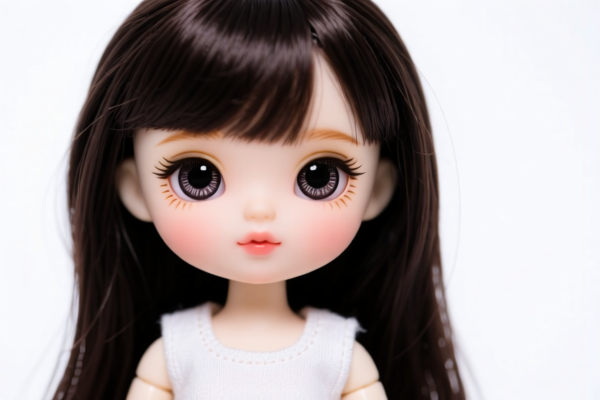
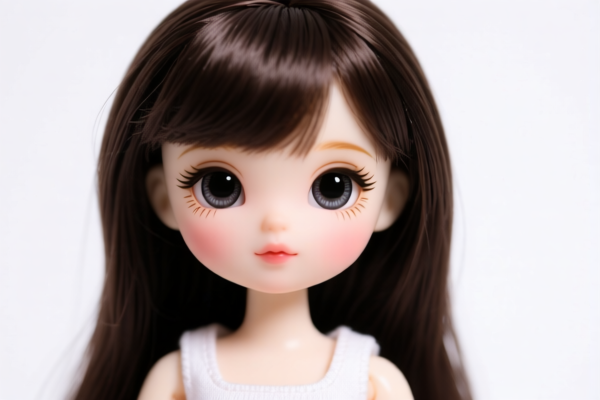
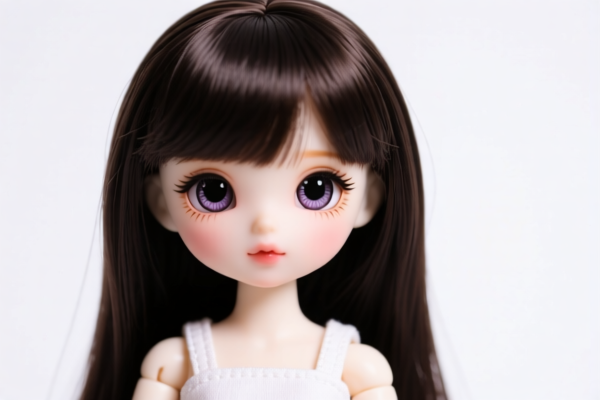
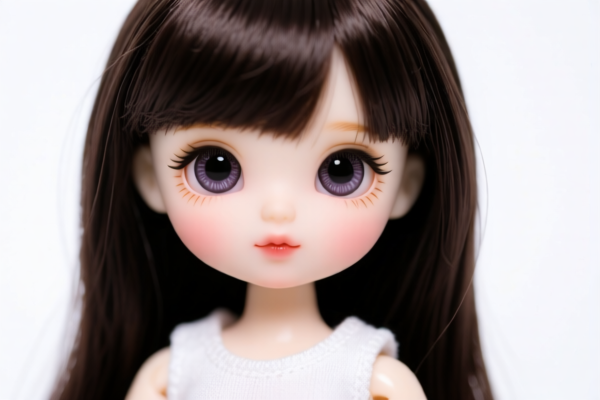
AI分析
👶 Doll Stroller (Toy & Utility Conflict)
🌐 HS Code Reference & Customs Clearance Guide | 2026 Latest Tariff Analysis | Professional Clearance Strategy
📌 I. Product Definition & Classification: Are You Declaring a Toy or a Vehicle?
A "Doll Stroller" is a unique product that sits on the borderline between toys and utility vehicles. This creates a significant classification risk because customs authorities view Toys (Chapter 95) and Baby Carriages/Prams (Chapter 87) under completely different regulatory frameworks and tax rates.
The Core Conflict:
* As a Toy (9503): It is considered a "doll carriage" or "similar wheeled toy." It is intended for play, not actual transport of an infant.
* As a Utility Vehicle (8715): It is considered a "baby carriage" (pram). It is intended for the actual transport of a baby.
⚠️ Critical Distinction Point:
- If the product is marketed as a toy for dolls, has minimal load-bearing capacity, lightweight materials, and is sold in toy sections → Likely Chapter 95.
- If the product is marketed as a real baby stroller (even if marketed for dolls in some contexts but structurally identical to real prams) → Likely Chapter 87.
- Note: The input data specifically maps "Doll Stroller" to both categories based on "similarity," leading to different tax outcomes.
📦 II. HS Code Classification Details (2026 Latest Tariff Authority)
Based on the provided data, here are the three possible HS Codes and their rationales:
| HS Code | Product Description | Rationale for Classification | Tax Category |
|---|---|---|---|
9503.00.00.71 |
Toys: Doll Carriages / Wheeled Toys | Matches "dolls' carriages" and "similar wheeled toys." The product is viewed as an extension of play. | Toy Category |
9503.00.00.90 |
Toys: Other / Accessories | Classified under "Other" for toys/doll carriages where specific sub-codes don't fit. No material conflict. | Toy Category |
8715.00.00.20 |
Baby Carriages & Parts | Matches "infant carriages (including strollers)" in intent and form. Treated as a utility vehicle for infants. | Vehicle Category |
🔍 Key Reminder:
-9503codes are for Toys.
-8715is for Real Baby Carriages.
- Even if the item is labeled "Doll Stroller," if it is structurally capable of holding a real infant, customs may reclassify it as8715.00.00.20, leading to higher duties.
💰 III. 2026 Latest Tariff Rate Breakdown (Including Surcharges)
✅ Applicable Country: United States (US)
✅ Origin: China (CN)
✅ Effective Time: 2025/2026 Period
🎯 1. Toy Classifications (9503.00.00.71 & 9503.00.00.90)
Both toy-related HS codes have the same tax structure.
| Item | Content |
|---|---|
| Base Tariff | 0.0% (Ad Valorem) |
| Section 301 Surcharge | 0.0% |
| Section 122 Tariff | 10.0% |
| Total Tariff Rate | 10.0% |
| Tax Calculation | CIF Value × 10% |
| De Minimis Eligibility | ❌ No (Subject to Section 122) |
| Legal Basis | Section 122 Tariff applied to Toy categories |
📌 Explanation:
- Base Duty: Toys often enjoy low base duties (0%).
- Section 122 Tariff: This specific 10% surcharge applies to certain goods imported from China. Unlike Section 301 (which can be 25%), Section 122 is fixed at 10% for these categories.
- Total Cost Impact: 10% is relatively moderate compared to other trade war tariffs, but it is still a significant cost adder on top of shipping.
🎯 2. Utility Vehicle Classification (8715.00.00.20)
If classified as a real Baby Carriage, the tax burden increases significantly.
| Item | Content |
|---|---|
| Base Tariff | 4.4% (Ad Valorem) |
| Section 301 Surcharge | 0.0% |
| Section 122 Tariff | 10.0% |
| Total Tariff Rate | 14.4% |
| Tax Calculation | CIF Value × 14.4% |
| De Minimis Eligibility | ❌ No (Subject to Section 122) |
| Legal Basis | Section 122 Tariff + Base Duty for Vehicles |
📌 Explanation:
- Base Duty: Real baby carriages (8715) have a higher base duty (4.4%) than toys (0%).
- Section 122 Tariff: The 10% surcharge still applies.
- Total Cost Impact: 14.4% is 4.4 percentage points higher than the toy classification.
- Risk: Misdeclaring a "Doll Stroller" as a Toy (9503) when it is actually a Baby Carriage (8715) can lead to underpayment of duties, resulting in penalties, back-taxes, and shipment delays.
🛠️ IV. Customs Clearance Practical Advice (Avoid Pitfalls)
✅ 1. Preparation Checklist (Non-negotiable)
| Material | Must Provide | Explanation |
|---|---|---|
| ✅ Product Photos | ✔️ | Clear images showing size, materials, and branding. Is it clearly small/toy-sized? |
| ✅ User Manual/Packaging | ✔️ | Does it say "Toy" or "For Babies"? Marketing language is key evidence. |
| ✅ Material Certificate | ✔️ | To prove weight/sturdiness. Lightweight plastic = Toy. Metal frame + fabric = Vehicle. |
| ✅ Commercial Invoice | ✔️ | Description must be precise: "Toy Doll Stroller" vs. "Baby Stroller." |
| ✅ Origin Certificate (CO) | ✔️ | Proves Chinese origin (triggers Section 122). |
✅ 2. Declaration Strategy (Key Mantra)
🔥 "Toy Status is King: Marketing, Size, and Material Must Align!"
| Scenario | Recommended HS Code | Why? |
|---|---|---|
| Small, plastic, doll-sized | 9503.00.00.71 |
Clearly a toy. Low base duty (0%). |
| Large, metal frame, infant-sized | 8715.00.00.20 |
Functionally a baby carriage. Higher base duty (4.4%). |
| Ambiguous/Universal | 9503.00.00.90 |
"Other" toy category. Safe if marketed strictly as a toy. |
⚠️ Warning:
Do not use8715if you are selling a toy.
Do not use9503if you are selling a real baby stroller (even if called "doll stroller" for marketing). Customs can reclassify based on physical characteristics.
✅ 3. Special Case Handling
| Situation | Advice |
|---|---|
| OEM Custom Strollers | Provide design specs. If it's a miniaturized version of a real stroller, argue for 9503 (Toy) but be prepared for scrutiny. |
| Mixed Bundles | If shipped with dolls, declare the stroller separately. Do not bundle into a single "Toy Set" if it complicates valuation. |
| Section 122 Impact | Factor in the 10% surcharge in your pricing model. It applies to both toy and vehicle categories in this dataset. |
🌍 V. Global Market Comparison (2026 Update)
| Country/Region | Recommended HS Code | Total Tariff (China Origin) | Notes |
|---|---|---|---|
| 🇺🇸 USA | 9503.00.00.71 or 8715.00.00.20 |
10% (Toy) or 14.4% (Vehicle) | Section 122 applies to both. Base duty differs. |
| 🇨🇳 China | 9503.00.00.71 or 8715.00.00.20 |
~5-14% (VAT+Duty) | Domestic consumption tax may apply. |
| 🇪🇺 EU | 9503.00 or 8715 |
Varies (Toy ~0-6%, Vehicle ~4.5%) | No Section 122 equivalent, but VAT is high. |
| 🇬🇧 UK | 9503.00 or 8715 |
Varies | Post-Brexit tariffs apply. |
📌 Conclusion:
- The US market is unique due to Section 122.
- Toy classification (9503) is more cost-effective (10% vs 14.4%).
- Justification is key: To claim the lower 10% rate, you must prove the item is a toy, not a utility vehicle.
📌 VI. Common Mistakes & Pitfalls (Lessons Learned)
❌ Mistake 1: Declaring a large, heavy, metal-framed "doll stroller" as a Toy (9503)
👉 Consequence: Customs reclassifies as Baby Carriage (8715), charging 14.4% instead of 10%, plus penalties for misdeclaration.
❌ Mistake 2: Ignoring Section 122 Tariff
👉 Consequence: Even toys have a 10% surcharge. Many importers forget this, leading to unexpected costs.
❌ Mistake 3: Using vague descriptions like "Baby Cart"
👉 Consequence: Ambiguity leads to inspection delays. Use "Toy Doll Stroller" or "Infant Stroller" clearly.
✅ Correct Approach:
"Plastic Toy Doll Stroller, Blue, Model XYZ, Designed for Play, Not Transport."
(Include this exact phrase in commercial invoice)
🎯 VII. Conclusion: Smart Classification, Lower Costs
🎯 Remember the Mantra:
🔹 "Toy vs. Tool: Size and Material Decide. Toy is 10%, Vehicle is 14.4%. Don't Guess, Prove It!"
🔹 "Section 122 is Here: 10% Extra on Top. Plan Your Margin Accordingly!"
📌 Pro Tip:
If your product is high-end and marketed as a "luxury toy," ensure your marketing materials emphasize play value over utility to support the 9503 classification. If it's a real baby stroller, accept the 14.4% rate to stay compliant.
📣 Immediate Action:
📞 Consult a licensed customs broker.
📄 Submit for Pre-Ruling if unsure.
🚀 Accurate classification saves money and avoids detention.
✨ Professional Clearance Starts with Accurate Classification!
💼 Every Percentage Point Counts in 2026 Trade!
用户评价
关于 HS 编码归类
协调制度(HS)是由世界海关组织(WCO)制定的国际贸易商品分类标准。全球 200 多个国家采用 HS 系统作为海关关税、贸易统计和进出口监管的基础。
每个 HS 编码遵循以下层级结构:
- 章(2 位)——商品大类(例如:第 84 章:机器和机械设备)
- 品目(4 位)——章内的更具体分类
- 子目(6 位)——国际通用细分,所有 WCO 成员国统一使用
- 本国细分(8-10 位)——各国自行扩展的细分编码,如美国 HTSUS 10 位编码
正确的 HS 编码归类对于顺利通关、准确缴纳关税和遵守贸易法规至关重要。错误归类可能导致海关延误、多缴关税或罚款。
从CN进口到US时,适用的关税税率可能包括:
- 最惠国(MFN)税率——适用于 WTO 成员国的标准关税税率
- 普通税率——适用于无贸易协定国家
- 贸易救济关税——附加关税,如 301 条款(反倾销)、232 条款(国家安全)或反补贴税
本页内容仅供参考。如需正式归类,请咨询当地海关或持牌报关代理。