Doll Stroller
CN → US| HS Code | Tariff Rate | Origin | Destination | Doc |
|---|---|---|---|---|
| 9503000071 | 10.0% | CN | US | Official Doc |
| 9503000090 | 10.0% | CN | US | Official Doc |
| 8715000020 | 14.4% | CN | US | Official Doc |
Product Images
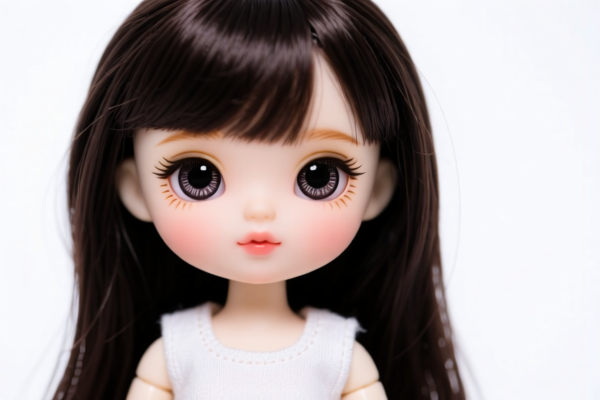
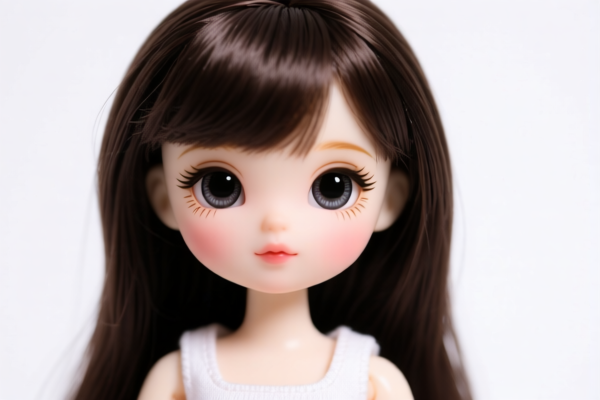
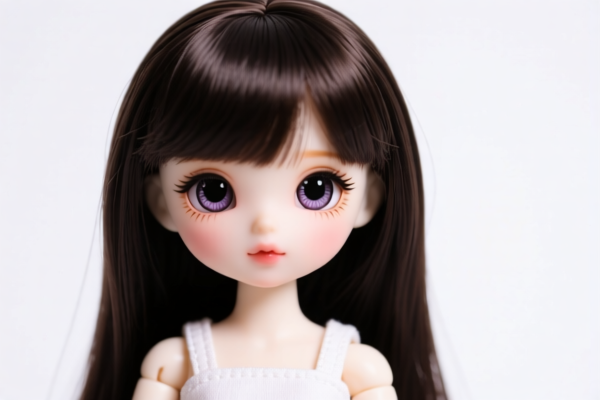
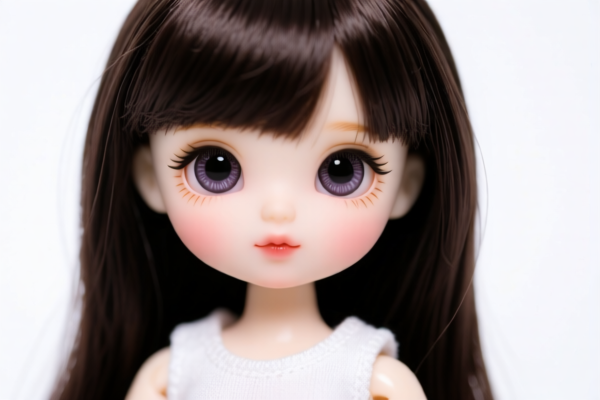
AI Analysis
👶 Doll Stroller (Toy & Utility Conflict)
🌐 HS Code Reference & Customs Clearance Guide | 2026 Latest Tariff Analysis | Professional Clearance Strategy
📌 I. Product Definition & Classification: Are You Declaring a Toy or a Vehicle?
A "Doll Stroller" is a unique product that sits on the borderline between toys and utility vehicles. This creates a significant classification risk because customs authorities view Toys (Chapter 95) and Baby Carriages/Prams (Chapter 87) under completely different regulatory frameworks and tax rates.
The Core Conflict:
* As a Toy (9503): It is considered a "doll carriage" or "similar wheeled toy." It is intended for play, not actual transport of an infant.
* As a Utility Vehicle (8715): It is considered a "baby carriage" (pram). It is intended for the actual transport of a baby.
⚠️ Critical Distinction Point:
- If the product is marketed as a toy for dolls, has minimal load-bearing capacity, lightweight materials, and is sold in toy sections → Likely Chapter 95.
- If the product is marketed as a real baby stroller (even if marketed for dolls in some contexts but structurally identical to real prams) → Likely Chapter 87.
- Note: The input data specifically maps "Doll Stroller" to both categories based on "similarity," leading to different tax outcomes.
📦 II. HS Code Classification Details (2026 Latest Tariff Authority)
Based on the provided data, here are the three possible HS Codes and their rationales:
| HS Code | Product Description | Rationale for Classification | Tax Category |
|---|---|---|---|
9503.00.00.71 |
Toys: Doll Carriages / Wheeled Toys | Matches "dolls' carriages" and "similar wheeled toys." The product is viewed as an extension of play. | Toy Category |
9503.00.00.90 |
Toys: Other / Accessories | Classified under "Other" for toys/doll carriages where specific sub-codes don't fit. No material conflict. | Toy Category |
8715.00.00.20 |
Baby Carriages & Parts | Matches "infant carriages (including strollers)" in intent and form. Treated as a utility vehicle for infants. | Vehicle Category |
🔍 Key Reminder:
-9503codes are for Toys.
-8715is for Real Baby Carriages.
- Even if the item is labeled "Doll Stroller," if it is structurally capable of holding a real infant, customs may reclassify it as8715.00.00.20, leading to higher duties.
💰 III. 2026 Latest Tariff Rate Breakdown (Including Surcharges)
✅ Applicable Country: United States (US)
✅ Origin: China (CN)
✅ Effective Time: 2025/2026 Period
🎯 1. Toy Classifications (9503.00.00.71 & 9503.00.00.90)
Both toy-related HS codes have the same tax structure.
| Item | Content |
|---|---|
| Base Tariff | 0.0% (Ad Valorem) |
| Section 301 Surcharge | 0.0% |
| Section 122 Tariff | 10.0% |
| Total Tariff Rate | 10.0% |
| Tax Calculation | CIF Value × 10% |
| De Minimis Eligibility | ❌ No (Subject to Section 122) |
| Legal Basis | Section 122 Tariff applied to Toy categories |
📌 Explanation:
- Base Duty: Toys often enjoy low base duties (0%).
- Section 122 Tariff: This specific 10% surcharge applies to certain goods imported from China. Unlike Section 301 (which can be 25%), Section 122 is fixed at 10% for these categories.
- Total Cost Impact: 10% is relatively moderate compared to other trade war tariffs, but it is still a significant cost adder on top of shipping.
🎯 2. Utility Vehicle Classification (8715.00.00.20)
If classified as a real Baby Carriage, the tax burden increases significantly.
| Item | Content |
|---|---|
| Base Tariff | 4.4% (Ad Valorem) |
| Section 301 Surcharge | 0.0% |
| Section 122 Tariff | 10.0% |
| Total Tariff Rate | 14.4% |
| Tax Calculation | CIF Value × 14.4% |
| De Minimis Eligibility | ❌ No (Subject to Section 122) |
| Legal Basis | Section 122 Tariff + Base Duty for Vehicles |
📌 Explanation:
- Base Duty: Real baby carriages (8715) have a higher base duty (4.4%) than toys (0%).
- Section 122 Tariff: The 10% surcharge still applies.
- Total Cost Impact: 14.4% is 4.4 percentage points higher than the toy classification.
- Risk: Misdeclaring a "Doll Stroller" as a Toy (9503) when it is actually a Baby Carriage (8715) can lead to underpayment of duties, resulting in penalties, back-taxes, and shipment delays.
🛠️ IV. Customs Clearance Practical Advice (Avoid Pitfalls)
✅ 1. Preparation Checklist (Non-negotiable)
| Material | Must Provide | Explanation |
|---|---|---|
| ✅ Product Photos | ✔️ | Clear images showing size, materials, and branding. Is it clearly small/toy-sized? |
| ✅ User Manual/Packaging | ✔️ | Does it say "Toy" or "For Babies"? Marketing language is key evidence. |
| ✅ Material Certificate | ✔️ | To prove weight/sturdiness. Lightweight plastic = Toy. Metal frame + fabric = Vehicle. |
| ✅ Commercial Invoice | ✔️ | Description must be precise: "Toy Doll Stroller" vs. "Baby Stroller." |
| ✅ Origin Certificate (CO) | ✔️ | Proves Chinese origin (triggers Section 122). |
✅ 2. Declaration Strategy (Key Mantra)
🔥 "Toy Status is King: Marketing, Size, and Material Must Align!"
| Scenario | Recommended HS Code | Why? |
|---|---|---|
| Small, plastic, doll-sized | 9503.00.00.71 |
Clearly a toy. Low base duty (0%). |
| Large, metal frame, infant-sized | 8715.00.00.20 |
Functionally a baby carriage. Higher base duty (4.4%). |
| Ambiguous/Universal | 9503.00.00.90 |
"Other" toy category. Safe if marketed strictly as a toy. |
⚠️ Warning:
Do not use8715if you are selling a toy.
Do not use9503if you are selling a real baby stroller (even if called "doll stroller" for marketing). Customs can reclassify based on physical characteristics.
✅ 3. Special Case Handling
| Situation | Advice |
|---|---|
| OEM Custom Strollers | Provide design specs. If it's a miniaturized version of a real stroller, argue for 9503 (Toy) but be prepared for scrutiny. |
| Mixed Bundles | If shipped with dolls, declare the stroller separately. Do not bundle into a single "Toy Set" if it complicates valuation. |
| Section 122 Impact | Factor in the 10% surcharge in your pricing model. It applies to both toy and vehicle categories in this dataset. |
🌍 V. Global Market Comparison (2026 Update)
| Country/Region | Recommended HS Code | Total Tariff (China Origin) | Notes |
|---|---|---|---|
| 🇺🇸 USA | 9503.00.00.71 or 8715.00.00.20 |
10% (Toy) or 14.4% (Vehicle) | Section 122 applies to both. Base duty differs. |
| 🇨🇳 China | 9503.00.00.71 or 8715.00.00.20 |
~5-14% (VAT+Duty) | Domestic consumption tax may apply. |
| 🇪🇺 EU | 9503.00 or 8715 |
Varies (Toy ~0-6%, Vehicle ~4.5%) | No Section 122 equivalent, but VAT is high. |
| 🇬🇧 UK | 9503.00 or 8715 |
Varies | Post-Brexit tariffs apply. |
📌 Conclusion:
- The US market is unique due to Section 122.
- Toy classification (9503) is more cost-effective (10% vs 14.4%).
- Justification is key: To claim the lower 10% rate, you must prove the item is a toy, not a utility vehicle.
📌 VI. Common Mistakes & Pitfalls (Lessons Learned)
❌ Mistake 1: Declaring a large, heavy, metal-framed "doll stroller" as a Toy (9503)
👉 Consequence: Customs reclassifies as Baby Carriage (8715), charging 14.4% instead of 10%, plus penalties for misdeclaration.
❌ Mistake 2: Ignoring Section 122 Tariff
👉 Consequence: Even toys have a 10% surcharge. Many importers forget this, leading to unexpected costs.
❌ Mistake 3: Using vague descriptions like "Baby Cart"
👉 Consequence: Ambiguity leads to inspection delays. Use "Toy Doll Stroller" or "Infant Stroller" clearly.
✅ Correct Approach:
"Plastic Toy Doll Stroller, Blue, Model XYZ, Designed for Play, Not Transport."
(Include this exact phrase in commercial invoice)
🎯 VII. Conclusion: Smart Classification, Lower Costs
🎯 Remember the Mantra:
🔹 "Toy vs. Tool: Size and Material Decide. Toy is 10%, Vehicle is 14.4%. Don't Guess, Prove It!"
🔹 "Section 122 is Here: 10% Extra on Top. Plan Your Margin Accordingly!"
📌 Pro Tip:
If your product is high-end and marketed as a "luxury toy," ensure your marketing materials emphasize play value over utility to support the 9503 classification. If it's a real baby stroller, accept the 14.4% rate to stay compliant.
📣 Immediate Action:
📞 Consult a licensed customs broker.
📄 Submit for Pre-Ruling if unsure.
🚀 Accurate classification saves money and avoids detention.
✨ Professional Clearance Starts with Accurate Classification!
💼 Every Percentage Point Counts in 2026 Trade!
Customer Reviews
About HS Code Classification
The Harmonized System (HS) is an internationally standardized nomenclature developed by the World Customs Organization (WCO) to classify traded products. Over 200 countries use the HS system as the basis for customs tariffs, trade statistics, and import/export regulations.
Each HS code follows a hierarchical structure:
- Chapter (2 digits) — Broad category of goods (e.g., Chapter 84: Machinery and Mechanical Appliances)
- Heading (4 digits) — More specific grouping within the chapter
- Subheading (6 digits) — Internationally standardized breakdown, used by all WCO member countries
- National subdivisions (8-10 digits) — Country-specific extensions for further classification, such as US HTSUS 10-digit codes
Correct HS code classification is essential for smooth customs clearance, accurate duty payment, and compliance with trade regulations. Misclassification can lead to customs delays, overpayment of duties, or penalties.
When importing from CN to US, the applicable tariff rates may include:
- Most-Favored-Nation (MFN) rate — The standard duty rate applied to WTO members
- General rate — Applied to countries without trade agreements
- Trade remedy duties — Additional tariffs such as Section 301 (anti-dumping), Section 232 (national security), or countervailing duties
The information provided on this page is for reference purposes only. For official classification, please consult with your local customs authority or a licensed customs broker.