Draft Book
CN → US| HS编码 | 关税税率 | 原产国 | 目的国 | 文档 |
|---|---|---|---|---|
| 4820102060 | 35.0% | CN | US | 官方文档 |
| 4820200000 | 35.0% | CN | US | 官方文档 |
| 4820104000 | 35.0% | CN | US | 官方文档 |
| 4820900000 | 35.0% | CN | US | 官方文档 |
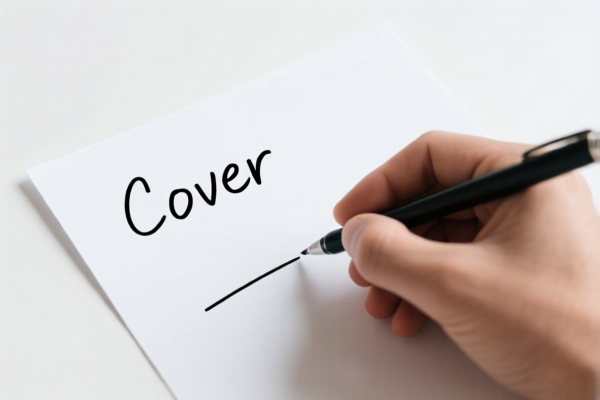
商品图片



AI分析
📓 Draft Book (Notebooks & Notepads for Office Use)
🌐 HS Code Reference & Customs Clearance Guide | 2026 Latest Tariff Analysis | Professional Level Strategy
📌 I. Product Definition and Classification: Do You Really Understand "Draft Books"?
A "Draft Book" (often referred to as a Notebook, Notepad, or Spiral Pad) is a fundamental stationery item used for writing, drafting, and recording information. In international trade, these are categorized under Chapter 48 (Paper and Paperboard), specifically within Heading 4820.
Key Distinctions: * Bound Notebooks/Draft Books (4820.10): Typically feature stitched, glued, or spiral binding. They have a defined cover and a block of pages. * Loose Leaf Pads/Notepads (4820.20): Often sold as single sheets or small stacks, sometimes with a cardboard backing, designed for quick notes. * Paper Sheets for Drafting (4820.90/4820.40): If the product is just loose sheets or unbound paper blocks intended specifically for drafting exercises, they may fall under different subheadings depending on the specific form.
⚠️ Key Distinction Point:
- If it has a cover and binding (spiral, glue, stitch) → Usually 4820.10 or 4820.20.
- If it is loose sheets or a simple notepad without complex binding → Usually 4820.20 or 4820.90.
- Note: All provided HS Codes in the source data have the same total tax rate, but accurate classification is still critical for compliance.
📦 II. HS Code Classification Details (2026 Latest Tariff Authority Comparison)
| HS Code | Product Description | Application Scenario | Binding/Format |
|---|---|---|---|
4820.10.20.60 |
Draft books belong to notebooks/recording items, material is paper | Standard school/office notebooks with covers | ✅ Bound |
4820.20.00.00 |
Draft books belong to exercise books/notepads or similar stationery | Simple notepads, sticky notes, loose-leaf pads | ✅/❌ Mixed |
4820.10.40.00 |
Draft paper belongs to paper stationery, form/use fits definition of registers/notebooks | Paper blocks for drafting, unbound but structured | ❌ Loose/Block |
4820.90.00.00 |
Draft paper belongs to stationery supplies, material is paper | General paper stationery not elsewhere specified | ❌ Loose/Various |
🔍 Key Reminder:
- All listed HS Codes fall under Chapter 48 (Paper and Paper Articles).
- The distinction between4820.10(Notebooks/Registers) and4820.20(Exercise Books/Notepads) depends on the binding method and intended use.
- Despite different codes, the total tax impact is identical in this specific trade context.
💰 III. 2026 Latest Tariff Rate Details (Including Surtaxes & Policy Surcharges)
✅ Applicable Country: United States (US)
✅ Country of Origin: China (CN)
✅ Effective Time: Includes subsequent imports (Policy Active)
🎯 1. All HS Codes: 4820.10.20.60, 4820.20.00.00, 4820.10.40.00, 4820.90.00.00
| Item | Content |
|---|---|
| Base Tariff Rate | 0.0% (ad valorem) |
| USITC Surcharge (Section 301) | +25.0% |
| Section 122 Tariff (IEEPA) | +10.0% |
| Total Tariff Rate | 35.0% |
| Tax Calculation | CIF Value × 35% |
| De Minimis Eligibility | ❌ Not Eligible (Deny De Minimis) |
| Legal Basis Path | USITC: Section 301 → IEEPA: Section 122 → HS Code |
📌 Explanation:
- The Base Rate is 0% because paper stationery generally enjoys low base tariffs.
- However, due to US-China trade tensions, a 25% Section 301 tariff is applied.
- An additional 10% Section 122 tariff (under the International Emergency Economic Powers Act) is levied on Chinese-origin paper products.
- Total Cost Impact: You must budget for 35% extra cost on top of the product value.
- No De Minimis Benefit: Small parcels (under $800) do not escape this tax. This is a critical pitfall for e-commerce sellers.
🛠️ IV. Customs Clearance Practical Advice (Battle-Proven Pitfall Avoidance)
✅ 1. Documentation Checklist (All Required)
| Document | Required | Description |
|---|---|---|
| ✅ Commercial Invoice | ✔️ | Must clearly state "Paper Notebook" or "Draft Book". |
| ✅ Packing List | ✔️ | Detail quantity, weight, and dimensions. |
| ✅ Product Description | ✔️ | Specify: "Paper Material", "Bound/Loose", "For Office Use". |
| ✅ Origin Certificate | ✔️ | Essential for proving CN origin (triggers the tax). |
| ✅ Brand/Logo Info | ✔️ | If branded, provide authorization letters to avoid IP issues. |
✅ 2. Declaration Tips (Key Mnemonics)
🔥 "Paper Stationery, CN Origin, 35% Tax, No Exemption!"
| Scenario | Correct Declaration | Wrong Practice |
|---|---|---|
| Bound Notebook | 4820.10.20.60 or 4820.10.40.00 |
Declaring as "Plastic Pen" → Misclassification Risk |
| Loose Notepad | 4820.20.00.00 or 4820.90.00.00 |
Declaring as "Textbook" → Different Chapter, Different Tax |
| Small Parcel | Declare full value | Trying to use De Minimis → Rejection + Penalty |
✅ 3. Special Cases Handling
| Situation | Handling Advice |
|---|---|
| Mixed Containers | If mixed with non-taxed items, declare separately to avoid blanket taxation errors. |
| Branded Goods | Ensure no trademark infringement. US Customs is strict on IP. |
| Recycled Paper | May require additional environmental compliance documents, though tax rate remains 35%. |
| E-commerce (B2C) | Do not rely on $800 de minimis. The 35% tax applies regardless of package value for CN origin. |
🌍 V. Global Market Comparison (2026 Latest)
| Country/Region | Recommended HS Code | Tariff (CN Origin) | Certification | Note |
|---|---|---|---|---|
| 🇺🇸 USA | 4820.20.00.00 (Common) |
35% (0% Base + 25% Sec 301 + 10% Sec 122) | None Specific | High Cost. No De Minimis. |
| 🇨🇳 China | 4820.20.00.00 |
0% - 5% | None | Low Entry Barrier |
| 🇪🇺 EU | 4820.10.00 |
0% - 2% | CE (if applicable) | No Surcharge |
| 🇬🇧 UK | 4820.10.00 |
0% - 2% | UKCA | Post-Brexit Stability |
| 🇯🇵 Japan | 4820.10.00 |
0% | JIS | Low Tax |
📌 Conclusion:
- The US market is the most expensive for Chinese paper stationery due to the 35% total tariff.
- Competitors in Vietnam, Thailand, or India may have 0% or lower tariffs due to FTA agreements.
- Strategy: Consider supply chain shifting or absorbing the cost into pricing.
📌 VI. Common Errors & Pitfalls (Lessons Learned)
❌ Error 1: Declaring Draft Books as "Books" (Chapter 49)
👉 Consequence: Misclassification. Chapter 49 is for printed books with text. Draft books are blank paper → Chapter 48.
👉 Result: Delayed Clearance, Potential Audit.
❌ Error 2: Ignoring Section 122 (10%)
👉 Consequence: Under-declaring tax.
👉 Result: Back taxes + Penalties + Possible Seizure.
❌ Error 3: Assuming De Minimis Applies to Paper
👉 Consequence: Shipping small samples without paying tax.
👉 Result: Package Seized or Returned. US Customs explicitly denies De Minimis for certain Chinese paper products under Section 301/122.
❌ Error 4: Vague Description "Stationery"
👉 Consequence: Customs officer cannot determine exact HS code.
👉 Result: Inspection Delay, Higher Administrative Costs.
✅ Correct Practice:
"Paper Notebook, 100 Pages, A5 Size, Spiral Bound, For Office Use, Model XYZ, Made in China"
🎯 VII. Conclusion: Professional Declaration, Cost Control, Efficiency!
🎯 Remember the Key Points:
🔹 "Paper from CN, US Market: 35% Tax, No De Minimis."
🔹 "Chapter 48, Not 49. Bindings Matter, But Tax Doesn't."
🔹 "Plan for the Surtax, or Lose Your Margin."
📌 Pro Tip:
If your draft books are originating from Vietnam, Malaysia, or Thailand, you may avoid the 25% Section 301 and 10% Section 122 tariffs.
Recommendation: Conduct a Supply Chain Audit. If possible, shift final assembly or sourcing to non-China countries to save 35% of product value.
📣 Immediate Action:
📞 Consult a Licensed Customs Broker + Provide Product Specs
🚀 Secure Your Supply Chain, Optimize Your Tax Liability, and Clear Customs Smoothly!
✨ Professional Clearance Starts with Precise Classification!
💼 Every Percent Saved is Profit Earned!
用户评价
关于 HS 编码归类
协调制度(HS)是由世界海关组织(WCO)制定的国际贸易商品分类标准。全球 200 多个国家采用 HS 系统作为海关关税、贸易统计和进出口监管的基础。
每个 HS 编码遵循以下层级结构:
- 章(2 位)——商品大类(例如:第 84 章:机器和机械设备)
- 品目(4 位)——章内的更具体分类
- 子目(6 位)——国际通用细分,所有 WCO 成员国统一使用
- 本国细分(8-10 位)——各国自行扩展的细分编码,如美国 HTSUS 10 位编码
正确的 HS 编码归类对于顺利通关、准确缴纳关税和遵守贸易法规至关重要。错误归类可能导致海关延误、多缴关税或罚款。
从CN进口到US时,适用的关税税率可能包括:
- 最惠国(MFN)税率——适用于 WTO 成员国的标准关税税率
- 普通税率——适用于无贸易协定国家
- 贸易救济关税——附加关税,如 301 条款(反倾销)、232 条款(国家安全)或反补贴税
本页内容仅供参考。如需正式归类,请咨询当地海关或持牌报关代理。