Draft Book
CN → US| HS Code | Tariff Rate | Origin | Destination | Doc |
|---|---|---|---|---|
| 4820102060 | 35.0% | CN | US | Official Doc |
| 4820200000 | 35.0% | CN | US | Official Doc |
| 4820104000 | 35.0% | CN | US | Official Doc |
| 4820900000 | 35.0% | CN | US | Official Doc |
Product Images
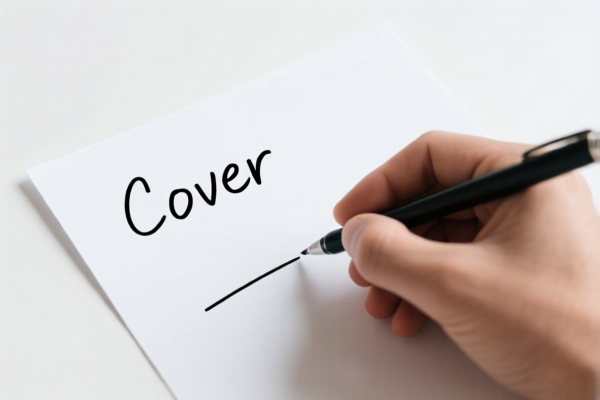



AI Analysis
📓 Draft Book (Notebooks & Notepads for Office Use)
🌐 HS Code Reference & Customs Clearance Guide | 2026 Latest Tariff Analysis | Professional Level Strategy
📌 I. Product Definition and Classification: Do You Really Understand "Draft Books"?
A "Draft Book" (often referred to as a Notebook, Notepad, or Spiral Pad) is a fundamental stationery item used for writing, drafting, and recording information. In international trade, these are categorized under Chapter 48 (Paper and Paperboard), specifically within Heading 4820.
Key Distinctions: * Bound Notebooks/Draft Books (4820.10): Typically feature stitched, glued, or spiral binding. They have a defined cover and a block of pages. * Loose Leaf Pads/Notepads (4820.20): Often sold as single sheets or small stacks, sometimes with a cardboard backing, designed for quick notes. * Paper Sheets for Drafting (4820.90/4820.40): If the product is just loose sheets or unbound paper blocks intended specifically for drafting exercises, they may fall under different subheadings depending on the specific form.
⚠️ Key Distinction Point:
- If it has a cover and binding (spiral, glue, stitch) → Usually 4820.10 or 4820.20.
- If it is loose sheets or a simple notepad without complex binding → Usually 4820.20 or 4820.90.
- Note: All provided HS Codes in the source data have the same total tax rate, but accurate classification is still critical for compliance.
📦 II. HS Code Classification Details (2026 Latest Tariff Authority Comparison)
| HS Code | Product Description | Application Scenario | Binding/Format |
|---|---|---|---|
4820.10.20.60 |
Draft books belong to notebooks/recording items, material is paper | Standard school/office notebooks with covers | ✅ Bound |
4820.20.00.00 |
Draft books belong to exercise books/notepads or similar stationery | Simple notepads, sticky notes, loose-leaf pads | ✅/❌ Mixed |
4820.10.40.00 |
Draft paper belongs to paper stationery, form/use fits definition of registers/notebooks | Paper blocks for drafting, unbound but structured | ❌ Loose/Block |
4820.90.00.00 |
Draft paper belongs to stationery supplies, material is paper | General paper stationery not elsewhere specified | ❌ Loose/Various |
🔍 Key Reminder:
- All listed HS Codes fall under Chapter 48 (Paper and Paper Articles).
- The distinction between4820.10(Notebooks/Registers) and4820.20(Exercise Books/Notepads) depends on the binding method and intended use.
- Despite different codes, the total tax impact is identical in this specific trade context.
💰 III. 2026 Latest Tariff Rate Details (Including Surtaxes & Policy Surcharges)
✅ Applicable Country: United States (US)
✅ Country of Origin: China (CN)
✅ Effective Time: Includes subsequent imports (Policy Active)
🎯 1. All HS Codes: 4820.10.20.60, 4820.20.00.00, 4820.10.40.00, 4820.90.00.00
| Item | Content |
|---|---|
| Base Tariff Rate | 0.0% (ad valorem) |
| USITC Surcharge (Section 301) | +25.0% |
| Section 122 Tariff (IEEPA) | +10.0% |
| Total Tariff Rate | 35.0% |
| Tax Calculation | CIF Value × 35% |
| De Minimis Eligibility | ❌ Not Eligible (Deny De Minimis) |
| Legal Basis Path | USITC: Section 301 → IEEPA: Section 122 → HS Code |
📌 Explanation:
- The Base Rate is 0% because paper stationery generally enjoys low base tariffs.
- However, due to US-China trade tensions, a 25% Section 301 tariff is applied.
- An additional 10% Section 122 tariff (under the International Emergency Economic Powers Act) is levied on Chinese-origin paper products.
- Total Cost Impact: You must budget for 35% extra cost on top of the product value.
- No De Minimis Benefit: Small parcels (under $800) do not escape this tax. This is a critical pitfall for e-commerce sellers.
🛠️ IV. Customs Clearance Practical Advice (Battle-Proven Pitfall Avoidance)
✅ 1. Documentation Checklist (All Required)
| Document | Required | Description |
|---|---|---|
| ✅ Commercial Invoice | ✔️ | Must clearly state "Paper Notebook" or "Draft Book". |
| ✅ Packing List | ✔️ | Detail quantity, weight, and dimensions. |
| ✅ Product Description | ✔️ | Specify: "Paper Material", "Bound/Loose", "For Office Use". |
| ✅ Origin Certificate | ✔️ | Essential for proving CN origin (triggers the tax). |
| ✅ Brand/Logo Info | ✔️ | If branded, provide authorization letters to avoid IP issues. |
✅ 2. Declaration Tips (Key Mnemonics)
🔥 "Paper Stationery, CN Origin, 35% Tax, No Exemption!"
| Scenario | Correct Declaration | Wrong Practice |
|---|---|---|
| Bound Notebook | 4820.10.20.60 or 4820.10.40.00 |
Declaring as "Plastic Pen" → Misclassification Risk |
| Loose Notepad | 4820.20.00.00 or 4820.90.00.00 |
Declaring as "Textbook" → Different Chapter, Different Tax |
| Small Parcel | Declare full value | Trying to use De Minimis → Rejection + Penalty |
✅ 3. Special Cases Handling
| Situation | Handling Advice |
|---|---|
| Mixed Containers | If mixed with non-taxed items, declare separately to avoid blanket taxation errors. |
| Branded Goods | Ensure no trademark infringement. US Customs is strict on IP. |
| Recycled Paper | May require additional environmental compliance documents, though tax rate remains 35%. |
| E-commerce (B2C) | Do not rely on $800 de minimis. The 35% tax applies regardless of package value for CN origin. |
🌍 V. Global Market Comparison (2026 Latest)
| Country/Region | Recommended HS Code | Tariff (CN Origin) | Certification | Note |
|---|---|---|---|---|
| 🇺🇸 USA | 4820.20.00.00 (Common) |
35% (0% Base + 25% Sec 301 + 10% Sec 122) | None Specific | High Cost. No De Minimis. |
| 🇨🇳 China | 4820.20.00.00 |
0% - 5% | None | Low Entry Barrier |
| 🇪🇺 EU | 4820.10.00 |
0% - 2% | CE (if applicable) | No Surcharge |
| 🇬🇧 UK | 4820.10.00 |
0% - 2% | UKCA | Post-Brexit Stability |
| 🇯🇵 Japan | 4820.10.00 |
0% | JIS | Low Tax |
📌 Conclusion:
- The US market is the most expensive for Chinese paper stationery due to the 35% total tariff.
- Competitors in Vietnam, Thailand, or India may have 0% or lower tariffs due to FTA agreements.
- Strategy: Consider supply chain shifting or absorbing the cost into pricing.
📌 VI. Common Errors & Pitfalls (Lessons Learned)
❌ Error 1: Declaring Draft Books as "Books" (Chapter 49)
👉 Consequence: Misclassification. Chapter 49 is for printed books with text. Draft books are blank paper → Chapter 48.
👉 Result: Delayed Clearance, Potential Audit.
❌ Error 2: Ignoring Section 122 (10%)
👉 Consequence: Under-declaring tax.
👉 Result: Back taxes + Penalties + Possible Seizure.
❌ Error 3: Assuming De Minimis Applies to Paper
👉 Consequence: Shipping small samples without paying tax.
👉 Result: Package Seized or Returned. US Customs explicitly denies De Minimis for certain Chinese paper products under Section 301/122.
❌ Error 4: Vague Description "Stationery"
👉 Consequence: Customs officer cannot determine exact HS code.
👉 Result: Inspection Delay, Higher Administrative Costs.
✅ Correct Practice:
"Paper Notebook, 100 Pages, A5 Size, Spiral Bound, For Office Use, Model XYZ, Made in China"
🎯 VII. Conclusion: Professional Declaration, Cost Control, Efficiency!
🎯 Remember the Key Points:
🔹 "Paper from CN, US Market: 35% Tax, No De Minimis."
🔹 "Chapter 48, Not 49. Bindings Matter, But Tax Doesn't."
🔹 "Plan for the Surtax, or Lose Your Margin."
📌 Pro Tip:
If your draft books are originating from Vietnam, Malaysia, or Thailand, you may avoid the 25% Section 301 and 10% Section 122 tariffs.
Recommendation: Conduct a Supply Chain Audit. If possible, shift final assembly or sourcing to non-China countries to save 35% of product value.
📣 Immediate Action:
📞 Consult a Licensed Customs Broker + Provide Product Specs
🚀 Secure Your Supply Chain, Optimize Your Tax Liability, and Clear Customs Smoothly!
✨ Professional Clearance Starts with Precise Classification!
💼 Every Percent Saved is Profit Earned!
Customer Reviews
About HS Code Classification
The Harmonized System (HS) is an internationally standardized nomenclature developed by the World Customs Organization (WCO) to classify traded products. Over 200 countries use the HS system as the basis for customs tariffs, trade statistics, and import/export regulations.
Each HS code follows a hierarchical structure:
- Chapter (2 digits) — Broad category of goods (e.g., Chapter 84: Machinery and Mechanical Appliances)
- Heading (4 digits) — More specific grouping within the chapter
- Subheading (6 digits) — Internationally standardized breakdown, used by all WCO member countries
- National subdivisions (8-10 digits) — Country-specific extensions for further classification, such as US HTSUS 10-digit codes
Correct HS code classification is essential for smooth customs clearance, accurate duty payment, and compliance with trade regulations. Misclassification can lead to customs delays, overpayment of duties, or penalties.
When importing from CN to US, the applicable tariff rates may include:
- Most-Favored-Nation (MFN) rate — The standard duty rate applied to WTO members
- General rate — Applied to countries without trade agreements
- Trade remedy duties — Additional tariffs such as Section 301 (anti-dumping), Section 232 (national security), or countervailing duties
The information provided on this page is for reference purposes only. For official classification, please consult with your local customs authority or a licensed customs broker.