Dyed Raccoon Fur Belt with Claws
CN → US| HS编码 | 关税税率 | 原产国 | 目的国 | 文档 |
|---|---|---|---|---|
| 4302194540 | 37.2% | CN | US | 官方文档 |
| 4302209000 | 36.7% | CN | US | 官方文档 |
| 4302194540 | 37.2% | CN | US | 官方文档 |
商品图片
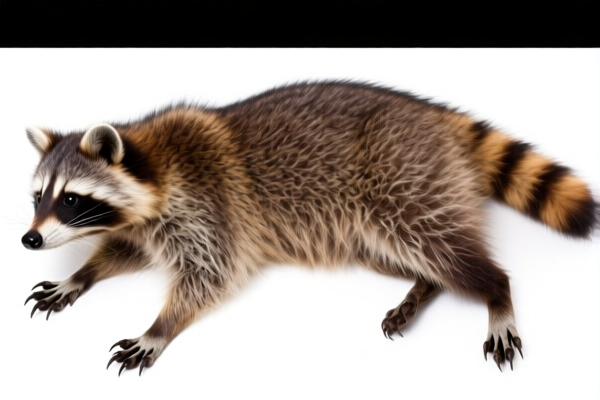
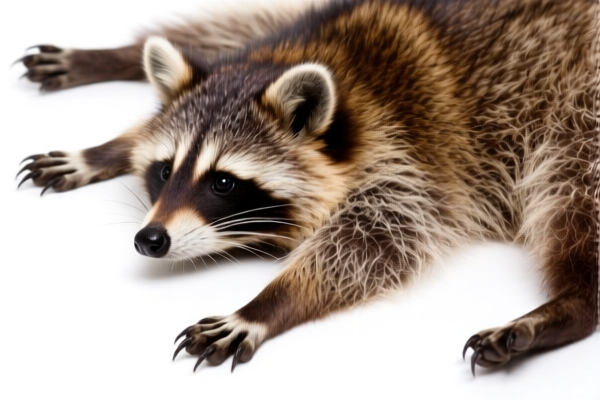
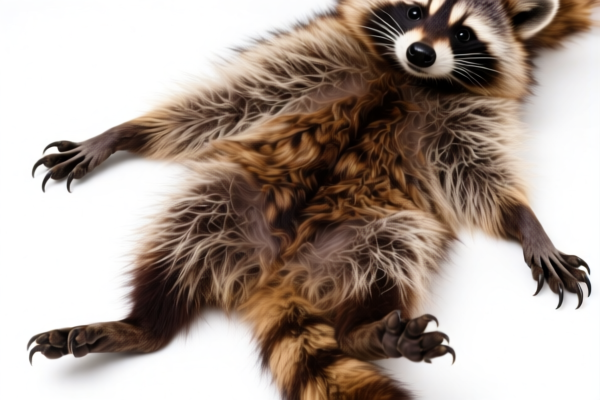
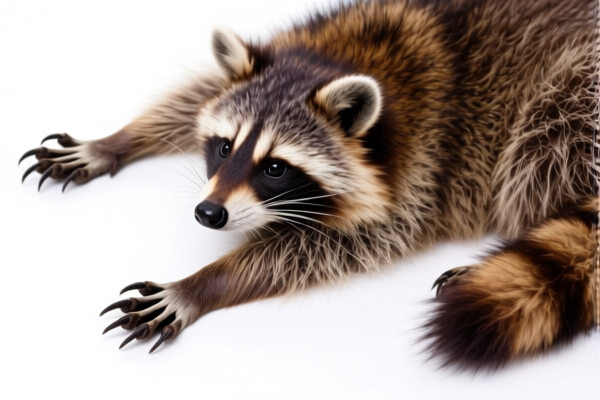
AI分析
🦝 Dyed Raccoon Fur Belt with Claws | HS Code Classification & Customs Clearance Guide
🌐 HS Code Reference & Clearance Strategy | 2026 Latest Tariff Analysis | Professional Compliance Guide
📌 I. Product Definition & Classification: Is It a Belt or a Cut Skin?
Dyed Raccoon Fur Belt with Claws is a highly specific textile/fur product often confused in customs declarations due to its dual nature: it is shaped like a "belt" (a wearable accessory) but materially classified as "prepared fur skins" (Section XI/XXI).
In international trade, shape does not dictate the HS Code for fur. Function and material preparation do.
⚠️ Key Distinction:
- If it is a whole skin (head-to-tail or main body) with claws/paws attached, even if cut into a strip shape, it falls under Chapter 43 (Prepared Fur Skins).
- It is NOT classified under Heading 4203 (Articles of Apparel and Clothing Accessories) because the primary value and identity come from the fur skin itself, not the sewing/assembly.
- Crucial Detail: The presence of claws and the dyed status confirms it is a processed fur skin, not a raw hide.
📦 II. HS Code Classification Details (2026 Latest Tariff Authority)
Based on the provided data, there are two primary classifications depending on the exact cut and documentation. Note: Both codes trigger high US tariffs due to Section 301 and IEEPA provisions.
| HS Code | Product Description | Key Classification Criteria | Total Tax Rate |
|---|---|---|---|
4302.19.45.40 |
Dyed Raccoon Fur Skin with Claws (Whole/Strip) | Material: Raccoon. State: Dyed. Form: Whole skin or strip with claws. Matches "Dyed raccoon fur skin" description. | 37.2% |
4302.20.90.00 |
Dyed Raccoon Fur Skins (Pieces/Chops with Claws) | Material: Raccoon. Form: Includes claws. Explicitly noted as "dyed." May be interpreted as "pieces/chops" if cut into smaller segments. | 36.7% |
🔍 Critical Analysis:
- Code4302.19.45.40is likely the most accurate for a "Belt" if it is cut from a whole skin but retains the integrity of a single piece with claws. The description "Whole Skin/With Claws" aligns best with a belt made from one raccoon hide.
- Code4302.20.90.00applies if the "belt" is made from multiple chops/pieces of raccoon fur stitched together, or if customs interprets the "belt" shape as "pieces" rather than "whole skins."
- Tax Difference: The difference is 0.5% (37.2% vs 36.7%), but the legal risk of misclassification is high.
💰 III. 2026 Latest Tariff Rate Breakdown (US Imports from China)
✅ Applicable Country: United States (US)
✅ Origin: China (CN)
✅ Effective Date: November 10, 2025 (and subsequent imports)
🎯 1. HS Code 4302.19.45.40 — Dyed Raccoon Fur Skin (With Claws)
| Component | Rate | Basis |
|---|---|---|
| Base Tariff | 2.2% | Standard MFN rate for prepared fur skins |
| Section 301 Tariff | 25.0% | Additional duty on Chinese goods (List 4B/Specific Fur Items) |
| IEEPA Tariff (Section 122) | 10.0% | Specific provision for certain Chinese imports |
| TOTAL RATE | 37.2% | Ad Valorem |
| De Minimis Exemption | ❌ NOT APPLICABLE | Fur products are explicitly excluded from Section 321 (de minimis) benefits |
📌 Explanation:
- "Base Tariff (2.2%)": Standard duty for processed fur.
- "Section 301 (25%)": The largest component. Raccoon fur is often targeted under trade restrictions.
- "Section 122 (10%)": A specific additional levy applicable to this category.
- No De Minimis: Do NOT attempt to ship via USPS/UPS小包 under $800. It will be seized or forced to pay 37.2% + penalties.
🎯 2. HS Code 4302.20.90.00 — Dyed Raccoon Fur Pieces/Chops
| Component | Rate | Basis |
|---|---|---|
| Base Tariff | 1.7% | Standard MFN rate for other prepared fur skins |
| Section 301 Tariff | 25.0% | Additional duty on Chinese goods |
| IEEPA Tariff (Section 122) | 10.0% | Specific provision for certain Chinese imports |
| TOTAL RATE | 36.7% | Ad Valorem |
| De Minimis Exemption | ❌ NOT APPLICABLE | Same exclusion as above |
📌 Note:
- Slightly lower base rate (1.7% vs 2.2%) due to classification as "pieces" rather than "whole skins," but the 301 and IEEPA duties remain identical.
🛠️ IV. Customs Clearance Practical Advice (Pitfall Avoidance)
✅ 1. Required Documentation (Non-Negotiable)
| Document | Required? | Purpose |
|---|---|---|
| Commercial Invoice | ✔️ | Must state: "Dyed Raccoon Fur Skin with Claws, HS Code 4302.19.45.40" |
| Product Photos | ✔️ | Clear images showing fur texture, dye color, and claw attachment |
| Material Composition | ✔️ | 100% Raccoon Fur (No other materials) |
| Origin Certificate | ✔️ | Proof of origin (China) for 301 duty assessment |
| CITES Permit | ⚠️ Check | If raccoon is a protected species in your target market, CITES may be required. Note: Most raccoon species are CITES Appendix II. Ensure legal sourcing. |
🚨 Critical Warning:
- Do NOT declare as "Fashion Belt" or "Clothing Accessory" (HS 4203) → This is a false declaration. Customs will reclassify it to HS 4302 and apply 37.2% + fines.
- Do NOT declare as "Raw Fur" → It is Dyed, so it must be declared as Prepared Fur.
✅ 2. Declaration Strategy (Key Phrases)
🔥 "Declare as FUR SKIN, not as BELT. Mention CLAWS and DYED."
| Scenario | Correct Declaration | Incorrect Declaration |
|---|---|---|
| Product Type | "Dyed Raccoon Fur Skin with Claws" | "Raccoon Fur Belt" |
| HS Code | 4302.19.45.40 |
4203.29.20 (Accessories) |
| Tariff Risk | 37.2% (Known, Legal) | 0% (Illegal, Penalty Risk) |
| Customs Reaction | Smooth clearance | Seizure, Audit, Fine |
✅ 3. Special Cases & Handling
| Situation | Advice |
|---|---|
| Small Package (De Minimis) | DO NOT USE. Raccoon fur is excluded from $800 exemption. Use formal entry. |
| Multiple Pieces Stitched | Consider HS 4302.20.90.00 if the belt is made from multiple chops. |
| CITES Compliance | Verify if the specific raccoon species requires CITES export/import permits. Failure to provide CITES docs = Seizure. |
| Dye Color | Ensure the invoice matches the actual color (e.g., "Brown Dyed Raccoon"). Discrepancies cause delays. |
🌍 V. Global Market Comparison (2026)
| Country | HS Code | Tariff Rate | Notes |
|---|---|---|---|
| 🇺🇸 USA | 4302.19.45.40 |
37.2% | High due to 301 + IEEPA. No de minimis. |
| 🇨🇳 China | 4302.19.45.40 |
2.2% | Low import duty for raw material entry. |
| 🇪🇺 EU | 4302.19.45.40 |
6.5% | Standard duty. CITES restrictions apply strictly. |
| 🇬🇧 UK | 4302.19.45.40 |
6.5% | Post-Brexit tariff schedule. CITES required. |
📌 Conclusion:
- USA is the most challenging market for raccoon fur due to 37.2% total duty.
- CITES compliance is universal for fur products from protected species.
- Misclassification is the biggest risk. Always declare as "Fur Skin," not "Accessory."
📌 VI. Common Mistakes & Blood Lessons
❌ Mistake 1: Declaring as "Belt" (HS 4203)
👉 Consequence: Customs reclassifies to HS 4302 → 37.2% tax + 200% penalty + seizure.
❌ Mistake 2: Using De Minimis ($800 exemption)
👉 Consequence: Denied entry. Fur is explicitly excluded. Package returned or destroyed.
❌ Mistake 3: Ignoring CITES
👉 Consequence: Seizure by CBP/Wildlife Enforcement. Fines up to $25,000 per violation.
❌ Mistake 4: Saying "With Claws" but declaring "Prepared Skin"
👉 Consequence: Clarification request → Delay in clearance + storage fees.
✅ Correct Action:
"Dyed Raccoon Fur Skin with Claws, HS Code 4302.19.45.40, Value: $XXX, Origin: China, CITES Permit Attached."
🎯 VII. Conclusion: Professional Clearance, Cost Control
🎯 Remember the Rule:
🔹 "Fur is Skin, not Clothing. Declare as Fur. Pay 37.2%. Avoid CITES violations."
🔹 "No De Minimis for Fur. Formal Entry Only."
📌 Pro Tip:
- For US imports, calculate 37.2% of CIF value as landed cost.
- If the product value is low, consider consolidating shipments to absorb the duty efficiently.
- Always pre-clear with a licensed customs broker if the value exceeds $2,500.
📣 Act Now:
📞 Contact a Customs Broker + Attach CITES Docs + Declare Correctly
🚀 Avoid Seizure, Pay Only What’s Due, Clear Smoothly!
✨ Professional Classification Starts with Accuracy!
💼 Every Dollar Saved is a Dollar Earned!
用户评价
关于 HS 编码归类
协调制度(HS)是由世界海关组织(WCO)制定的国际贸易商品分类标准。全球 200 多个国家采用 HS 系统作为海关关税、贸易统计和进出口监管的基础。
每个 HS 编码遵循以下层级结构:
- 章(2 位)——商品大类(例如:第 84 章:机器和机械设备)
- 品目(4 位)——章内的更具体分类
- 子目(6 位)——国际通用细分,所有 WCO 成员国统一使用
- 本国细分(8-10 位)——各国自行扩展的细分编码,如美国 HTSUS 10 位编码
正确的 HS 编码归类对于顺利通关、准确缴纳关税和遵守贸易法规至关重要。错误归类可能导致海关延误、多缴关税或罚款。
从CN进口到US时,适用的关税税率可能包括:
- 最惠国(MFN)税率——适用于 WTO 成员国的标准关税税率
- 普通税率——适用于无贸易协定国家
- 贸易救济关税——附加关税,如 301 条款(反倾销)、232 条款(国家安全)或反补贴税
本页内容仅供参考。如需正式归类,请咨询当地海关或持牌报关代理。