Dyed Raccoon Fur Belt with Claws
CN → US| HS Code | Tariff Rate | Origin | Destination | Doc |
|---|---|---|---|---|
| 4302194540 | 37.2% | CN | US | Official Doc |
| 4302209000 | 36.7% | CN | US | Official Doc |
| 4302194540 | 37.2% | CN | US | Official Doc |
Product Images
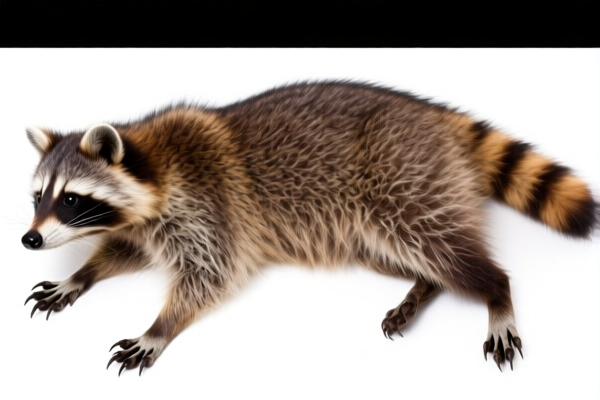
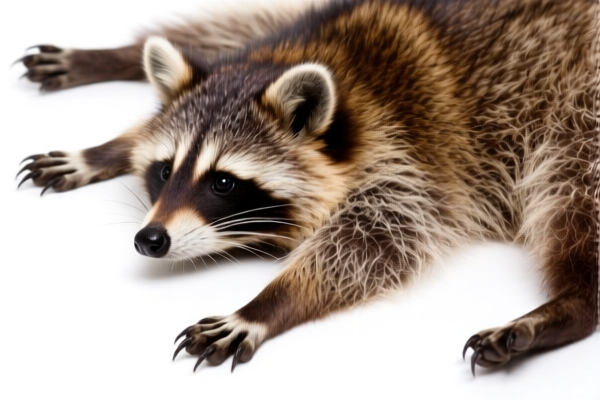
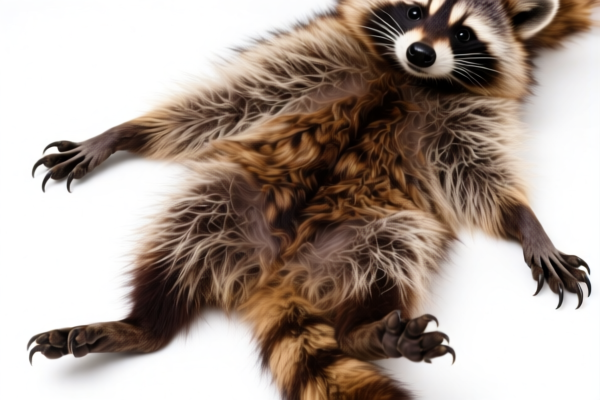
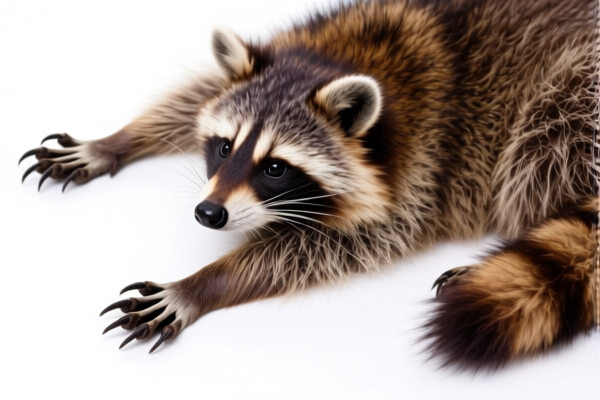
AI Analysis
🦝 Dyed Raccoon Fur Belt with Claws | HS Code Classification & Customs Clearance Guide
🌐 HS Code Reference & Clearance Strategy | 2026 Latest Tariff Analysis | Professional Compliance Guide
📌 I. Product Definition & Classification: Is It a Belt or a Cut Skin?
Dyed Raccoon Fur Belt with Claws is a highly specific textile/fur product often confused in customs declarations due to its dual nature: it is shaped like a "belt" (a wearable accessory) but materially classified as "prepared fur skins" (Section XI/XXI).
In international trade, shape does not dictate the HS Code for fur. Function and material preparation do.
⚠️ Key Distinction:
- If it is a whole skin (head-to-tail or main body) with claws/paws attached, even if cut into a strip shape, it falls under Chapter 43 (Prepared Fur Skins).
- It is NOT classified under Heading 4203 (Articles of Apparel and Clothing Accessories) because the primary value and identity come from the fur skin itself, not the sewing/assembly.
- Crucial Detail: The presence of claws and the dyed status confirms it is a processed fur skin, not a raw hide.
📦 II. HS Code Classification Details (2026 Latest Tariff Authority)
Based on the provided data, there are two primary classifications depending on the exact cut and documentation. Note: Both codes trigger high US tariffs due to Section 301 and IEEPA provisions.
| HS Code | Product Description | Key Classification Criteria | Total Tax Rate |
|---|---|---|---|
4302.19.45.40 |
Dyed Raccoon Fur Skin with Claws (Whole/Strip) | Material: Raccoon. State: Dyed. Form: Whole skin or strip with claws. Matches "Dyed raccoon fur skin" description. | 37.2% |
4302.20.90.00 |
Dyed Raccoon Fur Skins (Pieces/Chops with Claws) | Material: Raccoon. Form: Includes claws. Explicitly noted as "dyed." May be interpreted as "pieces/chops" if cut into smaller segments. | 36.7% |
🔍 Critical Analysis:
- Code4302.19.45.40is likely the most accurate for a "Belt" if it is cut from a whole skin but retains the integrity of a single piece with claws. The description "Whole Skin/With Claws" aligns best with a belt made from one raccoon hide.
- Code4302.20.90.00applies if the "belt" is made from multiple chops/pieces of raccoon fur stitched together, or if customs interprets the "belt" shape as "pieces" rather than "whole skins."
- Tax Difference: The difference is 0.5% (37.2% vs 36.7%), but the legal risk of misclassification is high.
💰 III. 2026 Latest Tariff Rate Breakdown (US Imports from China)
✅ Applicable Country: United States (US)
✅ Origin: China (CN)
✅ Effective Date: November 10, 2025 (and subsequent imports)
🎯 1. HS Code 4302.19.45.40 — Dyed Raccoon Fur Skin (With Claws)
| Component | Rate | Basis |
|---|---|---|
| Base Tariff | 2.2% | Standard MFN rate for prepared fur skins |
| Section 301 Tariff | 25.0% | Additional duty on Chinese goods (List 4B/Specific Fur Items) |
| IEEPA Tariff (Section 122) | 10.0% | Specific provision for certain Chinese imports |
| TOTAL RATE | 37.2% | Ad Valorem |
| De Minimis Exemption | ❌ NOT APPLICABLE | Fur products are explicitly excluded from Section 321 (de minimis) benefits |
📌 Explanation:
- "Base Tariff (2.2%)": Standard duty for processed fur.
- "Section 301 (25%)": The largest component. Raccoon fur is often targeted under trade restrictions.
- "Section 122 (10%)": A specific additional levy applicable to this category.
- No De Minimis: Do NOT attempt to ship via USPS/UPS小包 under $800. It will be seized or forced to pay 37.2% + penalties.
🎯 2. HS Code 4302.20.90.00 — Dyed Raccoon Fur Pieces/Chops
| Component | Rate | Basis |
|---|---|---|
| Base Tariff | 1.7% | Standard MFN rate for other prepared fur skins |
| Section 301 Tariff | 25.0% | Additional duty on Chinese goods |
| IEEPA Tariff (Section 122) | 10.0% | Specific provision for certain Chinese imports |
| TOTAL RATE | 36.7% | Ad Valorem |
| De Minimis Exemption | ❌ NOT APPLICABLE | Same exclusion as above |
📌 Note:
- Slightly lower base rate (1.7% vs 2.2%) due to classification as "pieces" rather than "whole skins," but the 301 and IEEPA duties remain identical.
🛠️ IV. Customs Clearance Practical Advice (Pitfall Avoidance)
✅ 1. Required Documentation (Non-Negotiable)
| Document | Required? | Purpose |
|---|---|---|
| Commercial Invoice | ✔️ | Must state: "Dyed Raccoon Fur Skin with Claws, HS Code 4302.19.45.40" |
| Product Photos | ✔️ | Clear images showing fur texture, dye color, and claw attachment |
| Material Composition | ✔️ | 100% Raccoon Fur (No other materials) |
| Origin Certificate | ✔️ | Proof of origin (China) for 301 duty assessment |
| CITES Permit | ⚠️ Check | If raccoon is a protected species in your target market, CITES may be required. Note: Most raccoon species are CITES Appendix II. Ensure legal sourcing. |
🚨 Critical Warning:
- Do NOT declare as "Fashion Belt" or "Clothing Accessory" (HS 4203) → This is a false declaration. Customs will reclassify it to HS 4302 and apply 37.2% + fines.
- Do NOT declare as "Raw Fur" → It is Dyed, so it must be declared as Prepared Fur.
✅ 2. Declaration Strategy (Key Phrases)
🔥 "Declare as FUR SKIN, not as BELT. Mention CLAWS and DYED."
| Scenario | Correct Declaration | Incorrect Declaration |
|---|---|---|
| Product Type | "Dyed Raccoon Fur Skin with Claws" | "Raccoon Fur Belt" |
| HS Code | 4302.19.45.40 |
4203.29.20 (Accessories) |
| Tariff Risk | 37.2% (Known, Legal) | 0% (Illegal, Penalty Risk) |
| Customs Reaction | Smooth clearance | Seizure, Audit, Fine |
✅ 3. Special Cases & Handling
| Situation | Advice |
|---|---|
| Small Package (De Minimis) | DO NOT USE. Raccoon fur is excluded from $800 exemption. Use formal entry. |
| Multiple Pieces Stitched | Consider HS 4302.20.90.00 if the belt is made from multiple chops. |
| CITES Compliance | Verify if the specific raccoon species requires CITES export/import permits. Failure to provide CITES docs = Seizure. |
| Dye Color | Ensure the invoice matches the actual color (e.g., "Brown Dyed Raccoon"). Discrepancies cause delays. |
🌍 V. Global Market Comparison (2026)
| Country | HS Code | Tariff Rate | Notes |
|---|---|---|---|
| 🇺🇸 USA | 4302.19.45.40 |
37.2% | High due to 301 + IEEPA. No de minimis. |
| 🇨🇳 China | 4302.19.45.40 |
2.2% | Low import duty for raw material entry. |
| 🇪🇺 EU | 4302.19.45.40 |
6.5% | Standard duty. CITES restrictions apply strictly. |
| 🇬🇧 UK | 4302.19.45.40 |
6.5% | Post-Brexit tariff schedule. CITES required. |
📌 Conclusion:
- USA is the most challenging market for raccoon fur due to 37.2% total duty.
- CITES compliance is universal for fur products from protected species.
- Misclassification is the biggest risk. Always declare as "Fur Skin," not "Accessory."
📌 VI. Common Mistakes & Blood Lessons
❌ Mistake 1: Declaring as "Belt" (HS 4203)
👉 Consequence: Customs reclassifies to HS 4302 → 37.2% tax + 200% penalty + seizure.
❌ Mistake 2: Using De Minimis ($800 exemption)
👉 Consequence: Denied entry. Fur is explicitly excluded. Package returned or destroyed.
❌ Mistake 3: Ignoring CITES
👉 Consequence: Seizure by CBP/Wildlife Enforcement. Fines up to $25,000 per violation.
❌ Mistake 4: Saying "With Claws" but declaring "Prepared Skin"
👉 Consequence: Clarification request → Delay in clearance + storage fees.
✅ Correct Action:
"Dyed Raccoon Fur Skin with Claws, HS Code 4302.19.45.40, Value: $XXX, Origin: China, CITES Permit Attached."
🎯 VII. Conclusion: Professional Clearance, Cost Control
🎯 Remember the Rule:
🔹 "Fur is Skin, not Clothing. Declare as Fur. Pay 37.2%. Avoid CITES violations."
🔹 "No De Minimis for Fur. Formal Entry Only."
📌 Pro Tip:
- For US imports, calculate 37.2% of CIF value as landed cost.
- If the product value is low, consider consolidating shipments to absorb the duty efficiently.
- Always pre-clear with a licensed customs broker if the value exceeds $2,500.
📣 Act Now:
📞 Contact a Customs Broker + Attach CITES Docs + Declare Correctly
🚀 Avoid Seizure, Pay Only What’s Due, Clear Smoothly!
✨ Professional Classification Starts with Accuracy!
💼 Every Dollar Saved is a Dollar Earned!
Customer Reviews
About HS Code Classification
The Harmonized System (HS) is an internationally standardized nomenclature developed by the World Customs Organization (WCO) to classify traded products. Over 200 countries use the HS system as the basis for customs tariffs, trade statistics, and import/export regulations.
Each HS code follows a hierarchical structure:
- Chapter (2 digits) — Broad category of goods (e.g., Chapter 84: Machinery and Mechanical Appliances)
- Heading (4 digits) — More specific grouping within the chapter
- Subheading (6 digits) — Internationally standardized breakdown, used by all WCO member countries
- National subdivisions (8-10 digits) — Country-specific extensions for further classification, such as US HTSUS 10-digit codes
Correct HS code classification is essential for smooth customs clearance, accurate duty payment, and compliance with trade regulations. Misclassification can lead to customs delays, overpayment of duties, or penalties.
When importing from CN to US, the applicable tariff rates may include:
- Most-Favored-Nation (MFN) rate — The standard duty rate applied to WTO members
- General rate — Applied to countries without trade agreements
- Trade remedy duties — Additional tariffs such as Section 301 (anti-dumping), Section 232 (national security), or countervailing duties
The information provided on this page is for reference purposes only. For official classification, please consult with your local customs authority or a licensed customs broker.