Dyed Sable Furskins
CN → US| HS编码 | 关税税率 | 原产国 | 目的国 | 文档 |
|---|---|---|---|---|
| 4301100020 | 17.5% | CN | US | 官方文档 |
| 4303100030 | 39.0% | CN | US | 官方文档 |
| 4303900000 | 35.0% | CN | US | 官方文档 |
| 4302209000 | 36.7% | CN | US | 官方文档 |
| 4301100010 | 17.5% | CN | US | 官方文档 |
| 4302110020 | 37.1% | CN | US | 官方文档 |
商品图片
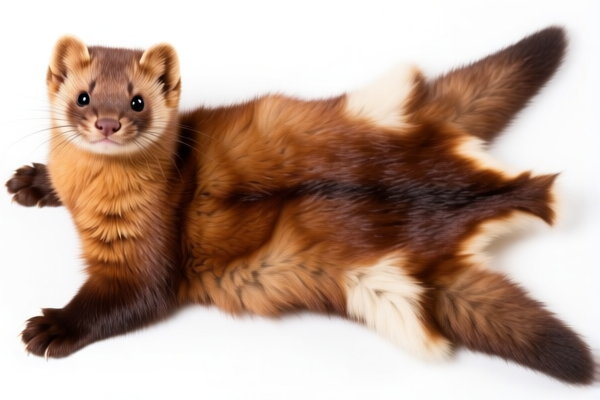
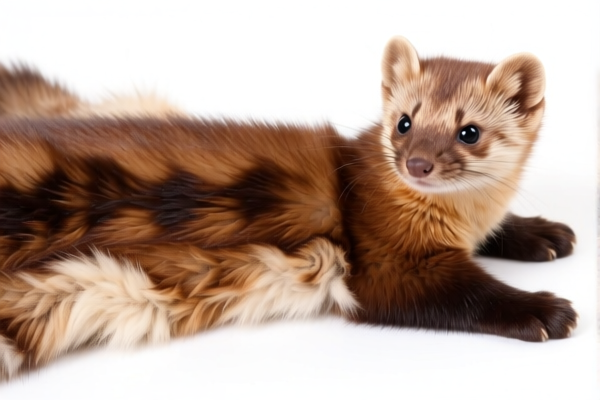


AI分析
🦊 Dyed Sable Furskins: The Ultimate Classification & Clearance Guide
🌐 HS Code Reference & Customs Clearance Guide | 2026 Latest Tariff Analysis | Professional Strategy for Fur Imports
📌 I. Product Definition: What Are "Dyed Sable Furskins"?
In the international trade of luxury materials, "Dyed Sable Furskins" (unassembled) refer to raw, dyed fur pelts of sable (or sable-like species) that have not yet been cut, sewn, or assembled into final garments. They are considered intermediate goods in the apparel and accessory manufacturing chain.
⚠️ Key Distinction:
- Raw/Unglazed vs. Dyed: Undyed fur falls under different codes. "Dyed" triggers specific subheadings.
- Assembled vs. Unassembled: "Unassembled" means they are whole pelts, not cut into patches or slices.
- Material: Specifically "Sable" (often classified under "Other sable" in broader HS codes if not explicitly "Marmot" or "Fox").
📦 II. HS Code Classification Matrix (2026 Latest Tariff Data)
Based on the provided data, here are the 6 possible HS Codes for "Dyed Sable Furskins (Unassembled)," ranging from low-tariff raw material classifications to high-tariff processed intermediates.
| HS Code | Product Description | Tax Category | Total Tax Rate | Tax Breakdown (CN Origin → US) |
|---|---|---|---|---|
| 4301.10.00.20 | Unassembled Dyed Sable Furskins | Raw Material / Slice Category | 17.5% | Base: 0.0% + Section 301: 7.5% + 122 Clause: 10% |
| 4301.10.00.10 | Unassembled Dyed Sable Furskins | Raw Skin Category | 17.5% | Base: 0.0% + Section 301: 7.5% + 122 Clause: 10% |
| 4302.20.90.00 | Unassembled Dyed Sable Furskins | Tanning/Dyed Intermediate | 36.7% | Base: 1.7% + Section 301: 25.0% + 122 Clause: 10% |
| 4303.10.00.30 | Unassembled Dyed Sable Furskins | Garment Accessory Intermediate | 39.0% | Base: 4.0% + Section 301: 25.0% + 122 Clause: 10% |
| 4302.11.00.20 | Unassembled Dyed Sable (Other) | Other Dyed Sable | 37.1% | Base: 2.1% + Section 301: 25.0% + 122 Clause: 10% |
| 4303.90.00.00 | Unassembled Dyed Sable Furskins | General Fur Product Intermediate | 35.0% | Base: 0.0% + Section 301: 25.0% + 122 Clause: 10% |
🔍 Critical Insight:
The difference in tax rates ranges from 17.5% to 39.0%. This 21.5 percentage point gap is driven entirely by how customs interprets the "state of processing" (raw vs. tanned vs. garment-ready).
- Codes 4301.xx are typically viewed as primary raw materials.
- Codes 4302.xx and 4303.xx are viewed as processed intermediates or garment components.
💰 III. 2026 Tariff Rate Breakdown (Detailed Analysis)
✅ Applicable Country: United States (US)
✅ Origin: China (CN)
✅ Effective Time: Current rates include Section 301 (122 Clause) tariffs.
🎯 1. The Low-Tariff Cluster: 4301.10.00.10 & 4301.10.00.20 (17.5% Total)
| Item | Content |
|---|---|
| Base Tariff | 0.0% (ad valorem) |
| Section 301 Tariff | +7.5% |
| 122 Clause Tariff | +10.0% |
| Total Effective Rate | 17.5% |
| Tax Calculation | CIF Value × 17.5% |
| De Minimis Eligibility | ❌ No (Furskins are generally excluded from de minimis) |
| Legal Basis | HS: 4301.10.00 → Section 301: 7.5% → 122 Clause: 10% |
📌 Interpretation:
- These codes classify the furskins as "sable fur, unworked or simply dressed" (4301).
- 4301.10.00.10 is defined as "Original sable fur."
- 4301.10.00.20 is defined as "Sable fur, sliced/chopped."
- Why 7.5%? This is the reduced Section 301 rate for certain raw animal products.
- Why 10%? This is the specific "122 Clause" tariff targeting Chinese fur products.
🎯 2. The Mid-Tariff Cluster: 4303.90.00.00 (35.0% Total)
| Item | Content |
|---|---|
| Base Tariff | 0.0% |
| Section 301 Tariff | +25.0% |
| 122 Clause Tariff | +10.0% |
| Total Effective Rate | 35.0% |
| Tax Calculation | CIF Value × 35.0% |
| De Minimis Eligibility | ❌ No |
| Legal Basis | HS: 4303.90.00 → Section 301: 25.0% → 122 Clause: 10% |
📌 Interpretation:
- Code 4303 covers "Articles of fur skin."
- 4303.90.00.00 is a residual category for fur articles not elsewhere specified.
- Customs may classify unassembled dyed skins here if they are deemed "partially processed" or "ready for garment making" rather than raw skins.
- The 25% Section 301 tariff is the standard rate for most manufactured/processed goods from China.
🎯 3. The High-Tariff Cluster: 4302.xx & 4303.10 (36.7% - 39.0% Total)
🎯 3A. 4302.20.90.00 — Dyed Fur Skins (Tanned) (36.7%)
- Base: 1.7%
- Section 301: 25.0%
- 122 Clause: 10.0%
- Logic: Code 4302 covers "Tanned or dressed fur skins." If the "dyed" process is considered part of tanning/dressing, this code applies. The higher base tariff (1.7%) pushes the total higher than 4303.90.
🎯 3B. 4303.10.00.30 — Garment Parts (39.0%)
- Base: 4.0%
- Section 301: 25.0%
- 122 Clause: 10.0%
- Logic: This code is for "Sable fur skins, dressed, for garment parts." If customs determines the skins are finished ready-to-sew (e.g., sorted, graded, and dyed for immediate garment production), they may classify them as garment components, triggering the highest base tariff (4.0%).
🎯 3C. 4302.11.00.20 — Other Dyed Sable (37.1%)
- Base: 2.1%
- Section 301: 25.0%
- 122 Clause: 10.0%
- Logic: Specific for "Other sable fur, dyed." The base tariff (2.1%) reflects the specific nature of sable, but the 25% Section 301 still applies.
🛠️ IV. Customs Clearance Practical Advice (Pitfall Avoidance)
✅ 1. Documentation Checklist (Non-Negotiable)
| Document | Required? | Description |
|---|---|---|
| ✅ Commercial Invoice | ✔️ | Must clearly state "Unassembled Dyed Sable Furskins" and specify "Raw/Dyed" status. |
| ✅ Packing List | ✔️ | Detail the number of pelts, total weight, and dimensions. |
| ✅ Product Photos | ✔️ | Clear images showing the fur grain, backing, and dye color. |
| ✅ Tanning/Dyeing Certificate | ✔️ | Proof of processing method (raw vs. tanned vs. dyed) to support HS code selection. |
| ✅ CITES Permit | ✔️ | CRITICAL: Sable is often a protected species. Import requires CITES Import Permit and Export Permit from origin. |
| ✅ Species Verification | ✔️ | Scientific name (Mustela sibirica) must be declared to avoid misclassification penalties. |
✅ 2. Declaration Strategy (Key Tips)
🔥 "Define State, Define Species, Avoid Ambiguity!"
| Scenario | Correct Declaration | Risk if Misclassified |
|---|---|---|
| Raw/Dyed Pelts | "Unassembled Dyed Sable Furskins, Raw Material" → 4301.10.00.10 |
Avoids 25% Section 301 if classified as raw (17.5% vs 35-39%). |
| Tanned/Dyed Pelts | "Tanned and Dyed Sable Fur Skins" → 4302.20.90.00 |
If declared as raw, customs may audit and reclassify, leading to back taxes. |
| Garment-Ready Skins | "Dressed Sable Fur Skins for Garment Production" → 4303.10.00.30 |
High tax (39%), but accurate if skins are pre-sorted/graded. |
| Mixed Species | Must declare each species separately | Mixed declarations lead to delays and potential fraud allegations. |
✅ 3. Special Cases
| Situation | Handling Advice |
|---|---|
| CITES Compliance | Sable is listed in CITES Appendix II (in many jurisdictions). Ensure you have valid CITES documents, or goods will be seized. |
| 122 Clause Tariff | This is a specific tariff on Chinese fur products. It applies regardless of HS code in the 43xx chapter. No evasion possible without changing origin. |
| Section 301 Exclusions | Check if the specific HS code has an exclusion number. Most fur products do not have exclusions. |
| Valuation | Customs will verify the value against global sable fur auction prices. Under-invoicing will trigger audits. |
🌍 V. Global Market Comparison (2026)
| Country/Region | Recommended HS Code | Tariff (China Origin) | Certification | Notes |
|---|---|---|---|---|
| 🇺🇸 USA | 4301.10.00.10 (Best) |
17.5% | CITES + 122 Clause | Highest risk of audit; ensure "raw" status is proven. |
| 🇨🇳 China | 4301.10.00.10 |
5-10% | CITES | No Section 301; lower entry barrier. |
| 🇪🇺 EU | 4301.10.00 |
0-6% | CITES + EPR | No 122 Clause; but strict CITES enforcement. |
| 🇬🇧 UK | 4301.10.00 |
0-6% | CITES | Post-Brexit rules; check UK Global Tariff. |
| 🇦🇺 Australia | 4301.10.00 |
5% | CITES | No major trade wars on fur. |
📌 Conclusion:
- The USA is the most expensive market due to the 122 Clause + Section 301.
- Strategy: Aim for HS Code 4301.10.00.10 (Raw/Unassembled) to pay only 17.5% instead of 35-39%.
- Evidence: Provide photos and certificates showing the skins are not processed into garment parts.
📌 VI. Common Mistakes & Pitfalls (Lessons Learned)
❌ Mistake 1: Declaring "Dyed Sable Skins" as "Garment Parts" (4303.10)
👉 Result: Pay 39.0% tax instead of 17.5%.
👉 Fix: Declare as "Unassembled Raw/Dyed Skins."
❌ Mistake 2: Ignoring CITES Permits
👉 Result: Goods seized by CBP/FWS.
👉 Fix: Obtain CITES permits before shipment.
❌ Mistake 3: Mislabeling "Sable" as "Mink" or "Fox"
👉 Result: Severe fines for misclassification. Sable has unique tariffs and protections.
👉 Fix: Use accurate scientific names and species verification.
❌ Mistake 4: Assuming "De Minimis" Applies
👉 Result: Customs rejects package for lacking duties. Fur is rarely de minimis.
👉 Fix: Pay duties upfront or use a bonded warehouse.
✅ Correct Approach:
"Unassembled Dyed Sable Furskins (Mustela sibirica), Raw Material, Not Cut, CITES Certified, HTS 4301.10.00.10"
🎯 VII. Conclusion: Professional Classification, Cost Optimization!
🎯 Remember the Rule:
🔹 "Raw = 17.5%, Tanned = 36-39%. Define as Raw to Save 20%+."
🔹 "CITES is Mandatory, 122 Clause is Unavoidable."
📌 Tips:
- If your furs are lightly dyed but structurally raw, argue for 4301.
- If they are tanned and dyed, accept 4302/4303 rates but ensure CITES compliance.
- Always apply for a Pre-Ruling from CBP if the shipment value is high.
📣 Immediate Action:
📞 Consult a licensed customs broker + Verify CITES status + Prepare detailed product specs
🚀 Optimize your HS Code to 4301.10.00.10 for maximum savings!
✨ Professional Clearance, Precision Starts with Classification!
💼 Every Dollar of Duty Saved is Profit Earned!
用户评价
关于 HS 编码归类
协调制度(HS)是由世界海关组织(WCO)制定的国际贸易商品分类标准。全球 200 多个国家采用 HS 系统作为海关关税、贸易统计和进出口监管的基础。
每个 HS 编码遵循以下层级结构:
- 章(2 位)——商品大类(例如:第 84 章:机器和机械设备)
- 品目(4 位)——章内的更具体分类
- 子目(6 位)——国际通用细分,所有 WCO 成员国统一使用
- 本国细分(8-10 位)——各国自行扩展的细分编码,如美国 HTSUS 10 位编码
正确的 HS 编码归类对于顺利通关、准确缴纳关税和遵守贸易法规至关重要。错误归类可能导致海关延误、多缴关税或罚款。
从CN进口到US时,适用的关税税率可能包括:
- 最惠国(MFN)税率——适用于 WTO 成员国的标准关税税率
- 普通税率——适用于无贸易协定国家
- 贸易救济关税——附加关税,如 301 条款(反倾销)、232 条款(国家安全)或反补贴税
本页内容仅供参考。如需正式归类,请咨询当地海关或持牌报关代理。