Dyed Sable Furskins
CN → US| HS Code | Tariff Rate | Origin | Destination | Doc |
|---|---|---|---|---|
| 4301100020 | 17.5% | CN | US | Official Doc |
| 4303100030 | 39.0% | CN | US | Official Doc |
| 4303900000 | 35.0% | CN | US | Official Doc |
| 4302209000 | 36.7% | CN | US | Official Doc |
| 4301100010 | 17.5% | CN | US | Official Doc |
| 4302110020 | 37.1% | CN | US | Official Doc |
Product Images
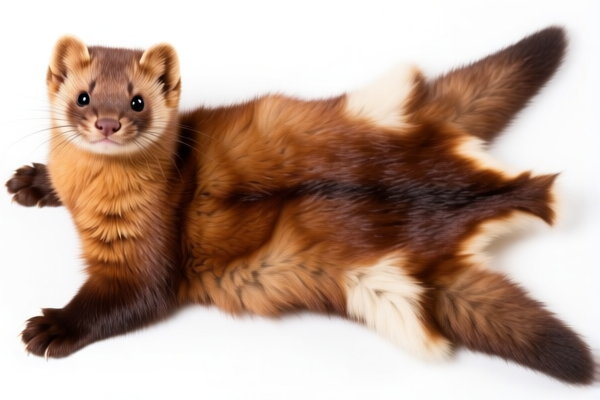
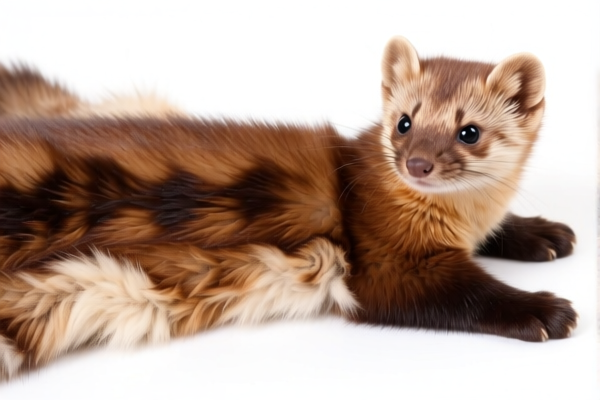


AI Analysis
🦊 Dyed Sable Furskins: The Ultimate Classification & Clearance Guide
🌐 HS Code Reference & Customs Clearance Guide | 2026 Latest Tariff Analysis | Professional Strategy for Fur Imports
📌 I. Product Definition: What Are "Dyed Sable Furskins"?
In the international trade of luxury materials, "Dyed Sable Furskins" (unassembled) refer to raw, dyed fur pelts of sable (or sable-like species) that have not yet been cut, sewn, or assembled into final garments. They are considered intermediate goods in the apparel and accessory manufacturing chain.
⚠️ Key Distinction:
- Raw/Unglazed vs. Dyed: Undyed fur falls under different codes. "Dyed" triggers specific subheadings.
- Assembled vs. Unassembled: "Unassembled" means they are whole pelts, not cut into patches or slices.
- Material: Specifically "Sable" (often classified under "Other sable" in broader HS codes if not explicitly "Marmot" or "Fox").
📦 II. HS Code Classification Matrix (2026 Latest Tariff Data)
Based on the provided data, here are the 6 possible HS Codes for "Dyed Sable Furskins (Unassembled)," ranging from low-tariff raw material classifications to high-tariff processed intermediates.
| HS Code | Product Description | Tax Category | Total Tax Rate | Tax Breakdown (CN Origin → US) |
|---|---|---|---|---|
| 4301.10.00.20 | Unassembled Dyed Sable Furskins | Raw Material / Slice Category | 17.5% | Base: 0.0% + Section 301: 7.5% + 122 Clause: 10% |
| 4301.10.00.10 | Unassembled Dyed Sable Furskins | Raw Skin Category | 17.5% | Base: 0.0% + Section 301: 7.5% + 122 Clause: 10% |
| 4302.20.90.00 | Unassembled Dyed Sable Furskins | Tanning/Dyed Intermediate | 36.7% | Base: 1.7% + Section 301: 25.0% + 122 Clause: 10% |
| 4303.10.00.30 | Unassembled Dyed Sable Furskins | Garment Accessory Intermediate | 39.0% | Base: 4.0% + Section 301: 25.0% + 122 Clause: 10% |
| 4302.11.00.20 | Unassembled Dyed Sable (Other) | Other Dyed Sable | 37.1% | Base: 2.1% + Section 301: 25.0% + 122 Clause: 10% |
| 4303.90.00.00 | Unassembled Dyed Sable Furskins | General Fur Product Intermediate | 35.0% | Base: 0.0% + Section 301: 25.0% + 122 Clause: 10% |
🔍 Critical Insight:
The difference in tax rates ranges from 17.5% to 39.0%. This 21.5 percentage point gap is driven entirely by how customs interprets the "state of processing" (raw vs. tanned vs. garment-ready).
- Codes 4301.xx are typically viewed as primary raw materials.
- Codes 4302.xx and 4303.xx are viewed as processed intermediates or garment components.
💰 III. 2026 Tariff Rate Breakdown (Detailed Analysis)
✅ Applicable Country: United States (US)
✅ Origin: China (CN)
✅ Effective Time: Current rates include Section 301 (122 Clause) tariffs.
🎯 1. The Low-Tariff Cluster: 4301.10.00.10 & 4301.10.00.20 (17.5% Total)
| Item | Content |
|---|---|
| Base Tariff | 0.0% (ad valorem) |
| Section 301 Tariff | +7.5% |
| 122 Clause Tariff | +10.0% |
| Total Effective Rate | 17.5% |
| Tax Calculation | CIF Value × 17.5% |
| De Minimis Eligibility | ❌ No (Furskins are generally excluded from de minimis) |
| Legal Basis | HS: 4301.10.00 → Section 301: 7.5% → 122 Clause: 10% |
📌 Interpretation:
- These codes classify the furskins as "sable fur, unworked or simply dressed" (4301).
- 4301.10.00.10 is defined as "Original sable fur."
- 4301.10.00.20 is defined as "Sable fur, sliced/chopped."
- Why 7.5%? This is the reduced Section 301 rate for certain raw animal products.
- Why 10%? This is the specific "122 Clause" tariff targeting Chinese fur products.
🎯 2. The Mid-Tariff Cluster: 4303.90.00.00 (35.0% Total)
| Item | Content |
|---|---|
| Base Tariff | 0.0% |
| Section 301 Tariff | +25.0% |
| 122 Clause Tariff | +10.0% |
| Total Effective Rate | 35.0% |
| Tax Calculation | CIF Value × 35.0% |
| De Minimis Eligibility | ❌ No |
| Legal Basis | HS: 4303.90.00 → Section 301: 25.0% → 122 Clause: 10% |
📌 Interpretation:
- Code 4303 covers "Articles of fur skin."
- 4303.90.00.00 is a residual category for fur articles not elsewhere specified.
- Customs may classify unassembled dyed skins here if they are deemed "partially processed" or "ready for garment making" rather than raw skins.
- The 25% Section 301 tariff is the standard rate for most manufactured/processed goods from China.
🎯 3. The High-Tariff Cluster: 4302.xx & 4303.10 (36.7% - 39.0% Total)
🎯 3A. 4302.20.90.00 — Dyed Fur Skins (Tanned) (36.7%)
- Base: 1.7%
- Section 301: 25.0%
- 122 Clause: 10.0%
- Logic: Code 4302 covers "Tanned or dressed fur skins." If the "dyed" process is considered part of tanning/dressing, this code applies. The higher base tariff (1.7%) pushes the total higher than 4303.90.
🎯 3B. 4303.10.00.30 — Garment Parts (39.0%)
- Base: 4.0%
- Section 301: 25.0%
- 122 Clause: 10.0%
- Logic: This code is for "Sable fur skins, dressed, for garment parts." If customs determines the skins are finished ready-to-sew (e.g., sorted, graded, and dyed for immediate garment production), they may classify them as garment components, triggering the highest base tariff (4.0%).
🎯 3C. 4302.11.00.20 — Other Dyed Sable (37.1%)
- Base: 2.1%
- Section 301: 25.0%
- 122 Clause: 10.0%
- Logic: Specific for "Other sable fur, dyed." The base tariff (2.1%) reflects the specific nature of sable, but the 25% Section 301 still applies.
🛠️ IV. Customs Clearance Practical Advice (Pitfall Avoidance)
✅ 1. Documentation Checklist (Non-Negotiable)
| Document | Required? | Description |
|---|---|---|
| ✅ Commercial Invoice | ✔️ | Must clearly state "Unassembled Dyed Sable Furskins" and specify "Raw/Dyed" status. |
| ✅ Packing List | ✔️ | Detail the number of pelts, total weight, and dimensions. |
| ✅ Product Photos | ✔️ | Clear images showing the fur grain, backing, and dye color. |
| ✅ Tanning/Dyeing Certificate | ✔️ | Proof of processing method (raw vs. tanned vs. dyed) to support HS code selection. |
| ✅ CITES Permit | ✔️ | CRITICAL: Sable is often a protected species. Import requires CITES Import Permit and Export Permit from origin. |
| ✅ Species Verification | ✔️ | Scientific name (Mustela sibirica) must be declared to avoid misclassification penalties. |
✅ 2. Declaration Strategy (Key Tips)
🔥 "Define State, Define Species, Avoid Ambiguity!"
| Scenario | Correct Declaration | Risk if Misclassified |
|---|---|---|
| Raw/Dyed Pelts | "Unassembled Dyed Sable Furskins, Raw Material" → 4301.10.00.10 |
Avoids 25% Section 301 if classified as raw (17.5% vs 35-39%). |
| Tanned/Dyed Pelts | "Tanned and Dyed Sable Fur Skins" → 4302.20.90.00 |
If declared as raw, customs may audit and reclassify, leading to back taxes. |
| Garment-Ready Skins | "Dressed Sable Fur Skins for Garment Production" → 4303.10.00.30 |
High tax (39%), but accurate if skins are pre-sorted/graded. |
| Mixed Species | Must declare each species separately | Mixed declarations lead to delays and potential fraud allegations. |
✅ 3. Special Cases
| Situation | Handling Advice |
|---|---|
| CITES Compliance | Sable is listed in CITES Appendix II (in many jurisdictions). Ensure you have valid CITES documents, or goods will be seized. |
| 122 Clause Tariff | This is a specific tariff on Chinese fur products. It applies regardless of HS code in the 43xx chapter. No evasion possible without changing origin. |
| Section 301 Exclusions | Check if the specific HS code has an exclusion number. Most fur products do not have exclusions. |
| Valuation | Customs will verify the value against global sable fur auction prices. Under-invoicing will trigger audits. |
🌍 V. Global Market Comparison (2026)
| Country/Region | Recommended HS Code | Tariff (China Origin) | Certification | Notes |
|---|---|---|---|---|
| 🇺🇸 USA | 4301.10.00.10 (Best) |
17.5% | CITES + 122 Clause | Highest risk of audit; ensure "raw" status is proven. |
| 🇨🇳 China | 4301.10.00.10 |
5-10% | CITES | No Section 301; lower entry barrier. |
| 🇪🇺 EU | 4301.10.00 |
0-6% | CITES + EPR | No 122 Clause; but strict CITES enforcement. |
| 🇬🇧 UK | 4301.10.00 |
0-6% | CITES | Post-Brexit rules; check UK Global Tariff. |
| 🇦🇺 Australia | 4301.10.00 |
5% | CITES | No major trade wars on fur. |
📌 Conclusion:
- The USA is the most expensive market due to the 122 Clause + Section 301.
- Strategy: Aim for HS Code 4301.10.00.10 (Raw/Unassembled) to pay only 17.5% instead of 35-39%.
- Evidence: Provide photos and certificates showing the skins are not processed into garment parts.
📌 VI. Common Mistakes & Pitfalls (Lessons Learned)
❌ Mistake 1: Declaring "Dyed Sable Skins" as "Garment Parts" (4303.10)
👉 Result: Pay 39.0% tax instead of 17.5%.
👉 Fix: Declare as "Unassembled Raw/Dyed Skins."
❌ Mistake 2: Ignoring CITES Permits
👉 Result: Goods seized by CBP/FWS.
👉 Fix: Obtain CITES permits before shipment.
❌ Mistake 3: Mislabeling "Sable" as "Mink" or "Fox"
👉 Result: Severe fines for misclassification. Sable has unique tariffs and protections.
👉 Fix: Use accurate scientific names and species verification.
❌ Mistake 4: Assuming "De Minimis" Applies
👉 Result: Customs rejects package for lacking duties. Fur is rarely de minimis.
👉 Fix: Pay duties upfront or use a bonded warehouse.
✅ Correct Approach:
"Unassembled Dyed Sable Furskins (Mustela sibirica), Raw Material, Not Cut, CITES Certified, HTS 4301.10.00.10"
🎯 VII. Conclusion: Professional Classification, Cost Optimization!
🎯 Remember the Rule:
🔹 "Raw = 17.5%, Tanned = 36-39%. Define as Raw to Save 20%+."
🔹 "CITES is Mandatory, 122 Clause is Unavoidable."
📌 Tips:
- If your furs are lightly dyed but structurally raw, argue for 4301.
- If they are tanned and dyed, accept 4302/4303 rates but ensure CITES compliance.
- Always apply for a Pre-Ruling from CBP if the shipment value is high.
📣 Immediate Action:
📞 Consult a licensed customs broker + Verify CITES status + Prepare detailed product specs
🚀 Optimize your HS Code to 4301.10.00.10 for maximum savings!
✨ Professional Clearance, Precision Starts with Classification!
💼 Every Dollar of Duty Saved is Profit Earned!
Customer Reviews
About HS Code Classification
The Harmonized System (HS) is an internationally standardized nomenclature developed by the World Customs Organization (WCO) to classify traded products. Over 200 countries use the HS system as the basis for customs tariffs, trade statistics, and import/export regulations.
Each HS code follows a hierarchical structure:
- Chapter (2 digits) — Broad category of goods (e.g., Chapter 84: Machinery and Mechanical Appliances)
- Heading (4 digits) — More specific grouping within the chapter
- Subheading (6 digits) — Internationally standardized breakdown, used by all WCO member countries
- National subdivisions (8-10 digits) — Country-specific extensions for further classification, such as US HTSUS 10-digit codes
Correct HS code classification is essential for smooth customs clearance, accurate duty payment, and compliance with trade regulations. Misclassification can lead to customs delays, overpayment of duties, or penalties.
When importing from CN to US, the applicable tariff rates may include:
- Most-Favored-Nation (MFN) rate — The standard duty rate applied to WTO members
- General rate — Applied to countries without trade agreements
- Trade remedy duties — Additional tariffs such as Section 301 (anti-dumping), Section 232 (national security), or countervailing duties
The information provided on this page is for reference purposes only. For official classification, please consult with your local customs authority or a licensed customs broker.