E bike Battery
CN → US| HS编码 | 关税税率 | 原产国 | 目的国 | 文档 |
|---|---|---|---|---|
| 8714998000 | 27.5% | CN | US | 官方文档 |
| 8507600010 | 20.9% | CN | US | 官方文档 |
| 8507204000 | 38.5% | CN | US | 官方文档 |
| 8714998000 | 27.5% | CN | US | 官方文档 |
| 8507600010 | 20.9% | CN | US | 官方文档 |
商品图片
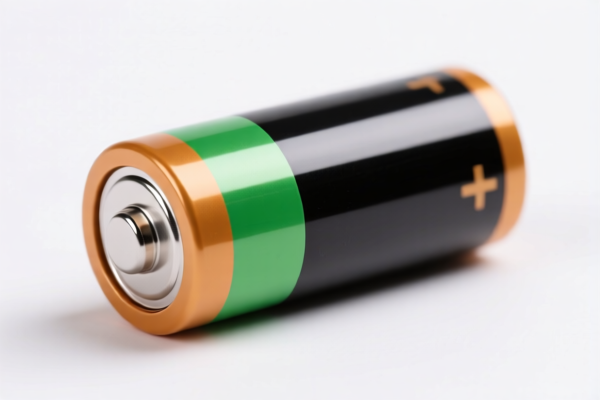
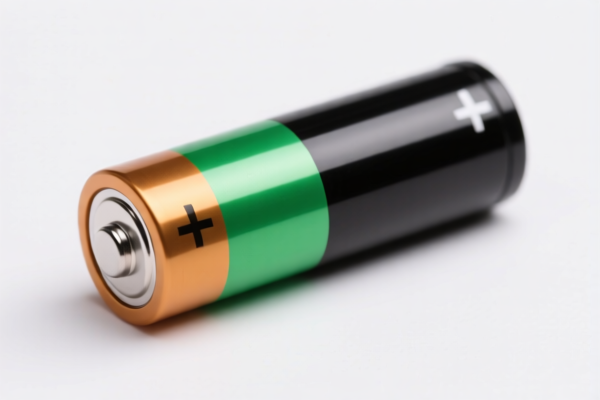

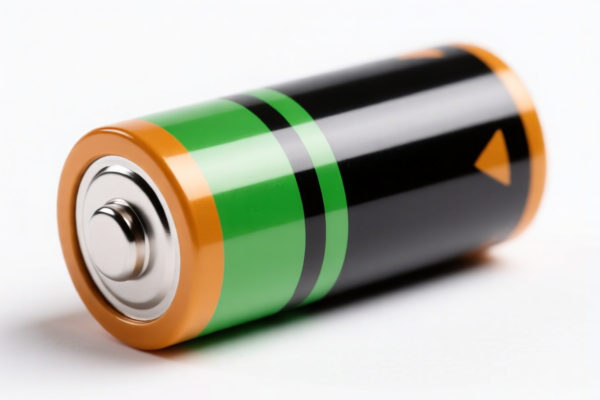
AI分析
🔋 E-Bike Battery (Electric Vehicle Batteries)
🌐 HS Code Reference & Customs Clearance Guide | 2026 Latest Tariff Analysis | Strategic Compliance Strategy
📌 I. Product Definition & Classification: Do You Really Understand "E-Bike Batteries"?
Electric bicycle batteries are the core power source for electric two-wheelers. In international trade, they are primarily categorized by their chemical composition (Lithium-ion vs. Lead-acid) and their function as a principal power source for vehicles.
Lithium-ion Batteries: Lightweight, high energy density, increasingly standard in modern e-bikes.
Lead-acid Batteries: Heavier, lower cost, traditional power source for many e-bikes.
⚠️ Key Distinction Point:
- If classified as Principal Power Source for Vehicles, Lithium batteries typically fall under 8507.60.00.10.
- If classified as Principal Power Source for Vehicles, Lead-acid batteries typically fall under 8507.20.40.00.
- If classified as Parts/Accessories (generic or material-conflicted), they may fall under 8714.99.80.00.
📦 II. HS Code Classification Details (2026 Latest Tariff Authority Comparison)
| HS Code | Product Description | Application Scenario | Material/Type |
|---|---|---|---|
8507.60.00.10 |
Electric Vehicle Battery, Lithium-ion, matched as the principal power source for electric vehicles | Modern e-bikes, high-performance scooters | ✅ Lithium-ion |
8507.20.40.00 |
Electric Vehicle Battery, Lead-acid, matched as the principal power source for electric vehicles | Traditional e-bikes, utility scooters | ✅ Lead-acid |
8714.99.80.00 |
Parts and Accessories of Vehicles (General Catch-all) | E-bike batteries where material classification is ambiguous or treated as generic vehicle parts | ✅ Li/Pb/Acid |
🔍 Key Reminder:
- Lithium-ion batteries designed as the main power source should ideally be classified under 8507.60.00.10 to potentially access lower base duties, but are subject to specific trade restrictions.
- Lead-acid batteries as main power sources fall under 8507.20.40.00, but carry higher "Section 301" surcharges.
- 8714.99.80.00 is often used as a fallback for "parts" but carries a higher base duty (10%) compared to battery-specific codes (3.4-3.5%).
💰 III. 2026 Latest Tariff Rate Breakdown (Including Surcharge & Policy Add-ons)
✅ Applicable Country: United States (US)
✅ Origin: China (CN)
✅ Effective Time: Current as of 2026
🎯 1. 8507.60.00.10 —— Lithium-ion Battery (Principal Power Source)
| Item | Content |
|---|---|
| Base Duty Rate | 3.4% |
| Section 301 Surcharge | +7.5% |
| Section 122 Tariff | +10% |
| Total Duty Rate | 20.9% |
| Tax Calculation | CIF Value × 20.9% |
| De Minimis Eligibility | ❌ Not Eligible (Subject to strict scrutiny) |
| Legal Basis Path | Section 301: 75% → Section 122: 10% → HTSUS: 8507.60.00.10 |
📌 Explanation:
- "Section 301 Surcharge 7.5%": Part of the broader US trade restrictions on Chinese goods.
- "Section 122 Tariff 10%": Imposed under the International Emergency Economic Powers Act (IEEPA) for specific items.
- Total 20.9% is the most favorable rate among the options, but applies only to Lithium-ion batteries designated as the principal power source.
🎯 2. 8507.20.40.00 —— Lead-acid Battery (Principal Power Source)
| Item | Content |
|---|---|
| Base Duty Rate | 3.5% |
| Section 301 Surcharge | +25.0% |
| Section 122 Tariff | +10% |
| Total Duty Rate | 38.5% |
| Tax Calculation | CIF Value × 38.5% |
| De Minimis Eligibility | ❌ Not Eligible |
| Legal Basis Path | Section 301: 25% → Section 122: 10% → HTSUS: 8507.20.40.00 |
📌 Note:
- Despite a similar base duty (3.5%), the Section 301 surcharge is 25%, leading to a significantly higher total rate.
- Lead-acid batteries face heavier punitive tariffs compared to their Lithium counterparts in this specific classification.
🎯 3. 8714.99.80.00 —— Parts and Accessories of Vehicles (Catch-all)
| Item | Content |
|---|---|
| Base Duty Rate | 10.0% |
| Section 301 Surcharge | +7.5% |
| Section 122 Tariff | +10% |
| Total Duty Rate | 27.5% |
| Tax Calculation | CIF Value × 27.5% |
| De Minimis Eligibility | ❌ Not Eligible |
| Legal Basis Path | Section 301: 75% → Section 122: 10% → HTSUS: 8714.99.80.00 |
📌 Note:
- This code applies if the battery is classified as a "part" rather than a "battery for vehicles," or if material specifications do not fit 8507.
- The base duty is 10%, which is higher than the battery-specific codes (3.4-3.5%), making the total rate higher than Lithium-ion but lower than Lead-acid in this specific scenario.
🛠️ IV. Customs Clearance Practical Advice (Real-World Pitfall Avoidance Guide)
✅ 1. Required Documentation Checklist (No Exceptions)
| Document | Must Provide | Explanation |
|---|---|---|
| ✅ Product Specification Sheet | ✔️ | Must explicitly state: "Lithium-ion" or "Lead-acid," Voltage, Capacity (Ah/Wh). |
| ✅ Material Composition Report | ✔️ | Proves the chemical nature (Li vs. Pb) to justify HS Code 8507 vs. 8714. |
| ✅ Battery Safety Certificate | ✔️ | UN38.3 Test Summary is mandatory for Lithium-ion batteries. |
| ✅ Commercial Invoice | ✔️ | Must describe the item as "E-Bike Battery, Lithium-ion, for Vehicle Power," not just "Battery." |
| ✅ Declaration of Principal Power Source | ✔️ | Explicitly state if it is the "principal power source" to qualify for 8507 codes. |
| ✅ Packing List | ✔️ | Include packaging details to show proper handling for hazardous materials (if applicable). |
✅ 2. Declaration Tips (Key Mantra)
🔥 "Match Material, Match Function, Avoid 'Parts' Trap!"
| Situation | Correct Declaration | Wrong Practice |
|---|---|---|
| Lithium-ion, Main Power Source | 8507.60.00.10 (20.9%) |
Misdeclaring as "Parts" (8714) → 27.5% (Higher!) |
| Lead-acid, Main Power Source | 8507.20.40.00 (38.5%) |
Misdeclaring as "Parts" → 27.5% (Lower, but risky if audited) |
| Ambiguous/Accessory Battery | 8714.99.80.00 (27.5%) |
Misdeclaring as "Battery" → Risk of penalty for wrong material |
✅ 3. Special Case Handling
| Situation | Handling Advice |
|---|---|
| Lithium vs. Lead-Acid | Ensure the invoice and spec sheet clearly distinguish between Li-ion and Lead-acid. Misclassification leads to large duty differences (20.9% vs 38.5%). |
| "Parts" Classification Risk | If the battery is not the main power source (e.g., auxiliary), it may correctly fall under 8714. However, for most e-bikes, the battery is the main power source, so 8507 is preferred. |
| Safety Certification | Without UN38.3 (for Li-ion), customs may detain the shipment. Ensure certification is on file. |
🌍 V. Global Main Market Clearance Comparison (2026 Latest)
| Country/Region | Recommended HS Code | Duty Rate (CN Origin) | Certification Requirements | Remarks |
|---|---|---|---|---|
| 🇺🇸 USA | 8507.60.00.10 |
20.9% | UN38.3 + MSDS | Highest duty for Lead-acid (38.5%). Lithium is more competitive. |
| 🇨🇳 China | 8507.60.00.00 |
~10-15% | CCC | No Section 301/122 surcharges. |
| 🇪🇺 EU | 8507.60.00 |
0% (if under quota) | CE + UN38.3 | Low duty, but strict environmental regulations. |
| 🇬🇧 UK | 8507.60.00 |
0% | UKCA | Post-Brexit standards apply. |
📌 Conclusion:
- USA is the most complex market due to high surcharges (Section 301 & 122).
- Lithium-ion batteries (8507.60) are significantly more tax-efficient than Lead-acid (8507.20) in the US.
- Misclassifying as "Parts" (8714) is risky and often more expensive than the correct Lithium classification.
📌 VI. Common Errors & Pitfall Guide (Blood-and-Tears Lessons)
❌ Error 1: Declaring Lithium-ion batteries as "Parts and Accessories" (8714)
👉 Consequence: Higher duty (27.5% vs 20.9%). While lower than Lead-acid, it misses the optimized rate for Lithium.
❌ Error 2: Declaring Lead-acid batteries as Lithium to get 20.9%
👉 Consequence: Severe penalty, seizure, and blacklisting. Material mismatch is easily detected.
❌ Error 3: Ignoring Section 122 Tariff (10%)
👉 Consequence: Underpayment of duties. This 10% applies to all codes in the data.
❌ Error 4: Not specifying "Principal Power Source"
👉 Consequence: Customs may default to 8714.99.80.00 (27.5%) if intent is unclear.
✅ Correct Approach:
"Electric Vehicle Battery, Lithium-Ion, 48V 10Ah, UN38.3 Certified, For Use as Principal Power Source in E-Bikes"
🎯 VII. Conclusion: Precise Classification Saves Money!
🎯 Remember the Mantra:
🔹 "Li-ion: 20.9%, Lead-acid: 38.5%, Parts: 27.5%."
🔹 "Material defines Code, Function defines Duty."
🔹 "Section 301 & 122 are non-negotiable!"
📌 Pro Tip:
- For Lithium-ion batteries, always use 8507.60.00.10 to maximize tax efficiency (20.9%).
- For Lead-acid batteries, the duty is high (38.5%). Consider if 8714.99.80.00 (27.5%) is legally justifiable as a "part" if it’s an auxiliary battery, but consult a customs broker.
- Always include UN38.3 certificates for Lithium batteries to avoid detention.
📣 Immediate Action:
📞 Contact a licensed customs broker to verify material composition.
🚀 Ensure your invoice clearly states Lithium or Lead-acid and Principal Power Source status.
💼 Your bottom line depends on a 17.6% duty difference (38.5% - 20.9%)!
✨ Professional Customs Clearance Starts with Accurate Classification!
💼 Every percentage point counts in global trade!
用户评价
关于 HS 编码归类
协调制度(HS)是由世界海关组织(WCO)制定的国际贸易商品分类标准。全球 200 多个国家采用 HS 系统作为海关关税、贸易统计和进出口监管的基础。
每个 HS 编码遵循以下层级结构:
- 章(2 位)——商品大类(例如:第 84 章:机器和机械设备)
- 品目(4 位)——章内的更具体分类
- 子目(6 位)——国际通用细分,所有 WCO 成员国统一使用
- 本国细分(8-10 位)——各国自行扩展的细分编码,如美国 HTSUS 10 位编码
正确的 HS 编码归类对于顺利通关、准确缴纳关税和遵守贸易法规至关重要。错误归类可能导致海关延误、多缴关税或罚款。
从CN进口到US时,适用的关税税率可能包括:
- 最惠国(MFN)税率——适用于 WTO 成员国的标准关税税率
- 普通税率——适用于无贸易协定国家
- 贸易救济关税——附加关税,如 301 条款(反倾销)、232 条款(国家安全)或反补贴税
本页内容仅供参考。如需正式归类,请咨询当地海关或持牌报关代理。