Eco friendly Rubber Plasticizer
CN → US| HS编码 | 关税税率 | 原产国 | 目的国 | 文档 |
|---|---|---|---|---|
| 3812105000 | 40.0% | CN | US | 官方文档 |
| 3812399000 | 40.0% | CN | US | 官方文档 |
| 3901909000 | 41.5% | CN | US | 官方文档 |
| 3901901000 | 35.0% | CN | US | 官方文档 |
| 3402901000 | 38.8% | CN | US | 官方文档 |
商品图片
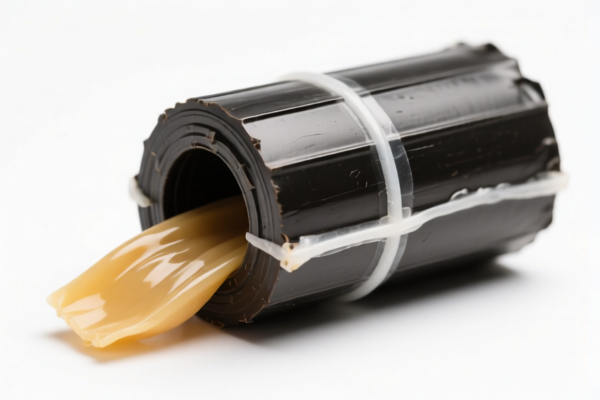

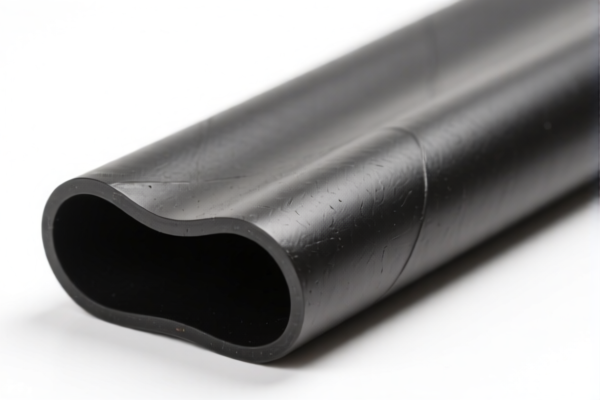
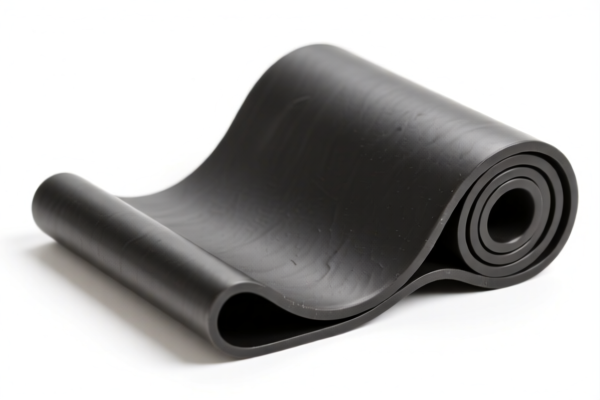
AI分析
🌿 Eco-Friendly Rubber Plasticizer
🌐 HS Code Reference & Customs Clearance Guide | 2026 Latest Tariff Analysis | Professional Compliance Strategy
📌 I. Product Definition & Classification: What Exactly is "Eco-Friendly Rubber Plasticizer"?
Rubber plasticizers are additives used to increase the flexibility, workability, and softness of rubber compounds during processing. In international trade, "Eco-Friendly" plasticizers typically refer to formulations that avoid or minimize hazardous phthalates, heavy metals, or volatile organic compounds (VOCs), often using bio-based esters, epoxidized oils, or specialized synthetic polyesters.
The classification depends heavily on the chemical composition and the specific function within the rubber manufacturing process: 1. Thickening/Stabilizing Additives: If the product primarily acts as a thickener or stabilizer for rubber mixtures. 2. Antioxidant/Composite Stabilizers: If the product is a complex formulation focusing on preventing degradation (oxidation) while plasticizing. 3. Polymer-Based Plasticizers: If the product is derived from or functions similarly to ethylene polymers or modified elastomers. 4. Surface-Active/Functional Chemicals: If the product functions as a surfactant or functional chemical aid in the rubber compounding process.
⚠️ Key Distinction Point:
- If it is a pure chemical additive for rubber processing → Chapter 38 (Miscellaneous Chemical Products)
- If it is a raw polymer material itself (not an additive) → Chapter 39 (Plastics and Articles Thereof)
- Note: Most "plasticizers" are classified under Chapter 38, but some complex polymer-based plasticizers may fall under Chapter 39 depending on their specific physical state and primary function.
📦 II. HS Code Classification Matrix (2026 Latest Tariff Authority Comparison)
Based on the provided data for Eco-Friendly Rubber Plasticizers, here are the matched HS Codes with their specific functional descriptions:
| HS Code | Product Summary & Function | Primary Application in Rubber | Tax Category Match |
|---|---|---|---|
3812.10.50.00 |
Rubber Material & Thickener/Stabilizer Type Chemical Additive | Matches products that thicken or stabilize rubber compounds while providing plasticizing effects. | ✅ High Match for traditional stabilizer-based eco-plasticizers |
3812.39.90.00 |
Rubber Material & Antioxidant/Composite Stabilizer Additive | Matches complex formulations where anti-oxidation is a primary co-function alongside plasticization. | ✅ High Match for multi-functional anti-degradation additives |
3901.90.90.00 |
Ethylene Polymer Raw Material & Fallback Category Attribute | Matches plasticizers derived from ethylene polymers or used as a "fallback" generic polymer additive. | ⚠️ Specific Match for polymer-based plasticizers |
3901.90.10.00 |
Primary Form Polymer & Elastomer/Modified Material Attribute | Matches primary form polymers that also serve as elastomers or modified materials for rubber processing. | ⚠️ Specific Match for polymer-grade plasticizers |
3402.90.10.00 |
Surface-Active or Functional Chemical Aid Additive | Matches plasticizers that function primarily as surfactants or functional chemical aids in rubber compounding. | ⚠️ Niche Match for surfactant-based plasticizers |
🔍 Critical Insight:
- Chapter 38 (3812) is the most common destination for additive plasticizers (chemical compounds mixed into rubber).
- Chapter 39 (3901) applies only if the plasticizer is a polymer itself (e.g., polymeric plasticizers).
- Chapter 34 (3402) is rare and applies only if the product is primarily a surface-active agent.
💰 III. 2026 Latest Tariff Rate Breakdown (Including Additional Taxes & Policy Surcharges)
✅ Applicable Country: United States (US)
✅ Country of Origin: China (CN)
✅ Effective Date: November 10, 2025 (and subsequent imports)
🎯 1. 3812.10.50.00 – Rubber Additives (Thickener/Stabilizer Type)
| Item | Detail |
|---|---|
| Base Tariff | 5.0% |
| Section 301 Additional Tariff | +25.0% |
| IEEPA 122 Clause Tariff | +10.0% |
| Total Tariff Rate | 40.0% |
| Tax Calculation | CIF Value × 40% |
| De Minimis Exemption | ❌ Not Eligible (High tariff threshold) |
| Legal Basis Path | USITC:3812.10.50.00 → 301 Footnote → IEEPA:122 |
📌 Explanation:
- The base rate of 5% is standard for chemical additives.
- The 25% Section 301 tariff applies to most chemical products from China.
- The 10% IEEPA 122 tariff is an additional surcharge for specific high-risk chemical categories from China.
- Total: 40% – This is a significant cost factor.
🎯 2. 3812.39.90.00 – Rubber Additives (Antioxidant/Composite Stabilizer)
| Item | Detail |
|---|---|
| Base Tariff | 5.0% |
| Section 301 Additional Tariff | +25.0% |
| IEEPA 122 Clause Tariff | +10.0% |
| Total Tariff Rate | 40.0% |
| Tax Calculation | CIF Value × 40% |
| De Minimis Exemption | ❌ Not Eligible |
| Legal Basis Path | USITC:3812.39.90.00 → 301 Footnote → IEEPA:122 |
📌 Note:
- Same tax structure as3812.10.50.00.
- Whether it is a pure thickener or a composite antioxidant-stabilizer, the tariff burden is identical for Chinese-origin goods.
🎯 3. 3901.90.90.00 – Ethylene Polymer Raw Material (Fallback)
| Item | Detail |
|---|---|
| Base Tariff | 6.5% |
| Section 301 Additional Tariff | +25.0% |
| IEEPA 122 Clause Tariff | +10.0% |
| Total Tariff Rate | 41.5% |
| Tax Calculation | CIF Value × 41.5% |
| De Minimis Exemption | ❌ Not Eligible |
| Legal Basis Path | USITC:3901.90.90.00 → 301 Footnote → IEEPA:122 |
📌 Note:
- Slightly higher base rate (6.5%) due to being classified under polymers rather than chemical additives.
- Total rate is 41.5%, the highest among the 38xx codes.
🎯 4. 3901.90.10.00 – Primary Form Polymer & Elastomer
| Item | Detail |
|---|---|
| Base Tariff | 0.0% |
| Section 301 Additional Tariff | +25.0% |
| IEEPA 122 Clause Tariff | +10.0% |
| Total Tariff Rate | 35.0% |
| Tax Calculation | CIF Value × 35% |
| De Minimis Exemption | ❌ Not Eligible |
| Legal Basis Path | USITC:3901.90.10.00 → 301 Footnote → IEEPA:122 |
📌 Opportunity Alert:
- This code has a 0% base tariff, making it the most tariff-efficient option among the 39xx codes.
- If your eco-plasticizer is a polymer-based product (e.g., polyolefin-based), this is the optimal classification to minimize duty.
🎯 5. 3402.90.10.00 – Surface-Active/Functional Chemical Aid
| Item | Detail |
|---|---|
| Base Tariff | 3.8% |
| Section 301 Additional Tariff | +25.0% |
| IEEPA 122 Clause Tariff | +10.0% |
| Total Tariff Rate | 38.8% |
| Tax Calculation | CIF Value × 38.8% |
| De Minimis Exemption | ❌ Not Eligible |
| Legal Basis Path | USITC:3402.90.10.00 → 301 Footnote → IEEPA:122 |
📌 Note:
- Base rate is 3.8%, higher than standard 3812 codes (5%)? No, 3.8% < 5%, but total is 38.8% vs 40%.
- Slightly more efficient than 3812 codes if classified here, but less efficient than 3901.90.10.00 (35%).
🛠️ IV. Customs Clearance Practical Advice (Real-World Pitfall Avoidance)
✅ 1. Required Documentation Checklist (Non-Negotiable)
| Document | Required? | Purpose |
|---|---|---|
| ✅ Material Safety Data Sheet (MSDS/SDS) | ✔️ | Critical for chemical clearance; proves "eco-friendly" status (no banned substances). |
| ✅ Product Specification Sheet | ✔️ | Details chemical composition, function (plasticizer vs. stabilizer), and physical state. |
| ✅ Certificate of Analysis (COA) | ✔️ | Confirms purity and compliance with eco-standards (e.g., REACH, Prop 65). |
| ✅ Commercial Invoice | ✔️ | Must clearly describe the product using the exact summary from the HS code match. |
| ✅ Packing List | ✔️ | Weight and volume details for customs valuation. |
| ✅ Proof of Origin | ✔️ | If not China-origin, may qualify for exemptions (not applicable here, but good practice). |
✅ 2. Declaration Strategy (Key Mnemonic)
🔥 “Function Dictates Chapter, Polymer vs. Additive, Eco-Cert is King!”
| Scenario | Correct Declaration | Incorrect Declaration | Risk |
|---|---|---|---|
| Chemical Additive (Traditional Plasticizer) | 3812.10.50.00 or 3812.39.90.00 |
3901.90.10.00 |
Misclassification → Penalty |
| Polymer-Based Plasticizer | 3901.90.10.00 |
3812.10.50.00 |
Higher duty (35% vs 40%) |
| Surfactant-Based | 3402.90.10.00 |
3812.10.50.00 |
Minor duty difference, but compliance risk |
| "Eco-Friendly" Claim | Provide REACH/Prop 65 certs | No proof | Customs may reject "eco" claim, audit product |
✅ 3. Special Situation Handling
| Situation | Handling Advice |
|---|---|
| OEM Private Label | Ensure MSDS lists the manufacturer, not just the brand. Customs looks for chemical identity. |
| Mixed Containers | If mixed with non-chemical goods, declare separately. Do not bundle rubber plasticizers with unrelated items. |
| "Green" Marketing | Ensure your "Eco-Friendly" label does not mislead customs into suspecting fraud. Use technical terms like "Phthalate-Free" in the description. |
| Pre-Ruling Application | For large shipments, apply for an Advance Ruling from CBP to confirm HS Code before shipment. |
🌍 V. Global Market Clearance Comparison (2026 Latest)
| Country/Region | Recommended HS Code | Tariff (China Origin) | Certification Requirement | Notes |
|---|---|---|---|---|
| 🇺🇸 USA | 3812.10.50.00 / 3901.90.10.00 |
35%-40% | MSDS, REACH (for EU reference), Prop 65 | High scrutiny on chemical composition. |
| 🇨🇳 China | 3812.10.50.00 |
5% | CCC (if applicable), Environmental Standards | Low tariff, but strict environmental compliance. |
| 🇪🇺 EU | 3812.10.50.00 |
0% (if REACH compliant) | REACH Registration | Mandatory for all chemical substances. |
| 🇯🇵 Japan | 3812.10.50.00 |
5% | JIS, Chemical Substance Control Law | Requires detailed chemical identity. |
📌 Conclusion:
- USA is the most expensive market due to Section 301 + IEEPA tariffs.
- EU is tariff-free but has strict REACH compliance requirements.
- China has low tariffs but enforces strict domestic environmental regulations.
📌 VI. Common Errors & Pitfall Guide (Lessons Learned)
❌ Error 1: Classifying polymer-based plasticizers under 3812 (Additives)
👉 Consequence: Higher duty (40% vs 35%). Missed savings.
❌ Error 2: Failing to provide MSDS for "Eco-Friendly" claims
👉 Consequence: Customs hold, audit, and potential fines for misdeclaration.
❌ Error 3: Using vague terms like "Rubber Oil" without chemical specificity
👉 Consequence: Customs cannot determine HS Code → Delayed release, storage fees.
❌ Error 4: Ignoring IEEPA 122 Clause
👉 Consequence: Underpayment of 10% surcharge → Back taxes + penalties.
✅ Correct Practice:
"Eco-Friendly Rubber Plasticizer, Phthalate-Free, Polymeric Form, MSDS Available, REACH Compliant, Model XYZ, HS Code 3901.90.10.00"
🎯 VII. Conclusion: Precision Classification Saves Costs!
🎯 Remember the Mnemonic:
🔹 "Polymer is 35%, Additive is 40%, Eco-Cert is King, MSDS is King!"
🔹 "HS Code Saves 5%, Documentation Saves Time, Compliance Saves Reputation!"
📌 Pro Tip:
If your product is not China-origin (e.g., from Thailand, Malaysia, Vietnam), you may qualify for IEEPA exemptions, reducing the total tariff significantly.
Recommend Advance Ruling application for high-volume shipments to ensure 100% compliance.
📣 Immediate Action:
📞 Contact your customs broker + Provide MSDS + Apply for HS Code Pre-Ruling
🚀 Ensure your Eco-Friendly Rubber Plasticizer clears smoothly, complies globally, and maximizes profit!
✨ Professional Customs Clearance Starts with Precise Classification!
💼 Every cent of duty is worth optimizing!
用户评价
关于 HS 编码归类
协调制度(HS)是由世界海关组织(WCO)制定的国际贸易商品分类标准。全球 200 多个国家采用 HS 系统作为海关关税、贸易统计和进出口监管的基础。
每个 HS 编码遵循以下层级结构:
- 章(2 位)——商品大类(例如:第 84 章:机器和机械设备)
- 品目(4 位)——章内的更具体分类
- 子目(6 位)——国际通用细分,所有 WCO 成员国统一使用
- 本国细分(8-10 位)——各国自行扩展的细分编码,如美国 HTSUS 10 位编码
正确的 HS 编码归类对于顺利通关、准确缴纳关税和遵守贸易法规至关重要。错误归类可能导致海关延误、多缴关税或罚款。
从CN进口到US时,适用的关税税率可能包括:
- 最惠国(MFN)税率——适用于 WTO 成员国的标准关税税率
- 普通税率——适用于无贸易协定国家
- 贸易救济关税——附加关税,如 301 条款(反倾销)、232 条款(国家安全)或反补贴税
本页内容仅供参考。如需正式归类,请咨询当地海关或持牌报关代理。