Eco friendly Rubber Plasticizer
CN → US| HS Code | Tariff Rate | Origin | Destination | Doc |
|---|---|---|---|---|
| 3812105000 | 40.0% | CN | US | Official Doc |
| 3812399000 | 40.0% | CN | US | Official Doc |
| 3901909000 | 41.5% | CN | US | Official Doc |
| 3901901000 | 35.0% | CN | US | Official Doc |
| 3402901000 | 38.8% | CN | US | Official Doc |
Product Images
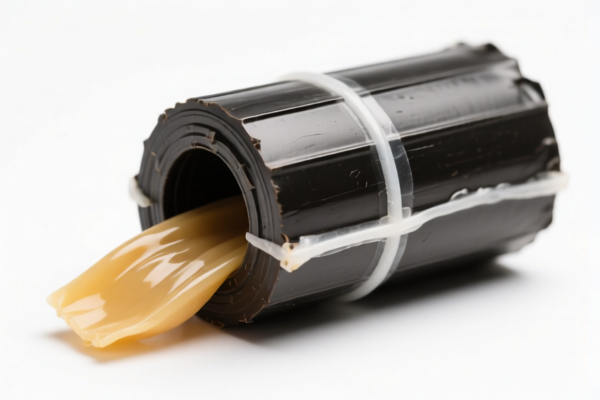

AI Analysis
🌿 Eco-Friendly Rubber Plasticizer
🌐 HS Code Reference & Customs Clearance Guide | 2026 Latest Tariff Analysis | Professional Compliance Strategy
📌 I. Product Definition & Classification: What Exactly is "Eco-Friendly Rubber Plasticizer"?
Rubber plasticizers are additives used to increase the flexibility, workability, and softness of rubber compounds during processing. In international trade, "Eco-Friendly" plasticizers typically refer to formulations that avoid or minimize hazardous phthalates, heavy metals, or volatile organic compounds (VOCs), often using bio-based esters, epoxidized oils, or specialized synthetic polyesters.
The classification depends heavily on the chemical composition and the specific function within the rubber manufacturing process: 1. Thickening/Stabilizing Additives: If the product primarily acts as a thickener or stabilizer for rubber mixtures. 2. Antioxidant/Composite Stabilizers: If the product is a complex formulation focusing on preventing degradation (oxidation) while plasticizing. 3. Polymer-Based Plasticizers: If the product is derived from or functions similarly to ethylene polymers or modified elastomers. 4. Surface-Active/Functional Chemicals: If the product functions as a surfactant or functional chemical aid in the rubber compounding process.
⚠️ Key Distinction Point:
- If it is a pure chemical additive for rubber processing → Chapter 38 (Miscellaneous Chemical Products)
- If it is a raw polymer material itself (not an additive) → Chapter 39 (Plastics and Articles Thereof)
- Note: Most "plasticizers" are classified under Chapter 38, but some complex polymer-based plasticizers may fall under Chapter 39 depending on their specific physical state and primary function.
📦 II. HS Code Classification Matrix (2026 Latest Tariff Authority Comparison)
Based on the provided data for Eco-Friendly Rubber Plasticizers, here are the matched HS Codes with their specific functional descriptions:
| HS Code | Product Summary & Function | Primary Application in Rubber | Tax Category Match |
|---|---|---|---|
3812.10.50.00 |
Rubber Material & Thickener/Stabilizer Type Chemical Additive | Matches products that thicken or stabilize rubber compounds while providing plasticizing effects. | ✅ High Match for traditional stabilizer-based eco-plasticizers |
3812.39.90.00 |
Rubber Material & Antioxidant/Composite Stabilizer Additive | Matches complex formulations where anti-oxidation is a primary co-function alongside plasticization. | ✅ High Match for multi-functional anti-degradation additives |
3901.90.90.00 |
Ethylene Polymer Raw Material & Fallback Category Attribute | Matches plasticizers derived from ethylene polymers or used as a "fallback" generic polymer additive. | ⚠️ Specific Match for polymer-based plasticizers |
3901.90.10.00 |
Primary Form Polymer & Elastomer/Modified Material Attribute | Matches primary form polymers that also serve as elastomers or modified materials for rubber processing. | ⚠️ Specific Match for polymer-grade plasticizers |
3402.90.10.00 |
Surface-Active or Functional Chemical Aid Additive | Matches plasticizers that function primarily as surfactants or functional chemical aids in rubber compounding. | ⚠️ Niche Match for surfactant-based plasticizers |
🔍 Critical Insight:
- Chapter 38 (3812) is the most common destination for additive plasticizers (chemical compounds mixed into rubber).
- Chapter 39 (3901) applies only if the plasticizer is a polymer itself (e.g., polymeric plasticizers).
- Chapter 34 (3402) is rare and applies only if the product is primarily a surface-active agent.
💰 III. 2026 Latest Tariff Rate Breakdown (Including Additional Taxes & Policy Surcharges)
✅ Applicable Country: United States (US)
✅ Country of Origin: China (CN)
✅ Effective Date: November 10, 2025 (and subsequent imports)
🎯 1. 3812.10.50.00 – Rubber Additives (Thickener/Stabilizer Type)
| Item | Detail |
|---|---|
| Base Tariff | 5.0% |
| Section 301 Additional Tariff | +25.0% |
| IEEPA 122 Clause Tariff | +10.0% |
| Total Tariff Rate | 40.0% |
| Tax Calculation | CIF Value × 40% |
| De Minimis Exemption | ❌ Not Eligible (High tariff threshold) |
| Legal Basis Path | USITC:3812.10.50.00 → 301 Footnote → IEEPA:122 |
📌 Explanation:
- The base rate of 5% is standard for chemical additives.
- The 25% Section 301 tariff applies to most chemical products from China.
- The 10% IEEPA 122 tariff is an additional surcharge for specific high-risk chemical categories from China.
- Total: 40% – This is a significant cost factor.
🎯 2. 3812.39.90.00 – Rubber Additives (Antioxidant/Composite Stabilizer)
| Item | Detail |
|---|---|
| Base Tariff | 5.0% |
| Section 301 Additional Tariff | +25.0% |
| IEEPA 122 Clause Tariff | +10.0% |
| Total Tariff Rate | 40.0% |
| Tax Calculation | CIF Value × 40% |
| De Minimis Exemption | ❌ Not Eligible |
| Legal Basis Path | USITC:3812.39.90.00 → 301 Footnote → IEEPA:122 |
📌 Note:
- Same tax structure as3812.10.50.00.
- Whether it is a pure thickener or a composite antioxidant-stabilizer, the tariff burden is identical for Chinese-origin goods.
🎯 3. 3901.90.90.00 – Ethylene Polymer Raw Material (Fallback)
| Item | Detail |
|---|---|
| Base Tariff | 6.5% |
| Section 301 Additional Tariff | +25.0% |
| IEEPA 122 Clause Tariff | +10.0% |
| Total Tariff Rate | 41.5% |
| Tax Calculation | CIF Value × 41.5% |
| De Minimis Exemption | ❌ Not Eligible |
| Legal Basis Path | USITC:3901.90.90.00 → 301 Footnote → IEEPA:122 |
📌 Note:
- Slightly higher base rate (6.5%) due to being classified under polymers rather than chemical additives.
- Total rate is 41.5%, the highest among the 38xx codes.
🎯 4. 3901.90.10.00 – Primary Form Polymer & Elastomer
| Item | Detail |
|---|---|
| Base Tariff | 0.0% |
| Section 301 Additional Tariff | +25.0% |
| IEEPA 122 Clause Tariff | +10.0% |
| Total Tariff Rate | 35.0% |
| Tax Calculation | CIF Value × 35% |
| De Minimis Exemption | ❌ Not Eligible |
| Legal Basis Path | USITC:3901.90.10.00 → 301 Footnote → IEEPA:122 |
📌 Opportunity Alert:
- This code has a 0% base tariff, making it the most tariff-efficient option among the 39xx codes.
- If your eco-plasticizer is a polymer-based product (e.g., polyolefin-based), this is the optimal classification to minimize duty.
🎯 5. 3402.90.10.00 – Surface-Active/Functional Chemical Aid
| Item | Detail |
|---|---|
| Base Tariff | 3.8% |
| Section 301 Additional Tariff | +25.0% |
| IEEPA 122 Clause Tariff | +10.0% |
| Total Tariff Rate | 38.8% |
| Tax Calculation | CIF Value × 38.8% |
| De Minimis Exemption | ❌ Not Eligible |
| Legal Basis Path | USITC:3402.90.10.00 → 301 Footnote → IEEPA:122 |
📌 Note:
- Base rate is 3.8%, higher than standard 3812 codes (5%)? No, 3.8% < 5%, but total is 38.8% vs 40%.
- Slightly more efficient than 3812 codes if classified here, but less efficient than 3901.90.10.00 (35%).
🛠️ IV. Customs Clearance Practical Advice (Real-World Pitfall Avoidance)
✅ 1. Required Documentation Checklist (Non-Negotiable)
| Document | Required? | Purpose |
|---|---|---|
| ✅ Material Safety Data Sheet (MSDS/SDS) | ✔️ | Critical for chemical clearance; proves "eco-friendly" status (no banned substances). |
| ✅ Product Specification Sheet | ✔️ | Details chemical composition, function (plasticizer vs. stabilizer), and physical state. |
| ✅ Certificate of Analysis (COA) | ✔️ | Confirms purity and compliance with eco-standards (e.g., REACH, Prop 65). |
| ✅ Commercial Invoice | ✔️ | Must clearly describe the product using the exact summary from the HS code match. |
| ✅ Packing List | ✔️ | Weight and volume details for customs valuation. |
| ✅ Proof of Origin | ✔️ | If not China-origin, may qualify for exemptions (not applicable here, but good practice). |
✅ 2. Declaration Strategy (Key Mnemonic)
🔥 “Function Dictates Chapter, Polymer vs. Additive, Eco-Cert is King!”
| Scenario | Correct Declaration | Incorrect Declaration | Risk |
|---|---|---|---|
| Chemical Additive (Traditional Plasticizer) | 3812.10.50.00 or 3812.39.90.00 |
3901.90.10.00 |
Misclassification → Penalty |
| Polymer-Based Plasticizer | 3901.90.10.00 |
3812.10.50.00 |
Higher duty (35% vs 40%) |
| Surfactant-Based | 3402.90.10.00 |
3812.10.50.00 |
Minor duty difference, but compliance risk |
| "Eco-Friendly" Claim | Provide REACH/Prop 65 certs | No proof | Customs may reject "eco" claim, audit product |
✅ 3. Special Situation Handling
| Situation | Handling Advice |
|---|---|
| OEM Private Label | Ensure MSDS lists the manufacturer, not just the brand. Customs looks for chemical identity. |
| Mixed Containers | If mixed with non-chemical goods, declare separately. Do not bundle rubber plasticizers with unrelated items. |
| "Green" Marketing | Ensure your "Eco-Friendly" label does not mislead customs into suspecting fraud. Use technical terms like "Phthalate-Free" in the description. |
| Pre-Ruling Application | For large shipments, apply for an Advance Ruling from CBP to confirm HS Code before shipment. |
🌍 V. Global Market Clearance Comparison (2026 Latest)
| Country/Region | Recommended HS Code | Tariff (China Origin) | Certification Requirement | Notes |
|---|---|---|---|---|
| 🇺🇸 USA | 3812.10.50.00 / 3901.90.10.00 |
35%-40% | MSDS, REACH (for EU reference), Prop 65 | High scrutiny on chemical composition. |
| 🇨🇳 China | 3812.10.50.00 |
5% | CCC (if applicable), Environmental Standards | Low tariff, but strict environmental compliance. |
| 🇪🇺 EU | 3812.10.50.00 |
0% (if REACH compliant) | REACH Registration | Mandatory for all chemical substances. |
| 🇯🇵 Japan | 3812.10.50.00 |
5% | JIS, Chemical Substance Control Law | Requires detailed chemical identity. |
📌 Conclusion:
- USA is the most expensive market due to Section 301 + IEEPA tariffs.
- EU is tariff-free but has strict REACH compliance requirements.
- China has low tariffs but enforces strict domestic environmental regulations.
📌 VI. Common Errors & Pitfall Guide (Lessons Learned)
❌ Error 1: Classifying polymer-based plasticizers under 3812 (Additives)
👉 Consequence: Higher duty (40% vs 35%). Missed savings.
❌ Error 2: Failing to provide MSDS for "Eco-Friendly" claims
👉 Consequence: Customs hold, audit, and potential fines for misdeclaration.
❌ Error 3: Using vague terms like "Rubber Oil" without chemical specificity
👉 Consequence: Customs cannot determine HS Code → Delayed release, storage fees.
❌ Error 4: Ignoring IEEPA 122 Clause
👉 Consequence: Underpayment of 10% surcharge → Back taxes + penalties.
✅ Correct Practice:
"Eco-Friendly Rubber Plasticizer, Phthalate-Free, Polymeric Form, MSDS Available, REACH Compliant, Model XYZ, HS Code 3901.90.10.00"
🎯 VII. Conclusion: Precision Classification Saves Costs!
🎯 Remember the Mnemonic:
🔹 "Polymer is 35%, Additive is 40%, Eco-Cert is King, MSDS is King!"
🔹 "HS Code Saves 5%, Documentation Saves Time, Compliance Saves Reputation!"
📌 Pro Tip:
If your product is not China-origin (e.g., from Thailand, Malaysia, Vietnam), you may qualify for IEEPA exemptions, reducing the total tariff significantly.
Recommend Advance Ruling application for high-volume shipments to ensure 100% compliance.
📣 Immediate Action:
📞 Contact your customs broker + Provide MSDS + Apply for HS Code Pre-Ruling
🚀 Ensure your Eco-Friendly Rubber Plasticizer clears smoothly, complies globally, and maximizes profit!
✨ Professional Customs Clearance Starts with Precise Classification!
💼 Every cent of duty is worth optimizing!
Customer Reviews
About HS Code Classification
The Harmonized System (HS) is an internationally standardized nomenclature developed by the World Customs Organization (WCO) to classify traded products. Over 200 countries use the HS system as the basis for customs tariffs, trade statistics, and import/export regulations.
Each HS code follows a hierarchical structure:
- Chapter (2 digits) — Broad category of goods (e.g., Chapter 84: Machinery and Mechanical Appliances)
- Heading (4 digits) — More specific grouping within the chapter
- Subheading (6 digits) — Internationally standardized breakdown, used by all WCO member countries
- National subdivisions (8-10 digits) — Country-specific extensions for further classification, such as US HTSUS 10-digit codes
Correct HS code classification is essential for smooth customs clearance, accurate duty payment, and compliance with trade regulations. Misclassification can lead to customs delays, overpayment of duties, or penalties.
When importing from CN to US, the applicable tariff rates may include:
- Most-Favored-Nation (MFN) rate — The standard duty rate applied to WTO members
- General rate — Applied to countries without trade agreements
- Trade remedy duties — Additional tariffs such as Section 301 (anti-dumping), Section 232 (national security), or countervailing duties
The information provided on this page is for reference purposes only. For official classification, please consult with your local customs authority or a licensed customs broker.