Eco friendly Textile Reinforced Conveyor Belt
CN → US| HS编码 | 关税税率 | 原产国 | 目的国 | 文档 |
|---|---|---|---|---|
| 5910009000 | 37.6% | CN | US | 官方文档 |
| 5910001070 | 39.0% | CN | US | 官方文档 |
| 8431390010 | 35.0% | CN | US | 官方文档 |
商品图片
AI分析
🌿 Eco-Friendly Textile Reinforced Conveyor Belt
🌐 HS Code Reference & Customs Clearance Guide | 2026 Latest Tariff Analysis | Professional Compliance Strategy
📌 1. Product Definition & Classification: Do You Truly Understand “Textile Reinforced Conveyor Belts”?
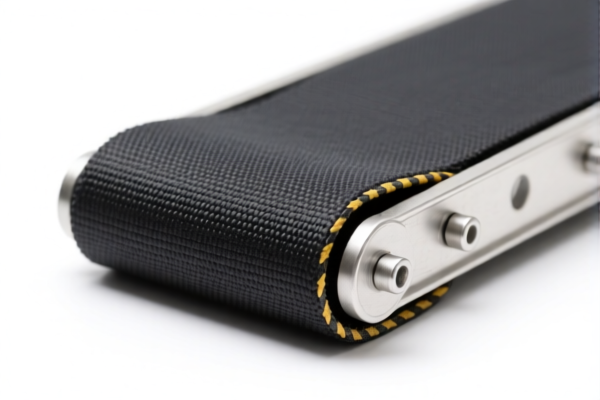
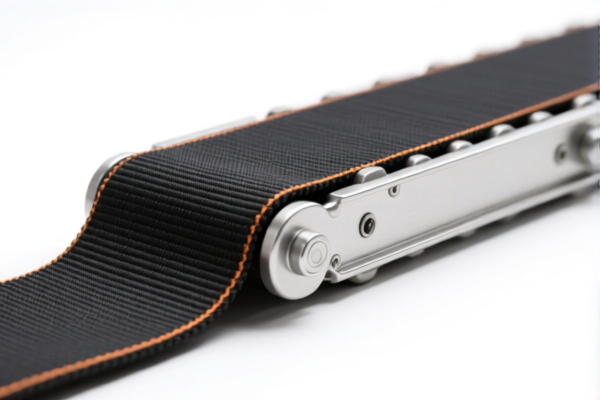
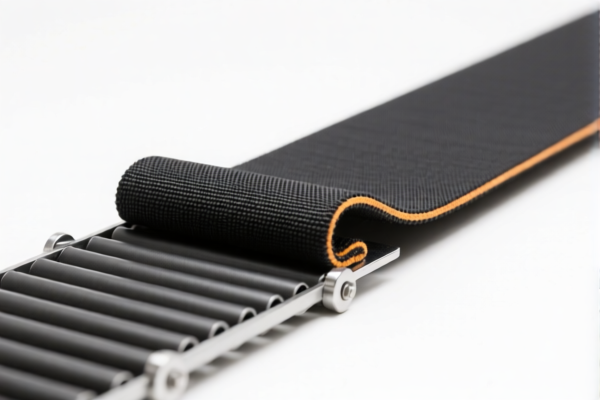
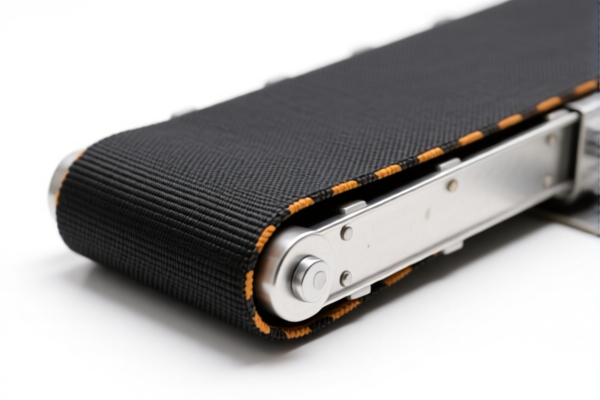
A textile-reinforced conveyor belt is a critical component in industrial material handling systems. It consists of a flexible belt made primarily from textile materials (such as nylon, polyester, cotton, or synthetic fibers) that provides the structural strength for transporting bulk materials, packaged goods, or components along a defined path.
In international trade, these belts are categorized based on their structure, primary material, and functional integration:
- Standalone Conveyor Belts: Separate units not yet integrated into a machine.
- Conveyor System Parts: Components specifically identified as parts of a conveyor system.
⚠️ Key Distinction Point:
- If the product is a standalone belt made of textile materials, it falls under Chapter 59 (Textile Articles).
- If the product is declared explicitly as a part of a conveyor machinery system, it may fall under Chapter 84 (Machinery).
📦 2. HS Code Classification Details (2026 Latest Tariff Authoritative Comparison)
| HS Code | Product Description | Application Scenario | Material Structure |
|---|---|---|---|
5910.00.90.00 |
Textile Reinforced Conveyor Belt, material is textile, used for conveying. | Standalone textile belts, general industrial use. | ✅ Textile Material |
5910.00.10.70 |
Textile Reinforced Conveyor Belt, material is artificial fiber or textile, used for transmission or conveying, non-chain structure. | Synthetic fiber belts, specific transmission applications. | ✅ Artificial Fiber / Textile |
8431.39.00.10 |
Textile Reinforced Conveyor Belt, as a conveyor part, falls under other parts of lifts and conveyors. | Belt identified as a spare part for a conveyor system. | ✅ Part of Machinery |
🔍 Important Reminder:
- "Eco-friendly" is a marketing term, not a customs classification criterion. The HS Code is determined by material composition and function, not by environmental certifications (like GRS, OEKO-TEX).
- If you import a belt as a standalone product, use 5910.xxxx.
- If you import a belt as a replacement part for a conveyor machine, using 8431.39.00.10 is possible but requires strict documentation proving it is a "part" and not a generic belt.
💰 3. 2026 Latest Tariff Rate Breakdown (Including Surcharges & Policy Add-ons)
✅ Applicable Country: United States (US)
✅ Country of Origin: China (CN)
✅ Effective Date: Ongoing (Subject to 301/IEEPA measures)
🎯 1. 5910.00.90.00 —— Textile Reinforced Conveyor Belt (General Textile)
| Item | Details |
|---|---|
| Base Tariff Rate | 2.6% (ad valorem) |
| Section 301 Surcharge | +25.0% (Trade Remedy Duties) |
| IEEPA Surcharge (Section 122) | +10.0% (Specific China-related measure) |
| Total Effective Tax Rate | 37.6% |
| Tax Calculation | CIF Value × 37.6% |
| De Minimis Eligibility | ❌ No (Denied due to high surcharge rates) |
| Legal Basis Path | USITC:5910.00.90.00 → FOOTNOTE:301.9904.01 → IEEPA:122 |
📌 Explanation:
- This is the standard classification for generic textile conveyor belts.
- The 37.6% total rate is significant. The 25% is the standard Section 301 duty on Chinese textiles/goods, and the 10% is an additional layer often applied to specific industrial materials from China.
🎯 2. 5910.00.10.70 —— Textile/AI Fiber Conveyor Belt (Specific Composition)
| Item | Details |
|---|---|
| Base Tariff Rate | 4.0% (ad valorem) |
| Section 301 Surcharge | +25.0% (Trade Remedy Duties) |
| IEEPA Surcharge (Section 122) | +10.0% (Specific China-related measure) |
| Total Effective Tax Rate | 39.0% |
| Tax Calculation | CIF Value × 39.0% |
| De Minimis Eligibility | ❌ No |
| Legal Basis Path | USITC:5910.00.10.70 → FOOTNOTE:301.9904.01 → IEEPA:122 |
📌 Note:
- This code applies if the belt is specifically made of artificial fibers (like polyester/nylon blends) for transmission/conveying.
- The base rate is slightly higher (4.0% vs 2.6%), leading to a higher total tax burden (39.0%).
- Ensure your material specification matches this code exactly; misclassification can lead to audits.
🎯 3. 8431.39.00.10 —— Conveyor Belt as a Part of Machinery
| Item | Details |
|---|---|
| Base Tariff Rate | 0.0% (ad valorem) |
| Section 301 Surcharge | +25.0% (Trade Remedy Duties) |
| IEEPA Surcharge (Section 122) | +10.0% (Specific China-related measure) |
| Total Effective Tax Rate | 35.0% |
| Tax Calculation | CIF Value × 35.0% |
| De Minimis Eligibility | ❌ No |
| Legal Basis Path | USITC:8431.39.00.10 → FOOTNOTE:301.9904.01 → IEEPA:122 |
📌 Critical Warning:
- While the base rate is 0%, the surcharges (25% + 10%) still apply, resulting in a 35.0% total rate.
- Risk: Customs may reject this classification if the item is imported as a generic belt. It must be clearly identified as a "Part of a Conveyor" (e.g., specific dimensions, splicing kits, or accompanying machinery documentation).
- Savings: This is 1.6% - 4.0% cheaper than the Chapter 59 options. However, the risk of reclassification and penalty is higher.
🛠️ 4. Customs Clearance Practical Advice (Field Guide)
✅ 1. Required Documentation Checklist (Non-Negotiable)
| Document | Must Provide | Description |
|---|---|---|
| ✅ Product Specification Sheet | ✔️ | Must list: Material composition (e.g., 100% Polyester), Layers, Tensile Strength, Width, Length. |
| ✅ Commercial Invoice | ✔️ | Description must match HS Code. Avoid vague terms like "Eco-Belt"; use "Textile Reinforced Conveyor Belt". |
| ✅ Packing List | ✔️ | Clearly state net/gross weight and dimensions. |
| ✅ Certificate of Origin (CO) | ✔️ | Proof of origin is critical for calculating 301/IEEPA duties. |
| ✅ Letter of Guarantee (if using 8431) | ✔️ | If using 8431.39.00.10, provide a statement from the manufacturer or buyer confirming it is a part of a conveyor system, not a standalone retail belt. |
| ✅ Eco-Certifications (Optional) | ✔️ | GRS, OEKO-TEX, etc. Note: These do not lower tariffs but help with buyer compliance. |
✅ 2. Declaration Tips (Key Mantras)
🔥 “Material First, Function Second, Name Precise, Tax Lowered!”
| Scenario | Correct Declaration | Wrong Practice |
|---|---|---|
| Standalone Belt | 5910.00.90.00 or 5910.00.10.70 |
Declaring as 8431 → Audit Risk |
| Part of Machine | 8431.39.00.10 |
Declaring as 5910 → Overpay Tax (by 2.6-4%) |
| "Eco-Friendly" Product | 5910.00.90.00 (Standard) |
Creating a fake HS Code for "Eco" → Fraud/Seizure |
📌 Note on "Eco-Friendly":
- There is no special HS Code for "Eco-friendly" products in the US tariff schedule.
- Do not try to misclassify a standard textile belt as a "recycled part" to avoid duties. The material composition (textile vs. rubber/plastic) and function are what matter.
✅ 3. Special Case Handling
| Scenario | Handling Advice |
|---|---|
| Mixed Material (Textile + Rubber Cover) | If the textile is the primary reinforcing material, 5910 is usually correct. If rubber dominates the value/structure, it might be 4016 (Vulcanized Rubber), but 5910 is specified in your data for textile-reinforced. |
| Importing with Machinery | If the belt comes with a conveyor machine, it is typically included in the machine's duty rate. If imported separately, it is subject to its own HS Code. |
| High-Value Industrial Belts | Consider applying for an Advance Ruling (Ruling Letter) from CBP if the classification between 5910 and 8431 is ambiguous for your specific use case. |
🌍 5. Global Market Comparison (2026 Latest)
| Country/Region | Recommended HS Code | Total Tariff (China Origin) | Certification Requirements | Notes |
|---|---|---|---|---|
| 🇺🇸 USA | 5910.00.90.00 |
37.6% | None (General) | High surcharges (301+IEEPA) make this expensive. |
| 🇨🇳 China | 5910.00.90.00 |
2.6% | CCC (if applicable) | Base rate only, no 301/IEEPA surcharges. |
| 🇪🇺 EU | 5910.00.00 |
~5-9% | REACH, RoHS | No Section 301/IEEPA. Tariffs vary by specific sub-code. |
| 🇦🇺 Australia | 5910.00.00 |
5% | None | Standard MFN rates apply. |
| 🇯🇵 Japan | 5910.00.00 |
5-8% | JIS Standards | No punitive surcharges. |
📌 Conclusion:
- The USA is the most expensive market for Chinese textile conveyor belts due to additive tariffs (37.6%-39.0%).
- EU, Australia, and Japan offer significantly lower tariff burdens.
- If targeting the US, consider supply chain diversification (e.g., manufacturing in Vietnam or Mexico) to mitigate 301/IEEPA duties, subject to rules of origin.
📌 6. Common Mistakes & Pitfalls (Lessons Learned)
❌ Mistake 1: Assuming "Eco-Friendly" reduces US Tariffs
👉 Consequence: No tax benefit. Customs ignores marketing terms.
❌ Mistake 2: Declaring a Standalone Belt as 8431.39.00.10 to Save 2.6%
👉 Consequence: High risk of CBP Audit, reclassification, and penalties. The savings are minimal compared to the risk.
❌ Mistake 3: Ignoring the 10% IEEPA Surcharge
👉 Consequence: Underestimating landed cost. The total tax is not just 25%.
❌ Mistake 4: Confusing "Textile Reinforced" with "Rubber Conveyor Belt"
👉 Consequence: Wrong HS Code (4016 vs 5910). 5910 is for textile-based structures; 4016 is for vulcanized rubber.
✅ Correct Approach:
"Textile Reinforced Conveyor Belt, 100% Polyester Textile Core, Rubber Cover, Industrial Grade, Model ABC."
🎯 7. Conclusion: Precision in Classification Saves Money!
🎯 Remember the Mantra:
🔹 "Eco is Marketing, Tax is Law."
🔹 "Textile Core = 5910 (37.6%). Part of Machine = 8431 (35.0%)."
🔹 "Don't gamble with 8431 unless you have proof it's a Part."
📌 Pro Tip:
If your company frequently imports these belts, consider applying for a CBP Advance Ruling. This legally binds CBP to your classification, providing certainty and protecting against future audits.
🚀 For US Market: Evaluate the total landed cost. A 37.6% tariff is substantial. Explore FTA benefits if sourcing from non-China countries (e.g., USMCA for Mexico/Canada).
📣 Immediate Action:
📞 Consult a licensed customs broker.
📄 Prepare precise material composition statements.
📉 Calculate total landed cost including 37.6% duty.
✨ Professional clearance starts with accurate classification!
💼 Every cent counts in global trade.
用户评价
关于 HS 编码归类
协调制度(HS)是由世界海关组织(WCO)制定的国际贸易商品分类标准。全球 200 多个国家采用 HS 系统作为海关关税、贸易统计和进出口监管的基础。
每个 HS 编码遵循以下层级结构:
- 章(2 位)——商品大类(例如:第 84 章:机器和机械设备)
- 品目(4 位)——章内的更具体分类
- 子目(6 位)——国际通用细分,所有 WCO 成员国统一使用
- 本国细分(8-10 位)——各国自行扩展的细分编码,如美国 HTSUS 10 位编码
正确的 HS 编码归类对于顺利通关、准确缴纳关税和遵守贸易法规至关重要。错误归类可能导致海关延误、多缴关税或罚款。
从CN进口到US时,适用的关税税率可能包括:
- 最惠国(MFN)税率——适用于 WTO 成员国的标准关税税率
- 普通税率——适用于无贸易协定国家
- 贸易救济关税——附加关税,如 301 条款(反倾销)、232 条款(国家安全)或反补贴税
本页内容仅供参考。如需正式归类,请咨询当地海关或持牌报关代理。