Eco friendly Textile Reinforced Conveyor Belt
CN → US| HS Code | Tariff Rate | Origin | Destination | Doc |
|---|---|---|---|---|
| 5910009000 | 37.6% | CN | US | Official Doc |
| 5910001070 | 39.0% | CN | US | Official Doc |
| 8431390010 | 35.0% | CN | US | Official Doc |
Product Images
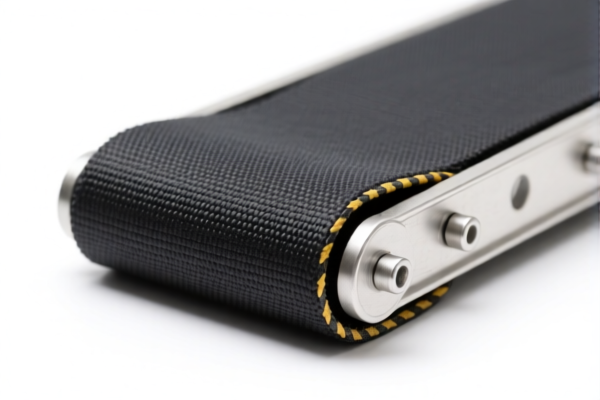
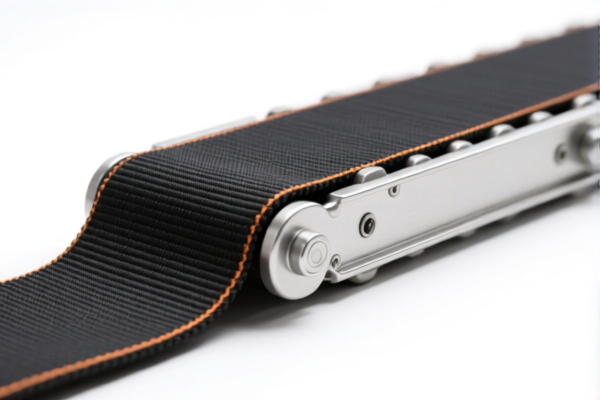
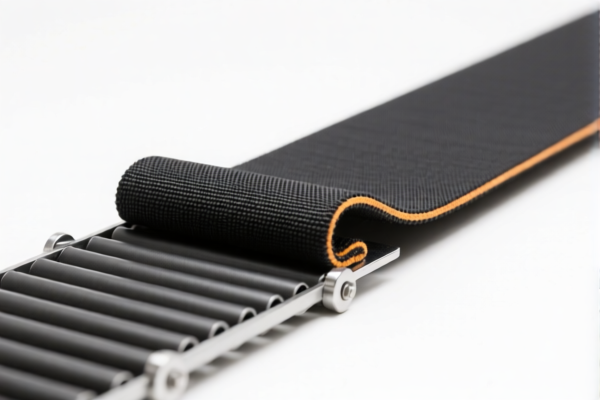
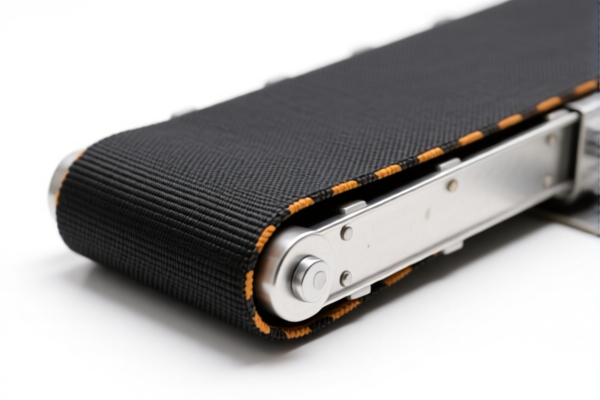
AI Analysis
🌿 Eco-Friendly Textile Reinforced Conveyor Belt
🌐 HS Code Reference & Customs Clearance Guide | 2026 Latest Tariff Analysis | Professional Compliance Strategy
📌 1. Product Definition & Classification: Do You Truly Understand “Textile Reinforced Conveyor Belts”?
A textile-reinforced conveyor belt is a critical component in industrial material handling systems. It consists of a flexible belt made primarily from textile materials (such as nylon, polyester, cotton, or synthetic fibers) that provides the structural strength for transporting bulk materials, packaged goods, or components along a defined path.
In international trade, these belts are categorized based on their structure, primary material, and functional integration:
- Standalone Conveyor Belts: Separate units not yet integrated into a machine.
- Conveyor System Parts: Components specifically identified as parts of a conveyor system.
⚠️ Key Distinction Point:
- If the product is a standalone belt made of textile materials, it falls under Chapter 59 (Textile Articles).
- If the product is declared explicitly as a part of a conveyor machinery system, it may fall under Chapter 84 (Machinery).
📦 2. HS Code Classification Details (2026 Latest Tariff Authoritative Comparison)
| HS Code | Product Description | Application Scenario | Material Structure |
|---|---|---|---|
5910.00.90.00 |
Textile Reinforced Conveyor Belt, material is textile, used for conveying. | Standalone textile belts, general industrial use. | ✅ Textile Material |
5910.00.10.70 |
Textile Reinforced Conveyor Belt, material is artificial fiber or textile, used for transmission or conveying, non-chain structure. | Synthetic fiber belts, specific transmission applications. | ✅ Artificial Fiber / Textile |
8431.39.00.10 |
Textile Reinforced Conveyor Belt, as a conveyor part, falls under other parts of lifts and conveyors. | Belt identified as a spare part for a conveyor system. | ✅ Part of Machinery |
🔍 Important Reminder:
- "Eco-friendly" is a marketing term, not a customs classification criterion. The HS Code is determined by material composition and function, not by environmental certifications (like GRS, OEKO-TEX).
- If you import a belt as a standalone product, use 5910.xxxx.
- If you import a belt as a replacement part for a conveyor machine, using 8431.39.00.10 is possible but requires strict documentation proving it is a "part" and not a generic belt.
💰 3. 2026 Latest Tariff Rate Breakdown (Including Surcharges & Policy Add-ons)
✅ Applicable Country: United States (US)
✅ Country of Origin: China (CN)
✅ Effective Date: Ongoing (Subject to 301/IEEPA measures)
🎯 1. 5910.00.90.00 —— Textile Reinforced Conveyor Belt (General Textile)
| Item | Details |
|---|---|
| Base Tariff Rate | 2.6% (ad valorem) |
| Section 301 Surcharge | +25.0% (Trade Remedy Duties) |
| IEEPA Surcharge (Section 122) | +10.0% (Specific China-related measure) |
| Total Effective Tax Rate | 37.6% |
| Tax Calculation | CIF Value × 37.6% |
| De Minimis Eligibility | ❌ No (Denied due to high surcharge rates) |
| Legal Basis Path | USITC:5910.00.90.00 → FOOTNOTE:301.9904.01 → IEEPA:122 |
📌 Explanation:
- This is the standard classification for generic textile conveyor belts.
- The 37.6% total rate is significant. The 25% is the standard Section 301 duty on Chinese textiles/goods, and the 10% is an additional layer often applied to specific industrial materials from China.
🎯 2. 5910.00.10.70 —— Textile/AI Fiber Conveyor Belt (Specific Composition)
| Item | Details |
|---|---|
| Base Tariff Rate | 4.0% (ad valorem) |
| Section 301 Surcharge | +25.0% (Trade Remedy Duties) |
| IEEPA Surcharge (Section 122) | +10.0% (Specific China-related measure) |
| Total Effective Tax Rate | 39.0% |
| Tax Calculation | CIF Value × 39.0% |
| De Minimis Eligibility | ❌ No |
| Legal Basis Path | USITC:5910.00.10.70 → FOOTNOTE:301.9904.01 → IEEPA:122 |
📌 Note:
- This code applies if the belt is specifically made of artificial fibers (like polyester/nylon blends) for transmission/conveying.
- The base rate is slightly higher (4.0% vs 2.6%), leading to a higher total tax burden (39.0%).
- Ensure your material specification matches this code exactly; misclassification can lead to audits.
🎯 3. 8431.39.00.10 —— Conveyor Belt as a Part of Machinery
| Item | Details |
|---|---|
| Base Tariff Rate | 0.0% (ad valorem) |
| Section 301 Surcharge | +25.0% (Trade Remedy Duties) |
| IEEPA Surcharge (Section 122) | +10.0% (Specific China-related measure) |
| Total Effective Tax Rate | 35.0% |
| Tax Calculation | CIF Value × 35.0% |
| De Minimis Eligibility | ❌ No |
| Legal Basis Path | USITC:8431.39.00.10 → FOOTNOTE:301.9904.01 → IEEPA:122 |
📌 Critical Warning:
- While the base rate is 0%, the surcharges (25% + 10%) still apply, resulting in a 35.0% total rate.
- Risk: Customs may reject this classification if the item is imported as a generic belt. It must be clearly identified as a "Part of a Conveyor" (e.g., specific dimensions, splicing kits, or accompanying machinery documentation).
- Savings: This is 1.6% - 4.0% cheaper than the Chapter 59 options. However, the risk of reclassification and penalty is higher.
🛠️ 4. Customs Clearance Practical Advice (Field Guide)
✅ 1. Required Documentation Checklist (Non-Negotiable)
| Document | Must Provide | Description |
|---|---|---|
| ✅ Product Specification Sheet | ✔️ | Must list: Material composition (e.g., 100% Polyester), Layers, Tensile Strength, Width, Length. |
| ✅ Commercial Invoice | ✔️ | Description must match HS Code. Avoid vague terms like "Eco-Belt"; use "Textile Reinforced Conveyor Belt". |
| ✅ Packing List | ✔️ | Clearly state net/gross weight and dimensions. |
| ✅ Certificate of Origin (CO) | ✔️ | Proof of origin is critical for calculating 301/IEEPA duties. |
| ✅ Letter of Guarantee (if using 8431) | ✔️ | If using 8431.39.00.10, provide a statement from the manufacturer or buyer confirming it is a part of a conveyor system, not a standalone retail belt. |
| ✅ Eco-Certifications (Optional) | ✔️ | GRS, OEKO-TEX, etc. Note: These do not lower tariffs but help with buyer compliance. |
✅ 2. Declaration Tips (Key Mantras)
🔥 “Material First, Function Second, Name Precise, Tax Lowered!”
| Scenario | Correct Declaration | Wrong Practice |
|---|---|---|
| Standalone Belt | 5910.00.90.00 or 5910.00.10.70 |
Declaring as 8431 → Audit Risk |
| Part of Machine | 8431.39.00.10 |
Declaring as 5910 → Overpay Tax (by 2.6-4%) |
| "Eco-Friendly" Product | 5910.00.90.00 (Standard) |
Creating a fake HS Code for "Eco" → Fraud/Seizure |
📌 Note on "Eco-Friendly":
- There is no special HS Code for "Eco-friendly" products in the US tariff schedule.
- Do not try to misclassify a standard textile belt as a "recycled part" to avoid duties. The material composition (textile vs. rubber/plastic) and function are what matter.
✅ 3. Special Case Handling
| Scenario | Handling Advice |
|---|---|
| Mixed Material (Textile + Rubber Cover) | If the textile is the primary reinforcing material, 5910 is usually correct. If rubber dominates the value/structure, it might be 4016 (Vulcanized Rubber), but 5910 is specified in your data for textile-reinforced. |
| Importing with Machinery | If the belt comes with a conveyor machine, it is typically included in the machine's duty rate. If imported separately, it is subject to its own HS Code. |
| High-Value Industrial Belts | Consider applying for an Advance Ruling (Ruling Letter) from CBP if the classification between 5910 and 8431 is ambiguous for your specific use case. |
🌍 5. Global Market Comparison (2026 Latest)
| Country/Region | Recommended HS Code | Total Tariff (China Origin) | Certification Requirements | Notes |
|---|---|---|---|---|
| 🇺🇸 USA | 5910.00.90.00 |
37.6% | None (General) | High surcharges (301+IEEPA) make this expensive. |
| 🇨🇳 China | 5910.00.90.00 |
2.6% | CCC (if applicable) | Base rate only, no 301/IEEPA surcharges. |
| 🇪🇺 EU | 5910.00.00 |
~5-9% | REACH, RoHS | No Section 301/IEEPA. Tariffs vary by specific sub-code. |
| 🇦🇺 Australia | 5910.00.00 |
5% | None | Standard MFN rates apply. |
| 🇯🇵 Japan | 5910.00.00 |
5-8% | JIS Standards | No punitive surcharges. |
📌 Conclusion:
- The USA is the most expensive market for Chinese textile conveyor belts due to additive tariffs (37.6%-39.0%).
- EU, Australia, and Japan offer significantly lower tariff burdens.
- If targeting the US, consider supply chain diversification (e.g., manufacturing in Vietnam or Mexico) to mitigate 301/IEEPA duties, subject to rules of origin.
📌 6. Common Mistakes & Pitfalls (Lessons Learned)
❌ Mistake 1: Assuming "Eco-Friendly" reduces US Tariffs
👉 Consequence: No tax benefit. Customs ignores marketing terms.
❌ Mistake 2: Declaring a Standalone Belt as 8431.39.00.10 to Save 2.6%
👉 Consequence: High risk of CBP Audit, reclassification, and penalties. The savings are minimal compared to the risk.
❌ Mistake 3: Ignoring the 10% IEEPA Surcharge
👉 Consequence: Underestimating landed cost. The total tax is not just 25%.
❌ Mistake 4: Confusing "Textile Reinforced" with "Rubber Conveyor Belt"
👉 Consequence: Wrong HS Code (4016 vs 5910). 5910 is for textile-based structures; 4016 is for vulcanized rubber.
✅ Correct Approach:
"Textile Reinforced Conveyor Belt, 100% Polyester Textile Core, Rubber Cover, Industrial Grade, Model ABC."
🎯 7. Conclusion: Precision in Classification Saves Money!
🎯 Remember the Mantra:
🔹 "Eco is Marketing, Tax is Law."
🔹 "Textile Core = 5910 (37.6%). Part of Machine = 8431 (35.0%)."
🔹 "Don't gamble with 8431 unless you have proof it's a Part."
📌 Pro Tip:
If your company frequently imports these belts, consider applying for a CBP Advance Ruling. This legally binds CBP to your classification, providing certainty and protecting against future audits.
🚀 For US Market: Evaluate the total landed cost. A 37.6% tariff is substantial. Explore FTA benefits if sourcing from non-China countries (e.g., USMCA for Mexico/Canada).
📣 Immediate Action:
📞 Consult a licensed customs broker.
📄 Prepare precise material composition statements.
📉 Calculate total landed cost including 37.6% duty.
✨ Professional clearance starts with accurate classification!
💼 Every cent counts in global trade.
Customer Reviews
About HS Code Classification
The Harmonized System (HS) is an internationally standardized nomenclature developed by the World Customs Organization (WCO) to classify traded products. Over 200 countries use the HS system as the basis for customs tariffs, trade statistics, and import/export regulations.
Each HS code follows a hierarchical structure:
- Chapter (2 digits) — Broad category of goods (e.g., Chapter 84: Machinery and Mechanical Appliances)
- Heading (4 digits) — More specific grouping within the chapter
- Subheading (6 digits) — Internationally standardized breakdown, used by all WCO member countries
- National subdivisions (8-10 digits) — Country-specific extensions for further classification, such as US HTSUS 10-digit codes
Correct HS code classification is essential for smooth customs clearance, accurate duty payment, and compliance with trade regulations. Misclassification can lead to customs delays, overpayment of duties, or penalties.
When importing from CN to US, the applicable tariff rates may include:
- Most-Favored-Nation (MFN) rate — The standard duty rate applied to WTO members
- General rate — Applied to countries without trade agreements
- Trade remedy duties — Additional tariffs such as Section 301 (anti-dumping), Section 232 (national security), or countervailing duties
The information provided on this page is for reference purposes only. For official classification, please consult with your local customs authority or a licensed customs broker.