Educational Toys: Building Blocks
CN → US| HS编码 | 关税税率 | 原产国 | 目的国 | 文档 |
|---|---|---|---|---|
| 9503000073 | 10.0% | CN | US | 官方文档 |
| 9503000071 | 10.0% | CN | US | 官方文档 |
商品图片
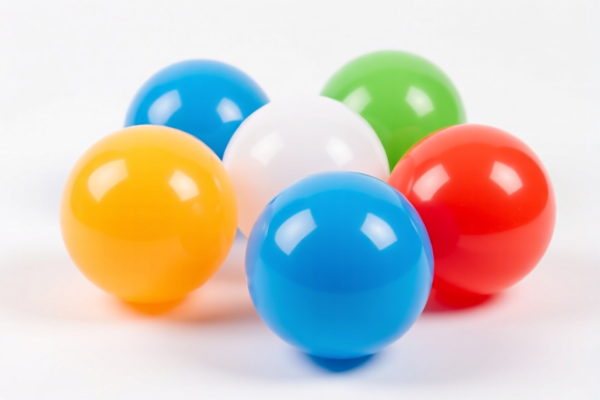
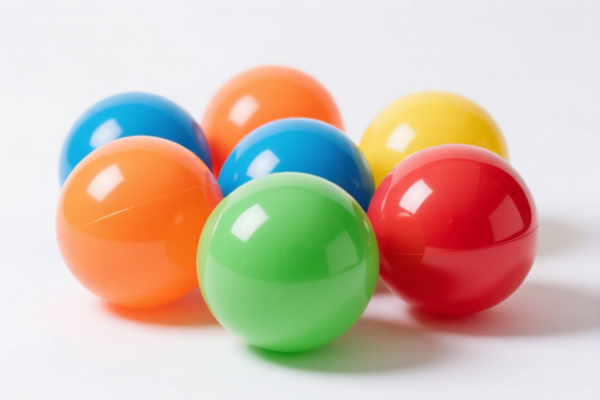


AI分析
🧱 Educational Toys: Building Blocks (Construction Sets)
🌐 HS Code Reference & Customs Clearance Guide | 2026 Latest Tariff Analysis | Strategic Entry Strategy for STEM Toys
📌 I. Product Definition & Classification: What Exactly Are "Building Blocks"?
Building blocks, often referred to as construction sets, are fundamental educational toys designed to enhance fine motor skills, spatial reasoning, and creativity in children. In international trade, these products fall under the broad category of "Toys," specifically classified under Heading 9503.
However, the critical distinction in classification (and subsequent tax liability) lies not in the shape or educational value, but in the target age group and safety labeling, as defined by the Consumer Product Safety Improvement Act (CPSIA) in the United States.
⚠️ Key Classification Trigger:
The HS Code suffix (.71vs.73) is determined by whether the product is labeled or intended for use by:
- Children Under 3 Years Old (High-risk, strict safety standards)
- Children Aged 3–12 Years Old (Standard toy safety)📌 Critical Warning:
- Small parts (blocks, bricks, figures) pose a choking hazard.
- If a product contains small parts, it MUST be labeled for ages 3+ to avoid stricter regulations and different tariff lines for "Under 3" products.
- Misclassifying a 3+ toy as "Under 3" or vice versa can lead to customs seizures, fines, or forced re-labeling.
📦 II. HS Code Classification Details (2026 Latest Tariff Authority Reference)
Based on the provided data, Building Blocks fall under HS Code 9503.00 (Tricycles, scooters, pedal cars... dolls, other toys...). The two specific sub-headings are determined by age:
| HS Code | Product Description | Applicable Scenario | Age Group | Safety Focus |
|---|---|---|---|---|
9503.00.00.71 |
Toys for Children Under 3 Years Old | Soft blocks, large interlocking bricks, non-sharp edges, no small parts | Under 3 | Choking hazard prevention, heavy metal limits, rigorous CPSIA testing |
9503.00.00.73 |
Toys for Children 3 to 12 Years Old | Standard LEGO-style bricks, complex construction sets, small figures, detailed accessories | 3–12 Years | Standard toy safety, durability, labeling requirements |
🔍 Key Distinction:
-.71(Under 3): Used only if the toy is explicitly designed and labeled for infants/toddlers (e.g., large soft blocks, oversized plastic bricks that cannot fit in a choke tube tester).
-.73(3-12 Years): The default classification for most standard building block sets (LEGO, generic bricks) because they contain small parts.
- Importer’s Declaration: The importer must explicitly declare the intended age group on commercial invoices and packing lists.
💰 III. 2026 Latest Tariff Rate Analysis (Detailed Breakdown)
✅ Applicable Country: United States (US)
✅ Origin: China (CN) (Note: Tariff rates for Chinese origin products under Section 301/IEEPA are subject to change, but currently show 0% for these specific toy sub-headings in the provided data)
✅ Effective Time: Current 2026 Tariff Schedule
🎯 1. 9503.00.00.71 —— Building Blocks for Children Under 3
| Item | Detail |
|---|---|
| Base Tariff Rate | 0.0% (Ad Valorem) |
| Additional Duties | 0.0% |
| Total Tax Rate | 0.0% |
| Tax Calculation | CIF Value × 0% = $0 |
| De Minimis Eligibility | ⚠️ Complex |
| Legal Basis | HTSUS: 9503.00.00.71 |
📌 Explanation:
- The base duty is 0%, which is favorable.
- However, the non-tariff barriers are high. You must provide:
- CPSC Children’s Product Certificate (CPC)
- ASTM F963 Test Reports (US Toy Safety Standard)
- Tracking Labels on product and packaging
- Lead Content Certification (≤90 ppm)
- Failure to provide these documents leads to detention, not necessarily tariffs.
🎯 2. 9503.00.00.73 —— Building Blocks for Children 3–12 Years Old
| Item | Detail |
|---|---|
| Base Tariff Rate | 0.0% (Ad Valorem) |
| Additional Duties | 0.0% |
| Total Tax Rate | 0.0% |
| Tax Calculation | CIF Value × 0% = $0 |
| De Minimis Eligibility | ✅ Generally Eligible (if < $800, though toys are often scrutinized for safety) |
| Legal Basis | HTSUS: 9503.00.00.73 |
📌 Explanation:
- Zero Duty makes this a cost-effective category for importers.
- Safety Requirements: Still requires ASTM F963 compliance, but labeling requirements are slightly less stringent than "Under 3" (e.g., "Choking Hazard" warning is mandatory).
- CPSIA Tracking Labels: Still required, but CPSC Testing is not always as rigorous as for under-3 products (unless the toy is also deemed a "children's product" which most are).🔍 Important Note on "Under 3" Classification:
- If your building blocks have small parts (standard brick size), they CANNOT be sold to children under 3.
- Therefore, most building block sets should be classified under9503.00.00.73, not.71.
- Only specialized large-block sets (with no small parts) qualify for.71.
🛠️ IV. Customs Clearance Practical Advice (Avoiding Pitfalls)
✅ 1. Mandatory Documentation Checklist
| Document | Required For | Purpose |
|---|---|---|
| Commercial Invoice | Both | Must clearly state: "Building Blocks for Children 3+ Years" or "Under 3 Years" |
| Packing List | Both | Detail quantity, weight, dimensions |
| Product Photos | Both | Show product, packaging, and age warning labels |
| CPC (Children’s Product Certificate) | Both | Mandatory for all children's toys under CPSIA |
| ASTM F963 Test Report | Both | From an CPSC-accepted laboratory |
| Tracking Label Sample | Both | Proof that labels are affixed to product/packaging |
| Choking Hazard Warning | Both (if applicable) | "Choking Hazard. Small Parts. Not for Children Under 3 Years" |
✅ 2. Declaration Tips (Key Phrase for Customs)
🔥 "Labeling is Everything!"
- For9503.00.00.73(3-12 Years):"Building Blocks Set, Plastic, 500 Pieces, For Children 3 Years and Over. Contains Small Parts. Choking Hazard."
- For9503.00.00.71(Under 3):
"Soft Building Blocks, For Infants Under 3 Years. No Small Parts. ASTM F963 Compliant. CPC Provided."⚠️ Do NOT use vague terms like "Educational Toy" without age specification.
⚠️ Do NOT classify small-brick sets as "Under 3" to avoid perceived stricter scrutiny. This is misdeclaration and can lead to penalties.
✅ 3. Special Circumstances
| Scenario | Handling Advice |
|---|---|
| Mixed Age Packs | If a set includes small bricks AND large blocks, classify based on the youngest recommended user. If small parts are present, default to 3+ (.73). |
| Digital/LED-Enhanced Blocks | Still classified as .73 (toys), but may require FCC certification for electronic components. |
| Wooden Blocks | Also classified under 9503.00.00.73. Ensure no sharp edges and non-toxic paint. |
| OEM/White Label | Ensure the manufacturer provides the CPC and test reports. You cannot self-certify without valid test data. |
🌍 V. Global Market Clearance Comparison (2026 Latest)
| Country/Region | Recommended HS Code | Tariff Rate | Key Certification Requirements | Notes |
|---|---|---|---|---|
| 🇺🇸 USA | 9503.00.00.73 (3-12) |
0.0% | CPC, ASTM F963, CPSIA Tracking | Zero duty, but high compliance cost. |
| 🇺🇸 USA | 9503.00.00.71 (Under 3) |
0.0% | CPC, ASTM F963, Stricter Testing | Rare for standard blocks. |
| 🇪🇺 EU | 9503.00 |
0.0% | CE Mark, EN71 | No age-split in HS code at this level; national laws apply. |
| 🇨🇳 China | 9503.00 |
0.0% | CCC Certification | Mandatory for toys sold in China. |
| 🇬🇧 UK | 9503.00 |
0.0% | UKCA Mark, BS EN71 | Post-Brexit, UKCA required. |
📌 Conclusion:
- The US offers 0% duty for building blocks, making it financially attractive.
- However, compliance costs (testing, CPC) are significant.
- Misclassification risk is high if age labeling is not clear.
📌 VI. Common Mistakes & Pitfalls (Blood Lessons)
❌ Mistake 1: Classifying standard LEGO-style bricks as "Under 3" (.71)
👉 Consequence: Customs will reject due to choking hazard. Product detained, re-labeled, or destroyed.
✅ Fix: Always use .73 for small-part toys.
❌ Mistake 2: No CPC or Test Report on file
👉 Consequence: Entry Refused. Goods held in bonded warehouse. Daily storage fees apply.
✅ Fix: Ensure CPC is generated by a CPSC-accepted lab before shipment.
❌ Mistake 3: Vague Description "Plastic Toys"
👉 Consequence: Customs may assign a higher duty rate or demand additional documentation, causing delays.
✅ Fix: Use exact HS Code + Age Group in commercial invoice.
❌ Mistake 4: Missing "Choking Hazard" Label
👉 Consequence: CPSC Violation. Fines up to $155,000 per violation.
✅ Fix: Label must be on both product and packaging.
🎯 VII. Conclusion: Smart Classification, Safe Clearance!
🎯 Remember This Mantra:
🔹 "0% Duty is Sweet, But Compliance is Key."
🔹 "Under 3 is Rare, 3+ is Default for Bricks."
🔹 "CPC is Non-Negotiable, Test Reports are Mandatory."📌 Pro Tip:
If you are importing standard building blocks, always classify under9503.00.00.73.
Prepare your ASTM F963 test reports and CPC before shipping.
Label everything clearly with "Age 3+" and "Choking Hazard".
📣 Immediate Action:
📞 Contact your CPSC-accepted lab for testing.
📄 Generate CPC before production.
🏷️ Apply Tracking Labels and Age Warnings at the factory.
🚀 Clear customs smoothly, avoid fines, and maximize profit with 0% Duty!
✨ Professional Clearance Starts with Precise Classification!
💼 Your Toy Business Deserves Zero Risk and Zero Duty!
用户评价
关于 HS 编码归类
协调制度(HS)是由世界海关组织(WCO)制定的国际贸易商品分类标准。全球 200 多个国家采用 HS 系统作为海关关税、贸易统计和进出口监管的基础。
每个 HS 编码遵循以下层级结构:
- 章(2 位)——商品大类(例如:第 84 章:机器和机械设备)
- 品目(4 位)——章内的更具体分类
- 子目(6 位)——国际通用细分,所有 WCO 成员国统一使用
- 本国细分(8-10 位)——各国自行扩展的细分编码,如美国 HTSUS 10 位编码
正确的 HS 编码归类对于顺利通关、准确缴纳关税和遵守贸易法规至关重要。错误归类可能导致海关延误、多缴关税或罚款。
从CN进口到US时,适用的关税税率可能包括:
- 最惠国(MFN)税率——适用于 WTO 成员国的标准关税税率
- 普通税率——适用于无贸易协定国家
- 贸易救济关税——附加关税,如 301 条款(反倾销)、232 条款(国家安全)或反补贴税
本页内容仅供参考。如需正式归类,请咨询当地海关或持牌报关代理。