Educational Toys: Building Blocks
CN → US| HS Code | Tariff Rate | Origin | Destination | Doc |
|---|---|---|---|---|
| 9503000073 | 10.0% | CN | US | Official Doc |
| 9503000071 | 10.0% | CN | US | Official Doc |
Product Images

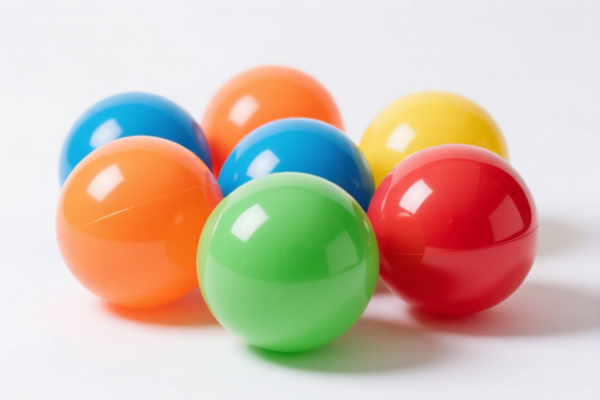


AI Analysis
🧱 Educational Toys: Building Blocks (Construction Sets)
🌐 HS Code Reference & Customs Clearance Guide | 2026 Latest Tariff Analysis | Strategic Entry Strategy for STEM Toys
📌 I. Product Definition & Classification: What Exactly Are "Building Blocks"?
Building blocks, often referred to as construction sets, are fundamental educational toys designed to enhance fine motor skills, spatial reasoning, and creativity in children. In international trade, these products fall under the broad category of "Toys," specifically classified under Heading 9503.
However, the critical distinction in classification (and subsequent tax liability) lies not in the shape or educational value, but in the target age group and safety labeling, as defined by the Consumer Product Safety Improvement Act (CPSIA) in the United States.
⚠️ Key Classification Trigger:
The HS Code suffix (.71vs.73) is determined by whether the product is labeled or intended for use by:
- Children Under 3 Years Old (High-risk, strict safety standards)
- Children Aged 3–12 Years Old (Standard toy safety)📌 Critical Warning:
- Small parts (blocks, bricks, figures) pose a choking hazard.
- If a product contains small parts, it MUST be labeled for ages 3+ to avoid stricter regulations and different tariff lines for "Under 3" products.
- Misclassifying a 3+ toy as "Under 3" or vice versa can lead to customs seizures, fines, or forced re-labeling.
📦 II. HS Code Classification Details (2026 Latest Tariff Authority Reference)
Based on the provided data, Building Blocks fall under HS Code 9503.00 (Tricycles, scooters, pedal cars... dolls, other toys...). The two specific sub-headings are determined by age:
| HS Code | Product Description | Applicable Scenario | Age Group | Safety Focus |
|---|---|---|---|---|
9503.00.00.71 |
Toys for Children Under 3 Years Old | Soft blocks, large interlocking bricks, non-sharp edges, no small parts | Under 3 | Choking hazard prevention, heavy metal limits, rigorous CPSIA testing |
9503.00.00.73 |
Toys for Children 3 to 12 Years Old | Standard LEGO-style bricks, complex construction sets, small figures, detailed accessories | 3–12 Years | Standard toy safety, durability, labeling requirements |
🔍 Key Distinction:
-.71(Under 3): Used only if the toy is explicitly designed and labeled for infants/toddlers (e.g., large soft blocks, oversized plastic bricks that cannot fit in a choke tube tester).
-.73(3-12 Years): The default classification for most standard building block sets (LEGO, generic bricks) because they contain small parts.
- Importer’s Declaration: The importer must explicitly declare the intended age group on commercial invoices and packing lists.
💰 III. 2026 Latest Tariff Rate Analysis (Detailed Breakdown)
✅ Applicable Country: United States (US)
✅ Origin: China (CN) (Note: Tariff rates for Chinese origin products under Section 301/IEEPA are subject to change, but currently show 0% for these specific toy sub-headings in the provided data)
✅ Effective Time: Current 2026 Tariff Schedule
🎯 1. 9503.00.00.71 —— Building Blocks for Children Under 3
| Item | Detail |
|---|---|
| Base Tariff Rate | 0.0% (Ad Valorem) |
| Additional Duties | 0.0% |
| Total Tax Rate | 0.0% |
| Tax Calculation | CIF Value × 0% = $0 |
| De Minimis Eligibility | ⚠️ Complex |
| Legal Basis | HTSUS: 9503.00.00.71 |
📌 Explanation:
- The base duty is 0%, which is favorable.
- However, the non-tariff barriers are high. You must provide:
- CPSC Children’s Product Certificate (CPC)
- ASTM F963 Test Reports (US Toy Safety Standard)
- Tracking Labels on product and packaging
- Lead Content Certification (≤90 ppm)
- Failure to provide these documents leads to detention, not necessarily tariffs.
🎯 2. 9503.00.00.73 —— Building Blocks for Children 3–12 Years Old
| Item | Detail |
|---|---|
| Base Tariff Rate | 0.0% (Ad Valorem) |
| Additional Duties | 0.0% |
| Total Tax Rate | 0.0% |
| Tax Calculation | CIF Value × 0% = $0 |
| De Minimis Eligibility | ✅ Generally Eligible (if < $800, though toys are often scrutinized for safety) |
| Legal Basis | HTSUS: 9503.00.00.73 |
📌 Explanation:
- Zero Duty makes this a cost-effective category for importers.
- Safety Requirements: Still requires ASTM F963 compliance, but labeling requirements are slightly less stringent than "Under 3" (e.g., "Choking Hazard" warning is mandatory).
- CPSIA Tracking Labels: Still required, but CPSC Testing is not always as rigorous as for under-3 products (unless the toy is also deemed a "children's product" which most are).🔍 Important Note on "Under 3" Classification:
- If your building blocks have small parts (standard brick size), they CANNOT be sold to children under 3.
- Therefore, most building block sets should be classified under9503.00.00.73, not.71.
- Only specialized large-block sets (with no small parts) qualify for.71.
🛠️ IV. Customs Clearance Practical Advice (Avoiding Pitfalls)
✅ 1. Mandatory Documentation Checklist
| Document | Required For | Purpose |
|---|---|---|
| Commercial Invoice | Both | Must clearly state: "Building Blocks for Children 3+ Years" or "Under 3 Years" |
| Packing List | Both | Detail quantity, weight, dimensions |
| Product Photos | Both | Show product, packaging, and age warning labels |
| CPC (Children’s Product Certificate) | Both | Mandatory for all children's toys under CPSIA |
| ASTM F963 Test Report | Both | From an CPSC-accepted laboratory |
| Tracking Label Sample | Both | Proof that labels are affixed to product/packaging |
| Choking Hazard Warning | Both (if applicable) | "Choking Hazard. Small Parts. Not for Children Under 3 Years" |
✅ 2. Declaration Tips (Key Phrase for Customs)
🔥 "Labeling is Everything!"
- For9503.00.00.73(3-12 Years):"Building Blocks Set, Plastic, 500 Pieces, For Children 3 Years and Over. Contains Small Parts. Choking Hazard."
- For9503.00.00.71(Under 3):
"Soft Building Blocks, For Infants Under 3 Years. No Small Parts. ASTM F963 Compliant. CPC Provided."⚠️ Do NOT use vague terms like "Educational Toy" without age specification.
⚠️ Do NOT classify small-brick sets as "Under 3" to avoid perceived stricter scrutiny. This is misdeclaration and can lead to penalties.
✅ 3. Special Circumstances
| Scenario | Handling Advice |
|---|---|
| Mixed Age Packs | If a set includes small bricks AND large blocks, classify based on the youngest recommended user. If small parts are present, default to 3+ (.73). |
| Digital/LED-Enhanced Blocks | Still classified as .73 (toys), but may require FCC certification for electronic components. |
| Wooden Blocks | Also classified under 9503.00.00.73. Ensure no sharp edges and non-toxic paint. |
| OEM/White Label | Ensure the manufacturer provides the CPC and test reports. You cannot self-certify without valid test data. |
🌍 V. Global Market Clearance Comparison (2026 Latest)
| Country/Region | Recommended HS Code | Tariff Rate | Key Certification Requirements | Notes |
|---|---|---|---|---|
| 🇺🇸 USA | 9503.00.00.73 (3-12) |
0.0% | CPC, ASTM F963, CPSIA Tracking | Zero duty, but high compliance cost. |
| 🇺🇸 USA | 9503.00.00.71 (Under 3) |
0.0% | CPC, ASTM F963, Stricter Testing | Rare for standard blocks. |
| 🇪🇺 EU | 9503.00 |
0.0% | CE Mark, EN71 | No age-split in HS code at this level; national laws apply. |
| 🇨🇳 China | 9503.00 |
0.0% | CCC Certification | Mandatory for toys sold in China. |
| 🇬🇧 UK | 9503.00 |
0.0% | UKCA Mark, BS EN71 | Post-Brexit, UKCA required. |
📌 Conclusion:
- The US offers 0% duty for building blocks, making it financially attractive.
- However, compliance costs (testing, CPC) are significant.
- Misclassification risk is high if age labeling is not clear.
📌 VI. Common Mistakes & Pitfalls (Blood Lessons)
❌ Mistake 1: Classifying standard LEGO-style bricks as "Under 3" (.71)
👉 Consequence: Customs will reject due to choking hazard. Product detained, re-labeled, or destroyed.
✅ Fix: Always use .73 for small-part toys.
❌ Mistake 2: No CPC or Test Report on file
👉 Consequence: Entry Refused. Goods held in bonded warehouse. Daily storage fees apply.
✅ Fix: Ensure CPC is generated by a CPSC-accepted lab before shipment.
❌ Mistake 3: Vague Description "Plastic Toys"
👉 Consequence: Customs may assign a higher duty rate or demand additional documentation, causing delays.
✅ Fix: Use exact HS Code + Age Group in commercial invoice.
❌ Mistake 4: Missing "Choking Hazard" Label
👉 Consequence: CPSC Violation. Fines up to $155,000 per violation.
✅ Fix: Label must be on both product and packaging.
🎯 VII. Conclusion: Smart Classification, Safe Clearance!
🎯 Remember This Mantra:
🔹 "0% Duty is Sweet, But Compliance is Key."
🔹 "Under 3 is Rare, 3+ is Default for Bricks."
🔹 "CPC is Non-Negotiable, Test Reports are Mandatory."📌 Pro Tip:
If you are importing standard building blocks, always classify under9503.00.00.73.
Prepare your ASTM F963 test reports and CPC before shipping.
Label everything clearly with "Age 3+" and "Choking Hazard".
📣 Immediate Action:
📞 Contact your CPSC-accepted lab for testing.
📄 Generate CPC before production.
🏷️ Apply Tracking Labels and Age Warnings at the factory.
🚀 Clear customs smoothly, avoid fines, and maximize profit with 0% Duty!
✨ Professional Clearance Starts with Precise Classification!
💼 Your Toy Business Deserves Zero Risk and Zero Duty!
Customer Reviews
About HS Code Classification
The Harmonized System (HS) is an internationally standardized nomenclature developed by the World Customs Organization (WCO) to classify traded products. Over 200 countries use the HS system as the basis for customs tariffs, trade statistics, and import/export regulations.
Each HS code follows a hierarchical structure:
- Chapter (2 digits) — Broad category of goods (e.g., Chapter 84: Machinery and Mechanical Appliances)
- Heading (4 digits) — More specific grouping within the chapter
- Subheading (6 digits) — Internationally standardized breakdown, used by all WCO member countries
- National subdivisions (8-10 digits) — Country-specific extensions for further classification, such as US HTSUS 10-digit codes
Correct HS code classification is essential for smooth customs clearance, accurate duty payment, and compliance with trade regulations. Misclassification can lead to customs delays, overpayment of duties, or penalties.
When importing from CN to US, the applicable tariff rates may include:
- Most-Favored-Nation (MFN) rate — The standard duty rate applied to WTO members
- General rate — Applied to countries without trade agreements
- Trade remedy duties — Additional tariffs such as Section 301 (anti-dumping), Section 232 (national security), or countervailing duties
The information provided on this page is for reference purposes only. For official classification, please consult with your local customs authority or a licensed customs broker.