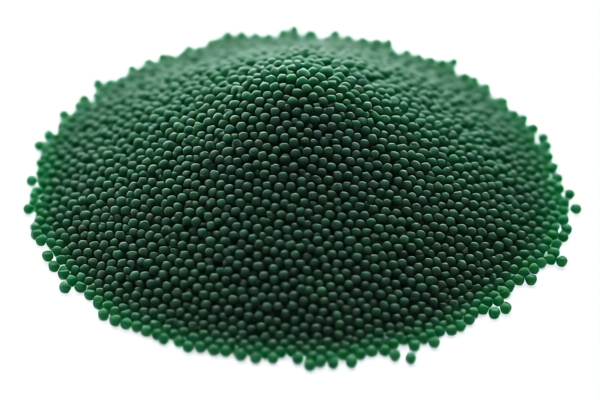
Elastomeric Petroleum Resin Granules
CN → US| HS编码 | 关税税率 | 原产国 | 目的国 | 文档 |
|---|---|---|---|---|
| 3913902090 | 40.8% | CN | US | 官方文档 |
| 3824994900 | 41.5% | CN | US | 官方文档 |
| 3913901000 | 35.0% | CN | US | 官方文档 |
| 3824995500 | 38.7% | CN | US | 官方文档 |
| 3909501000 | 35.0% | CN | US | 官方文档 |
商品图片


AI分析
🧪 Elastomeric Petroleum Resin Granules (Low Molecular Weight)
🌐 HS Code Reference & Customs Clearance Guide | 2026 Latest Tariff Analysis | Professional Entry Strategies
📌 I. Product Definition & Classification: What Exactly Are "Elastomeric Petroleum Resin Granules"?
Low molecular weight petroleum resin elastomers are specialized hydrocarbon polymers derived from petroleum byproducts. They exhibit elastomeric properties (rubber-like elasticity) while maintaining the processability of resins. In international trade, they are often confused with general plastics or chemical mixtures.
Key Distinction: * Polymeric Resins (Chapter 39): If the product is primarily a polymeric substance with elastomeric characteristics, it falls under Chapter 39. * Prepared Chemical Products (Chapter 38): If the product is classified as a mixture, halogenated derivative, or prepared chemical auxiliary agent, it falls under Chapter 38.
⚠️ Critical Classification Point:
- If the primary characteristic is being a polymer/elastomer (even if modified) → Look at HS 3913 or 3909.
- If the primary characteristic is a chemical mixture or halogenated compound → Look at HS 3824.
- Note: The summary descriptions in the data link the same physical product to different HS codes based on specific chemical composition interpretations (e.g., hydrocarbon polymer vs. halogenated mixture).
📦 II. HS Code Classification Details (2026 Authoritative Cross-Reference)
Based on the provided data, the product "Elastomeric Petroleum Resin Granules" maps to five distinct HS codes. The differences lie in the legal description and tariff liability.
| HS Code | Product Description (Summary) | Chemical Nature | Total Tax Rate | Key Differentiator |
|---|---|---|---|---|
| 3913.90.20.90 | Low MW Petroleum Resin Elastomer; belongs to hydrocarbon polymers; shape is elastomer. | Hydrocarbon Polymer | 40.8% | Classified strictly as a generic hydrocarbon polymer under 3913. |
| 3824.99.49.00 | Low MW Petroleum Resin Elastomer; hydrocarbon composition derived from petroleum. | Petroleum-derived Hydrocarbon | 41.5% | Classified under "Prepared Binders" or other chemical products (3824), often used for specific industrial binders/adhesives. |
| 3913.90.10.00 | Low MW Petroleum Resin Elastomer; belongs to natural polymers and modified derivatives. | Modified Natural Polymer | 35.0% | Lowest Tax Rate. Classifies as a modified derivative of natural polymers. Requires strong proof of modification status. |
| 3824.99.55.00 | Low MW Petroleum Resin Elastomer; belongs to halogenated hydrocarbon mixtures or other chemicals. | Halogenated Mixture | 38.7% | Classifies as a halogenated product. This implies the resin contains halogens (Cl, F, Br, I), changing its chemical nature significantly. |
| 3909.50.10.00 | Petroleum Resin Elastomer Plasticizer; elastomer shape consistent with polyurethane/resin primary shapes. | Polyurethane/Resin Primary Shape | 35.0% | Classified as a Plasticizer or primary shape material, specifically linked to polyurethane processing characteristics. |
🔍 Strategic Insight:
- Tax Variation Range: The total tax burden varies significantly from 35.0% to 41.5%.
- Chemical Identity is Key: The difference between3913.90.20.90(40.8%) and3913.90.10.00(35.0%) lies in whether the customs authority views the material as a generic polymer or a "modified derivative."
- Halogen Content:3824.99.55.00explicitly mentions halogenated compounds. If your resin does not contain halogens, this classification is incorrect and will lead to penalties.
💰 III. 2026 Latest Tariff Rate Breakdown (Including Surtaxes & Policy Add-ons)
✅ Applicable Country: USA (US)
✅ Origin: China (CN)
✅ Effective Date: Post-November 2025 (Current Trade Environment)
All HS codes in the dataset share the same surtax structure. The total tax is calculated as:
Total Tax = Base Duty + Section 301 Surcharge (25%) + IEEPA Surcharge (10%)
🎯 1. 3913.90.20.90 & 3824.99.49.00 (Higher Tax Bracket)
| Item | Content |
|---|---|
| Base Duty | 5.8% (for 3913) / 6.5% (for 3824) |
| Section 301 Surtax | +25.0% (USITC Footnote: China-origin goods) |
| IEEPA Surtax | +10.0% (China-origin goods, effective Nov 2025) |
| Total Tax Rate | 40.8% (3913) / 41.5% (3824) |
| Calculation Basis | CIF Value × Total Rate |
| De Minimis Exemption | ❌ NOT Applicable |
| Legal Path | Base Tariff → USITC:301 → IEEPA:9903 |
📌 Explanation:
- 3913.90.20.90: Base 5.8% + 25% + 10% = 40.8%.
- 3824.99.49.00: Base 6.5% + 25% + 10% = 41.5%.
- These are the most expensive classifications. Avoid unless necessary for chemical compatibility reasons.
🎯 2. 3913.90.10.00 & 3909.50.10.00 (Lowest Tax Bracket)
| Item | Content |
|---|---|
| Base Duty | 0.0% |
| Section 301 Surtax | +25.0% |
| IEEPA Surtax | +10.0% |
| Total Tax Rate | 35.0% |
| Calculation Basis | CIF Value × 35.0% |
| De Minimis Exemption | ❌ NOT Applicable |
| Legal Path | Base Tariff (0%) → USITC:301 → IEEPA:9903 |
📌 Explanation:
- Both codes have 0% base duty.
- The total burden is driven entirely by the political surcharges (25% + 10%).
- Strategic Advantage: Choosing either3913.90.10.00or3909.50.10.00saves 5.8% - 6.5% compared to the highest bracket. This is significant for high-volume shipments.
🎯 3. 3824.99.55.00 (Mid-Range Tax)
| Item | Content |
|---|---|
| Base Duty | 3.7% |
| Section 301 Surtax | +25.0% |
| IEEPA Surtax | +10.0% |
| Total Tax Rate | 38.7% |
| Calculation Basis | CIF Value × 38.7% |
📌 Explanation:
- Base duty is 3.7%.
- This code is only valid if the resin is halogenated. Do not use if the resin is purely hydrocarbon-based.
🛠️ IV. Customs Clearance Practical Advice (Real-World Pitfall Guide)
✅ 1. Required Documentation Checklist
| Document | Mandatory? | Purpose |
|---|---|---|
| ✅ Product Specification Sheet | ✔️ | Must detail: Molecular weight range, chemical structure (hydrocarbon vs. halogenated), physical form (granules). |
| ✅ COA (Certificate of Analysis) | ✔️ | Proves chemical composition. Critical for distinguishing between 3913 (polymer) and 3824 (mixture/halogenated). |
| ✅ Formula/Composition Disclosure | ✔️ | Must specify % of hydrocarbons, resins, and any additives. If halogens are present, they must be explicitly stated. |
| ✅ Commercial Invoice | ✔️ | Description must match HS code logic (e.g., "Elastomeric Resin" vs. "Halogenated Chemical Mixture"). |
| ✅ Origin Certificate | ✔️ | To confirm China origin for surtax application. |
✅ 2. Classification Strategy & Tips
🔥 "Define the Chemistry, Not Just the Form!"
| Scenario | Recommended HS Code | Why? | Risk |
|---|---|---|---|
| Standard Hydrocarbon Resin | 3913.90.10.00 |
Lowest tax (35%). Classifies as modified polymer. | Must prove it's a "modified derivative." |
| Resin for Polyurethane Processing | 3909.50.10.00 |
Lowest tax (35%). Specific to PU/resin primary shapes. | Must demonstrate end-use in PU industry. |
| Halogenated Resin | 3824.99.55.00 |
Required by chemical nature. | High scrutiny. Halogens trigger environmental checks. |
| Generic Industrial Binder | 3824.99.49.00 |
High tax (41.5%). Last resort if polymer classification fails. | Highest cost. Avoid if possible. |
| Unclassified Polymer | 3913.90.20.90 |
Standard polymer tax (40.8%). | Moderate cost. Safe but expensive. |
📌 Warning:
- Do not arbitrarily choose3913.90.10.00(35%) if the product is clearly a mixture or halogenated. Customs may audit and reclassify to3824.99.55.00(38.7%) or3824.99.49.00(41.5%) + penalties.
- Granules do not dictate the HS code. The chemical composition does.
✅ 3. Special Handling for Elastomers
| Issue | Solution |
|---|---|
| Misclassification as Rubber (4002) | Ensure documentation emphasizes "Resin" and "Hydrocarbon Polymer" not just "Elastomer." Rubber codes often have different surtax structures. |
| Halogen Detection | If 3824.99.55.00 is chosen, ensure environmental compliance (EPA) for halogenated organics. |
| Plasticizer vs. Resin | If using 3909.50.10.00, provide proof that the product functions as a plasticizer or primary shape material in PU processing. |
🌍 V. Global Market Clearance Comparison (2026)
| Market | Recommended HS | Est. Total Tax (China Origin) | Key Requirement |
|---|---|---|---|
| 🇺🇸 USA | 3913.90.10.00 / 3909.50.10.00 |
35.0% | Detailed COA, Chemical Abstract Service (CAS) numbers. |
| 🇨🇳 China | 3913.90.20.90 |
~5.8% (Base) | Import License if applicable, CCC (if consumer-facing). |
| 🇪🇺 EU | 3913.90.90 |
~4-5% | REACH Registration (mandatory for chemicals). |
| 🇬🇧 UK | 3913.90.90 |
~4-5% | UK REACH, Post-Brexit certification. |
| 🇻🇳 Vietnam | 3913.90.90 |
0-5% (with Certificate of Origin) | Form E (China-Australia/ASEAN if applicable). |
📌 Conclusion:
- USA is the most expensive market due to Section 301 + IEEPA surcharges.
- Tax Minimization in USA relies on selecting 0% base duty codes (3913.90.10.00or3909.50.10.00).
- EU/UK require strict REACH/UK REACH compliance for any chemical product.
📌 VI. Common Errors & Pitfalls (Lessons Learned)
❌ Error 1: Using 3824.99.49.00 (41.5%) for a standard hydrocarbon resin.
👉 Fix: If it is a pure hydrocarbon polymer, use 3913.90.10.00 (35.0%) to save 6.5%.
❌ Error 2: Using 3824.99.55.00 for a non-halogenated resin.
👉 Risk: Customs will detect no halogens via lab test, reclassify to 3824.99.49.00 or 3913, and impose penalties for misdeclaration.
❌ Error 3: Confusing "Elastomer" with "Rubber" (Chapter 40).
👉 Fix: Petroleum resin elastomers are synthetic resins, not natural or synthetic rubbers in the traditional sense. Stick to Chapter 39 or 38.
✅ Correct Declaration Example:
"Low Molecular Weight Hydrocarbon Resin, Elastomeric Grade, Granular Form, Used as Polymer Modifier, CAS No. [Insert], Halogen-Free"
🎯 VII. Conclusion: Professional Classification for Cost Optimization
🎯 Key Takeaway:
🔹 "Hydrocarbon Polymer = 3913.90.10.00 (35%)"
🔹 "Halogenated Mixture = 3824.99.55.00 (38.7%)"
🔹 "Generic/Other = 3824.99.49.00 (41.5%)"
📌 Action Plan:
1. Lab Test: Confirm if the resin contains halogens. If yes, use 3824.99.55.00. If no, proceed to step 2.
2. End-Use Proof: If used in Polyurethane processing, gather docs to support 3909.50.10.00 (35%).
3. Fallback: If not PU-specific, classify as Modified Natural Polymer Derivative using 3913.90.10.00 (35%).
4. Avoid: 3913.90.20.90 and 3824.99.49.00 unless no other classification fits, as they carry higher base duties.
📣 Final Advice:
📞 Consult a Customs Broker with the product's CAS number and chemical structure before shipment.
🚀 Apply for Advance Ruling if possible to lock in the 35% rate and avoid post-import audits.
✨ Precision Classification Saves Money!
💼 Every Percentage Point of Duty Counts!
用户评价
关于 HS 编码归类
协调制度(HS)是由世界海关组织(WCO)制定的国际贸易商品分类标准。全球 200 多个国家采用 HS 系统作为海关关税、贸易统计和进出口监管的基础。
每个 HS 编码遵循以下层级结构:
- 章(2 位)——商品大类(例如:第 84 章:机器和机械设备)
- 品目(4 位)——章内的更具体分类
- 子目(6 位)——国际通用细分,所有 WCO 成员国统一使用
- 本国细分(8-10 位)——各国自行扩展的细分编码,如美国 HTSUS 10 位编码
正确的 HS 编码归类对于顺利通关、准确缴纳关税和遵守贸易法规至关重要。错误归类可能导致海关延误、多缴关税或罚款。
从CN进口到US时,适用的关税税率可能包括:
- 最惠国(MFN)税率——适用于 WTO 成员国的标准关税税率
- 普通税率——适用于无贸易协定国家
- 贸易救济关税——附加关税,如 301 条款(反倾销)、232 条款(国家安全)或反补贴税
本页内容仅供参考。如需正式归类,请咨询当地海关或持牌报关代理。