Elastomeric Petroleum Resin Granules
CN → US| HS Code | Tariff Rate | Origin | Destination | Doc |
|---|---|---|---|---|
| 3913902090 | 40.8% | CN | US | Official Doc |
| 3824994900 | 41.5% | CN | US | Official Doc |
| 3913901000 | 35.0% | CN | US | Official Doc |
| 3824995500 | 38.7% | CN | US | Official Doc |
| 3909501000 | 35.0% | CN | US | Official Doc |
Product Images


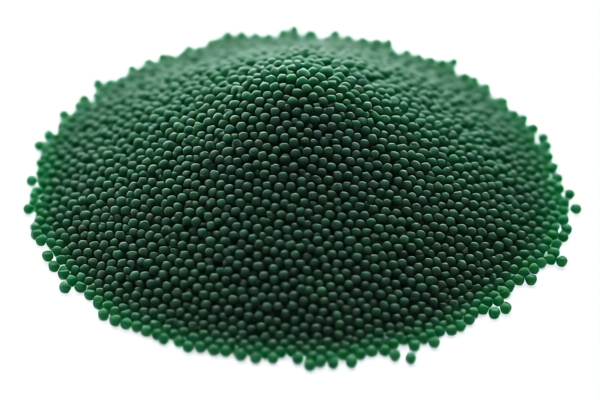
AI Analysis
🧪 Elastomeric Petroleum Resin Granules (Low Molecular Weight)
🌐 HS Code Reference & Customs Clearance Guide | 2026 Latest Tariff Analysis | Professional Entry Strategies
📌 I. Product Definition & Classification: What Exactly Are "Elastomeric Petroleum Resin Granules"?
Low molecular weight petroleum resin elastomers are specialized hydrocarbon polymers derived from petroleum byproducts. They exhibit elastomeric properties (rubber-like elasticity) while maintaining the processability of resins. In international trade, they are often confused with general plastics or chemical mixtures.
Key Distinction: * Polymeric Resins (Chapter 39): If the product is primarily a polymeric substance with elastomeric characteristics, it falls under Chapter 39. * Prepared Chemical Products (Chapter 38): If the product is classified as a mixture, halogenated derivative, or prepared chemical auxiliary agent, it falls under Chapter 38.
⚠️ Critical Classification Point:
- If the primary characteristic is being a polymer/elastomer (even if modified) → Look at HS 3913 or 3909.
- If the primary characteristic is a chemical mixture or halogenated compound → Look at HS 3824.
- Note: The summary descriptions in the data link the same physical product to different HS codes based on specific chemical composition interpretations (e.g., hydrocarbon polymer vs. halogenated mixture).
📦 II. HS Code Classification Details (2026 Authoritative Cross-Reference)
Based on the provided data, the product "Elastomeric Petroleum Resin Granules" maps to five distinct HS codes. The differences lie in the legal description and tariff liability.
| HS Code | Product Description (Summary) | Chemical Nature | Total Tax Rate | Key Differentiator |
|---|---|---|---|---|
| 3913.90.20.90 | Low MW Petroleum Resin Elastomer; belongs to hydrocarbon polymers; shape is elastomer. | Hydrocarbon Polymer | 40.8% | Classified strictly as a generic hydrocarbon polymer under 3913. |
| 3824.99.49.00 | Low MW Petroleum Resin Elastomer; hydrocarbon composition derived from petroleum. | Petroleum-derived Hydrocarbon | 41.5% | Classified under "Prepared Binders" or other chemical products (3824), often used for specific industrial binders/adhesives. |
| 3913.90.10.00 | Low MW Petroleum Resin Elastomer; belongs to natural polymers and modified derivatives. | Modified Natural Polymer | 35.0% | Lowest Tax Rate. Classifies as a modified derivative of natural polymers. Requires strong proof of modification status. |
| 3824.99.55.00 | Low MW Petroleum Resin Elastomer; belongs to halogenated hydrocarbon mixtures or other chemicals. | Halogenated Mixture | 38.7% | Classifies as a halogenated product. This implies the resin contains halogens (Cl, F, Br, I), changing its chemical nature significantly. |
| 3909.50.10.00 | Petroleum Resin Elastomer Plasticizer; elastomer shape consistent with polyurethane/resin primary shapes. | Polyurethane/Resin Primary Shape | 35.0% | Classified as a Plasticizer or primary shape material, specifically linked to polyurethane processing characteristics. |
🔍 Strategic Insight:
- Tax Variation Range: The total tax burden varies significantly from 35.0% to 41.5%.
- Chemical Identity is Key: The difference between3913.90.20.90(40.8%) and3913.90.10.00(35.0%) lies in whether the customs authority views the material as a generic polymer or a "modified derivative."
- Halogen Content:3824.99.55.00explicitly mentions halogenated compounds. If your resin does not contain halogens, this classification is incorrect and will lead to penalties.
💰 III. 2026 Latest Tariff Rate Breakdown (Including Surtaxes & Policy Add-ons)
✅ Applicable Country: USA (US)
✅ Origin: China (CN)
✅ Effective Date: Post-November 2025 (Current Trade Environment)
All HS codes in the dataset share the same surtax structure. The total tax is calculated as:
Total Tax = Base Duty + Section 301 Surcharge (25%) + IEEPA Surcharge (10%)
🎯 1. 3913.90.20.90 & 3824.99.49.00 (Higher Tax Bracket)
| Item | Content |
|---|---|
| Base Duty | 5.8% (for 3913) / 6.5% (for 3824) |
| Section 301 Surtax | +25.0% (USITC Footnote: China-origin goods) |
| IEEPA Surtax | +10.0% (China-origin goods, effective Nov 2025) |
| Total Tax Rate | 40.8% (3913) / 41.5% (3824) |
| Calculation Basis | CIF Value × Total Rate |
| De Minimis Exemption | ❌ NOT Applicable |
| Legal Path | Base Tariff → USITC:301 → IEEPA:9903 |
📌 Explanation:
- 3913.90.20.90: Base 5.8% + 25% + 10% = 40.8%.
- 3824.99.49.00: Base 6.5% + 25% + 10% = 41.5%.
- These are the most expensive classifications. Avoid unless necessary for chemical compatibility reasons.
🎯 2. 3913.90.10.00 & 3909.50.10.00 (Lowest Tax Bracket)
| Item | Content |
|---|---|
| Base Duty | 0.0% |
| Section 301 Surtax | +25.0% |
| IEEPA Surtax | +10.0% |
| Total Tax Rate | 35.0% |
| Calculation Basis | CIF Value × 35.0% |
| De Minimis Exemption | ❌ NOT Applicable |
| Legal Path | Base Tariff (0%) → USITC:301 → IEEPA:9903 |
📌 Explanation:
- Both codes have 0% base duty.
- The total burden is driven entirely by the political surcharges (25% + 10%).
- Strategic Advantage: Choosing either3913.90.10.00or3909.50.10.00saves 5.8% - 6.5% compared to the highest bracket. This is significant for high-volume shipments.
🎯 3. 3824.99.55.00 (Mid-Range Tax)
| Item | Content |
|---|---|
| Base Duty | 3.7% |
| Section 301 Surtax | +25.0% |
| IEEPA Surtax | +10.0% |
| Total Tax Rate | 38.7% |
| Calculation Basis | CIF Value × 38.7% |
📌 Explanation:
- Base duty is 3.7%.
- This code is only valid if the resin is halogenated. Do not use if the resin is purely hydrocarbon-based.
🛠️ IV. Customs Clearance Practical Advice (Real-World Pitfall Guide)
✅ 1. Required Documentation Checklist
| Document | Mandatory? | Purpose |
|---|---|---|
| ✅ Product Specification Sheet | ✔️ | Must detail: Molecular weight range, chemical structure (hydrocarbon vs. halogenated), physical form (granules). |
| ✅ COA (Certificate of Analysis) | ✔️ | Proves chemical composition. Critical for distinguishing between 3913 (polymer) and 3824 (mixture/halogenated). |
| ✅ Formula/Composition Disclosure | ✔️ | Must specify % of hydrocarbons, resins, and any additives. If halogens are present, they must be explicitly stated. |
| ✅ Commercial Invoice | ✔️ | Description must match HS code logic (e.g., "Elastomeric Resin" vs. "Halogenated Chemical Mixture"). |
| ✅ Origin Certificate | ✔️ | To confirm China origin for surtax application. |
✅ 2. Classification Strategy & Tips
🔥 "Define the Chemistry, Not Just the Form!"
| Scenario | Recommended HS Code | Why? | Risk |
|---|---|---|---|
| Standard Hydrocarbon Resin | 3913.90.10.00 |
Lowest tax (35%). Classifies as modified polymer. | Must prove it's a "modified derivative." |
| Resin for Polyurethane Processing | 3909.50.10.00 |
Lowest tax (35%). Specific to PU/resin primary shapes. | Must demonstrate end-use in PU industry. |
| Halogenated Resin | 3824.99.55.00 |
Required by chemical nature. | High scrutiny. Halogens trigger environmental checks. |
| Generic Industrial Binder | 3824.99.49.00 |
High tax (41.5%). Last resort if polymer classification fails. | Highest cost. Avoid if possible. |
| Unclassified Polymer | 3913.90.20.90 |
Standard polymer tax (40.8%). | Moderate cost. Safe but expensive. |
📌 Warning:
- Do not arbitrarily choose3913.90.10.00(35%) if the product is clearly a mixture or halogenated. Customs may audit and reclassify to3824.99.55.00(38.7%) or3824.99.49.00(41.5%) + penalties.
- Granules do not dictate the HS code. The chemical composition does.
✅ 3. Special Handling for Elastomers
| Issue | Solution |
|---|---|
| Misclassification as Rubber (4002) | Ensure documentation emphasizes "Resin" and "Hydrocarbon Polymer" not just "Elastomer." Rubber codes often have different surtax structures. |
| Halogen Detection | If 3824.99.55.00 is chosen, ensure environmental compliance (EPA) for halogenated organics. |
| Plasticizer vs. Resin | If using 3909.50.10.00, provide proof that the product functions as a plasticizer or primary shape material in PU processing. |
🌍 V. Global Market Clearance Comparison (2026)
| Market | Recommended HS | Est. Total Tax (China Origin) | Key Requirement |
|---|---|---|---|
| 🇺🇸 USA | 3913.90.10.00 / 3909.50.10.00 |
35.0% | Detailed COA, Chemical Abstract Service (CAS) numbers. |
| 🇨🇳 China | 3913.90.20.90 |
~5.8% (Base) | Import License if applicable, CCC (if consumer-facing). |
| 🇪🇺 EU | 3913.90.90 |
~4-5% | REACH Registration (mandatory for chemicals). |
| 🇬🇧 UK | 3913.90.90 |
~4-5% | UK REACH, Post-Brexit certification. |
| 🇻🇳 Vietnam | 3913.90.90 |
0-5% (with Certificate of Origin) | Form E (China-Australia/ASEAN if applicable). |
📌 Conclusion:
- USA is the most expensive market due to Section 301 + IEEPA surcharges.
- Tax Minimization in USA relies on selecting 0% base duty codes (3913.90.10.00or3909.50.10.00).
- EU/UK require strict REACH/UK REACH compliance for any chemical product.
📌 VI. Common Errors & Pitfalls (Lessons Learned)
❌ Error 1: Using 3824.99.49.00 (41.5%) for a standard hydrocarbon resin.
👉 Fix: If it is a pure hydrocarbon polymer, use 3913.90.10.00 (35.0%) to save 6.5%.
❌ Error 2: Using 3824.99.55.00 for a non-halogenated resin.
👉 Risk: Customs will detect no halogens via lab test, reclassify to 3824.99.49.00 or 3913, and impose penalties for misdeclaration.
❌ Error 3: Confusing "Elastomer" with "Rubber" (Chapter 40).
👉 Fix: Petroleum resin elastomers are synthetic resins, not natural or synthetic rubbers in the traditional sense. Stick to Chapter 39 or 38.
✅ Correct Declaration Example:
"Low Molecular Weight Hydrocarbon Resin, Elastomeric Grade, Granular Form, Used as Polymer Modifier, CAS No. [Insert], Halogen-Free"
🎯 VII. Conclusion: Professional Classification for Cost Optimization
🎯 Key Takeaway:
🔹 "Hydrocarbon Polymer = 3913.90.10.00 (35%)"
🔹 "Halogenated Mixture = 3824.99.55.00 (38.7%)"
🔹 "Generic/Other = 3824.99.49.00 (41.5%)"
📌 Action Plan:
1. Lab Test: Confirm if the resin contains halogens. If yes, use 3824.99.55.00. If no, proceed to step 2.
2. End-Use Proof: If used in Polyurethane processing, gather docs to support 3909.50.10.00 (35%).
3. Fallback: If not PU-specific, classify as Modified Natural Polymer Derivative using 3913.90.10.00 (35%).
4. Avoid: 3913.90.20.90 and 3824.99.49.00 unless no other classification fits, as they carry higher base duties.
📣 Final Advice:
📞 Consult a Customs Broker with the product's CAS number and chemical structure before shipment.
🚀 Apply for Advance Ruling if possible to lock in the 35% rate and avoid post-import audits.
✨ Precision Classification Saves Money!
💼 Every Percentage Point of Duty Counts!
Customer Reviews
About HS Code Classification
The Harmonized System (HS) is an internationally standardized nomenclature developed by the World Customs Organization (WCO) to classify traded products. Over 200 countries use the HS system as the basis for customs tariffs, trade statistics, and import/export regulations.
Each HS code follows a hierarchical structure:
- Chapter (2 digits) — Broad category of goods (e.g., Chapter 84: Machinery and Mechanical Appliances)
- Heading (4 digits) — More specific grouping within the chapter
- Subheading (6 digits) — Internationally standardized breakdown, used by all WCO member countries
- National subdivisions (8-10 digits) — Country-specific extensions for further classification, such as US HTSUS 10-digit codes
Correct HS code classification is essential for smooth customs clearance, accurate duty payment, and compliance with trade regulations. Misclassification can lead to customs delays, overpayment of duties, or penalties.
When importing from CN to US, the applicable tariff rates may include:
- Most-Favored-Nation (MFN) rate — The standard duty rate applied to WTO members
- General rate — Applied to countries without trade agreements
- Trade remedy duties — Additional tariffs such as Section 301 (anti-dumping), Section 232 (national security), or countervailing duties
The information provided on this page is for reference purposes only. For official classification, please consult with your local customs authority or a licensed customs broker.