Electric Vegetable Cutter Green
CN → US| HS编码 | 关税税率 | 原产国 | 目的国 | 文档 |
|---|---|---|---|---|
| 8509400040 | 14.2% | CN | US | 官方文档 |
| 8509400025 | 14.2% | CN | US | 官方文档 |
| 8438600000 | 35.0% | CN | US | 官方文档 |
| 8438800000 | 35.0% | CN | US | 官方文档 |
商品图片
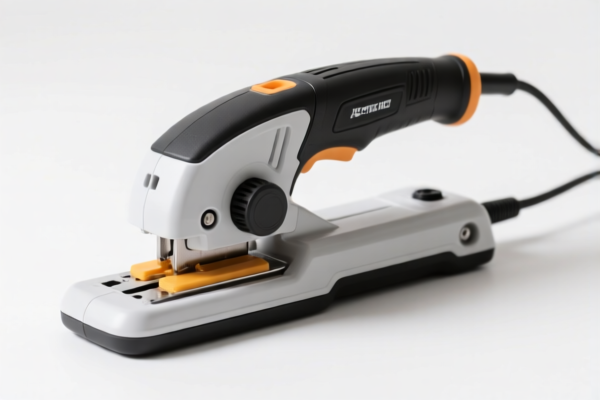
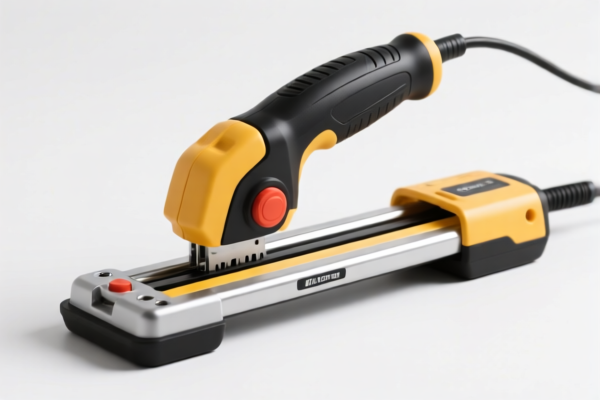
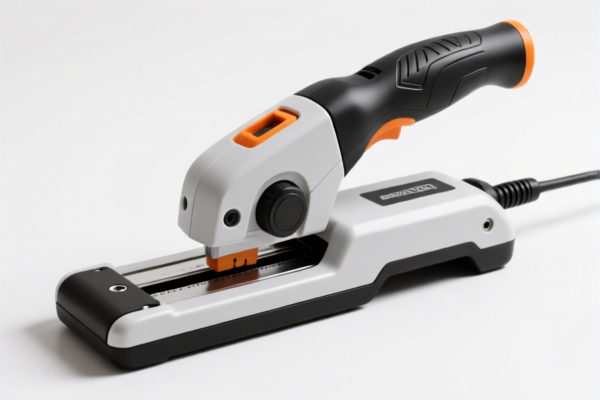
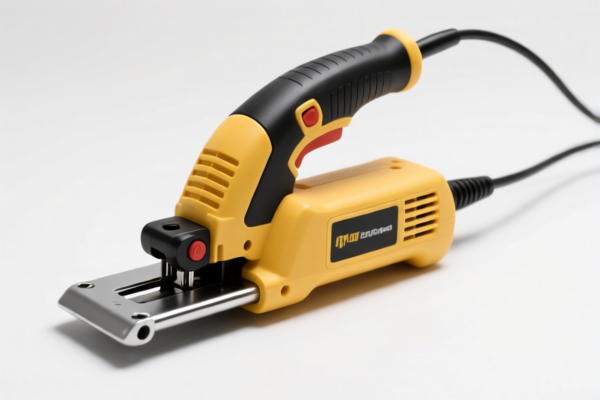
AI分析
🥦 Electric Vegetable Cutter (Green)
🌐 HS Code Reference & Customs Clearance Guide | 2026 Latest Tariff Analysis | Professional Clearance Strategy
📌 I. Product Definition & Classification: What is an "Electric Vegetable Cutter"?
The "Electric Vegetable Cutter" is a household or commercial appliance designed to slice, chop, dice, or grind vegetables and fruits. In international trade, its classification depends heavily on whether it is considered a household electric appliance or an industrial food preparation machine.
⚠️ Key Distinction Point:
- If it is a small household appliance (plug-in, handheld, or countertop, <2000W typically used in homes/kitchens) → It falls under Chapter 85 (Electrical Machinery).
- If it is a larger, industrial-grade machine (high capacity, motor-driven processing line component) → It falls under Chapter 84 (Nuclear Reactors, Boilers, Machinery).
The color "Green" is merely an aesthetic description and does not affect the HS Code classification.
📦 II. HS Code Classification Details (2026 Latest Tariff Authority Comparison)
Based on the provided data, there are 4 distinct HS Code paths with significantly different tax implications.
| HS Code | Product Description | Applicability | Tax Rate |
|---|---|---|---|
8509.40.00.40 |
Food Grinders and Mixers; Electric Domestic Appliances | Household electric vegetable chopper/slicer | 14.2% |
8509.40.00.25 |
Food Grinders and Mixers; Electric Domestic Appliances | Household electric vegetable chopper (Plastic/Metal body) | 14.2% |
8438.60.00.00 |
Machinery for the Preparation of Vegetables or Fruits | Industrial/Commercial food prep machinery | 35.0% |
8438.80.00.00 |
Other Food/Drink Preparation Machinery | Industrial food prep machine (General Category) | 35.0% |
🔍 Critical Insight:
- Codes 8509.40.00.40 & 8509.40.00.25 are for Household Electric Appliances. These have a much lower tax burden (14.2%).
- Codes 8438.60.00.00 & 8438.80.00.00 are for Industrial Machinery. These attract a high tax burden (35.0%) due to Section 301 tariffs.
- Misclassification Risk: Declaring a simple electric chopper as "Industrial Machinery" to avoid "Electrical Appliance" rules is incorrect and risky. However, declaring an industrial machine as a "Household Appliance" may lead to audits if the product’s capacity/power exceeds household standards.
💰 III. 2026 Latest Tariff Rate Breakdown (Including Surcharges & Policy Add-ons)
✅ Applicable Country: United States (US)
✅ Country of Origin: China (CN)
✅ Effective Date: November 10, 2025 (and onwards)
🎯 1. 8509.40.00.40 & 8509.40.00.25 —— Electric Food Processors (Household)
| Item | Content |
|---|---|
| Base Tariff | 4.2% |
| Section 301 Surcharge | 0.0% |
| Section 122 Tariff | 10.0% |
| Total Tax Rate | 14.2% |
| Tax Calculation | CIF Value × 14.2% |
| De Minimis Eligibility | ❌ No (Likely subject to strict scrutiny due to 122 clause) |
| Legal Basis Path | USITC:8509.40.00.40 → SECTION_122:10% |
📌 Explanation:
- Base Tariff (4.2%): Standard MFN rate for food grinders/mixers.
- Section 122 Tariff (10%): Applied under Section 222 of the Trade Expansion Act (often associated with national security or specific trade remedy measures). Note: The data explicitly lists "122 Clause Tariff 10%".
- No Section 301 Surcharge: These specific sub-headings under 8509 appear to be exempt from the additional 25% or 10% tariffs often applied to other electrical goods under Section 301.
- Total Cost: Only 14.2%, making this the most cost-effective classification for household electric cutters.
🎯 2. 8438.60.00.00 & 8438.80.00.00 —— Food Preparation Machinery (Industrial)
| Item | Content |
|---|---|
| Base Tariff | 0.0% |
| Section 301 Surcharge | 25.0% |
| Section 122 Tariff | 10.0% |
| Total Tax Rate | 35.0% |
| Tax Calculation | CIF Value × 35.0% |
| De Minimis Eligibility | ❌ No |
| Legal Basis Path | USITC:8438.60.00.00 → SECTION_301:25% → SECTION_122:10% |
📌 Explanation:
- Base Tariff (0.0%): Machinery for food preparation often has a 0% base rate.
- Section 301 Surcharge (25%): Applied to "Other machinery for industrial preparation of food/drink."
- Section 122 Tariff (10%): Additional layer of duty.
- Total Cost: 35.0%, which is more than double the household appliance rate. This classification is significantly more expensive.
🛠️ IV. Customs Clearance Practical Advice (Combat Pitfalls Guide)
✅ 1. Preparation Checklist (All Documents Required)
| Document | Must Provide | Description |
|---|---|---|
| ✅ Product Specifications | ✔️ | Capacity (Liters), Power (Watts), Voltage (V), Frequency (Hz) |
| ✅ Product Photos | ✔️ | Clear images of the device, blades, motor, and "Made in China" label |
| ✅ Commercial Invoice | ✔️ | Must clearly state "Electric Vegetable Slicer" or "Food Processor" |
| ✅ Packing List | ✔️ | Detail net/gross weight, dimensions |
| ✅ Certifications | ✔️ | UL/ETL (Safety), FCC (Electromagnetic Compatibility), FDA (if food-contact parts) |
| ✅ Origin Certificate | ✔️ | To prove Chinese origin for tariff calculation |
✅ 2. Declaration Strategy (Key Mnemonics)
🔥 "Household = 8509 (14.2%); Industrial = 8438 (35.0%)! Declare Power & Use!"
| Scenario | Correct Declaration | Incorrect Declaration | Consequence |
|---|---|---|---|
| Home Use Electric Chopper | 8509.40.00.40 / 8509.40.00.25 |
8438.60.00.00 |
Overpaying Tax (14.2% vs 35%) |
| Industrial Food Processor | 8438.60.00.00 |
8509.40.00.40 |
Misclassification Risk (Audit/Retrospective Duty) |
| Handheld Electric Slicer | 8509.40.00.25 |
8438.80.00.00 |
Overpaying Tax |
| Color Mention | Ignore "Green" in HS reasoning | Use "Green" as primary reason | Confusion (Color does not affect classification) |
✅ 3. Special Considerations
| Situation | Handling Advice |
|---|---|
| Mixed Shipment | If shipping both household and industrial models, separate declarations are mandatory to apply the correct rates. |
| "Green" Color | Do not use "Green" in the HS Code description. It is irrelevant. Use "Electric Food Processor" as the key term. |
| Power Rating | Ensure the declared wattage aligns with household standards (<1500W typically). High power (>2000W) may push customs to classify as 8438. |
| Blade Material | While not explicitly in the tax breakdown, stainless steel blades are standard. Mentioning "Stainless Steel Blades" supports the "Food Processor" description but doesn't change HS Code. |
🌍 V. Global Market Comparison (2026 Latest)
| Country/Region | Recommended HS Code | Tariff (China Origin) | Certification | Notes |
|---|---|---|---|---|
| 🇺🇸 USA | 8509.40.00.40 |
14.2% | UL, FCC | Lowest Tax Path for household electric. |
| 🇺🇸 USA | 8438.60.00.00 |
35.0% | None Specific | High tax due to Section 301 + 122. |
| 🇨🇳 China | 8509.40.00.40 |
~10-13% (Import) | CCC | Domestic market classification similar. |
| 🇪🇺 EU | 8509.40.00 |
~0-6% | CE, RoHS | No Section 301 or 122 equivalents. |
| 🇬🇧 UK | 8509.40.00 |
~0-6% | UKCA, RoHS | Post-Brexit tariff structures similar to EU. |
📌 Conclusion:
- For the US Market, classifying as Household Electric Appliance (8509) is financially optimal (14.2% vs 35%).
- Ensure the product is marketed and physically resembles a household appliance (not a large industrial unit) to justify the 8509 classification.
📌 VI. Common Errors & Pitfalls (Blood & Tears Lessons)
❌ Error 1: Declaring a household electric chopper as 8438.80.00.00 to "simplify" paperwork.
👉 Consequence: You pay 35% tax instead of 14.2%. Loss of profit margin.
❌ Error 2: Using "Green Vegetable Cutter" as the primary description without mentioning "Electric."
👉 Consequence: Customs may classify as a non-electric manual tool (Chapter 82/73), leading to different tax rates or denial of entry if electrical safety certs are missing.
❌ Error 3: Ignoring the "122 Clause Tariff."
👉 Consequence: Underestimating cost. Even for 8509, the 10% Section 122 tariff applies. Do not assume 0% surcharge.
✅ Correct Declaration Example:
"Electric Food Processor, Household Use, 500W, 120V, Stainless Steel Blades, Green Housing, Model XYZ, UL Listed, Made in China."
🎯 VII. Conclusion: Professional Declaration Saves Money!
🎯 Remember the Mnemonic:
🔹 "Household Electric (8509) = 14.2% Industrial Machine (8438) = 35%."
🔹 "Don't let Color Confuse You, Power and Use Define the Route!"
🔹 "122 Clause Applies to Both, Check the Base Rate First!"
📌 Pro Tip:
If your product is borderline (e.g., high-power countertop slicer), consider applying for a Binding Ruling from U.S. Customs and Border Protection (CBP) before shipment. This provides legal certainty and prevents unexpected 35% tariffs upon arrival.
📣 Immediate Action:
📞 Contact your customs broker with the following:
1. Product Photos
2. Power/Wattage Specification
3. Intended Use (Household vs. Industrial)
🚀 Optimize your tax rate to 14.2% and boost your profit!
✨ Professional Clearance Starts with Accurate Classification!
💼 Every Percent of Tax Saved is Pure Profit!
用户评价
关于 HS 编码归类
协调制度(HS)是由世界海关组织(WCO)制定的国际贸易商品分类标准。全球 200 多个国家采用 HS 系统作为海关关税、贸易统计和进出口监管的基础。
每个 HS 编码遵循以下层级结构:
- 章(2 位)——商品大类(例如:第 84 章:机器和机械设备)
- 品目(4 位)——章内的更具体分类
- 子目(6 位)——国际通用细分,所有 WCO 成员国统一使用
- 本国细分(8-10 位)——各国自行扩展的细分编码,如美国 HTSUS 10 位编码
正确的 HS 编码归类对于顺利通关、准确缴纳关税和遵守贸易法规至关重要。错误归类可能导致海关延误、多缴关税或罚款。
从CN进口到US时,适用的关税税率可能包括:
- 最惠国(MFN)税率——适用于 WTO 成员国的标准关税税率
- 普通税率——适用于无贸易协定国家
- 贸易救济关税——附加关税,如 301 条款(反倾销)、232 条款(国家安全)或反补贴税
本页内容仅供参考。如需正式归类,请咨询当地海关或持牌报关代理。