Electric Vegetable Cutter Green
CN → US| HS Code | Tariff Rate | Origin | Destination | Doc |
|---|---|---|---|---|
| 8509400040 | 14.2% | CN | US | Official Doc |
| 8509400025 | 14.2% | CN | US | Official Doc |
| 8438600000 | 35.0% | CN | US | Official Doc |
| 8438800000 | 35.0% | CN | US | Official Doc |
Product Images
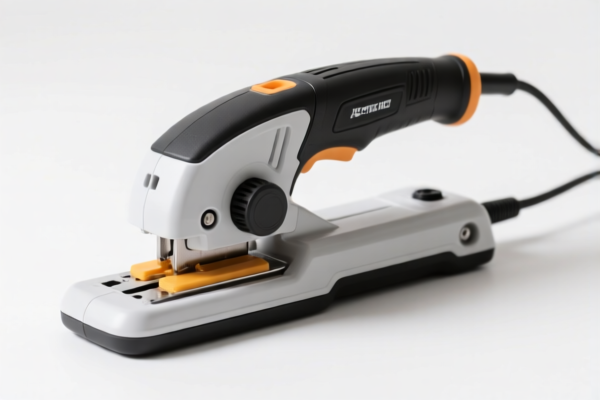
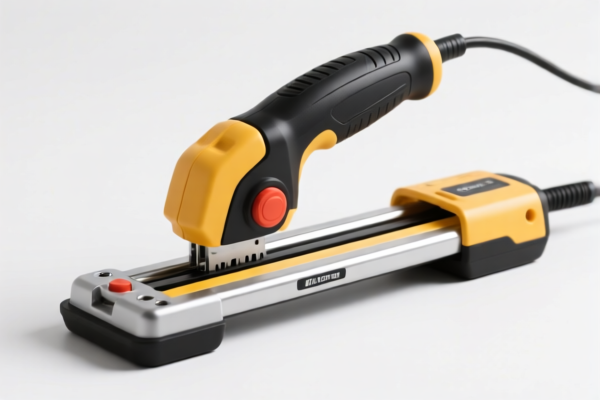
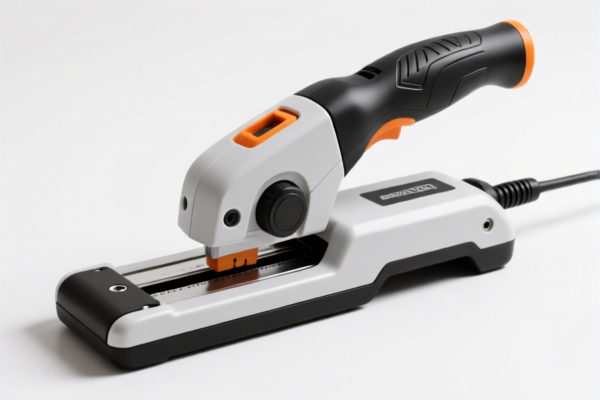
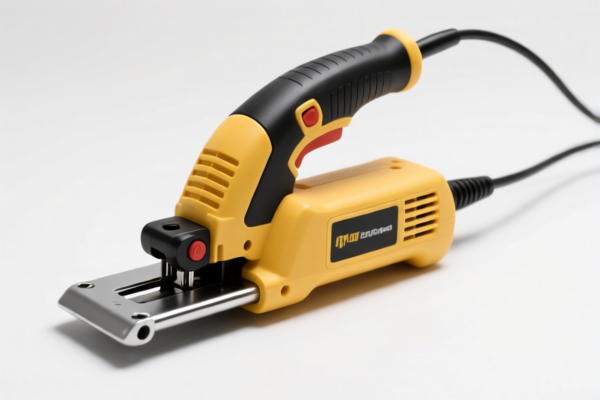
AI Analysis
🥦 Electric Vegetable Cutter (Green)
🌐 HS Code Reference & Customs Clearance Guide | 2026 Latest Tariff Analysis | Professional Clearance Strategy
📌 I. Product Definition & Classification: What is an "Electric Vegetable Cutter"?
The "Electric Vegetable Cutter" is a household or commercial appliance designed to slice, chop, dice, or grind vegetables and fruits. In international trade, its classification depends heavily on whether it is considered a household electric appliance or an industrial food preparation machine.
⚠️ Key Distinction Point:
- If it is a small household appliance (plug-in, handheld, or countertop, <2000W typically used in homes/kitchens) → It falls under Chapter 85 (Electrical Machinery).
- If it is a larger, industrial-grade machine (high capacity, motor-driven processing line component) → It falls under Chapter 84 (Nuclear Reactors, Boilers, Machinery).
The color "Green" is merely an aesthetic description and does not affect the HS Code classification.
📦 II. HS Code Classification Details (2026 Latest Tariff Authority Comparison)
Based on the provided data, there are 4 distinct HS Code paths with significantly different tax implications.
| HS Code | Product Description | Applicability | Tax Rate |
|---|---|---|---|
8509.40.00.40 |
Food Grinders and Mixers; Electric Domestic Appliances | Household electric vegetable chopper/slicer | 14.2% |
8509.40.00.25 |
Food Grinders and Mixers; Electric Domestic Appliances | Household electric vegetable chopper (Plastic/Metal body) | 14.2% |
8438.60.00.00 |
Machinery for the Preparation of Vegetables or Fruits | Industrial/Commercial food prep machinery | 35.0% |
8438.80.00.00 |
Other Food/Drink Preparation Machinery | Industrial food prep machine (General Category) | 35.0% |
🔍 Critical Insight:
- Codes 8509.40.00.40 & 8509.40.00.25 are for Household Electric Appliances. These have a much lower tax burden (14.2%).
- Codes 8438.60.00.00 & 8438.80.00.00 are for Industrial Machinery. These attract a high tax burden (35.0%) due to Section 301 tariffs.
- Misclassification Risk: Declaring a simple electric chopper as "Industrial Machinery" to avoid "Electrical Appliance" rules is incorrect and risky. However, declaring an industrial machine as a "Household Appliance" may lead to audits if the product’s capacity/power exceeds household standards.
💰 III. 2026 Latest Tariff Rate Breakdown (Including Surcharges & Policy Add-ons)
✅ Applicable Country: United States (US)
✅ Country of Origin: China (CN)
✅ Effective Date: November 10, 2025 (and onwards)
🎯 1. 8509.40.00.40 & 8509.40.00.25 —— Electric Food Processors (Household)
| Item | Content |
|---|---|
| Base Tariff | 4.2% |
| Section 301 Surcharge | 0.0% |
| Section 122 Tariff | 10.0% |
| Total Tax Rate | 14.2% |
| Tax Calculation | CIF Value × 14.2% |
| De Minimis Eligibility | ❌ No (Likely subject to strict scrutiny due to 122 clause) |
| Legal Basis Path | USITC:8509.40.00.40 → SECTION_122:10% |
📌 Explanation:
- Base Tariff (4.2%): Standard MFN rate for food grinders/mixers.
- Section 122 Tariff (10%): Applied under Section 222 of the Trade Expansion Act (often associated with national security or specific trade remedy measures). Note: The data explicitly lists "122 Clause Tariff 10%".
- No Section 301 Surcharge: These specific sub-headings under 8509 appear to be exempt from the additional 25% or 10% tariffs often applied to other electrical goods under Section 301.
- Total Cost: Only 14.2%, making this the most cost-effective classification for household electric cutters.
🎯 2. 8438.60.00.00 & 8438.80.00.00 —— Food Preparation Machinery (Industrial)
| Item | Content |
|---|---|
| Base Tariff | 0.0% |
| Section 301 Surcharge | 25.0% |
| Section 122 Tariff | 10.0% |
| Total Tax Rate | 35.0% |
| Tax Calculation | CIF Value × 35.0% |
| De Minimis Eligibility | ❌ No |
| Legal Basis Path | USITC:8438.60.00.00 → SECTION_301:25% → SECTION_122:10% |
📌 Explanation:
- Base Tariff (0.0%): Machinery for food preparation often has a 0% base rate.
- Section 301 Surcharge (25%): Applied to "Other machinery for industrial preparation of food/drink."
- Section 122 Tariff (10%): Additional layer of duty.
- Total Cost: 35.0%, which is more than double the household appliance rate. This classification is significantly more expensive.
🛠️ IV. Customs Clearance Practical Advice (Combat Pitfalls Guide)
✅ 1. Preparation Checklist (All Documents Required)
| Document | Must Provide | Description |
|---|---|---|
| ✅ Product Specifications | ✔️ | Capacity (Liters), Power (Watts), Voltage (V), Frequency (Hz) |
| ✅ Product Photos | ✔️ | Clear images of the device, blades, motor, and "Made in China" label |
| ✅ Commercial Invoice | ✔️ | Must clearly state "Electric Vegetable Slicer" or "Food Processor" |
| ✅ Packing List | ✔️ | Detail net/gross weight, dimensions |
| ✅ Certifications | ✔️ | UL/ETL (Safety), FCC (Electromagnetic Compatibility), FDA (if food-contact parts) |
| ✅ Origin Certificate | ✔️ | To prove Chinese origin for tariff calculation |
✅ 2. Declaration Strategy (Key Mnemonics)
🔥 "Household = 8509 (14.2%); Industrial = 8438 (35.0%)! Declare Power & Use!"
| Scenario | Correct Declaration | Incorrect Declaration | Consequence |
|---|---|---|---|
| Home Use Electric Chopper | 8509.40.00.40 / 8509.40.00.25 |
8438.60.00.00 |
Overpaying Tax (14.2% vs 35%) |
| Industrial Food Processor | 8438.60.00.00 |
8509.40.00.40 |
Misclassification Risk (Audit/Retrospective Duty) |
| Handheld Electric Slicer | 8509.40.00.25 |
8438.80.00.00 |
Overpaying Tax |
| Color Mention | Ignore "Green" in HS reasoning | Use "Green" as primary reason | Confusion (Color does not affect classification) |
✅ 3. Special Considerations
| Situation | Handling Advice |
|---|---|
| Mixed Shipment | If shipping both household and industrial models, separate declarations are mandatory to apply the correct rates. |
| "Green" Color | Do not use "Green" in the HS Code description. It is irrelevant. Use "Electric Food Processor" as the key term. |
| Power Rating | Ensure the declared wattage aligns with household standards (<1500W typically). High power (>2000W) may push customs to classify as 8438. |
| Blade Material | While not explicitly in the tax breakdown, stainless steel blades are standard. Mentioning "Stainless Steel Blades" supports the "Food Processor" description but doesn't change HS Code. |
🌍 V. Global Market Comparison (2026 Latest)
| Country/Region | Recommended HS Code | Tariff (China Origin) | Certification | Notes |
|---|---|---|---|---|
| 🇺🇸 USA | 8509.40.00.40 |
14.2% | UL, FCC | Lowest Tax Path for household electric. |
| 🇺🇸 USA | 8438.60.00.00 |
35.0% | None Specific | High tax due to Section 301 + 122. |
| 🇨🇳 China | 8509.40.00.40 |
~10-13% (Import) | CCC | Domestic market classification similar. |
| 🇪🇺 EU | 8509.40.00 |
~0-6% | CE, RoHS | No Section 301 or 122 equivalents. |
| 🇬🇧 UK | 8509.40.00 |
~0-6% | UKCA, RoHS | Post-Brexit tariff structures similar to EU. |
📌 Conclusion:
- For the US Market, classifying as Household Electric Appliance (8509) is financially optimal (14.2% vs 35%).
- Ensure the product is marketed and physically resembles a household appliance (not a large industrial unit) to justify the 8509 classification.
📌 VI. Common Errors & Pitfalls (Blood & Tears Lessons)
❌ Error 1: Declaring a household electric chopper as 8438.80.00.00 to "simplify" paperwork.
👉 Consequence: You pay 35% tax instead of 14.2%. Loss of profit margin.
❌ Error 2: Using "Green Vegetable Cutter" as the primary description without mentioning "Electric."
👉 Consequence: Customs may classify as a non-electric manual tool (Chapter 82/73), leading to different tax rates or denial of entry if electrical safety certs are missing.
❌ Error 3: Ignoring the "122 Clause Tariff."
👉 Consequence: Underestimating cost. Even for 8509, the 10% Section 122 tariff applies. Do not assume 0% surcharge.
✅ Correct Declaration Example:
"Electric Food Processor, Household Use, 500W, 120V, Stainless Steel Blades, Green Housing, Model XYZ, UL Listed, Made in China."
🎯 VII. Conclusion: Professional Declaration Saves Money!
🎯 Remember the Mnemonic:
🔹 "Household Electric (8509) = 14.2% Industrial Machine (8438) = 35%."
🔹 "Don't let Color Confuse You, Power and Use Define the Route!"
🔹 "122 Clause Applies to Both, Check the Base Rate First!"
📌 Pro Tip:
If your product is borderline (e.g., high-power countertop slicer), consider applying for a Binding Ruling from U.S. Customs and Border Protection (CBP) before shipment. This provides legal certainty and prevents unexpected 35% tariffs upon arrival.
📣 Immediate Action:
📞 Contact your customs broker with the following:
1. Product Photos
2. Power/Wattage Specification
3. Intended Use (Household vs. Industrial)
🚀 Optimize your tax rate to 14.2% and boost your profit!
✨ Professional Clearance Starts with Accurate Classification!
💼 Every Percent of Tax Saved is Pure Profit!
Customer Reviews
About HS Code Classification
The Harmonized System (HS) is an internationally standardized nomenclature developed by the World Customs Organization (WCO) to classify traded products. Over 200 countries use the HS system as the basis for customs tariffs, trade statistics, and import/export regulations.
Each HS code follows a hierarchical structure:
- Chapter (2 digits) — Broad category of goods (e.g., Chapter 84: Machinery and Mechanical Appliances)
- Heading (4 digits) — More specific grouping within the chapter
- Subheading (6 digits) — Internationally standardized breakdown, used by all WCO member countries
- National subdivisions (8-10 digits) — Country-specific extensions for further classification, such as US HTSUS 10-digit codes
Correct HS code classification is essential for smooth customs clearance, accurate duty payment, and compliance with trade regulations. Misclassification can lead to customs delays, overpayment of duties, or penalties.
When importing from CN to US, the applicable tariff rates may include:
- Most-Favored-Nation (MFN) rate — The standard duty rate applied to WTO members
- General rate — Applied to countries without trade agreements
- Trade remedy duties — Additional tariffs such as Section 301 (anti-dumping), Section 232 (national security), or countervailing duties
The information provided on this page is for reference purposes only. For official classification, please consult with your local customs authority or a licensed customs broker.