Electrolytic Copper Foil Tape
CN → US商品图片
AI分析
🥇 Electrolytic Copper Foil Tape (Cathode Copper Foil)
🌐 HS Code Reference & Customs Clearance Guide | 2026 Latest Tariff Analysis | Professional Clearance Strategy
📌 I. Product Definition & Classification: Do You Really Understand "Copper Foil"?
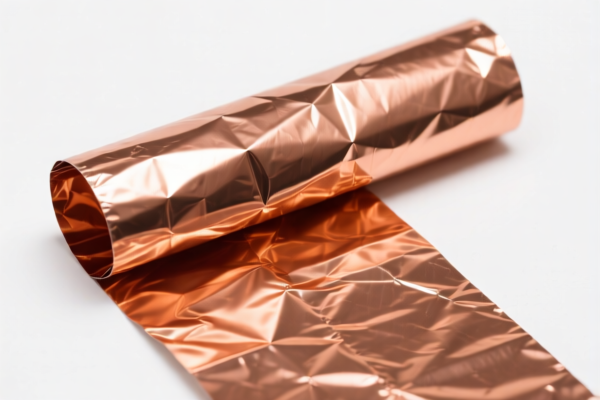
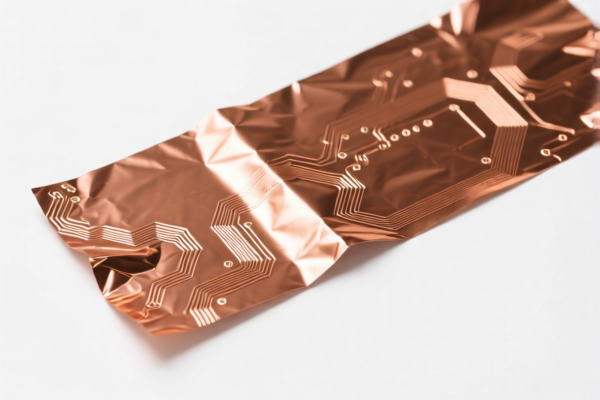
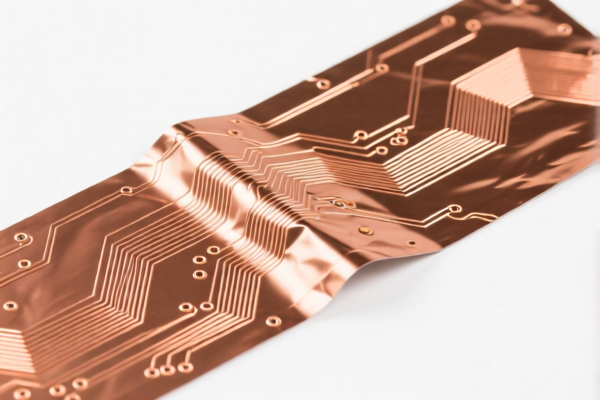
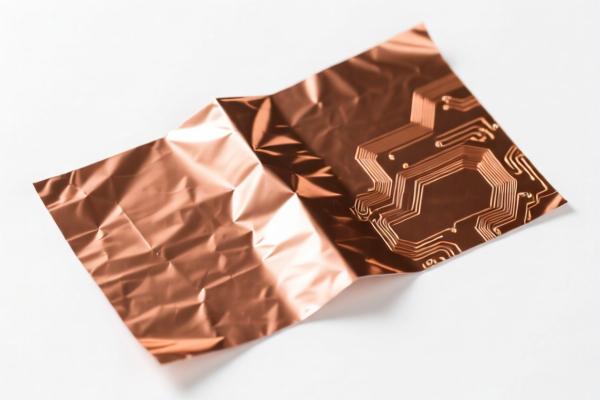
Electrolytic Copper Foil (ECF) is a high-purity copper sheet (typically 6–20 μm thick) produced by electrodeposition. It is the essential raw material for manufacturing Printed Circuit Boards (PCBs), Lithium-ion Battery electrodes, and electromagnetic shielding.
In international trade, the critical distinction lies not in the "tape" form, but in the production process:
- Electrolytic Copper Foil (ECF): Produced via electrolysis. Generally has a slightly rougher surface (roughened) for better adhesion to resin. This is the most common type.
- Rolled Copper Foil: Produced by rolling copper ingots. Used mainly in flexible PCBs or specialized electronics. Note: The user input specifies "Electrolytic," so we focus on ECF.
⚠️ Key Distinction Point:
- If it is rolled copper foil → 7411.10
- If it is electrolytic copper foil (even if slitted into strips/tapes) → 7409.21
- Crucial Rule: Slitting a copper strip into "tape" or "ribbon" for batteries/PCBs does not change its fundamental classification from "Sheet" to "Tape" under HS codes. It remains classified as Copper Sheets/Plates/Strips.
📦 II. HS Code Classification Details (2026 Latest Tariff Authority)
| HS Code | Product Description | Application Scenario | Is it Electrolytic? |
|---|---|---|---|
7409.21.00.00 |
Electrolytic Copper Sheets, Plates, and Strips, less than 0.15 mm thick | Lithium Battery Anodes, PCB Base Layers, EMI Shielding | ✅ YES (ECF) |
7409.19.00.00 |
Non-alloy Copper Sheets, Plates, and Strips, < 0.15 mm (Other than Electrolytic) | Rolled copper, general industrial use | ❌ No (Rolled/Other) |
7411.10.10.00 |
Rolled Copper Foil | Flexible PCBs (FPC), specialized electronics | ✅ Rolled |
8536.90.00.00 |
Connectors, Terminal Blocks (Finished Goods) | If the foil is already processed into a functional connector | N/A (Finished Good) |
3920.10.00.00 |
Plastic Films (If backed with polymer) | Adhesive Transfer Tape with copper backing | N/A (Composite) |
🔍 Key Reminder:
- Most "Copper Foil Tape" used in EV batteries and PCBs falls under 7409.21.00.00 because it is an electrolytic strip < 0.15mm.
- Do NOT classify as "Tape" under Chapter 39 (Plastics) or Chapter 54 (Textiles) unless it is a composite material where plastic is the essential character. Pure copper foil is always Chapter 74.
💰 III. 2026 Latest Tariff Rate Breakdown (Including Additional Taxes)
✅ Applicable Country: USA (US)
✅ Origin: China (CN)
✅ Effective Date: November 10, 2025 (and subsequent imports)
🎯 1. 7409.21.00.00 —— Electrolytic Copper Foil (< 0.15 mm)
| Item | Details |
|---|---|
| Base Rate | 0% (ad valorem) |
| USITC Additional Duty | +25% (From USITC Footnote 9903.88.01 under Section 301) |
| IEEPA Additional Duty | +10% (针对中国/香港产品, starting Nov 10, 2025) |
| Total Tariff Rate | 35% |
| Tax Calculation | CIF Value × 35% |
| De Minimis Eligibility | ❌ Denied (deny_de_minimis) |
| Legal Pathway | IEEPA:9903.01.25 → IEEPA:9903.01.24 → USITC:7409.21.00.00 → FOOTNOTE:9903.88.01 |
📌 Explanation:
- Copper Foil is a critical strategic material for EVs and electronics. The US imposes heavy tariffs to protect domestic smelting and foil production.
- 35% Total Duty: This is significant. A $100,000 shipment will incur $35,000 in duties.
- No De Minimis: Small packages (under $800) cannot bypass this tax. Every shipment is subject to scrutiny.
🛠️ IV. Customs Clearance Practical Advice (Battle-Tested Pitfall Guide)
✅ 1. Required Documentation Checklist (Mandatory)
| Document | Must Provide | Description |
|---|---|---|
| ✅ Product Specification Sheet | ✔️ | Must explicitly state: "Electrolytic Copper Foil", thickness (e.g., 9μm), width, and purity (≥99.95%). |
| ✅ Certificate of Origin (CO) | ✔️ | Essential for proving origin. If from China, expect 35% tax. |
| ✅ Commercial Invoice | ✔️ | Must use precise HS Code 7409.21.00.00. Avoid vague terms like "Copper Tape." |
| ✅ HS Code Pre-Ruling | ✔️ | Highly recommended for large volumes to lock in classification. |
| ✅ Third-Party Test Report | ✔️ | Proof of electrolytic process (vs. rolled). Some customs brokers may ask for this. |
| ✅ Packaging List | ✔️ | Detail net weight vs. gross weight. Copper is dense; weight discrepancies raise red flags. |
✅ 2. Declaration Tips (Key Mantra)
🔥 "Electrolytic = 7409, Rolled = 7411. Thickness < 0.15mm is Key!"
| Scenario | Correct Declaration | Wrong Practice |
|---|---|---|
| Copper Foil for EV Batteries | 7409.21.00.00 (Electrolytic) |
Misdeclare as 7411.10 (Rolled) to seek lower tax? → RISKY AUDIT |
| Copper Foil for PCBs | 7409.21.00.00 |
Declare as "Electronic Component" → Customs Rejection |
| Copper Strip > 0.15mm | 7409.19.00.00 or other |
Keep using < 0.15mm code → Penalty for Misclassification |
| Composite Foil (Plastic Backing) | 3920.xx or 7410 |
Declare as pure copper → Undervaluation Penalty |
✅ 3. Special Circumstances Handling
| Situation | Handling Advice |
|---|---|
| OEM Custom Widths | Provide slitting specs. Ensure the base material is still classified as "Strip" (< 0.15mm). |
| Battery Grade vs. PCB Grade | Both are 7409.21.00.00. However, Battery Grade may face stricter scrutiny for dual-use items if high-purity additives are present. |
| Small Samples (< 5kg) | Still Subject to 35% Tax. Do not use Parcel Express to avoid duty; CBP tracks electronic data. |
| Transshipment via Vietnam/Mexico | High Risk. US Customs strictly audits "Substantial Transformation." Simple transshipment will lead to seizure and blacklisting. |
🌍 V. Global Market Customs Comparison (2026 Latest)
| Country/Region | Recommended HS Code | Tariff Rate (China Origin) | Certification Requirements | Notes |
|---|---|---|---|---|
| 🇺🇸 USA | 7409.21.00.00 |
35% (25% + 10%) | No special certs, but strict origin checks | Highest barrier. Consider supply chain relocation. |
| 🇨🇳 China | 7409.21.00.00 |
0% (Import) | CCC (if finished goods) | Major producer. Import duty low, but export controls may apply. |
| 🇪🇺 EU | 7409.21.00.00 |
0% (MFN) | REACH Compliance | No Section 301 equivalent. Competitive. |
| 🇯🇵 Japan | 7409.21.00.00 |
5% | PSE (if finished) | Moderate tariff. Stable trade relations. |
| 🇬🇧 UK | 7409.21.00.00 |
0% | UKCA | Post-Brexit alignment with low tariffs for raw materials. |
📌 Conclusion:
- USA is the only major market with punitive 35% tariffs on Chinese electrolytic copper foil.
- EU/UK/Japan are tariff-free or low-tariff alternatives.
- If targeting the US, consider sourcing from Korea (HDEx), Japan (Nippon), or Malaysia to mitigate duty risks.
📌 VI. Common Errors & Pitfall Guide (Lessons Learned)
❌ Error 1: Classifying as 3920.10 (Plastic Film) because it has adhesive backing.
👉 Consequence: If the copper is the essential character, this is misclassification. Penalties + Back Taxes!
❌ Error 2: Using "Copper Tape" as the product name without specifying "Electrolytic."
👉 Consequence: Customs may classify as general copper strip (7409.19) with different duty rates or require additional verification, causing delays.
❌ Error 3: Declaring thin foil (>0.15mm) as < 0.15mm to qualify for 7409.21.
👉 Consequence: Physical inspection will reveal thickness. Fine for Fraud.
❌ Error 4: Ignoring the IEEPA 10% Surcharge effective Nov 2025.
👉 Consequence: Under-declaring total duty. Audit Trigger.
✅ Correct Practice:
"Electrolytic Copper Foil, 9 Microns, 10mm Width, Pure Copper, No Alloy, For Lithium Battery Anode Use, HS 7409.21.00.00"
🎯 VII. Conclusion: Precision in Classification, Profit in Logistics
🎯 Remember the Mantra:
🔹 "Electrolytic is 7409.21. Thickness < 0.15mm. US Tariff 35%. Don't be cheap, be right!"
🔹 "Copper Foil is strategic. 35% tax kills margins. Plan your supply chain early!"
📌 Pro Tip:
If you are exporting high-performance copper foil (e.g., for advanced EVs), consider applying for an Exclusion under Section 301 if available for specific sub-headings, though rare for raw copper.
More realistically, diversify manufacturing to non-China origins to access the lucrative US market with 0% additional duty.
📣 Immediate Action:
📞 Consult a licensed customs broker for a Pre-Ruling on Thickness and Process.
📄 Ensure your Invoice and Packing List match the 35% Tariff Duty Entry.
🚀 Protect your profit margin by accurate HS coding.
✨ Professional Clearance Starts with Accurate Classification!
💼 Your Cost Efficiency Depends on Your HS Code Strategy!
用户评价
关于 HS 编码归类
协调制度(HS)是由世界海关组织(WCO)制定的国际贸易商品分类标准。全球 200 多个国家采用 HS 系统作为海关关税、贸易统计和进出口监管的基础。
每个 HS 编码遵循以下层级结构:
- 章(2 位)——商品大类(例如:第 84 章:机器和机械设备)
- 品目(4 位)——章内的更具体分类
- 子目(6 位)——国际通用细分,所有 WCO 成员国统一使用
- 本国细分(8-10 位)——各国自行扩展的细分编码,如美国 HTSUS 10 位编码
正确的 HS 编码归类对于顺利通关、准确缴纳关税和遵守贸易法规至关重要。错误归类可能导致海关延误、多缴关税或罚款。
从CN进口到US时,适用的关税税率可能包括:
- 最惠国(MFN)税率——适用于 WTO 成员国的标准关税税率
- 普通税率——适用于无贸易协定国家
- 贸易救济关税——附加关税,如 301 条款(反倾销)、232 条款(国家安全)或反补贴税
本页内容仅供参考。如需正式归类,请咨询当地海关或持牌报关代理。