Electrolytic Copper Foil Tape
CN → USProduct Images
AI Analysis
🥇 Electrolytic Copper Foil Tape (Cathode Copper Foil)
🌐 HS Code Reference & Customs Clearance Guide | 2026 Latest Tariff Analysis | Professional Clearance Strategy
📌 I. Product Definition & Classification: Do You Really Understand "Copper Foil"?
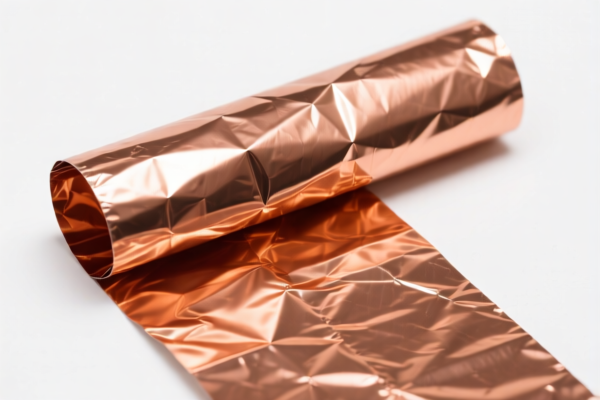
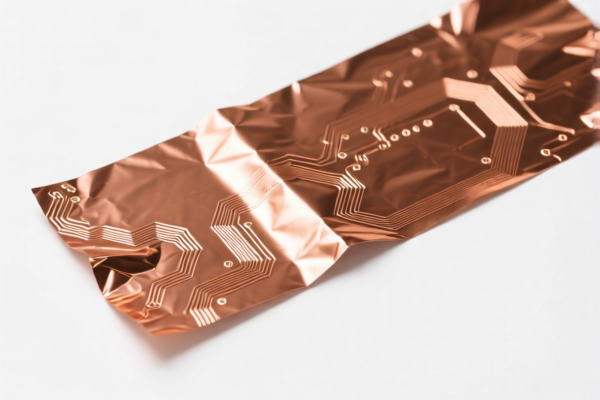
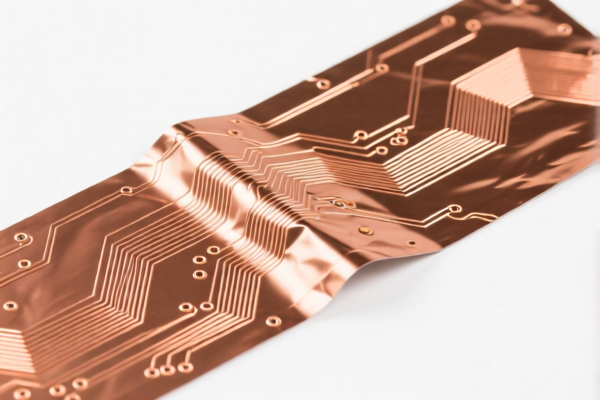
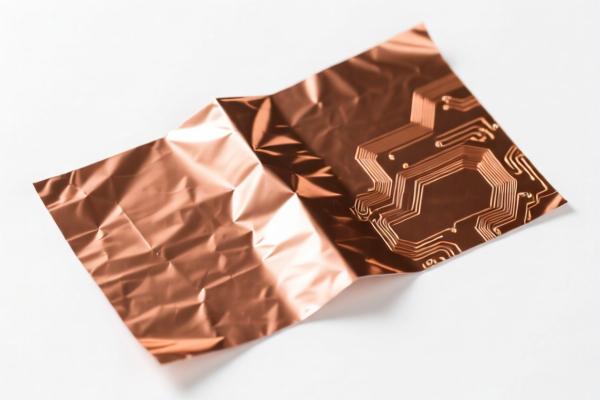
Electrolytic Copper Foil (ECF) is a high-purity copper sheet (typically 6–20 μm thick) produced by electrodeposition. It is the essential raw material for manufacturing Printed Circuit Boards (PCBs), Lithium-ion Battery electrodes, and electromagnetic shielding.
In international trade, the critical distinction lies not in the "tape" form, but in the production process:
- Electrolytic Copper Foil (ECF): Produced via electrolysis. Generally has a slightly rougher surface (roughened) for better adhesion to resin. This is the most common type.
- Rolled Copper Foil: Produced by rolling copper ingots. Used mainly in flexible PCBs or specialized electronics. Note: The user input specifies "Electrolytic," so we focus on ECF.
⚠️ Key Distinction Point:
- If it is rolled copper foil → 7411.10
- If it is electrolytic copper foil (even if slitted into strips/tapes) → 7409.21
- Crucial Rule: Slitting a copper strip into "tape" or "ribbon" for batteries/PCBs does not change its fundamental classification from "Sheet" to "Tape" under HS codes. It remains classified as Copper Sheets/Plates/Strips.
📦 II. HS Code Classification Details (2026 Latest Tariff Authority)
| HS Code | Product Description | Application Scenario | Is it Electrolytic? |
|---|---|---|---|
7409.21.00.00 |
Electrolytic Copper Sheets, Plates, and Strips, less than 0.15 mm thick | Lithium Battery Anodes, PCB Base Layers, EMI Shielding | ✅ YES (ECF) |
7409.19.00.00 |
Non-alloy Copper Sheets, Plates, and Strips, < 0.15 mm (Other than Electrolytic) | Rolled copper, general industrial use | ❌ No (Rolled/Other) |
7411.10.10.00 |
Rolled Copper Foil | Flexible PCBs (FPC), specialized electronics | ✅ Rolled |
8536.90.00.00 |
Connectors, Terminal Blocks (Finished Goods) | If the foil is already processed into a functional connector | N/A (Finished Good) |
3920.10.00.00 |
Plastic Films (If backed with polymer) | Adhesive Transfer Tape with copper backing | N/A (Composite) |
🔍 Key Reminder:
- Most "Copper Foil Tape" used in EV batteries and PCBs falls under 7409.21.00.00 because it is an electrolytic strip < 0.15mm.
- Do NOT classify as "Tape" under Chapter 39 (Plastics) or Chapter 54 (Textiles) unless it is a composite material where plastic is the essential character. Pure copper foil is always Chapter 74.
💰 III. 2026 Latest Tariff Rate Breakdown (Including Additional Taxes)
✅ Applicable Country: USA (US)
✅ Origin: China (CN)
✅ Effective Date: November 10, 2025 (and subsequent imports)
🎯 1. 7409.21.00.00 —— Electrolytic Copper Foil (< 0.15 mm)
| Item | Details |
|---|---|
| Base Rate | 0% (ad valorem) |
| USITC Additional Duty | +25% (From USITC Footnote 9903.88.01 under Section 301) |
| IEEPA Additional Duty | +10% (针对中国/香港产品, starting Nov 10, 2025) |
| Total Tariff Rate | 35% |
| Tax Calculation | CIF Value × 35% |
| De Minimis Eligibility | ❌ Denied (deny_de_minimis) |
| Legal Pathway | IEEPA:9903.01.25 → IEEPA:9903.01.24 → USITC:7409.21.00.00 → FOOTNOTE:9903.88.01 |
📌 Explanation:
- Copper Foil is a critical strategic material for EVs and electronics. The US imposes heavy tariffs to protect domestic smelting and foil production.
- 35% Total Duty: This is significant. A $100,000 shipment will incur $35,000 in duties.
- No De Minimis: Small packages (under $800) cannot bypass this tax. Every shipment is subject to scrutiny.
🛠️ IV. Customs Clearance Practical Advice (Battle-Tested Pitfall Guide)
✅ 1. Required Documentation Checklist (Mandatory)
| Document | Must Provide | Description |
|---|---|---|
| ✅ Product Specification Sheet | ✔️ | Must explicitly state: "Electrolytic Copper Foil", thickness (e.g., 9μm), width, and purity (≥99.95%). |
| ✅ Certificate of Origin (CO) | ✔️ | Essential for proving origin. If from China, expect 35% tax. |
| ✅ Commercial Invoice | ✔️ | Must use precise HS Code 7409.21.00.00. Avoid vague terms like "Copper Tape." |
| ✅ HS Code Pre-Ruling | ✔️ | Highly recommended for large volumes to lock in classification. |
| ✅ Third-Party Test Report | ✔️ | Proof of electrolytic process (vs. rolled). Some customs brokers may ask for this. |
| ✅ Packaging List | ✔️ | Detail net weight vs. gross weight. Copper is dense; weight discrepancies raise red flags. |
✅ 2. Declaration Tips (Key Mantra)
🔥 "Electrolytic = 7409, Rolled = 7411. Thickness < 0.15mm is Key!"
| Scenario | Correct Declaration | Wrong Practice |
|---|---|---|
| Copper Foil for EV Batteries | 7409.21.00.00 (Electrolytic) |
Misdeclare as 7411.10 (Rolled) to seek lower tax? → RISKY AUDIT |
| Copper Foil for PCBs | 7409.21.00.00 |
Declare as "Electronic Component" → Customs Rejection |
| Copper Strip > 0.15mm | 7409.19.00.00 or other |
Keep using < 0.15mm code → Penalty for Misclassification |
| Composite Foil (Plastic Backing) | 3920.xx or 7410 |
Declare as pure copper → Undervaluation Penalty |
✅ 3. Special Circumstances Handling
| Situation | Handling Advice |
|---|---|
| OEM Custom Widths | Provide slitting specs. Ensure the base material is still classified as "Strip" (< 0.15mm). |
| Battery Grade vs. PCB Grade | Both are 7409.21.00.00. However, Battery Grade may face stricter scrutiny for dual-use items if high-purity additives are present. |
| Small Samples (< 5kg) | Still Subject to 35% Tax. Do not use Parcel Express to avoid duty; CBP tracks electronic data. |
| Transshipment via Vietnam/Mexico | High Risk. US Customs strictly audits "Substantial Transformation." Simple transshipment will lead to seizure and blacklisting. |
🌍 V. Global Market Customs Comparison (2026 Latest)
| Country/Region | Recommended HS Code | Tariff Rate (China Origin) | Certification Requirements | Notes |
|---|---|---|---|---|
| 🇺🇸 USA | 7409.21.00.00 |
35% (25% + 10%) | No special certs, but strict origin checks | Highest barrier. Consider supply chain relocation. |
| 🇨🇳 China | 7409.21.00.00 |
0% (Import) | CCC (if finished goods) | Major producer. Import duty low, but export controls may apply. |
| 🇪🇺 EU | 7409.21.00.00 |
0% (MFN) | REACH Compliance | No Section 301 equivalent. Competitive. |
| 🇯🇵 Japan | 7409.21.00.00 |
5% | PSE (if finished) | Moderate tariff. Stable trade relations. |
| 🇬🇧 UK | 7409.21.00.00 |
0% | UKCA | Post-Brexit alignment with low tariffs for raw materials. |
📌 Conclusion:
- USA is the only major market with punitive 35% tariffs on Chinese electrolytic copper foil.
- EU/UK/Japan are tariff-free or low-tariff alternatives.
- If targeting the US, consider sourcing from Korea (HDEx), Japan (Nippon), or Malaysia to mitigate duty risks.
📌 VI. Common Errors & Pitfall Guide (Lessons Learned)
❌ Error 1: Classifying as 3920.10 (Plastic Film) because it has adhesive backing.
👉 Consequence: If the copper is the essential character, this is misclassification. Penalties + Back Taxes!
❌ Error 2: Using "Copper Tape" as the product name without specifying "Electrolytic."
👉 Consequence: Customs may classify as general copper strip (7409.19) with different duty rates or require additional verification, causing delays.
❌ Error 3: Declaring thin foil (>0.15mm) as < 0.15mm to qualify for 7409.21.
👉 Consequence: Physical inspection will reveal thickness. Fine for Fraud.
❌ Error 4: Ignoring the IEEPA 10% Surcharge effective Nov 2025.
👉 Consequence: Under-declaring total duty. Audit Trigger.
✅ Correct Practice:
"Electrolytic Copper Foil, 9 Microns, 10mm Width, Pure Copper, No Alloy, For Lithium Battery Anode Use, HS 7409.21.00.00"
🎯 VII. Conclusion: Precision in Classification, Profit in Logistics
🎯 Remember the Mantra:
🔹 "Electrolytic is 7409.21. Thickness < 0.15mm. US Tariff 35%. Don't be cheap, be right!"
🔹 "Copper Foil is strategic. 35% tax kills margins. Plan your supply chain early!"
📌 Pro Tip:
If you are exporting high-performance copper foil (e.g., for advanced EVs), consider applying for an Exclusion under Section 301 if available for specific sub-headings, though rare for raw copper.
More realistically, diversify manufacturing to non-China origins to access the lucrative US market with 0% additional duty.
📣 Immediate Action:
📞 Consult a licensed customs broker for a Pre-Ruling on Thickness and Process.
📄 Ensure your Invoice and Packing List match the 35% Tariff Duty Entry.
🚀 Protect your profit margin by accurate HS coding.
✨ Professional Clearance Starts with Accurate Classification!
💼 Your Cost Efficiency Depends on Your HS Code Strategy!
Customer Reviews
About HS Code Classification
The Harmonized System (HS) is an internationally standardized nomenclature developed by the World Customs Organization (WCO) to classify traded products. Over 200 countries use the HS system as the basis for customs tariffs, trade statistics, and import/export regulations.
Each HS code follows a hierarchical structure:
- Chapter (2 digits) — Broad category of goods (e.g., Chapter 84: Machinery and Mechanical Appliances)
- Heading (4 digits) — More specific grouping within the chapter
- Subheading (6 digits) — Internationally standardized breakdown, used by all WCO member countries
- National subdivisions (8-10 digits) — Country-specific extensions for further classification, such as US HTSUS 10-digit codes
Correct HS code classification is essential for smooth customs clearance, accurate duty payment, and compliance with trade regulations. Misclassification can lead to customs delays, overpayment of duties, or penalties.
When importing from CN to US, the applicable tariff rates may include:
- Most-Favored-Nation (MFN) rate — The standard duty rate applied to WTO members
- General rate — Applied to countries without trade agreements
- Trade remedy duties — Additional tariffs such as Section 301 (anti-dumping), Section 232 (national security), or countervailing duties
The information provided on this page is for reference purposes only. For official classification, please consult with your local customs authority or a licensed customs broker.