Electronic Grade Rosin Ester
CN → US| HS编码 | 关税税率 | 原产国 | 目的国 | 文档 |
|---|---|---|---|---|
| 3806900000 | 39.2% | CN | US | 官方文档 |
| 3911200000 | 41.5% | CN | US | 官方文档 |
| 1301909190 | 17.5% | CN | US | 官方文档 |
| 3806300000 | 41.5% | CN | US | 官方文档 |
| 1301904000 | 18.8% | CN | US | 官方文档 |
商品图片
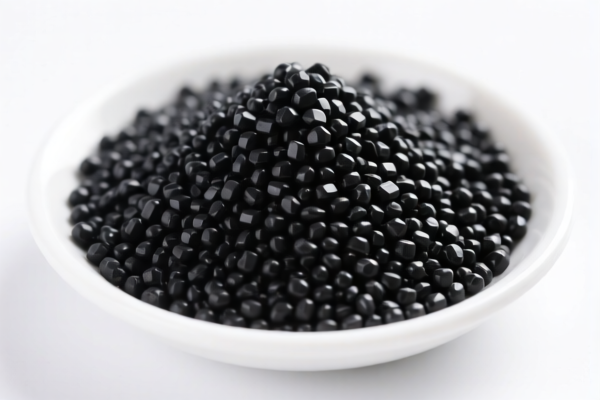


AI分析
🧪 Electronic Grade Rosin Ester: HS Code Classification & Tariff Strategy (2026)
🌐 HS Code Reference & Clearance Guide | 2026 Latest Tariff Analysis | Professional Entry Strategy
📌 I. Product Definition & Classification: Do You Truly Understand "Rosin Ester"?
Rosin Ester (also known as Rosin Resin) is a modified form of rosin, primarily used as a flux, tackifier, or adhesive component. In international trade, its classification depends heavily on the raw material source and chemical processing level.
For "Electronic Grade Rosin Ester", the key differentiators are: 1. Raw Material Basis: Is it derived from natural rosin (Colophony) or petroleum/resin derivatives? 2. Processing Level: Is it a simple natural resin derivative (Chapter 13) or a manufactured chemical product/ester (Chapter 38)? 3. Purity/Application: "Electronic Grade" implies high purity, but this does not automatically change the HS code unless it falls under specific chemical headings.
⚠️ Key Classification Distinction: - If the product is essentially a natural resin derivative (processed rosin) → Chapter 13 (1301) or Chapter 38 (3806) depending on specific esterification. - If the product is considered a petroleum-based or synthetic resin derivative → Chapter 39 (3911). - "Electronic Grade" alone does not grant a special tax code; it must be aligned with the material definition.
📦 II. HS Code Classification Matrix (2026 Latest Tariff对照)
| HS Code | Product Description | Application/Reasoning | Tax Rate (China Origin) |
|---|---|---|---|
3806.90.00.00 |
Rosin and Rosin Derivatives (Other) | Rosin esters fall under rosin derivatives. "Other" covers specific esters not listed elsewhere. Fits the definition of rosin-based materials. | 39.2% |
3911.20.00.00 |
Petroleum Resins / C9 Resins / etc. | If the rosin ester is classified as a derivative of petroleum/resin systems (e.g., hydrogenated rosin or blended with petrochemicals). | 41.5% |
1301.90.91.90 |
Other Natural Resins (High Purity/Electronic Grade) | If deemed a natural resin with electronic-grade purity, fitting the "other natural resin" category. Low base duty helps offset additions. | 17.5% |
3806.30.00.00 |
Rosin Esters (Specific) | Explicitly covers "Esters of Rosin". If the product is purely esterified rosin, this is the most direct material match. | 41.5% |
1301.90.40.00 |
Oleoresins / Resinoids | If classified as a "Resinoid" or oil resin derivative. Fits the natural origin profile. | 18.8% |
🔍 Critical Insight: - Chapter 38 (3806) is the most common for processed Rosin Esters used in industrial/electronic applications. - Chapter 13 (1301) is rare for "Esters" as they are chemically modified, but possible if the modification is minimal and still considered a "natural resin derivative." - Chapter 39 (3911) is used if the ester is considered a "plastic resin" derivative or blends heavily with synthetic resins.
💰 III. 2026 Latest Tariff Breakdown (Including Surcharges)
✅ Applicable Country: United States (US)
✅ Origin: China (CN)
✅ Effective Date: November 10, 2025 (and ongoing)
🎯 1. 3806.90.00.00 – Rosin Derivatives (Other)
| Item | Detail |
|---|---|
| Base Duty | 4.2% |
| Section 301 Duty | +25.0% |
| IEEPA Duty (122 Clause) | +10.0% |
| Total Tariff Rate | 39.2% |
| De Minimis Exemption | ❌ Denied (deny_de_minimis) |
| Legal Basis | USITC:3806.90.00.00 → Footnote:301 → IEEPA:9903.01.24 |
📌 Explanation: - Rosin esters are considered chemical products. The 301 tariff applies heavily to chemical intermediates. - The 10% IEEPA surcharge is mandatory for Chinese-origin goods.
🎯 2. 3911.20.00.00 – Petroleum/Resin Derivatives
| Item | Detail |
|---|---|
| Base Duty | 6.5% |
| Section 301 Duty | +25.0% |
| IEEPA Duty (122 Clause) | +10.0% |
| Total Tariff Rate | 41.5% |
| De Minimis Exemption | ❌ Denied |
| Legal Basis | USITC:3911.20.00.00 → Footnote:301 → IEEPA:9903.01.24 |
📌 Warning: - This is one of the highest tariff brackets for resin-like materials. - Misclassifying a rosin ester here (if it’s actually natural rosin-derived) can lead to overpayment, but misclassifying a synthetic resin here as natural can lead to penalties.
🎯 3. 1301.90.91.90 – Other Natural Resins (Electronic Grade)
| Item | Detail |
|---|---|
| Base Duty | 0.0% |
| Section 301 Duty | +7.5% |
| IEEPA Duty (122 Clause) | +10.0% |
| Total Tariff Rate | 17.5% |
| De Minimis Exemption | ❌ Denied |
| Legal Basis | USITC:1301.90.91.90 → Footnote:301 (reduced rate for some agricultural/natural goods) → IEEPA:9903.01.24 |
📌 Opportunity: - This is the lowest tariff option (17.5%). - Challenge: Must prove the product is a "Natural Resin" derivative and not a manufactured chemical ester. "Electronic Grade" purity helps argue for high-value natural resin status, but customs may still view "Ester" as chemically modified.
🎯 4. 3806.30.00.00 – Rosin Esters (Specific)
| Item | Detail |
|---|---|
| Base Duty | 6.5% |
| Section 301 Duty | +25.0% |
| IEEPA Duty (122 Clause) | +10.0% |
| Total Tariff Rate | 41.5% |
| De Minimis Exemption | ❌ Denied |
| Legal Basis | USITC:3806.30.00.00 → Footnote:301 → IEEPA:9903.01.24 |
📌 Note: - This is the most technically accurate code for "Rosin Ester" as it specifically lists "Esters." - However, it carries the highest standard surcharge (301 + 10%) on top of a 6.5% base.
🎯 5. 1301.90.40.00 – Oleoresins
| Item | Detail |
|---|---|
| Base Duty | 1.3% |
| Section 301 Duty | +7.5% |
| IEEPA Duty (122 Clause) | +10.0% |
| Total Tariff Rate | 18.8% |
| De Minimis Exemption | ❌ Denied |
| Legal Basis | USITC:1301.90.40.00 → Footnote:301 (reduced) → IEEPA:9903.01.24 |
📌 Strategy: - If the rosin ester can be argued as a "Resinoid" or "Oleoresin" (oil-based resin extract), this code offers a low-rate advantage.
🛠️ IV. Customs Clearance Practical Advice
✅ 1. Required Documentation Checklist
| Document | Required? | Purpose |
|---|---|---|
| Product Specification Sheet | ✅ | Must detail chemical structure, purity level, and "Electronic Grade" specs. |
| COA (Certificate of Analysis) | ✅ | Proves purity and composition. Crucial for arguing Chapter 13 vs. 38. |
| Flowchart of Manufacturing Process | ✅ | Shows if it’s just "esterification" (Chapter 38) or "purification of natural resin" (Chapter 13). |
| Commercial Invoice | ✅ | Must clearly state "Electronic Grade Rosin Ester" and HS Code. |
| Proof of Origin | ✅ | To confirm China origin and apply correct tariffs. |
| Material Safety Data Sheet (MSDS) | ✅ | For customs safety screening. |
✅ 2. Declaration Strategy & Key Mnemonics
🔥 "Ester is Chemical, Natural is 1301; 3806 is Specific, 3911 is Synthetic!"
| Scenario | Recommended HS Code | Reasoning |
|---|---|---|
| Purely Esterified Rosin | 3806.30.00.00 |
Most accurate chemical definition. High tax (41.5%). |
| High-Purity Natural Resin Derivative | 1301.90.91.90 |
Attempt to classify as natural resin to save tax (17.5%). Riskier. |
| Blended with Petroleum Resins | 3911.20.00.00 |
If synthetic blend dominates. High tax (41.5%). |
| Oil-Based Resin Extract | 1301.90.40.00 |
If it fits "Oleoresin" definition. Low tax (18.8%). |
✅ 3. Special Handling for "Electronic Grade"
- "Electronic Grade" is not a HS Code: It does not change the tariff. However, it can be used in the description to justify high purity, which may support a Chapter 13 classification if the chemical modification is minimal.
- Avoid "Resin" Ambiguity: Clearly distinguish between "Rosin Ester" (chemical) and "Rosin" (natural). Misdeclaration can lead to 100% penalties.
🌍 V. Global Market Clearance Comparison (2026)
| Region | Recommended HS Code | Estimated Total Tax (China Origin) | Notes |
|---|---|---|---|
| 🇺🇸 USA | 3806.30.00.00 or 1301.90.91.90 |
17.5% – 41.5% | High 301 + IEEPA taxes. Aggressive optimization possible with Chapter 13. |
| 🇨🇳 China | 3806.30.00.00 |
~6.5% - 13% | No Section 301. Standard import duties apply. |
| 🇪🇺 EU | 3806.30.00 |
0% - 6.5% | No equivalent 301 tariffs. Lower overall cost. |
| 🇯🇵 Japan | 3806.30.00 |
2.5% - 5.0% | Favorable for chemical imports. |
📌 Conclusion: - USA: Tariffs are highly punitive. Optimization via Chapter 13 (
1301.90.91.90or1301.90.40.00) can save ~23-24% in duties. - Non-US Markets: Consider shipping to EU/Asia hubs for re-export if possible to avoid US tariffs.
📌 VI. Common Pitfalls & Risk Avoidance
❌ Pitfall 1: Declaring "Rosin Ester" as "Natural Rosin" (1302.11)
👉 Consequence: Customs will reject based on chemical structure. Penalty + Back Taxes.
❌ Pitfall 2: Ignoring IEEPA 10% Surcharge 👉 Consequence: Underpayment of duties. Audit Risk.
❌ Pitfall 3: Using "Electronic Grade" as the Primary Description 👉 Consequence: Customs may ignore the material class. Always lead with Material (Rosin/Petroleum).
✅ Best Practice:
"Rosin Ester, Electronic Grade, High Purity (>99%), For Flux Applications, Made from Pine Rosin, Esterified with Glycerol."
🎯 VII. Final Recommendation: Optimize for Cost & Compliance
🎯 Strategy Summary:
1. Attempt Chapter 13: If your rosin ester is purely derived from natural rosin with minimal chemical alteration, argue for 1301.90.91.90 (17.5%) or 1301.90.40.00 (18.8%). Provide COA and manufacturing process to prove "Natural Resin Derivative" status.
2. Accept Chapter 38 if Inevitable: If the product is chemically modified (esterified), 3806.30.00.00 (41.5%) is the safest but costliest. Ensure precise labeling to avoid misclassification penalties.
3. Avoid Chapter 39: Unless it’s a petroleum blend, avoid 3911.20.00.00 as it offers no tax advantage over 3806.30.00.00 and is harder to justify for rosin-derived products.
📌 Action Item: - Request a Pre-Ruling (Ruling Request) from CBP if the Chapter 13 classification is feasible. - Audit your supply chain: If tariffs are prohibitive, consider sourcing from non-China origins (if available) for US market entry.
✨ Precision Classification Saves Money.
💼 Don’t let 25% + 10% tariffs eat your margin. Optimize your HS Code today!
用户评价
关于 HS 编码归类
协调制度(HS)是由世界海关组织(WCO)制定的国际贸易商品分类标准。全球 200 多个国家采用 HS 系统作为海关关税、贸易统计和进出口监管的基础。
每个 HS 编码遵循以下层级结构:
- 章(2 位)——商品大类(例如:第 84 章:机器和机械设备)
- 品目(4 位)——章内的更具体分类
- 子目(6 位)——国际通用细分,所有 WCO 成员国统一使用
- 本国细分(8-10 位)——各国自行扩展的细分编码,如美国 HTSUS 10 位编码
正确的 HS 编码归类对于顺利通关、准确缴纳关税和遵守贸易法规至关重要。错误归类可能导致海关延误、多缴关税或罚款。
从CN进口到US时,适用的关税税率可能包括:
- 最惠国(MFN)税率——适用于 WTO 成员国的标准关税税率
- 普通税率——适用于无贸易协定国家
- 贸易救济关税——附加关税,如 301 条款(反倾销)、232 条款(国家安全)或反补贴税
本页内容仅供参考。如需正式归类,请咨询当地海关或持牌报关代理。