Electronic Grade Rosin Ester
CN → US| HS Code | Tariff Rate | Origin | Destination | Doc |
|---|---|---|---|---|
| 3806900000 | 39.2% | CN | US | Official Doc |
| 3911200000 | 41.5% | CN | US | Official Doc |
| 1301909190 | 17.5% | CN | US | Official Doc |
| 3806300000 | 41.5% | CN | US | Official Doc |
| 1301904000 | 18.8% | CN | US | Official Doc |
Product Images
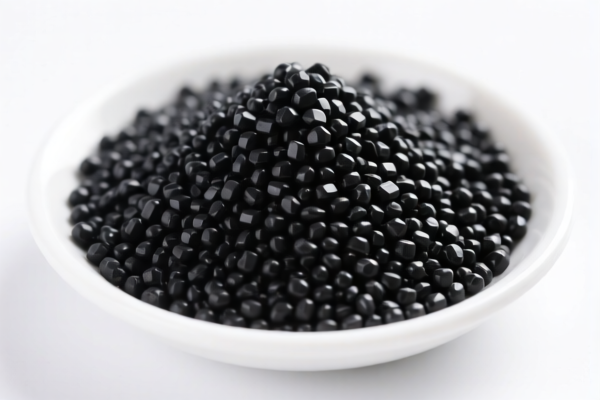


AI Analysis
🧪 Electronic Grade Rosin Ester: HS Code Classification & Tariff Strategy (2026)
🌐 HS Code Reference & Clearance Guide | 2026 Latest Tariff Analysis | Professional Entry Strategy
📌 I. Product Definition & Classification: Do You Truly Understand "Rosin Ester"?
Rosin Ester (also known as Rosin Resin) is a modified form of rosin, primarily used as a flux, tackifier, or adhesive component. In international trade, its classification depends heavily on the raw material source and chemical processing level.
For "Electronic Grade Rosin Ester", the key differentiators are: 1. Raw Material Basis: Is it derived from natural rosin (Colophony) or petroleum/resin derivatives? 2. Processing Level: Is it a simple natural resin derivative (Chapter 13) or a manufactured chemical product/ester (Chapter 38)? 3. Purity/Application: "Electronic Grade" implies high purity, but this does not automatically change the HS code unless it falls under specific chemical headings.
⚠️ Key Classification Distinction: - If the product is essentially a natural resin derivative (processed rosin) → Chapter 13 (1301) or Chapter 38 (3806) depending on specific esterification. - If the product is considered a petroleum-based or synthetic resin derivative → Chapter 39 (3911). - "Electronic Grade" alone does not grant a special tax code; it must be aligned with the material definition.
📦 II. HS Code Classification Matrix (2026 Latest Tariff对照)
| HS Code | Product Description | Application/Reasoning | Tax Rate (China Origin) |
|---|---|---|---|
3806.90.00.00 |
Rosin and Rosin Derivatives (Other) | Rosin esters fall under rosin derivatives. "Other" covers specific esters not listed elsewhere. Fits the definition of rosin-based materials. | 39.2% |
3911.20.00.00 |
Petroleum Resins / C9 Resins / etc. | If the rosin ester is classified as a derivative of petroleum/resin systems (e.g., hydrogenated rosin or blended with petrochemicals). | 41.5% |
1301.90.91.90 |
Other Natural Resins (High Purity/Electronic Grade) | If deemed a natural resin with electronic-grade purity, fitting the "other natural resin" category. Low base duty helps offset additions. | 17.5% |
3806.30.00.00 |
Rosin Esters (Specific) | Explicitly covers "Esters of Rosin". If the product is purely esterified rosin, this is the most direct material match. | 41.5% |
1301.90.40.00 |
Oleoresins / Resinoids | If classified as a "Resinoid" or oil resin derivative. Fits the natural origin profile. | 18.8% |
🔍 Critical Insight: - Chapter 38 (3806) is the most common for processed Rosin Esters used in industrial/electronic applications. - Chapter 13 (1301) is rare for "Esters" as they are chemically modified, but possible if the modification is minimal and still considered a "natural resin derivative." - Chapter 39 (3911) is used if the ester is considered a "plastic resin" derivative or blends heavily with synthetic resins.
💰 III. 2026 Latest Tariff Breakdown (Including Surcharges)
✅ Applicable Country: United States (US)
✅ Origin: China (CN)
✅ Effective Date: November 10, 2025 (and ongoing)
🎯 1. 3806.90.00.00 – Rosin Derivatives (Other)
| Item | Detail |
|---|---|
| Base Duty | 4.2% |
| Section 301 Duty | +25.0% |
| IEEPA Duty (122 Clause) | +10.0% |
| Total Tariff Rate | 39.2% |
| De Minimis Exemption | ❌ Denied (deny_de_minimis) |
| Legal Basis | USITC:3806.90.00.00 → Footnote:301 → IEEPA:9903.01.24 |
📌 Explanation: - Rosin esters are considered chemical products. The 301 tariff applies heavily to chemical intermediates. - The 10% IEEPA surcharge is mandatory for Chinese-origin goods.
🎯 2. 3911.20.00.00 – Petroleum/Resin Derivatives
| Item | Detail |
|---|---|
| Base Duty | 6.5% |
| Section 301 Duty | +25.0% |
| IEEPA Duty (122 Clause) | +10.0% |
| Total Tariff Rate | 41.5% |
| De Minimis Exemption | ❌ Denied |
| Legal Basis | USITC:3911.20.00.00 → Footnote:301 → IEEPA:9903.01.24 |
📌 Warning: - This is one of the highest tariff brackets for resin-like materials. - Misclassifying a rosin ester here (if it’s actually natural rosin-derived) can lead to overpayment, but misclassifying a synthetic resin here as natural can lead to penalties.
🎯 3. 1301.90.91.90 – Other Natural Resins (Electronic Grade)
| Item | Detail |
|---|---|
| Base Duty | 0.0% |
| Section 301 Duty | +7.5% |
| IEEPA Duty (122 Clause) | +10.0% |
| Total Tariff Rate | 17.5% |
| De Minimis Exemption | ❌ Denied |
| Legal Basis | USITC:1301.90.91.90 → Footnote:301 (reduced rate for some agricultural/natural goods) → IEEPA:9903.01.24 |
📌 Opportunity: - This is the lowest tariff option (17.5%). - Challenge: Must prove the product is a "Natural Resin" derivative and not a manufactured chemical ester. "Electronic Grade" purity helps argue for high-value natural resin status, but customs may still view "Ester" as chemically modified.
🎯 4. 3806.30.00.00 – Rosin Esters (Specific)
| Item | Detail |
|---|---|
| Base Duty | 6.5% |
| Section 301 Duty | +25.0% |
| IEEPA Duty (122 Clause) | +10.0% |
| Total Tariff Rate | 41.5% |
| De Minimis Exemption | ❌ Denied |
| Legal Basis | USITC:3806.30.00.00 → Footnote:301 → IEEPA:9903.01.24 |
📌 Note: - This is the most technically accurate code for "Rosin Ester" as it specifically lists "Esters." - However, it carries the highest standard surcharge (301 + 10%) on top of a 6.5% base.
🎯 5. 1301.90.40.00 – Oleoresins
| Item | Detail |
|---|---|
| Base Duty | 1.3% |
| Section 301 Duty | +7.5% |
| IEEPA Duty (122 Clause) | +10.0% |
| Total Tariff Rate | 18.8% |
| De Minimis Exemption | ❌ Denied |
| Legal Basis | USITC:1301.90.40.00 → Footnote:301 (reduced) → IEEPA:9903.01.24 |
📌 Strategy: - If the rosin ester can be argued as a "Resinoid" or "Oleoresin" (oil-based resin extract), this code offers a low-rate advantage.
🛠️ IV. Customs Clearance Practical Advice
✅ 1. Required Documentation Checklist
| Document | Required? | Purpose |
|---|---|---|
| Product Specification Sheet | ✅ | Must detail chemical structure, purity level, and "Electronic Grade" specs. |
| COA (Certificate of Analysis) | ✅ | Proves purity and composition. Crucial for arguing Chapter 13 vs. 38. |
| Flowchart of Manufacturing Process | ✅ | Shows if it’s just "esterification" (Chapter 38) or "purification of natural resin" (Chapter 13). |
| Commercial Invoice | ✅ | Must clearly state "Electronic Grade Rosin Ester" and HS Code. |
| Proof of Origin | ✅ | To confirm China origin and apply correct tariffs. |
| Material Safety Data Sheet (MSDS) | ✅ | For customs safety screening. |
✅ 2. Declaration Strategy & Key Mnemonics
🔥 "Ester is Chemical, Natural is 1301; 3806 is Specific, 3911 is Synthetic!"
| Scenario | Recommended HS Code | Reasoning |
|---|---|---|
| Purely Esterified Rosin | 3806.30.00.00 |
Most accurate chemical definition. High tax (41.5%). |
| High-Purity Natural Resin Derivative | 1301.90.91.90 |
Attempt to classify as natural resin to save tax (17.5%). Riskier. |
| Blended with Petroleum Resins | 3911.20.00.00 |
If synthetic blend dominates. High tax (41.5%). |
| Oil-Based Resin Extract | 1301.90.40.00 |
If it fits "Oleoresin" definition. Low tax (18.8%). |
✅ 3. Special Handling for "Electronic Grade"
- "Electronic Grade" is not a HS Code: It does not change the tariff. However, it can be used in the description to justify high purity, which may support a Chapter 13 classification if the chemical modification is minimal.
- Avoid "Resin" Ambiguity: Clearly distinguish between "Rosin Ester" (chemical) and "Rosin" (natural). Misdeclaration can lead to 100% penalties.
🌍 V. Global Market Clearance Comparison (2026)
| Region | Recommended HS Code | Estimated Total Tax (China Origin) | Notes |
|---|---|---|---|
| 🇺🇸 USA | 3806.30.00.00 or 1301.90.91.90 |
17.5% – 41.5% | High 301 + IEEPA taxes. Aggressive optimization possible with Chapter 13. |
| 🇨🇳 China | 3806.30.00.00 |
~6.5% - 13% | No Section 301. Standard import duties apply. |
| 🇪🇺 EU | 3806.30.00 |
0% - 6.5% | No equivalent 301 tariffs. Lower overall cost. |
| 🇯🇵 Japan | 3806.30.00 |
2.5% - 5.0% | Favorable for chemical imports. |
📌 Conclusion: - USA: Tariffs are highly punitive. Optimization via Chapter 13 (
1301.90.91.90or1301.90.40.00) can save ~23-24% in duties. - Non-US Markets: Consider shipping to EU/Asia hubs for re-export if possible to avoid US tariffs.
📌 VI. Common Pitfalls & Risk Avoidance
❌ Pitfall 1: Declaring "Rosin Ester" as "Natural Rosin" (1302.11)
👉 Consequence: Customs will reject based on chemical structure. Penalty + Back Taxes.
❌ Pitfall 2: Ignoring IEEPA 10% Surcharge 👉 Consequence: Underpayment of duties. Audit Risk.
❌ Pitfall 3: Using "Electronic Grade" as the Primary Description 👉 Consequence: Customs may ignore the material class. Always lead with Material (Rosin/Petroleum).
✅ Best Practice:
"Rosin Ester, Electronic Grade, High Purity (>99%), For Flux Applications, Made from Pine Rosin, Esterified with Glycerol."
🎯 VII. Final Recommendation: Optimize for Cost & Compliance
🎯 Strategy Summary:
1. Attempt Chapter 13: If your rosin ester is purely derived from natural rosin with minimal chemical alteration, argue for 1301.90.91.90 (17.5%) or 1301.90.40.00 (18.8%). Provide COA and manufacturing process to prove "Natural Resin Derivative" status.
2. Accept Chapter 38 if Inevitable: If the product is chemically modified (esterified), 3806.30.00.00 (41.5%) is the safest but costliest. Ensure precise labeling to avoid misclassification penalties.
3. Avoid Chapter 39: Unless it’s a petroleum blend, avoid 3911.20.00.00 as it offers no tax advantage over 3806.30.00.00 and is harder to justify for rosin-derived products.
📌 Action Item: - Request a Pre-Ruling (Ruling Request) from CBP if the Chapter 13 classification is feasible. - Audit your supply chain: If tariffs are prohibitive, consider sourcing from non-China origins (if available) for US market entry.
✨ Precision Classification Saves Money.
💼 Don’t let 25% + 10% tariffs eat your margin. Optimize your HS Code today!
Customer Reviews
About HS Code Classification
The Harmonized System (HS) is an internationally standardized nomenclature developed by the World Customs Organization (WCO) to classify traded products. Over 200 countries use the HS system as the basis for customs tariffs, trade statistics, and import/export regulations.
Each HS code follows a hierarchical structure:
- Chapter (2 digits) — Broad category of goods (e.g., Chapter 84: Machinery and Mechanical Appliances)
- Heading (4 digits) — More specific grouping within the chapter
- Subheading (6 digits) — Internationally standardized breakdown, used by all WCO member countries
- National subdivisions (8-10 digits) — Country-specific extensions for further classification, such as US HTSUS 10-digit codes
Correct HS code classification is essential for smooth customs clearance, accurate duty payment, and compliance with trade regulations. Misclassification can lead to customs delays, overpayment of duties, or penalties.
When importing from CN to US, the applicable tariff rates may include:
- Most-Favored-Nation (MFN) rate — The standard duty rate applied to WTO members
- General rate — Applied to countries without trade agreements
- Trade remedy duties — Additional tariffs such as Section 301 (anti-dumping), Section 232 (national security), or countervailing duties
The information provided on this page is for reference purposes only. For official classification, please consult with your local customs authority or a licensed customs broker.