Embossed, Patterned, or Printed Paper and Cardboard
CN → US| HS编码 | 关税税率 | 原产国 | 目的国 | 文档 |
|---|---|---|---|---|
| 4823906700 | 35.0% | CN | US | 官方文档 |
| 4823908000 | 35.0% | CN | US | 官方文档 |
| 4823906700 | 35.0% | CN | US | 官方文档 |
商品图片
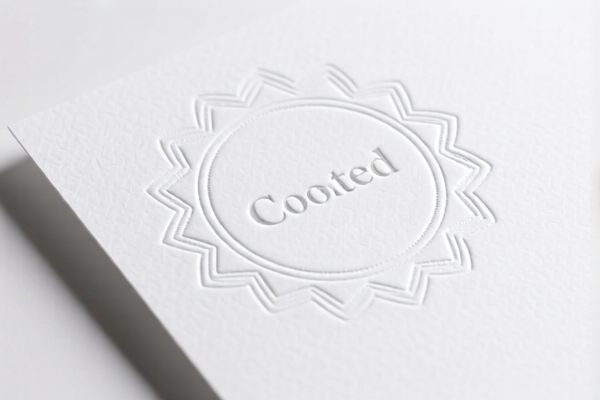
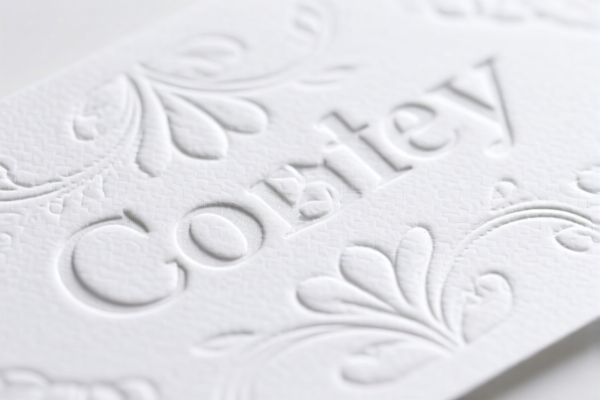
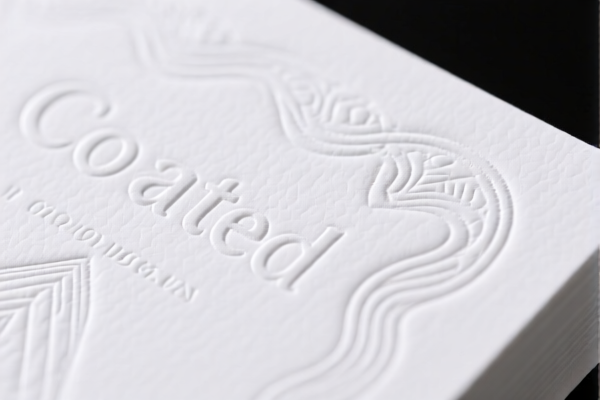
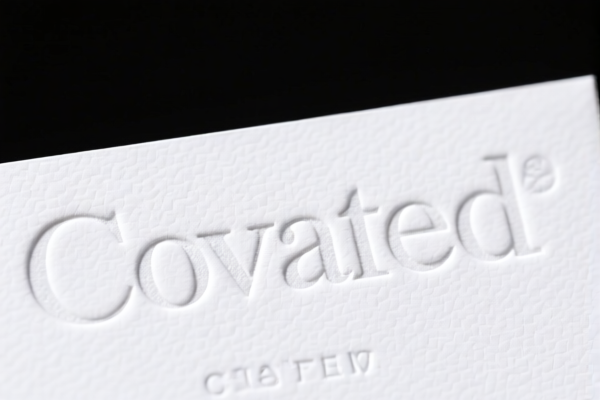
AI分析
📜 Embossed, Patterned, or Printed Paper and Cardboard
🌐 HS Code Reference & Customs Clearance Guide | 2026 Latest Tariff Analysis | Professional Entry Strategy
📌 I. Product Definition & Classification: What Exactly Are We Importing?
In international trade, Paper and Cardboard are not just raw materials; they are highly processed goods. When paper is embossed, patterned (textured), or printed, it moves beyond simple sheets and enters specific sub-categories under Chapter 48.
The key distinction lies in the physical structure and processing method: * Embossed/Patterned Paper: Paper with raised or depressed patterns created through mechanical pressure (calendering, embossing rollers). * Printed Paper/Cardboard: Paper with designs applied via ink, digital printing, or lithography. * Crinkled/Creped Paper: A specific type of textured paper, often used for decorative or sanitary purposes, characterized by its stretched, wrinkled structure.
⚠️ Critical Distinction Point:
- If the paper is plain, unprinted, and unembossed → It belongs to different chapters (e.g., 4801–4805).
- If the paper is embossed, printed, or crinkled → It falls under 4823.90 (Other paper, paperboard, cellulose wadding and webs of cellulose fibers, cut to size or shape; other articles of paper pulp, paper, paperboard, cellulose wadding or webs of cellulose fibers).
- Shape Matters: Are the sheets rolled (rolls) or cut (sheets)? This can influence the exact sub-code in some jurisdictions, but for the US HTS, they often converge under 4823.90.67 or 4823.90.80 depending on specific material properties.
📦 II. HS Code Classification Details (2026 Latest Tariff Authority Match)
Based on the provided data, the relevant HS Codes for Embossed, Patterned, or Printed Paper and Cardboard are:
| HS Code | Product Description | Key Characteristics | Typical Application |
|---|---|---|---|
4823.90.67.00 |
Other paper and paperboard, cut to size or shape; embossed, perforated, or printed | Material: Paper/Cardboard. Process: Embossing, Perforating, or Printing. | Decorative paper, packaging materials, printed cards, textured stationery. |
4823.90.80.00 |
Other paper and paperboard; creped, crinkled, embossed, or perforated | Material: Paper. Form: Rolls or Sheets. Structure: Creped/Crinkled/Embossed. | Tissue paper, decorative crinkle paper, craft paper, sanitary paper products. |
🔍 Important Note:
-4823.90.67.00focuses on embossed, perforated, or printed items. If your product is heavily printed or mechanically embossed with fine patterns, this is likely your code. -4823.90.80.00is broader for creped, crinkled, or embossed paper. If the paper has a distinct "wrinkled" or "creped" texture (like toilet paper or decorative crepe paper), use this code. - Both codes apply to rolls or sheets.
💰 III. 2026 Latest Tariff Rate Breakdown (Including Surtaxes & Policy Add-ons)
✅ Applicable Country: United States (US)
✅ Country of Origin: China (CN)
✅ Effective Time: 2025/2026 Import Cycle
🎯 1. 4823.90.67.00 —— Embossed, Perforated, or Printed Paper/Cardboard
| Item | Content |
|---|---|
| Base Tariff Rate | 0.0% (General Rate for Paper Products) |
| Section 301 Surcharge (25%) | +25.0% (Under USITC Footnote 4) |
| Section 122 Surcharge (10%) | +10.0% (Under IEEPA Section 122, targeting specific Chinese goods) |
| Total Effective Rate | 35.0% |
| Tax Calculation | CIF Value × 35% |
| De Minimis Exemption | ❌ Not Eligible (Value > $800 is subject to duties; even below $800, if declared as Section 301/122 goods, risks apply) |
| Legal Basis Path | HTSUS:4823.90.67.00 → USITC:301-List1 → IEEPA:122-List |
📌 Explanation:
- Base 0%: Paper products often have low base tariffs to support manufacturing.
- 301 Clause (+25%): This is the standard "Trade War" tariff on most Chinese goods, including processed paper.
- Section 122 (+10%): A newer, specific surcharge applied to certain Chinese imports under emergency economic powers.
- Total 35%: This is a significant cost factor. A $1,000 shipment will incur $350 in duties alone.
🎯 2. 4823.90.80.00 —— Creped, Crinkled, or Embossed Paper
| Item | Content |
|---|---|
| Base Tariff Rate | 0.0% |
| Section 301 Surcharge (25%) | +25.0% |
| Section 122 Surcharge (10%) | +10.0% |
| Total Effective Rate | 35.0% |
| Tax Calculation | CIF Value × 35% |
| De Minimis Exemption | ❌ Not Eligible |
| Legal Basis Path | HTSUS:4823.90.80.00 → USITC:301-List1 → IEEPA:122-List |
📌 Note:
- The tariff structure is identical to4823.90.67.00.
- Whether it's printed, embossed, or crinkled, if it's from China, it faces the same 35% hit.
🛠️ IV. Customs Clearance Practical Advice (Real-World Pitfall Avoidance)
✅ 1. Required Documentation Checklist (Do Not Miss)
| Document | Mandatory? | Explanation |
|---|---|---|
| ✅ Product Specification Sheet | ✔️ | Must clearly state: Material (e.g., 100% Wood Pulp), Weight (GSM), Dimensions, Color, Texture (Embossed/Printed). |
| ✅ Commercial Invoice | ✔️ | Must describe goods as "Embossed Paper," "Printed Cardboard," or "Creped Paper." Avoid vague terms like "Decorative Material." |
| ✅ Packing List | ✔️ | Specify if items are in Rolls or Sheets. This confirms the physical form. |
| ✅ Proof of Origin (CO) | ✔️ | Critical for 301/122. If claimed as non-Chinese, provide Certificate of Origin. If Chinese, duties apply. |
| ✅ Product Photos | ✔️ | Show the texture/print quality. Helps customs distinguish between plain paper (0% base) and processed paper (0% base + surcharges). |
✅ 2. Declaration Tips (Key Mnemonic)
🔥 “Texture Defines Code, Origin Defines Duty!”
| Scenario | Correct Declaration | Wrong Practice |
|---|---|---|
| Printed Gift Wrap | 4823.90.67.00 - "Printed Embossed Paper" |
Declare as "Paper" → Risk of misclassification penalty. |
| Decorative Crinkle Paper | 4823.90.80.00 - "Creped/Crinkled Paper" |
Declare as "Cardboard" → If it's thin, it's paper; if thick, it's cardboard. Be precise. |
| Plain White Paper | 4802.56 or 4802.58 (NOT 4823) |
Declare as 4823 → Overpaying tariffs or audit flag. |
| Packaging Box (Cardboard) | 4819.10 or 4819.20 (NOT 4823) |
If it's a box, it may be 4819. 4823 is for sheets/rolls or flat articles. |
⚠️ Critical Check:
- Is it a box or a sheet?
- Boxes often fall under4819.
- Sheets/Rolls (even if printed/embossed) fall under4823.
- If in doubt, choose4823for flat, processed paper products.
✅ 3. Special Situations
| Situation | Handling Advice |
|---|---|
| Mixed Shipments (Plain + Printed) | Declare separately. Plain paper (if eligible) may have lower taxes. Mixing codes in one line item can cause delays. |
| High-Value Luxury Packaging | Ensure the value declared includes the cost of the printing/embossing process. Customs may adjust value if under-declared. |
| Sample Shipments (<$800) | Even if under $800 (De Minimis), Section 301/122 duties may still apply if the carrier or CBP decides to audit. Better to pay duties upfront than face hold-ups. |
🌍 V. Global Market Clearance Comparison (2026)
| Country/Region | Recommended HS Code | Base Tariff | Surtaxes (China) | Total Estimate | Remarks |
|---|---|---|---|---|---|
| 🇺🇸 USA | 4823.90.67.00 / .80 |
0% | +25% (301) +10% (122) | 35% | Highest burden. Plan for 35% cost. |
| 🇨🇳 China | 4823.90.67.00 / .80 |
8–10% | N/A | ~8–10% | Lower base rate, but domestic consumption tax may apply. |
| 🇪🇺 EU | 4823.90.90 |
5–6% | None | ~6% | No Section 301 equivalent. Much more favorable. |
| 🇬🇧 UK | 4823.90.90 |
5% | None | ~5% | Post-Brexit rules. No US-style surcharges. |
| 🇨🇦 Canada | 4823.90.90.90 |
5% | None | ~5% | CUSMA benefits may apply for North American goods. |
📌 Conclusion:
- The US market is the most challenging due to Section 301 and 122 surcharges.
- EU and UK are significantly more favorable for paper products from China.
- Consider transshipment or final assembly in third countries (e.g., Vietnam, Mexico) if aiming for the US market, but ensure substantial transformation to change origin.
📌 VI. Common Mistakes & Pitfalls (Blood-Teaching Lessons)
❌ Mistake 1: Declaring "Embossed Paper" as "Plain Paper" (4802)
👉 Consequence: Customs will reclassify, apply 35% tariff, and may impose penalties.
✅ Fix: Always declare the processing (embossed/printing).
❌ Mistake 2: Confusing "Paper" (4823) with "Cardboard Boxes" (4819)
👉 Consequence: If you send printed sheets but declare as boxes, or vice versa, goods may be detained.
✅ Fix:
- Flat, flexible sheets/rolls → 4823.
- Rigid, folded containers → 4819.
❌ Mistake 3: Ignoring Section 122 (10%) Surcharge
👉 Consequence: Many importers forget this 10% add-on, leading to underpayment and IRS/CBP audits.
✅ Fix: Always calculate Base + 25% + 10% = 35% for China-origin paper goods.
🎯 VII. Conclusion: Professional Declaration, Cost Control, Efficiency!
🎯 Remember the Mnemonic:
🔹 "Embossed/Printed = 4823. Plain = 4802. Box = 4819."
🔹 "China Origin = 35% Total Duty. No exceptions."
🔹 "Declare Texture, Declare Shape, Avoid Delays."
📌 Pro Tip:
- If your paper products are not from China (e.g., from Indonesia, Malaysia, or Canada), you can avoid the 35% surcharge entirely.
- Consider supply chain diversification to countries with Free Trade Agreements (FTAs) with the US.
- For high-volume imports, apply for a Customs Ruling (Binding Ruling) to confirm the exact HS Code and duty liability before shipping.
📣 Immediate Action:
📞 Contact your Customs Broker + Provide Product Samples/Photos + Confirm Origin.
🚀 Optimize your supply chain to mitigate 35% duty impact!
✨ Professional Customs Clearance Starts with Accurate Classification!
💼 Your Margin Depends on Precision!
用户评价
关于 HS 编码归类
协调制度(HS)是由世界海关组织(WCO)制定的国际贸易商品分类标准。全球 200 多个国家采用 HS 系统作为海关关税、贸易统计和进出口监管的基础。
每个 HS 编码遵循以下层级结构:
- 章(2 位)——商品大类(例如:第 84 章:机器和机械设备)
- 品目(4 位)——章内的更具体分类
- 子目(6 位)——国际通用细分,所有 WCO 成员国统一使用
- 本国细分(8-10 位)——各国自行扩展的细分编码,如美国 HTSUS 10 位编码
正确的 HS 编码归类对于顺利通关、准确缴纳关税和遵守贸易法规至关重要。错误归类可能导致海关延误、多缴关税或罚款。
从CN进口到US时,适用的关税税率可能包括:
- 最惠国(MFN)税率——适用于 WTO 成员国的标准关税税率
- 普通税率——适用于无贸易协定国家
- 贸易救济关税——附加关税,如 301 条款(反倾销)、232 条款(国家安全)或反补贴税
本页内容仅供参考。如需正式归类,请咨询当地海关或持牌报关代理。