Embossed, Patterned, or Printed Paper and Cardboard
CN → US| HS Code | Tariff Rate | Origin | Destination | Doc |
|---|---|---|---|---|
| 4823906700 | 35.0% | CN | US | Official Doc |
| 4823908000 | 35.0% | CN | US | Official Doc |
| 4823906700 | 35.0% | CN | US | Official Doc |
Product Images
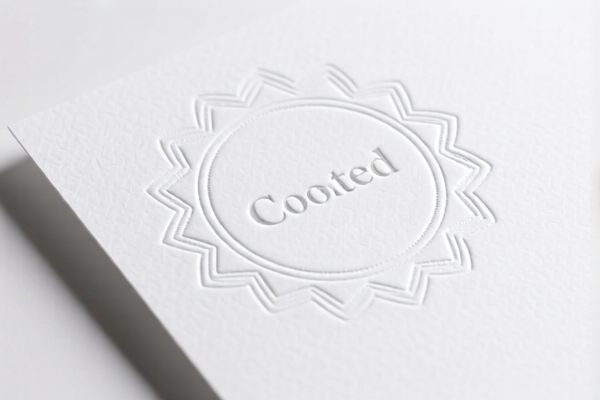
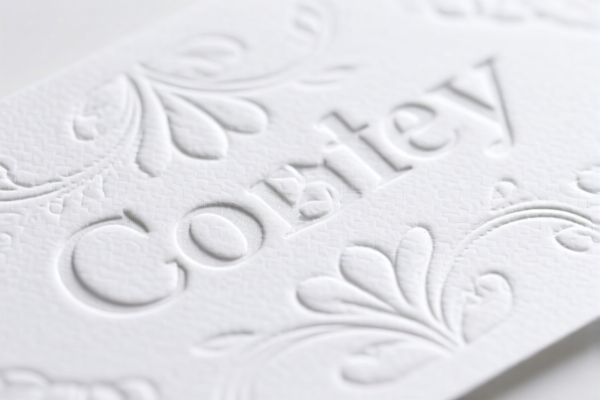
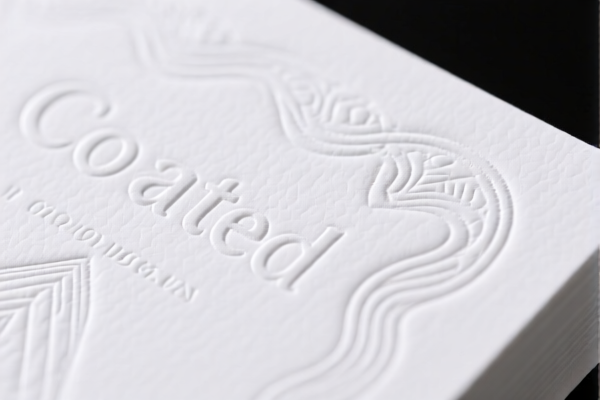
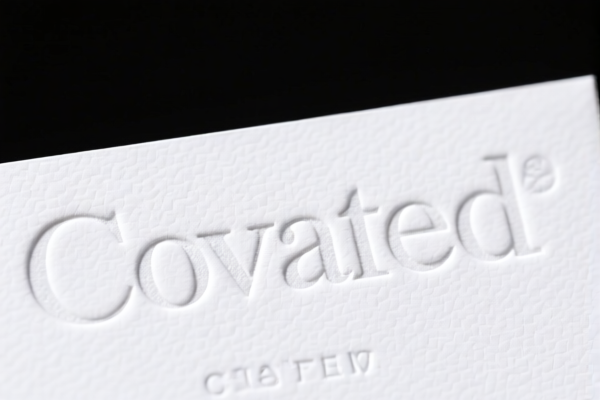
AI Analysis
📜 Embossed, Patterned, or Printed Paper and Cardboard
🌐 HS Code Reference & Customs Clearance Guide | 2026 Latest Tariff Analysis | Professional Entry Strategy
📌 I. Product Definition & Classification: What Exactly Are We Importing?
In international trade, Paper and Cardboard are not just raw materials; they are highly processed goods. When paper is embossed, patterned (textured), or printed, it moves beyond simple sheets and enters specific sub-categories under Chapter 48.
The key distinction lies in the physical structure and processing method: * Embossed/Patterned Paper: Paper with raised or depressed patterns created through mechanical pressure (calendering, embossing rollers). * Printed Paper/Cardboard: Paper with designs applied via ink, digital printing, or lithography. * Crinkled/Creped Paper: A specific type of textured paper, often used for decorative or sanitary purposes, characterized by its stretched, wrinkled structure.
⚠️ Critical Distinction Point:
- If the paper is plain, unprinted, and unembossed → It belongs to different chapters (e.g., 4801–4805).
- If the paper is embossed, printed, or crinkled → It falls under 4823.90 (Other paper, paperboard, cellulose wadding and webs of cellulose fibers, cut to size or shape; other articles of paper pulp, paper, paperboard, cellulose wadding or webs of cellulose fibers).
- Shape Matters: Are the sheets rolled (rolls) or cut (sheets)? This can influence the exact sub-code in some jurisdictions, but for the US HTS, they often converge under 4823.90.67 or 4823.90.80 depending on specific material properties.
📦 II. HS Code Classification Details (2026 Latest Tariff Authority Match)
Based on the provided data, the relevant HS Codes for Embossed, Patterned, or Printed Paper and Cardboard are:
| HS Code | Product Description | Key Characteristics | Typical Application |
|---|---|---|---|
4823.90.67.00 |
Other paper and paperboard, cut to size or shape; embossed, perforated, or printed | Material: Paper/Cardboard. Process: Embossing, Perforating, or Printing. | Decorative paper, packaging materials, printed cards, textured stationery. |
4823.90.80.00 |
Other paper and paperboard; creped, crinkled, embossed, or perforated | Material: Paper. Form: Rolls or Sheets. Structure: Creped/Crinkled/Embossed. | Tissue paper, decorative crinkle paper, craft paper, sanitary paper products. |
🔍 Important Note:
-4823.90.67.00focuses on embossed, perforated, or printed items. If your product is heavily printed or mechanically embossed with fine patterns, this is likely your code. -4823.90.80.00is broader for creped, crinkled, or embossed paper. If the paper has a distinct "wrinkled" or "creped" texture (like toilet paper or decorative crepe paper), use this code. - Both codes apply to rolls or sheets.
💰 III. 2026 Latest Tariff Rate Breakdown (Including Surtaxes & Policy Add-ons)
✅ Applicable Country: United States (US)
✅ Country of Origin: China (CN)
✅ Effective Time: 2025/2026 Import Cycle
🎯 1. 4823.90.67.00 —— Embossed, Perforated, or Printed Paper/Cardboard
| Item | Content |
|---|---|
| Base Tariff Rate | 0.0% (General Rate for Paper Products) |
| Section 301 Surcharge (25%) | +25.0% (Under USITC Footnote 4) |
| Section 122 Surcharge (10%) | +10.0% (Under IEEPA Section 122, targeting specific Chinese goods) |
| Total Effective Rate | 35.0% |
| Tax Calculation | CIF Value × 35% |
| De Minimis Exemption | ❌ Not Eligible (Value > $800 is subject to duties; even below $800, if declared as Section 301/122 goods, risks apply) |
| Legal Basis Path | HTSUS:4823.90.67.00 → USITC:301-List1 → IEEPA:122-List |
📌 Explanation:
- Base 0%: Paper products often have low base tariffs to support manufacturing.
- 301 Clause (+25%): This is the standard "Trade War" tariff on most Chinese goods, including processed paper.
- Section 122 (+10%): A newer, specific surcharge applied to certain Chinese imports under emergency economic powers.
- Total 35%: This is a significant cost factor. A $1,000 shipment will incur $350 in duties alone.
🎯 2. 4823.90.80.00 —— Creped, Crinkled, or Embossed Paper
| Item | Content |
|---|---|
| Base Tariff Rate | 0.0% |
| Section 301 Surcharge (25%) | +25.0% |
| Section 122 Surcharge (10%) | +10.0% |
| Total Effective Rate | 35.0% |
| Tax Calculation | CIF Value × 35% |
| De Minimis Exemption | ❌ Not Eligible |
| Legal Basis Path | HTSUS:4823.90.80.00 → USITC:301-List1 → IEEPA:122-List |
📌 Note:
- The tariff structure is identical to4823.90.67.00.
- Whether it's printed, embossed, or crinkled, if it's from China, it faces the same 35% hit.
🛠️ IV. Customs Clearance Practical Advice (Real-World Pitfall Avoidance)
✅ 1. Required Documentation Checklist (Do Not Miss)
| Document | Mandatory? | Explanation |
|---|---|---|
| ✅ Product Specification Sheet | ✔️ | Must clearly state: Material (e.g., 100% Wood Pulp), Weight (GSM), Dimensions, Color, Texture (Embossed/Printed). |
| ✅ Commercial Invoice | ✔️ | Must describe goods as "Embossed Paper," "Printed Cardboard," or "Creped Paper." Avoid vague terms like "Decorative Material." |
| ✅ Packing List | ✔️ | Specify if items are in Rolls or Sheets. This confirms the physical form. |
| ✅ Proof of Origin (CO) | ✔️ | Critical for 301/122. If claimed as non-Chinese, provide Certificate of Origin. If Chinese, duties apply. |
| ✅ Product Photos | ✔️ | Show the texture/print quality. Helps customs distinguish between plain paper (0% base) and processed paper (0% base + surcharges). |
✅ 2. Declaration Tips (Key Mnemonic)
🔥 “Texture Defines Code, Origin Defines Duty!”
| Scenario | Correct Declaration | Wrong Practice |
|---|---|---|
| Printed Gift Wrap | 4823.90.67.00 - "Printed Embossed Paper" |
Declare as "Paper" → Risk of misclassification penalty. |
| Decorative Crinkle Paper | 4823.90.80.00 - "Creped/Crinkled Paper" |
Declare as "Cardboard" → If it's thin, it's paper; if thick, it's cardboard. Be precise. |
| Plain White Paper | 4802.56 or 4802.58 (NOT 4823) |
Declare as 4823 → Overpaying tariffs or audit flag. |
| Packaging Box (Cardboard) | 4819.10 or 4819.20 (NOT 4823) |
If it's a box, it may be 4819. 4823 is for sheets/rolls or flat articles. |
⚠️ Critical Check:
- Is it a box or a sheet?
- Boxes often fall under4819.
- Sheets/Rolls (even if printed/embossed) fall under4823.
- If in doubt, choose4823for flat, processed paper products.
✅ 3. Special Situations
| Situation | Handling Advice |
|---|---|
| Mixed Shipments (Plain + Printed) | Declare separately. Plain paper (if eligible) may have lower taxes. Mixing codes in one line item can cause delays. |
| High-Value Luxury Packaging | Ensure the value declared includes the cost of the printing/embossing process. Customs may adjust value if under-declared. |
| Sample Shipments (<$800) | Even if under $800 (De Minimis), Section 301/122 duties may still apply if the carrier or CBP decides to audit. Better to pay duties upfront than face hold-ups. |
🌍 V. Global Market Clearance Comparison (2026)
| Country/Region | Recommended HS Code | Base Tariff | Surtaxes (China) | Total Estimate | Remarks |
|---|---|---|---|---|---|
| 🇺🇸 USA | 4823.90.67.00 / .80 |
0% | +25% (301) +10% (122) | 35% | Highest burden. Plan for 35% cost. |
| 🇨🇳 China | 4823.90.67.00 / .80 |
8–10% | N/A | ~8–10% | Lower base rate, but domestic consumption tax may apply. |
| 🇪🇺 EU | 4823.90.90 |
5–6% | None | ~6% | No Section 301 equivalent. Much more favorable. |
| 🇬🇧 UK | 4823.90.90 |
5% | None | ~5% | Post-Brexit rules. No US-style surcharges. |
| 🇨🇦 Canada | 4823.90.90.90 |
5% | None | ~5% | CUSMA benefits may apply for North American goods. |
📌 Conclusion:
- The US market is the most challenging due to Section 301 and 122 surcharges.
- EU and UK are significantly more favorable for paper products from China.
- Consider transshipment or final assembly in third countries (e.g., Vietnam, Mexico) if aiming for the US market, but ensure substantial transformation to change origin.
📌 VI. Common Mistakes & Pitfalls (Blood-Teaching Lessons)
❌ Mistake 1: Declaring "Embossed Paper" as "Plain Paper" (4802)
👉 Consequence: Customs will reclassify, apply 35% tariff, and may impose penalties.
✅ Fix: Always declare the processing (embossed/printing).
❌ Mistake 2: Confusing "Paper" (4823) with "Cardboard Boxes" (4819)
👉 Consequence: If you send printed sheets but declare as boxes, or vice versa, goods may be detained.
✅ Fix:
- Flat, flexible sheets/rolls → 4823.
- Rigid, folded containers → 4819.
❌ Mistake 3: Ignoring Section 122 (10%) Surcharge
👉 Consequence: Many importers forget this 10% add-on, leading to underpayment and IRS/CBP audits.
✅ Fix: Always calculate Base + 25% + 10% = 35% for China-origin paper goods.
🎯 VII. Conclusion: Professional Declaration, Cost Control, Efficiency!
🎯 Remember the Mnemonic:
🔹 "Embossed/Printed = 4823. Plain = 4802. Box = 4819."
🔹 "China Origin = 35% Total Duty. No exceptions."
🔹 "Declare Texture, Declare Shape, Avoid Delays."
📌 Pro Tip:
- If your paper products are not from China (e.g., from Indonesia, Malaysia, or Canada), you can avoid the 35% surcharge entirely.
- Consider supply chain diversification to countries with Free Trade Agreements (FTAs) with the US.
- For high-volume imports, apply for a Customs Ruling (Binding Ruling) to confirm the exact HS Code and duty liability before shipping.
📣 Immediate Action:
📞 Contact your Customs Broker + Provide Product Samples/Photos + Confirm Origin.
🚀 Optimize your supply chain to mitigate 35% duty impact!
✨ Professional Customs Clearance Starts with Accurate Classification!
💼 Your Margin Depends on Precision!
Customer Reviews
About HS Code Classification
The Harmonized System (HS) is an internationally standardized nomenclature developed by the World Customs Organization (WCO) to classify traded products. Over 200 countries use the HS system as the basis for customs tariffs, trade statistics, and import/export regulations.
Each HS code follows a hierarchical structure:
- Chapter (2 digits) — Broad category of goods (e.g., Chapter 84: Machinery and Mechanical Appliances)
- Heading (4 digits) — More specific grouping within the chapter
- Subheading (6 digits) — Internationally standardized breakdown, used by all WCO member countries
- National subdivisions (8-10 digits) — Country-specific extensions for further classification, such as US HTSUS 10-digit codes
Correct HS code classification is essential for smooth customs clearance, accurate duty payment, and compliance with trade regulations. Misclassification can lead to customs delays, overpayment of duties, or penalties.
When importing from CN to US, the applicable tariff rates may include:
- Most-Favored-Nation (MFN) rate — The standard duty rate applied to WTO members
- General rate — Applied to countries without trade agreements
- Trade remedy duties — Additional tariffs such as Section 301 (anti-dumping), Section 232 (national security), or countervailing duties
The information provided on this page is for reference purposes only. For official classification, please consult with your local customs authority or a licensed customs broker.