Emergency Alarm System
CN → US| HS编码 | 关税税率 | 原产国 | 目的国 | 文档 |
|---|---|---|---|---|
| 8531100045 | 11.3% | CN | US | 官方文档 |
| 9031808085 | 10.0% | CN | US | 官方文档 |
| 9031499000 | 35.0% | CN | US | 官方文档 |
| 8543709860 | 37.6% | CN | US | 官方文档 |
| 8531100035 | 36.3% | CN | US | 官方文档 |
| 8543706000 | 35.0% | CN | US | 官方文档 |
商品图片
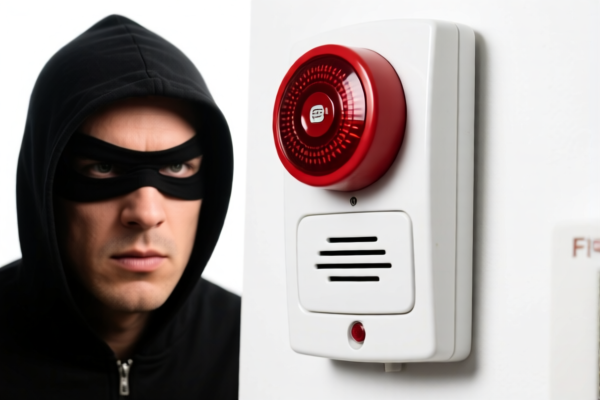
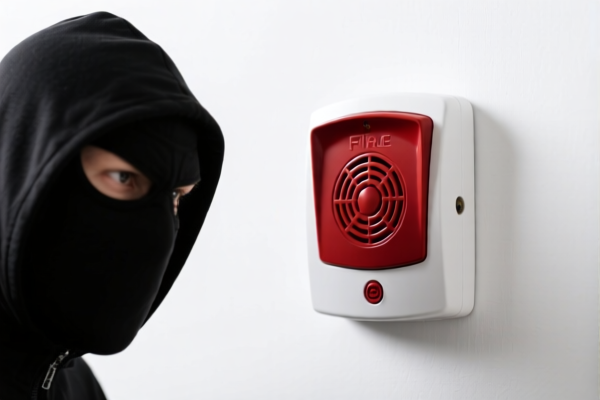
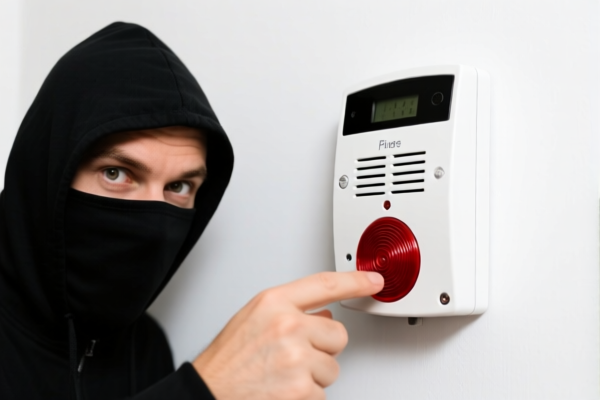

AI分析
🚨 Emergency Alarm Systems (EAS)
HS Code Classification, Tax Breakdown & Customs Clearance Strategy (USA)
🌐 HS Code Reference & Customs Guide | 2026 Latest Tariff Analysis | Professional Clearance Strategy
📌 Part 1: Product Definition & Classification – What Exactly is an "Emergency Alarm System"?
An Emergency Alarm System is a broad category of electronic devices designed to detect emergencies (such as fire, theft, intrusion, or panic situations) and trigger an audible/visual alert or transmit a signal to monitoring centers.
In international trade, these systems are not classified under a single HS code. Instead, they are split based on their specific function, hardware composition, and signal transmission method. Misclassification can lead to significant tariff penalties (up to 45% extra).
⚠️ Key Distinction Points: - Is it a standalone detector? (e.g., Smoke detector) → Usually
8531.10- Is it a signal transmission unit? (e.g., Modem/GSM module for alarms) → Usually8543.70- Is it a general monitoring instrument? (e.g., Sensor controller) → Usually9031.80or9031.49
📦 Part 2: HS Code Classification Details (2026 Latest Tariff Authority)
Based on the provided data, here are the 6 potential HS Codes for Emergency Alarm Systems, with detailed tax explanations.
| HS Code | Product Description | Functionality & Summary |
|---|---|---|
8531.10.00.35 |
Theft/Fire Alarm Devices | Belongs to theft or fire alarm devices, fitting the purpose description of emergency alarm systems. |
8543.70.60.00 |
Signal Transmission Units | Designed to connect to telegraph/telephone equipment, instruments, or networks; fits alarm system signal transmission characteristics. |
8531.10.00.45 |
General Alarm Devices | Belongs to theft or fire alarms and similar devices, fitting the device's functional attributes. |
9031.80.80.85 |
Monitoring/Inspection Instruments | Belongs to monitoring/alarm equipment, fitting the residual classification of other measuring/inspection instruments. |
9031.49.90.00 |
Electronic/Optical Monitoring Devices | Belongs to detection/measurement/monitoring electronic/optical devices, classified under other optical/measuring instruments. |
8543.70.98.60 |
Independent Electronic Units | Belongs to electronic devices with independent functions, fitting the purpose description of other machines/devices. |
🔍 Critical Note:
-8531.10is the most common for audible/visual alarms (sirens, strobes).
-8543.70is for signal processing/transmission (modems, control panels with communication features).
-9031.80is a "Catch-all" for specialized monitoring equipment that doesn't fit strictly into fire/theft categories.
💰 Part 3: 2026 Tariff Rate Breakdown (Detailed Tax Clauses)
✅ Applicable Country: United States (US)
✅ Origin: China (CN)
✅ Effective Date: Current rates apply (Includes Section 301 & IEEPA tariffs)
🎯 1. 8531.10.00.35 – Theft/Fire Alarm Devices
| Item | Content |
|---|---|
| Base Tariff | 1.3% |
| Section 301 Tariff | +25.0% (Additional Tariff) |
| IEEPA Tariff | +10.0% (122 Clause Tariff for China) |
| Total Tax Rate | 36.3% |
| Tax Calculation | CIF Value × 36.3% |
| De Minimis Exemption | ❌ NOT Eligible |
| Legal Basis Path | Base:8531.10 → Sec301:25% → IEEPA:10% |
📌 Explanation:
- This code covers physical alarm devices (sirens, bells, strobes).
- The 36.3% rate is high due to the combination of standard and punitive tariffs.
🎯 2. 8543.70.60.00 – Signal Transmission Units
| Item | Content |
|---|---|
| Base Tariff | 0.0% |
| Section 301 Tariff | +25.0% |
| IEEPA Tariff | +10.0% |
| Total Tax Rate | 35.0% |
| Tax Calculation | CIF Value × 35.0% |
| De Minimis Exemption | ❌ NOT Eligible |
| Legal Basis Path | Base:8543.70 → Sec301:25% → IEEPA:10% |
📌 Explanation:
- Often used for alarm control panels with GSM/Internet modems.
- Even though the base is 0%, the 35.0% total is still significant.
🎯 3. 8531.10.00.45 – General Alarm Devices (Lower Risk)
| Item | Content |
|---|---|
| Base Tariff | 1.3% |
| Section 301 Tariff | 0.0% |
| IEEPA Tariff | +10.0% |
| Total Tax Rate | 11.3% |
| Tax Calculation | CIF Value × 11.3% |
| De Minimis Exemption | ❌ NOT Eligible |
| Legal Basis Path | Base:8531.10 → IEEPA:10% |
📌 Explanation:
- Best Rate Option: This is the most tax-efficient code if the product fits the description.
- Note: No Section 301 (25%) applies here, only the IEEPA 10%.
🎯 4. 9031.80.80.85 – Monitoring Instruments (Lowest Risk)
| Item | Content |
|---|---|
| Base Tariff | 0.0% |
| Section 301 Tariff | 0.0% |
| IEEPA Tariff | +10.0% |
| Total Tax Rate | 10.0% |
| Tax Calculation | CIF Value × 10.0% |
| De Minimis Exemption | ❌ NOT Eligible |
| Legal Basis Path | Base:9031.80 → IEEPA:10% |
📌 Explanation:
- If the device is primarily a monitoring instrument (e.g., environmental sensor for emergency detection), this code offers the lowest tariff (10%).
- Strategy: If your alarm system is sensor-based, argue for this classification to save 25-36% in taxes.
🎯 5. 9031.49.90.00 – Electronic/Optical Monitoring Devices
| Item | Content |
|---|---|
| Base Tariff | 0.0% |
| Section 301 Tariff | +25.0% |
| IEEPA Tariff | +10.0% |
| Total Tax Rate | 35.0% |
| Tax Calculation | CIF Value × 35.0% |
| De Minimis Exemption | ❌ NOT Eligible |
| Legal Basis Path | Base:9031.49 → Sec301:25% → IEEPA:10% |
📌 Explanation:
- Applies if the device uses optical/electronic sensing for monitoring.
- High tariff due to Section 301 application.
🎯 6. 8543.70.98.60 – Independent Electronic Units
| Item | Content |
|---|---|
| Base Tariff | 2.6% |
| Section 301 Tariff | +25.0% |
| IEEPA Tariff | +10.0% |
| Total Tax Rate | 37.6% |
| Tax Calculation | CIF Value × 37.6% |
| De Minimis Exemption | ❌ NOT Eligible |
| Legal Basis Path | Base:8543.70 → Sec301:25% → IEEPA:10% |
📌 Explanation:
- The highest tax rate among the options.
- Use only if the device is a general-purpose electronic unit that doesn't fit more specific categories.
🛠️ Part 4: Customs Clearance Practical Advice (Avoid Pitfalls)
✅ 1. Preparation Checklist (Missing Documents = Delay/Return)
| Document | Required | Notes |
|---|---|---|
| ✅ Product Specifications | ✔️ | Must include voltage, frequency, alarm type, and communication protocol (GSM/HTTP). |
| ✅ Circuit Diagrams/Schematics | ✔️ | Crucial for distinguishing between 8531 (Alarm) and 8543/9031 (Instrument/Transmission). |
| ✅ Product Photos | ✔️ | Show internal components. Does it have a siren? A modem? A sensor? |
| ✅ FCC Certification | ✔️ | Mandatory for US import for any electronic signal-emitting device. |
| ✅ Commercial Invoice | ✔️ | Clearly describe the product as "Emergency Alarm System" or "Fire Detection Device." |
| ✅ Packing List | ✔️ | Detail each component. Do not lump sensors and sires if they are shipped separately. |
✅ 2. Declaration Tips (Key Mantra)
🔥 "Function First, Hardware Second, Name Specific, Tax Reduced!"
| Scenario | Correct Declaration | Incorrect Practice |
|---|---|---|
| Simple Siren/Strobe | 8531.10.00.45 (11.3%) or 8531.10.00.35 (36.3%) |
Declaring as "Electrical Part" → High risk of audit |
| Alarm Control Panel with Modem | 8543.70.60.00 (35.0%) |
Declaring as "Computer Part" → 100% penalty |
| Environmental Sensor for Emergency | 9031.80.80.85 (10.0%) |
Declaring as "Alarm" → 36.3% unnecessary cost |
| Complete System (Panel + Sensors) | Whole System Classification | Splitting into parts → Each part taxed at high rates |
✅ 3. Special Handling Cases
| Situation | Recommendation |
|---|---|
| OEM Custom Alarms | Provide client order + design files. Prove it's not a generic "machine." |
| Smart Home Alarms (WiFi/Zigbee) | May fall under 8543.70.60.00. Highlight "Network Connectivity." |
| Medical Emergency Buttons | Could be classified under 9031.80 if strictly for patient monitoring. |
| Industrial Fire Detection | Strong case for 8531.10. Provide UL/FM certificates. |
🌍 Part 5: Global Market Comparison (2026)
| Country/Region | Recommended HS Code | Est. Tariff (China Origin) | Certification Required | Notes |
|---|---|---|---|---|
| 🇺🇸 USA | 8531.10.00.45 or 9031.80.80.85 |
10% - 36.3% | FCC, UL, FM | High Tariff Volatility; Choose 9031 or 8531.10.00.45 if possible. |
| 🇨🇳 China | 8531.10.00 |
~1.3% - 2.0% | CCC | Low tariff, high volume. |
| 🇪🇺 EU | 8531.10.00 |
~0% - 2.5% | CE, RED Directive | No punitive tariffs. |
| 🇯🇵 Japan | 8531.10.00 |
~0% - 1.5% | PSE, JIS | Strict safety standards. |
📌 Conclusion:
- USA is the most challenging market due to high additional tariffs.
- Optimization Strategy: If your product is a sensor-based monitoring device, argue for9031.80.80.85(10%) instead of8531.10.00.35(36.3%).
- Documentation is Key: Clear technical specs can justify lower-risk HS codes.
📌 Part 6: Common Errors & Pitfalls (Lessons Learned)
❌ Error 1: Declaring all alarm systems as 8531.10.00.35
👉 Result: Paying 36.3% when 11.3% was available under 8531.10.00.45.
❌ Error 2: Missing FCC Certification
👉 Result: Goods detained at US Customs for lack of RF compliance.
❌ Error 3: Vague Description ("Alarm System")
👉 Result: Customs officers assign worst-case HS code (e.g., 8543.70.98.60 at 37.6%).
❌ Error 4: Ignoring IEEPA Tariffs
👉 Result: Underestimating total landed cost by 10%.
✅ Correct Action:
"Wireless Emergency Alarm System, Smoke & Heat Detection, with GSM Module, Model XYZ, FCC Part 15 Certified"
🎯 Part 7: Conclusion – Professional Clearance, Cost Optimization!
🎯 Remember the Mantra:
🔹 "Sirens: Check 8531.10.45 (11.3%). Sensors: Check 9031.80 (10%). Modems: Check 8543.70 (35%). Don't guess, specify!"
🔹 "HS Code decides your tax, Tax decides your profit, Clearance decides your speed!"
📌 Pro Tip:
If your alarm system uses WiFi/Bluetooth, ensure FCC ID is on the label. If it uses GSM, verify it doesn't conflict with US cellular bands.
For high-value shipments, consider Advance Ruling (CBP Binding Ruling) to lock in a favorable HS code.
📣 Immediate Action:
📞 Contact a licensed Customs Broker + Provide Datasheets + Verify FCC/UL Certs
🚀 Ensure your Emergency Alarm Systems clear customs smoothly, stay compliant, and maximize margins!
✨ Professional Clearance Starts with Accurate Classification!
💼 Every cent saved on tariffs is pure profit added to your bottom line!
用户评价
关于 HS 编码归类
协调制度(HS)是由世界海关组织(WCO)制定的国际贸易商品分类标准。全球 200 多个国家采用 HS 系统作为海关关税、贸易统计和进出口监管的基础。
每个 HS 编码遵循以下层级结构:
- 章(2 位)——商品大类(例如:第 84 章:机器和机械设备)
- 品目(4 位)——章内的更具体分类
- 子目(6 位)——国际通用细分,所有 WCO 成员国统一使用
- 本国细分(8-10 位)——各国自行扩展的细分编码,如美国 HTSUS 10 位编码
正确的 HS 编码归类对于顺利通关、准确缴纳关税和遵守贸易法规至关重要。错误归类可能导致海关延误、多缴关税或罚款。
从CN进口到US时,适用的关税税率可能包括:
- 最惠国(MFN)税率——适用于 WTO 成员国的标准关税税率
- 普通税率——适用于无贸易协定国家
- 贸易救济关税——附加关税,如 301 条款(反倾销)、232 条款(国家安全)或反补贴税
本页内容仅供参考。如需正式归类,请咨询当地海关或持牌报关代理。