Emergency Alarm System
CN → US| HS Code | Tariff Rate | Origin | Destination | Doc |
|---|---|---|---|---|
| 8531100045 | 11.3% | CN | US | Official Doc |
| 9031808085 | 10.0% | CN | US | Official Doc |
| 9031499000 | 35.0% | CN | US | Official Doc |
| 8543709860 | 37.6% | CN | US | Official Doc |
| 8531100035 | 36.3% | CN | US | Official Doc |
| 8543706000 | 35.0% | CN | US | Official Doc |
Product Images
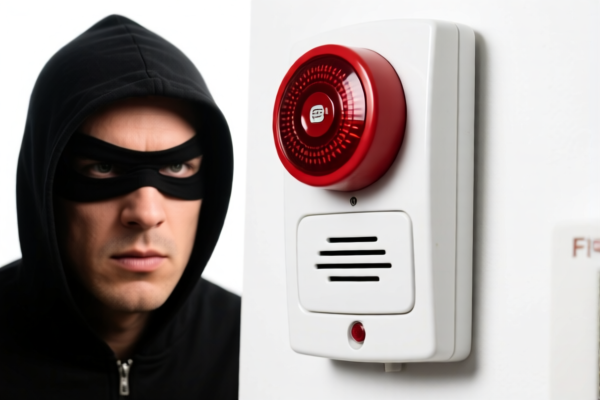
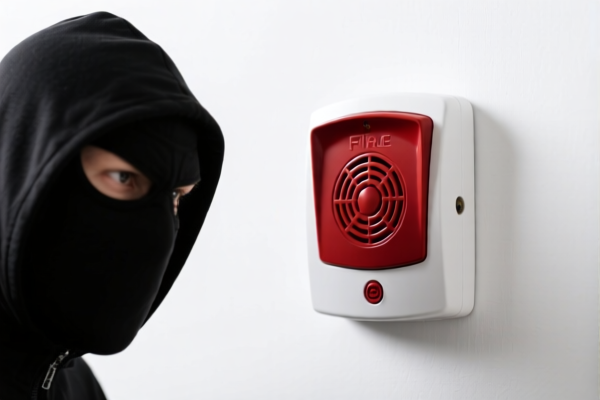
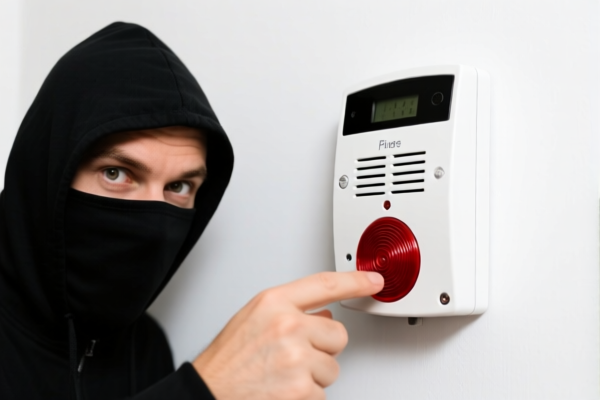

AI Analysis
🚨 Emergency Alarm Systems (EAS)
HS Code Classification, Tax Breakdown & Customs Clearance Strategy (USA)
🌐 HS Code Reference & Customs Guide | 2026 Latest Tariff Analysis | Professional Clearance Strategy
📌 Part 1: Product Definition & Classification – What Exactly is an "Emergency Alarm System"?
An Emergency Alarm System is a broad category of electronic devices designed to detect emergencies (such as fire, theft, intrusion, or panic situations) and trigger an audible/visual alert or transmit a signal to monitoring centers.
In international trade, these systems are not classified under a single HS code. Instead, they are split based on their specific function, hardware composition, and signal transmission method. Misclassification can lead to significant tariff penalties (up to 45% extra).
⚠️ Key Distinction Points: - Is it a standalone detector? (e.g., Smoke detector) → Usually
8531.10- Is it a signal transmission unit? (e.g., Modem/GSM module for alarms) → Usually8543.70- Is it a general monitoring instrument? (e.g., Sensor controller) → Usually9031.80or9031.49
📦 Part 2: HS Code Classification Details (2026 Latest Tariff Authority)
Based on the provided data, here are the 6 potential HS Codes for Emergency Alarm Systems, with detailed tax explanations.
| HS Code | Product Description | Functionality & Summary |
|---|---|---|
8531.10.00.35 |
Theft/Fire Alarm Devices | Belongs to theft or fire alarm devices, fitting the purpose description of emergency alarm systems. |
8543.70.60.00 |
Signal Transmission Units | Designed to connect to telegraph/telephone equipment, instruments, or networks; fits alarm system signal transmission characteristics. |
8531.10.00.45 |
General Alarm Devices | Belongs to theft or fire alarms and similar devices, fitting the device's functional attributes. |
9031.80.80.85 |
Monitoring/Inspection Instruments | Belongs to monitoring/alarm equipment, fitting the residual classification of other measuring/inspection instruments. |
9031.49.90.00 |
Electronic/Optical Monitoring Devices | Belongs to detection/measurement/monitoring electronic/optical devices, classified under other optical/measuring instruments. |
8543.70.98.60 |
Independent Electronic Units | Belongs to electronic devices with independent functions, fitting the purpose description of other machines/devices. |
🔍 Critical Note:
-8531.10is the most common for audible/visual alarms (sirens, strobes).
-8543.70is for signal processing/transmission (modems, control panels with communication features).
-9031.80is a "Catch-all" for specialized monitoring equipment that doesn't fit strictly into fire/theft categories.
💰 Part 3: 2026 Tariff Rate Breakdown (Detailed Tax Clauses)
✅ Applicable Country: United States (US)
✅ Origin: China (CN)
✅ Effective Date: Current rates apply (Includes Section 301 & IEEPA tariffs)
🎯 1. 8531.10.00.35 – Theft/Fire Alarm Devices
| Item | Content |
|---|---|
| Base Tariff | 1.3% |
| Section 301 Tariff | +25.0% (Additional Tariff) |
| IEEPA Tariff | +10.0% (122 Clause Tariff for China) |
| Total Tax Rate | 36.3% |
| Tax Calculation | CIF Value × 36.3% |
| De Minimis Exemption | ❌ NOT Eligible |
| Legal Basis Path | Base:8531.10 → Sec301:25% → IEEPA:10% |
📌 Explanation:
- This code covers physical alarm devices (sirens, bells, strobes).
- The 36.3% rate is high due to the combination of standard and punitive tariffs.
🎯 2. 8543.70.60.00 – Signal Transmission Units
| Item | Content |
|---|---|
| Base Tariff | 0.0% |
| Section 301 Tariff | +25.0% |
| IEEPA Tariff | +10.0% |
| Total Tax Rate | 35.0% |
| Tax Calculation | CIF Value × 35.0% |
| De Minimis Exemption | ❌ NOT Eligible |
| Legal Basis Path | Base:8543.70 → Sec301:25% → IEEPA:10% |
📌 Explanation:
- Often used for alarm control panels with GSM/Internet modems.
- Even though the base is 0%, the 35.0% total is still significant.
🎯 3. 8531.10.00.45 – General Alarm Devices (Lower Risk)
| Item | Content |
|---|---|
| Base Tariff | 1.3% |
| Section 301 Tariff | 0.0% |
| IEEPA Tariff | +10.0% |
| Total Tax Rate | 11.3% |
| Tax Calculation | CIF Value × 11.3% |
| De Minimis Exemption | ❌ NOT Eligible |
| Legal Basis Path | Base:8531.10 → IEEPA:10% |
📌 Explanation:
- Best Rate Option: This is the most tax-efficient code if the product fits the description.
- Note: No Section 301 (25%) applies here, only the IEEPA 10%.
🎯 4. 9031.80.80.85 – Monitoring Instruments (Lowest Risk)
| Item | Content |
|---|---|
| Base Tariff | 0.0% |
| Section 301 Tariff | 0.0% |
| IEEPA Tariff | +10.0% |
| Total Tax Rate | 10.0% |
| Tax Calculation | CIF Value × 10.0% |
| De Minimis Exemption | ❌ NOT Eligible |
| Legal Basis Path | Base:9031.80 → IEEPA:10% |
📌 Explanation:
- If the device is primarily a monitoring instrument (e.g., environmental sensor for emergency detection), this code offers the lowest tariff (10%).
- Strategy: If your alarm system is sensor-based, argue for this classification to save 25-36% in taxes.
🎯 5. 9031.49.90.00 – Electronic/Optical Monitoring Devices
| Item | Content |
|---|---|
| Base Tariff | 0.0% |
| Section 301 Tariff | +25.0% |
| IEEPA Tariff | +10.0% |
| Total Tax Rate | 35.0% |
| Tax Calculation | CIF Value × 35.0% |
| De Minimis Exemption | ❌ NOT Eligible |
| Legal Basis Path | Base:9031.49 → Sec301:25% → IEEPA:10% |
📌 Explanation:
- Applies if the device uses optical/electronic sensing for monitoring.
- High tariff due to Section 301 application.
🎯 6. 8543.70.98.60 – Independent Electronic Units
| Item | Content |
|---|---|
| Base Tariff | 2.6% |
| Section 301 Tariff | +25.0% |
| IEEPA Tariff | +10.0% |
| Total Tax Rate | 37.6% |
| Tax Calculation | CIF Value × 37.6% |
| De Minimis Exemption | ❌ NOT Eligible |
| Legal Basis Path | Base:8543.70 → Sec301:25% → IEEPA:10% |
📌 Explanation:
- The highest tax rate among the options.
- Use only if the device is a general-purpose electronic unit that doesn't fit more specific categories.
🛠️ Part 4: Customs Clearance Practical Advice (Avoid Pitfalls)
✅ 1. Preparation Checklist (Missing Documents = Delay/Return)
| Document | Required | Notes |
|---|---|---|
| ✅ Product Specifications | ✔️ | Must include voltage, frequency, alarm type, and communication protocol (GSM/HTTP). |
| ✅ Circuit Diagrams/Schematics | ✔️ | Crucial for distinguishing between 8531 (Alarm) and 8543/9031 (Instrument/Transmission). |
| ✅ Product Photos | ✔️ | Show internal components. Does it have a siren? A modem? A sensor? |
| ✅ FCC Certification | ✔️ | Mandatory for US import for any electronic signal-emitting device. |
| ✅ Commercial Invoice | ✔️ | Clearly describe the product as "Emergency Alarm System" or "Fire Detection Device." |
| ✅ Packing List | ✔️ | Detail each component. Do not lump sensors and sires if they are shipped separately. |
✅ 2. Declaration Tips (Key Mantra)
🔥 "Function First, Hardware Second, Name Specific, Tax Reduced!"
| Scenario | Correct Declaration | Incorrect Practice |
|---|---|---|
| Simple Siren/Strobe | 8531.10.00.45 (11.3%) or 8531.10.00.35 (36.3%) |
Declaring as "Electrical Part" → High risk of audit |
| Alarm Control Panel with Modem | 8543.70.60.00 (35.0%) |
Declaring as "Computer Part" → 100% penalty |
| Environmental Sensor for Emergency | 9031.80.80.85 (10.0%) |
Declaring as "Alarm" → 36.3% unnecessary cost |
| Complete System (Panel + Sensors) | Whole System Classification | Splitting into parts → Each part taxed at high rates |
✅ 3. Special Handling Cases
| Situation | Recommendation |
|---|---|
| OEM Custom Alarms | Provide client order + design files. Prove it's not a generic "machine." |
| Smart Home Alarms (WiFi/Zigbee) | May fall under 8543.70.60.00. Highlight "Network Connectivity." |
| Medical Emergency Buttons | Could be classified under 9031.80 if strictly for patient monitoring. |
| Industrial Fire Detection | Strong case for 8531.10. Provide UL/FM certificates. |
🌍 Part 5: Global Market Comparison (2026)
| Country/Region | Recommended HS Code | Est. Tariff (China Origin) | Certification Required | Notes |
|---|---|---|---|---|
| 🇺🇸 USA | 8531.10.00.45 or 9031.80.80.85 |
10% - 36.3% | FCC, UL, FM | High Tariff Volatility; Choose 9031 or 8531.10.00.45 if possible. |
| 🇨🇳 China | 8531.10.00 |
~1.3% - 2.0% | CCC | Low tariff, high volume. |
| 🇪🇺 EU | 8531.10.00 |
~0% - 2.5% | CE, RED Directive | No punitive tariffs. |
| 🇯🇵 Japan | 8531.10.00 |
~0% - 1.5% | PSE, JIS | Strict safety standards. |
📌 Conclusion:
- USA is the most challenging market due to high additional tariffs.
- Optimization Strategy: If your product is a sensor-based monitoring device, argue for9031.80.80.85(10%) instead of8531.10.00.35(36.3%).
- Documentation is Key: Clear technical specs can justify lower-risk HS codes.
📌 Part 6: Common Errors & Pitfalls (Lessons Learned)
❌ Error 1: Declaring all alarm systems as 8531.10.00.35
👉 Result: Paying 36.3% when 11.3% was available under 8531.10.00.45.
❌ Error 2: Missing FCC Certification
👉 Result: Goods detained at US Customs for lack of RF compliance.
❌ Error 3: Vague Description ("Alarm System")
👉 Result: Customs officers assign worst-case HS code (e.g., 8543.70.98.60 at 37.6%).
❌ Error 4: Ignoring IEEPA Tariffs
👉 Result: Underestimating total landed cost by 10%.
✅ Correct Action:
"Wireless Emergency Alarm System, Smoke & Heat Detection, with GSM Module, Model XYZ, FCC Part 15 Certified"
🎯 Part 7: Conclusion – Professional Clearance, Cost Optimization!
🎯 Remember the Mantra:
🔹 "Sirens: Check 8531.10.45 (11.3%). Sensors: Check 9031.80 (10%). Modems: Check 8543.70 (35%). Don't guess, specify!"
🔹 "HS Code decides your tax, Tax decides your profit, Clearance decides your speed!"
📌 Pro Tip:
If your alarm system uses WiFi/Bluetooth, ensure FCC ID is on the label. If it uses GSM, verify it doesn't conflict with US cellular bands.
For high-value shipments, consider Advance Ruling (CBP Binding Ruling) to lock in a favorable HS code.
📣 Immediate Action:
📞 Contact a licensed Customs Broker + Provide Datasheets + Verify FCC/UL Certs
🚀 Ensure your Emergency Alarm Systems clear customs smoothly, stay compliant, and maximize margins!
✨ Professional Clearance Starts with Accurate Classification!
💼 Every cent saved on tariffs is pure profit added to your bottom line!
Customer Reviews
About HS Code Classification
The Harmonized System (HS) is an internationally standardized nomenclature developed by the World Customs Organization (WCO) to classify traded products. Over 200 countries use the HS system as the basis for customs tariffs, trade statistics, and import/export regulations.
Each HS code follows a hierarchical structure:
- Chapter (2 digits) — Broad category of goods (e.g., Chapter 84: Machinery and Mechanical Appliances)
- Heading (4 digits) — More specific grouping within the chapter
- Subheading (6 digits) — Internationally standardized breakdown, used by all WCO member countries
- National subdivisions (8-10 digits) — Country-specific extensions for further classification, such as US HTSUS 10-digit codes
Correct HS code classification is essential for smooth customs clearance, accurate duty payment, and compliance with trade regulations. Misclassification can lead to customs delays, overpayment of duties, or penalties.
When importing from CN to US, the applicable tariff rates may include:
- Most-Favored-Nation (MFN) rate — The standard duty rate applied to WTO members
- General rate — Applied to countries without trade agreements
- Trade remedy duties — Additional tariffs such as Section 301 (anti-dumping), Section 232 (national security), or countervailing duties
The information provided on this page is for reference purposes only. For official classification, please consult with your local customs authority or a licensed customs broker.