Energy saving Plastic Pipe Fittings
CN → US| HS编码 | 关税税率 | 原产国 | 目的国 | 文档 |
|---|---|---|---|---|
| 3926909987 | 22.8% | CN | US | 官方文档 |
| 3926305000 | 22.8% | CN | US | 官方文档 |
| 8481805090 | 38.0% | CN | US | 官方文档 |
| 8481809050 | 37.0% | CN | US | 官方文档 |
| 3917400050 | 40.3% | CN | US | 官方文档 |
商品图片
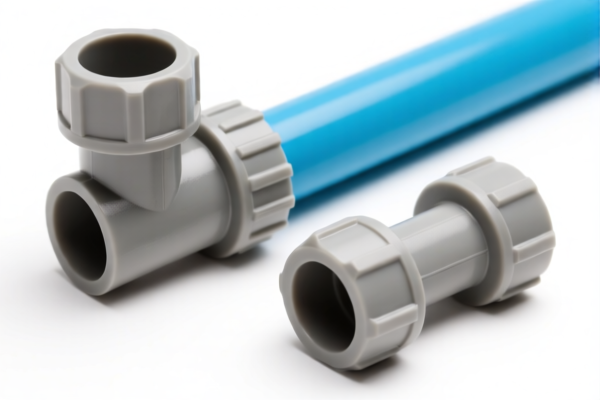
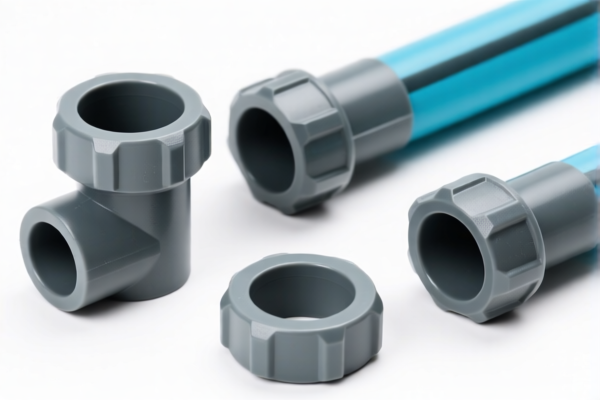
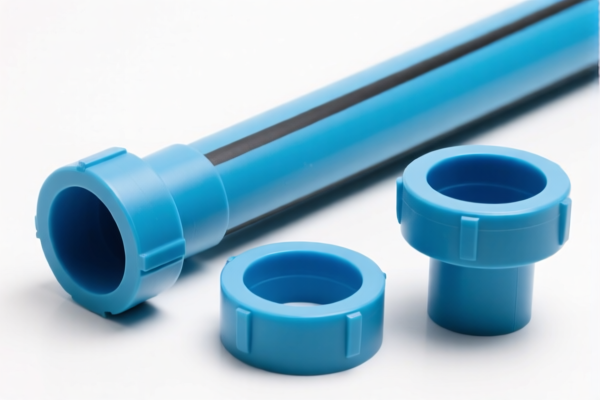
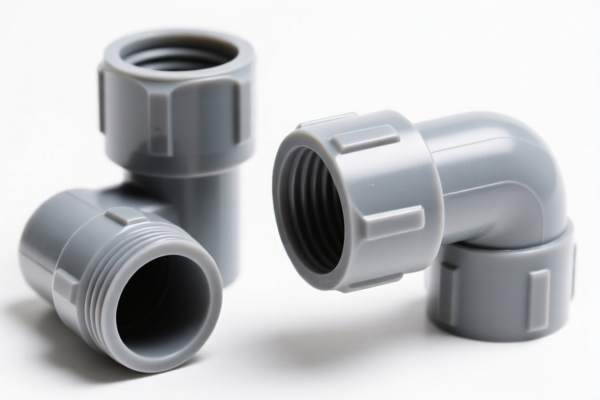
AI分析
🌊 Energy Saving Plastic Pipe Fittings (Solar System Components)
🌐 HS Code Reference & Customs Clearance Guide | 2026 Latest Tariff Analysis | Professional Clearance Strategy
📌 I. Product Definition & Classification: What Are "Energy Saving Plastic Pipe Fittings"?
Energy Saving Plastic Pipe Fittings are specialized components used in solar thermal systems, heat pump networks, or high-efficiency fluid transport systems. These fittings are typically made from polymers such as PEX, PP-R, PVC, or PE, designed to reduce thermal loss and withstand specific pressure/temperature conditions.
In international trade, the classification depends heavily on whether the fitting has integrated mechanical functions (like valves) or if it is a simple passive connector. This distinction drastically affects the tariff rate.
⚠️ Key Distinction Point:
- Passive Connectors (Elbows, Tees, Couplings): Simple plastic shapes for joining pipes → Generally classified under Chapter 39 (Plastics).
- Active/Functional Devices (Valves, Regulators): Fittings that control flow, pressure, or direction → Generally classified under Chapter 84 (Machinery/Nuclear Reactors, Boilers, Pressure Vessels).
📦 II. HS Code Classification Details (2026 Latest Tariff Authority Comparison)
| HS Code | Product Description | Application Scenario | Mechanical Function? |
|---|---|---|---|
3926.90.99.87 |
Plastic pipe fittings, not elsewhere specified | Simple elbows, tees, connectors for solar loops | ❌ No |
3926.30.50.00 |
Other plastic articles (accessories) | Complex plastic assembly pieces, non-valve accessories | ❌ No |
8481.80.50.90 |
Pipes, tubes, and hoses with fitting devices | Fittings with integrated control mechanisms, specialized pressure devices | ✅ Yes (Complex) |
8481.80.90.50 |
Other appliances for pipes, tubes, or hoses | General-purpose plastic valves or regulators not specified elsewhere | ✅ Yes (Valve-like) |
3917.40.00.50 |
Plastic pipe fittings (specific accessory category) | Specific plastic valve accessories or specialized connection parts | ✅/❌ (Context Dependent) |
🔍 Key Reminder:
- If the product is just a shaped plastic piece used to join pipes (e.g., an elbow joint), it belongs to Chapter 39.
- If the product controls flow, pressure, or has moving parts, it likely belongs to Chapter 84 (8481).
- Misclassification Risk: Declaring a valve as a simple fitting (3926) can lead to severe penalties. Conversely, over-classifying a simple elbow as a machine part (8481) results in higher taxes.
💰 III. 2026 Latest Tariff Rate Breakdown (Including Surtaxes & Policy Add-ons)
✅ Applicable Country: United States (US)
✅ Country of Origin: China (CN)
✅ Effective Date: From November 10, 2025 (and subsequent imports)
🎯 1. 3926.90.99.87 —— Plastic Pipe Fittings (General)
| Item | Details |
|---|---|
| Base Tariff Rate | 5.3% (ad valorem) |
| Section 301 Surtax | +7.5% (General surcharge) |
| Section 122 Tariff | +10% (Specific section 122 levy) |
| Total Tax Rate | 22.8% |
| Tax Calculation | CIF Value × 22.8% |
| De Minimis Exemption | ❌ Not Eligible (deny_de_minimis) |
| Legal Basis Path | Section 301: 7.5% → Section 122: 10% → USITC: 3926.90.99.87 |
📌 Explanation:
- Base 5.3%: Standard MFN rate for plastic articles.
- 7.5% Section 301: General trade war surcharge on Chinese plastics.
- 10% Section 122: Additional levy applied to specific plastic import categories.
- Total 22.8%: This is the lowest risk option if the product is a simple passive fitting.
🎯 2. 3926.30.50.00 —— Other Plastic Articles (Accessories)
| Item | Details |
|---|---|
| Base Tariff Rate | 5.3% |
| Section 301 Surtax | +7.5% |
| Section 122 Tariff | +10% |
| Total Tax Rate | 22.8% |
| Tax Calculation | CIF Value × 22.8% |
| De Minimis Exemption | ❌ Not Eligible |
| Legal Basis Path | Section 301: 7.5% → Section 122: 10% → USITC: 3926.30.50.00 |
📌 Note:
- Same tax burden as above.
- Use this code only if the item is considered an "accessory" rather than a direct pipe component, but ensure it remains a passive plastic part.
🎯 3. 8481.80.50.90 —— Pipes, Tubs, and Hoses with Fitting Devices (Complex)
| Item | Details |
|---|---|
| Base Tariff Rate | 3.0% |
| Section 301 Surtax | +25.0% (High rate for machinery/parts) |
| Section 122 Tariff | +10% |
| Total Tax Rate | 38.0% |
| Tax Calculation | CIF Value × 38.0% |
| De Minimis Exemption | ❌ Not Eligible |
| Legal Basis Path | Section 301: 25% → Section 122: 10% → USITC: 8481.80.50.90 |
📌 Warning:
- Much Higher Cost: The Section 301 surcharge jumps from 7.5% to 25% for machinery-related items.
- Only use if the fitting has active mechanical control functions.
- Misclassifying a simple plastic elbow here will not save money; it complicates customs review.
🎯 4. 8481.80.90.50 —— Other Appliances for Pipes (Valves)
| Item | Details |
|---|---|
| Base Tariff Rate | 2.0% |
| Section 301 Surtax | +25.0% |
| Section 122 Tariff | +10% |
| Total Tax Rate | 37.0% |
| Tax Calculation | CIF Value × 37.0% |
| De Minimis Exemption | ❌ Not Eligible |
| Legal Basis Path | Section 301: 25% → Section 122: 10% → USITC: 8481.80.90.50 |
📌 Note:
- This category is typically for valves or pressure-regulating devices.
- If your "energy saving" fitting includes a check valve, flow restrictor, or pressure relief mechanism, it must go here.
- Total 37% is significantly higher than the 22.8% for passive plastics.
🎯 5. 3917.40.00.50 —— Plastic Pipe Fittings (Specific Accessory)
| Item | Details |
|---|---|
| Base Tariff Rate | 5.3% |
| Section 301 Surtax | +25.0% |
| Section 122 Tariff | +10% |
| Total Tax Rate | 40.3% |
| Tax Calculation | CIF Value × 40.3% |
| De Minimis Exemption | ❌ Not Eligible |
| Legal Basis Path | Section 301: 25% → Section 122: 10% → USITC: 3917.40.00.50 |
📌 Critical Alert:
- Despite being in Chapter 39, this subheading attracts the 25% Section 301 rate (unlike general plastics which get 7.5%).
- This is often a trap for "accessories" that are deemed critical components.
- Avoid this code unless specifically required;3926.90.99.87(22.8%) is far more economical for similar items.
🛠️ IV. Customs Clearance Practical Advice (Real-World Pitfall Guide)
✅ 1. Documentation Checklist (Non-negotiable)
| Document | Mandatory? | Notes |
|---|---|---|
| ✅ Product Specification Sheet | ✔️ | Must clearly state "Passive Connection" vs. "Flow Control". |
| ✅ Technical Diagrams | ✔️ | Show internal structure. No moving parts? → Chapter 39. |
| ✅ High-Res Photos | ✔️ | Show assembly context (is it part of a valve assembly?). |
| ✅ Commercial Invoice | ✔️ | Use precise descriptions: "Plastic Pipe Elbow, No Mechanical Parts" |
| ✅ Certificate of Origin | ✔️ | Required for Section 122 and 301 calculations. |
| ✅ Packaging List | ✔️ | Ensure kits are not split improperly. |
✅ 2. Declaration Strategy (Key Mantra)
🔥 "Simple Shape = Ch 39 (22.8%), Valve/Function = Ch 84 (37-40%), Accessory Trap = 40.3% Avoid!"
| Scenario | Correct HS Code | Cost Impact |
|---|---|---|
| Simple Plastic Elbow/Tee for Solar Pipes | 3926.90.99.87 |
22.8% (Best) |
| Plastic Pipe Fitting with Integrated Valve | 8481.80.90.50 |
37.0% |
| Complex Pipe Device with Mechanism | 8481.80.50.90 |
38.0% |
| Plastic Fitting "Accessory" (Risk) | 3917.40.00.50 |
40.3% (Worst) |
✅ 3. Special Handling Scenarios
| Situation | Recommendation |
|---|---|
| Solar Thermal System Kits | Declare each item separately. Elbows as 3926, valves as 8481. Do not lump together. |
| Pre-assembled Units | If sold as a single "regulator unit," classify as 8481. If sold as loose parts, classify individually. |
| OEM/Private Label | Ensure the supplier's technical data sheet supports the "No Mechanical Parts" claim for 3926 classification. |
| Cross-Border E-commerce | High Risk. Many platforms default to higher tax codes. Pre-clearance is strongly advised. |
🌍 V. Global Market Comparison (2026 Latest)
| Country/Region | Recommended HS Code | Estimated Tariff | Certification | Notes |
|---|---|---|---|---|
| 🇺🇸 USA | 3926.90.99.87 |
22.8% | CPC, FCC (if electronic) | Highest surtaxes. Strict origin rules. |
| 🇨🇳 China | 3926.90.99.87 |
~5% | CCC (if applicable) | Low entry barrier. |
| 🇪🇺 EU | 3917.21.10 / 3917.23.10 |
~4-6% | CE, REACH | No Section 301/122 equivalents. |
| 🇬🇧 UK | 3917.21.10 |
~4% | UKCA, REACH | Post-Brexit alignment with EU. |
📌 Conclusion:
- USA is the most expensive market due to the combination of Base Tariff + 301 + Section 122.
- Correct Classification is Critical: A simple error between3926(22.8%) and3917.40(40.3%) can double your customs duties.
- Valves vs. Fittings: Always separate them. Do not let a valve's presence force the entire shipment into Chapter 84 if they are packed separately.
📌 VI. Common Errors & Pitfall Guide (Lessons Learned)
❌ Error 1: Declaring a valve as a simple plastic fitting (3926)
👉 Consequence: Customs audit reveals mechanical parts. Penalty + Back Tax + 37-40% rate applied retroactively.
❌ Error 2: Declaring a simple elbow as a complex device (8481)
👉 Consequence: Unnecessary 25% Section 301 surcharge instead of 7.5%. Overpaying 15.2% more in taxes.
❌ Error 3: Using the "Accessory" code 3917.40.00.50 without justification
👉 Consequence: Attracts the highest tax rate (40.3%) for a simple plastic part. Avoid unless legally mandated.
❌ Error 4: Vague Description "Plastic Fittings"
👉 Consequence: Customs may assign the highest default rate or reject the entry.
✅ Correct Declaration Example:
"Plastic Pipe Fittings for Solar Heating Systems, PP-R Material, Elbow Type, No Mechanical Parts, Model XYZ"
🎯 VII. Conclusion: Precise Classification Saves Money!
🎯 Remember the Mantra:
🔹 "Passive Plastic = Ch 39 (22.8%) | Valves = Ch 84 (37%+) | Accessories = Trap (40.3%)!"
🔹 "HS Code is Law, Tax Rate is Life. One digit change can cost you thousands!"
📌 Pro Tip:
If your plastic fittings are originating from Vietnam, Mexico, or Thailand, you may be eligible for IEEPA Exemptions or lower Section 301 rates.
Recommendation: Apply for a Binding Ruling (Pre-classification) with CBP before shipping large volumes to ensure your 3926 vs. 8481 classification is bulletproof.
📣 Immediate Action:
📞 Consult a licensed customs broker.
📄 Provide technical drawings proving "No Moving Parts."
🚀 Ship smart, save 15-20%, and clear customs smoothly!
✨ Professional Clearance Starts with Precise Classification!
💼 Every percentage point counts in the solar supply chain!
用户评价
关于 HS 编码归类
协调制度(HS)是由世界海关组织(WCO)制定的国际贸易商品分类标准。全球 200 多个国家采用 HS 系统作为海关关税、贸易统计和进出口监管的基础。
每个 HS 编码遵循以下层级结构:
- 章(2 位)——商品大类(例如:第 84 章:机器和机械设备)
- 品目(4 位)——章内的更具体分类
- 子目(6 位)——国际通用细分,所有 WCO 成员国统一使用
- 本国细分(8-10 位)——各国自行扩展的细分编码,如美国 HTSUS 10 位编码
正确的 HS 编码归类对于顺利通关、准确缴纳关税和遵守贸易法规至关重要。错误归类可能导致海关延误、多缴关税或罚款。
从CN进口到US时,适用的关税税率可能包括:
- 最惠国(MFN)税率——适用于 WTO 成员国的标准关税税率
- 普通税率——适用于无贸易协定国家
- 贸易救济关税——附加关税,如 301 条款(反倾销)、232 条款(国家安全)或反补贴税
本页内容仅供参考。如需正式归类,请咨询当地海关或持牌报关代理。