Energy saving Plastic Pipe Fittings
CN → US| HS Code | Tariff Rate | Origin | Destination | Doc |
|---|---|---|---|---|
| 3926909987 | 22.8% | CN | US | Official Doc |
| 3926305000 | 22.8% | CN | US | Official Doc |
| 8481805090 | 38.0% | CN | US | Official Doc |
| 8481809050 | 37.0% | CN | US | Official Doc |
| 3917400050 | 40.3% | CN | US | Official Doc |
Product Images
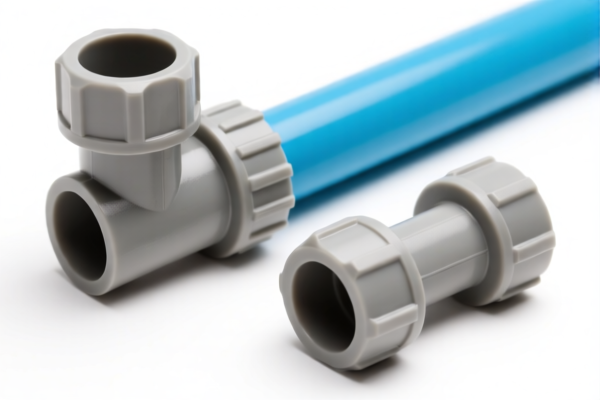
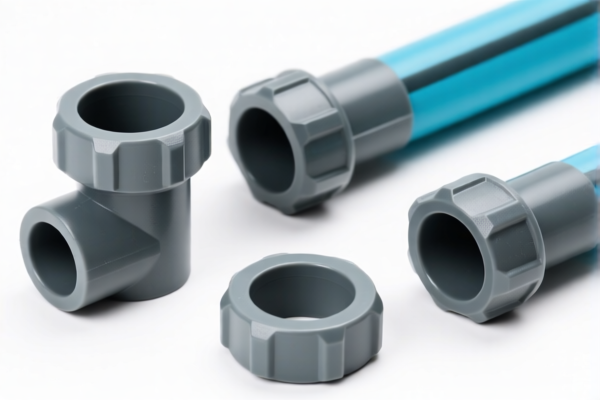
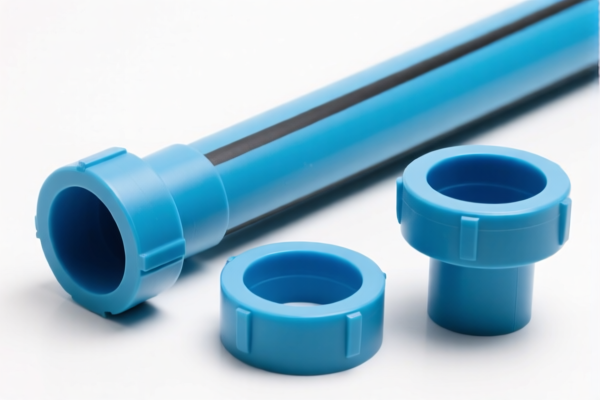
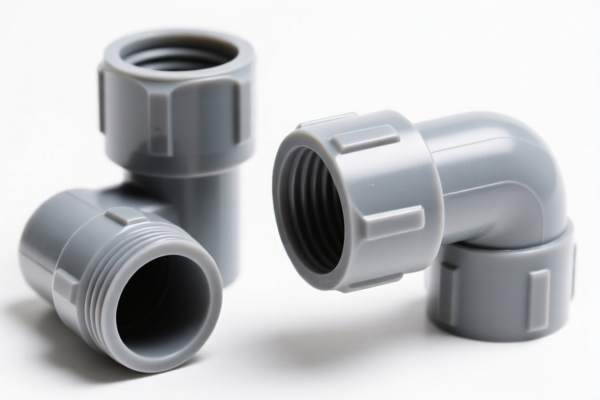
AI Analysis
🌊 Energy Saving Plastic Pipe Fittings (Solar System Components)
🌐 HS Code Reference & Customs Clearance Guide | 2026 Latest Tariff Analysis | Professional Clearance Strategy
📌 I. Product Definition & Classification: What Are "Energy Saving Plastic Pipe Fittings"?
Energy Saving Plastic Pipe Fittings are specialized components used in solar thermal systems, heat pump networks, or high-efficiency fluid transport systems. These fittings are typically made from polymers such as PEX, PP-R, PVC, or PE, designed to reduce thermal loss and withstand specific pressure/temperature conditions.
In international trade, the classification depends heavily on whether the fitting has integrated mechanical functions (like valves) or if it is a simple passive connector. This distinction drastically affects the tariff rate.
⚠️ Key Distinction Point:
- Passive Connectors (Elbows, Tees, Couplings): Simple plastic shapes for joining pipes → Generally classified under Chapter 39 (Plastics).
- Active/Functional Devices (Valves, Regulators): Fittings that control flow, pressure, or direction → Generally classified under Chapter 84 (Machinery/Nuclear Reactors, Boilers, Pressure Vessels).
📦 II. HS Code Classification Details (2026 Latest Tariff Authority Comparison)
| HS Code | Product Description | Application Scenario | Mechanical Function? |
|---|---|---|---|
3926.90.99.87 |
Plastic pipe fittings, not elsewhere specified | Simple elbows, tees, connectors for solar loops | ❌ No |
3926.30.50.00 |
Other plastic articles (accessories) | Complex plastic assembly pieces, non-valve accessories | ❌ No |
8481.80.50.90 |
Pipes, tubes, and hoses with fitting devices | Fittings with integrated control mechanisms, specialized pressure devices | ✅ Yes (Complex) |
8481.80.90.50 |
Other appliances for pipes, tubes, or hoses | General-purpose plastic valves or regulators not specified elsewhere | ✅ Yes (Valve-like) |
3917.40.00.50 |
Plastic pipe fittings (specific accessory category) | Specific plastic valve accessories or specialized connection parts | ✅/❌ (Context Dependent) |
🔍 Key Reminder:
- If the product is just a shaped plastic piece used to join pipes (e.g., an elbow joint), it belongs to Chapter 39.
- If the product controls flow, pressure, or has moving parts, it likely belongs to Chapter 84 (8481).
- Misclassification Risk: Declaring a valve as a simple fitting (3926) can lead to severe penalties. Conversely, over-classifying a simple elbow as a machine part (8481) results in higher taxes.
💰 III. 2026 Latest Tariff Rate Breakdown (Including Surtaxes & Policy Add-ons)
✅ Applicable Country: United States (US)
✅ Country of Origin: China (CN)
✅ Effective Date: From November 10, 2025 (and subsequent imports)
🎯 1. 3926.90.99.87 —— Plastic Pipe Fittings (General)
| Item | Details |
|---|---|
| Base Tariff Rate | 5.3% (ad valorem) |
| Section 301 Surtax | +7.5% (General surcharge) |
| Section 122 Tariff | +10% (Specific section 122 levy) |
| Total Tax Rate | 22.8% |
| Tax Calculation | CIF Value × 22.8% |
| De Minimis Exemption | ❌ Not Eligible (deny_de_minimis) |
| Legal Basis Path | Section 301: 7.5% → Section 122: 10% → USITC: 3926.90.99.87 |
📌 Explanation:
- Base 5.3%: Standard MFN rate for plastic articles.
- 7.5% Section 301: General trade war surcharge on Chinese plastics.
- 10% Section 122: Additional levy applied to specific plastic import categories.
- Total 22.8%: This is the lowest risk option if the product is a simple passive fitting.
🎯 2. 3926.30.50.00 —— Other Plastic Articles (Accessories)
| Item | Details |
|---|---|
| Base Tariff Rate | 5.3% |
| Section 301 Surtax | +7.5% |
| Section 122 Tariff | +10% |
| Total Tax Rate | 22.8% |
| Tax Calculation | CIF Value × 22.8% |
| De Minimis Exemption | ❌ Not Eligible |
| Legal Basis Path | Section 301: 7.5% → Section 122: 10% → USITC: 3926.30.50.00 |
📌 Note:
- Same tax burden as above.
- Use this code only if the item is considered an "accessory" rather than a direct pipe component, but ensure it remains a passive plastic part.
🎯 3. 8481.80.50.90 —— Pipes, Tubs, and Hoses with Fitting Devices (Complex)
| Item | Details |
|---|---|
| Base Tariff Rate | 3.0% |
| Section 301 Surtax | +25.0% (High rate for machinery/parts) |
| Section 122 Tariff | +10% |
| Total Tax Rate | 38.0% |
| Tax Calculation | CIF Value × 38.0% |
| De Minimis Exemption | ❌ Not Eligible |
| Legal Basis Path | Section 301: 25% → Section 122: 10% → USITC: 8481.80.50.90 |
📌 Warning:
- Much Higher Cost: The Section 301 surcharge jumps from 7.5% to 25% for machinery-related items.
- Only use if the fitting has active mechanical control functions.
- Misclassifying a simple plastic elbow here will not save money; it complicates customs review.
🎯 4. 8481.80.90.50 —— Other Appliances for Pipes (Valves)
| Item | Details |
|---|---|
| Base Tariff Rate | 2.0% |
| Section 301 Surtax | +25.0% |
| Section 122 Tariff | +10% |
| Total Tax Rate | 37.0% |
| Tax Calculation | CIF Value × 37.0% |
| De Minimis Exemption | ❌ Not Eligible |
| Legal Basis Path | Section 301: 25% → Section 122: 10% → USITC: 8481.80.90.50 |
📌 Note:
- This category is typically for valves or pressure-regulating devices.
- If your "energy saving" fitting includes a check valve, flow restrictor, or pressure relief mechanism, it must go here.
- Total 37% is significantly higher than the 22.8% for passive plastics.
🎯 5. 3917.40.00.50 —— Plastic Pipe Fittings (Specific Accessory)
| Item | Details |
|---|---|
| Base Tariff Rate | 5.3% |
| Section 301 Surtax | +25.0% |
| Section 122 Tariff | +10% |
| Total Tax Rate | 40.3% |
| Tax Calculation | CIF Value × 40.3% |
| De Minimis Exemption | ❌ Not Eligible |
| Legal Basis Path | Section 301: 25% → Section 122: 10% → USITC: 3917.40.00.50 |
📌 Critical Alert:
- Despite being in Chapter 39, this subheading attracts the 25% Section 301 rate (unlike general plastics which get 7.5%).
- This is often a trap for "accessories" that are deemed critical components.
- Avoid this code unless specifically required;3926.90.99.87(22.8%) is far more economical for similar items.
🛠️ IV. Customs Clearance Practical Advice (Real-World Pitfall Guide)
✅ 1. Documentation Checklist (Non-negotiable)
| Document | Mandatory? | Notes |
|---|---|---|
| ✅ Product Specification Sheet | ✔️ | Must clearly state "Passive Connection" vs. "Flow Control". |
| ✅ Technical Diagrams | ✔️ | Show internal structure. No moving parts? → Chapter 39. |
| ✅ High-Res Photos | ✔️ | Show assembly context (is it part of a valve assembly?). |
| ✅ Commercial Invoice | ✔️ | Use precise descriptions: "Plastic Pipe Elbow, No Mechanical Parts" |
| ✅ Certificate of Origin | ✔️ | Required for Section 122 and 301 calculations. |
| ✅ Packaging List | ✔️ | Ensure kits are not split improperly. |
✅ 2. Declaration Strategy (Key Mantra)
🔥 "Simple Shape = Ch 39 (22.8%), Valve/Function = Ch 84 (37-40%), Accessory Trap = 40.3% Avoid!"
| Scenario | Correct HS Code | Cost Impact |
|---|---|---|
| Simple Plastic Elbow/Tee for Solar Pipes | 3926.90.99.87 |
22.8% (Best) |
| Plastic Pipe Fitting with Integrated Valve | 8481.80.90.50 |
37.0% |
| Complex Pipe Device with Mechanism | 8481.80.50.90 |
38.0% |
| Plastic Fitting "Accessory" (Risk) | 3917.40.00.50 |
40.3% (Worst) |
✅ 3. Special Handling Scenarios
| Situation | Recommendation |
|---|---|
| Solar Thermal System Kits | Declare each item separately. Elbows as 3926, valves as 8481. Do not lump together. |
| Pre-assembled Units | If sold as a single "regulator unit," classify as 8481. If sold as loose parts, classify individually. |
| OEM/Private Label | Ensure the supplier's technical data sheet supports the "No Mechanical Parts" claim for 3926 classification. |
| Cross-Border E-commerce | High Risk. Many platforms default to higher tax codes. Pre-clearance is strongly advised. |
🌍 V. Global Market Comparison (2026 Latest)
| Country/Region | Recommended HS Code | Estimated Tariff | Certification | Notes |
|---|---|---|---|---|
| 🇺🇸 USA | 3926.90.99.87 |
22.8% | CPC, FCC (if electronic) | Highest surtaxes. Strict origin rules. |
| 🇨🇳 China | 3926.90.99.87 |
~5% | CCC (if applicable) | Low entry barrier. |
| 🇪🇺 EU | 3917.21.10 / 3917.23.10 |
~4-6% | CE, REACH | No Section 301/122 equivalents. |
| 🇬🇧 UK | 3917.21.10 |
~4% | UKCA, REACH | Post-Brexit alignment with EU. |
📌 Conclusion:
- USA is the most expensive market due to the combination of Base Tariff + 301 + Section 122.
- Correct Classification is Critical: A simple error between3926(22.8%) and3917.40(40.3%) can double your customs duties.
- Valves vs. Fittings: Always separate them. Do not let a valve's presence force the entire shipment into Chapter 84 if they are packed separately.
📌 VI. Common Errors & Pitfall Guide (Lessons Learned)
❌ Error 1: Declaring a valve as a simple plastic fitting (3926)
👉 Consequence: Customs audit reveals mechanical parts. Penalty + Back Tax + 37-40% rate applied retroactively.
❌ Error 2: Declaring a simple elbow as a complex device (8481)
👉 Consequence: Unnecessary 25% Section 301 surcharge instead of 7.5%. Overpaying 15.2% more in taxes.
❌ Error 3: Using the "Accessory" code 3917.40.00.50 without justification
👉 Consequence: Attracts the highest tax rate (40.3%) for a simple plastic part. Avoid unless legally mandated.
❌ Error 4: Vague Description "Plastic Fittings"
👉 Consequence: Customs may assign the highest default rate or reject the entry.
✅ Correct Declaration Example:
"Plastic Pipe Fittings for Solar Heating Systems, PP-R Material, Elbow Type, No Mechanical Parts, Model XYZ"
🎯 VII. Conclusion: Precise Classification Saves Money!
🎯 Remember the Mantra:
🔹 "Passive Plastic = Ch 39 (22.8%) | Valves = Ch 84 (37%+) | Accessories = Trap (40.3%)!"
🔹 "HS Code is Law, Tax Rate is Life. One digit change can cost you thousands!"
📌 Pro Tip:
If your plastic fittings are originating from Vietnam, Mexico, or Thailand, you may be eligible for IEEPA Exemptions or lower Section 301 rates.
Recommendation: Apply for a Binding Ruling (Pre-classification) with CBP before shipping large volumes to ensure your 3926 vs. 8481 classification is bulletproof.
📣 Immediate Action:
📞 Consult a licensed customs broker.
📄 Provide technical drawings proving "No Moving Parts."
🚀 Ship smart, save 15-20%, and clear customs smoothly!
✨ Professional Clearance Starts with Precise Classification!
💼 Every percentage point counts in the solar supply chain!
Customer Reviews
About HS Code Classification
The Harmonized System (HS) is an internationally standardized nomenclature developed by the World Customs Organization (WCO) to classify traded products. Over 200 countries use the HS system as the basis for customs tariffs, trade statistics, and import/export regulations.
Each HS code follows a hierarchical structure:
- Chapter (2 digits) — Broad category of goods (e.g., Chapter 84: Machinery and Mechanical Appliances)
- Heading (4 digits) — More specific grouping within the chapter
- Subheading (6 digits) — Internationally standardized breakdown, used by all WCO member countries
- National subdivisions (8-10 digits) — Country-specific extensions for further classification, such as US HTSUS 10-digit codes
Correct HS code classification is essential for smooth customs clearance, accurate duty payment, and compliance with trade regulations. Misclassification can lead to customs delays, overpayment of duties, or penalties.
When importing from CN to US, the applicable tariff rates may include:
- Most-Favored-Nation (MFN) rate — The standard duty rate applied to WTO members
- General rate — Applied to countries without trade agreements
- Trade remedy duties — Additional tariffs such as Section 301 (anti-dumping), Section 232 (national security), or countervailing duties
The information provided on this page is for reference purposes only. For official classification, please consult with your local customs authority or a licensed customs broker.