Engineering Grade Glass Bead Reflective Plastic Film
CN → US| HS编码 | 关税税率 | 原产国 | 目的国 | 文档 |
|---|---|---|---|---|
| 3926909925 | 22.8% | CN | US | 官方文档 |
| 3926909989 | 22.8% | CN | US | 官方文档 |
| 3920991000 | 41.0% | CN | US | 官方文档 |
| 3919905010 | 40.8% | CN | US | 官方文档 |
| 3919901000 | 41.5% | CN | US | 官方文档 |
商品图片

AI分析
🌟 Engineering Grade Glass Bead Reflective Plastic Film
---
🌐 HS Code Classification & Customs Clearance Guide | 2026 Latest Tariff Analysis | Professional Strategy
📌 1. Product Definition: What is "Engineering Grade Reflective Film"?
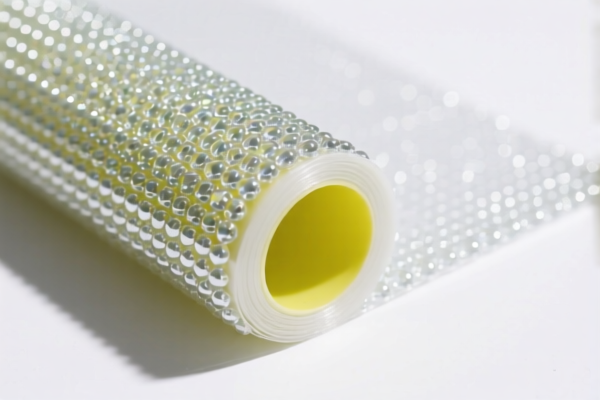
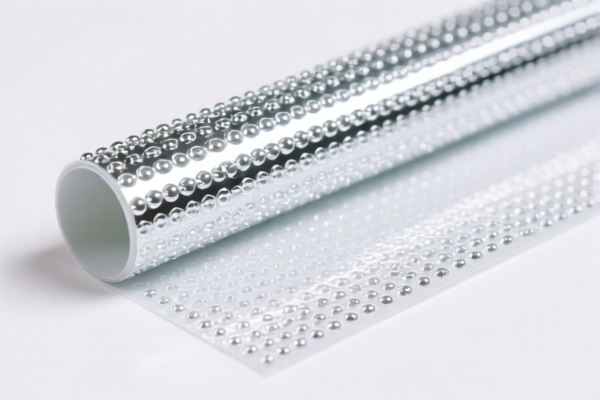
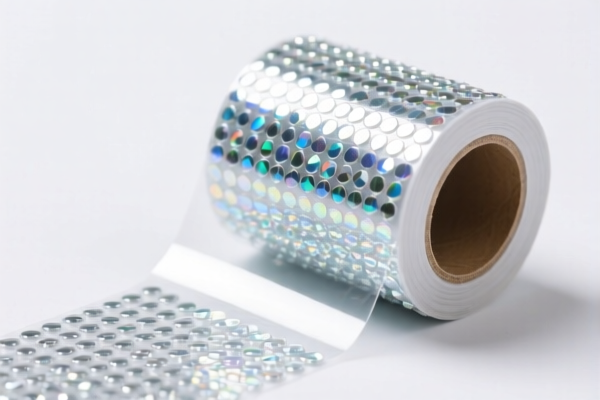
Engineering Grade Reflective Film is a high-performance material used primarily in traffic signs, road markings, and safety apparel. It relies on glass beads embedded in a plastic/polymer substrate to reflect light back to its source (retroreflection).
In international trade, classification depends heavily on the physical form (flat sheet vs. roll/film) and the specific composition. Misclassification can lead to severe tariff penalties due to differing duty rates (ranging from 22.8% to 41.5%).
⚠️ Key Distinction: - 3926.90: General "Other articles of plastics" – Lower duty (22.8%). - 3920.99: "Other plates, sheets, film..." – Higher duty (41.0%). - 3919.90: "Self-adhesive plates, sheets, film..." – Highest duty risk (40.8%-41.5%).
📦 2. HS Code Classification Matrix (Authoritative对照)
| HS Code | Product Description Summary | Key Characteristics | Total Tax Rate |
|---|---|---|---|
3926.90.99.25 |
Engineering Grade Reflective Film | Material: Plastic/Polymer substrate. Classified as Other Plastic Articles. | 22.8% |
3926.90.99.89 |
Engineering Grade Reflective Film | Material: Mainly Plastic (Polymer) substrate. Classified as Other Plastic Articles. | 22.8% |
3920.99.10.00 |
Engineering Grade Reflective Film | Form: Plastic Film. Material: Polyester or Plastic. Matches "Other Plastic Plates/Sheets/Film". | 41.0% |
3919.90.50.10 |
Engineering Grade Reflective Film | Use: Reflective Sheet. Form: Flat. Material: Plastic-based. | 40.8% |
3919.90.10.00 |
Engineering Grade Reflective Film | Form: Reflective Surface Product. Material: Plastic + Glass Beads. | 41.5% |
🔍 Critical Note: - Chapter 39 covers plastics. - Section X (Articles of Plastic) vs. Section XXII (Works of Art/Collector's Pieces - N/A here) vs. Chapter 39 vs Chapter 32/90: Reflective films are generally plastics unless they contain optical elements defining Chapter 90. However, standard engineering grade films remain in Chapter 39. - The difference between
3926(Articles) and3919/3920(Sheets/Film) is crucial for cost optimization.
💰 3. 2026 Tariff Rate Breakdown (Detailed Tax Clauses)
✅ Applicable Region: USA (US)
✅ Origin: China (CN)
✅ Effective Date: Current trade policies include Section 301 and Section 122 tariffs.
🎯 A. Low Tariff Tier: HS Code 3926.90.99.25 & 3926.90.99.89
🏆 Most Cost-Effective Classification (22.8%)
| Item | Details |
|---|---|
| Base Tariff | 5.3% (General Rate) |
| Section 301 Tariff | 7.5% (List 4B/Additional Duties) |
| Section 122 Tariff | 10% (Specific duty on certain Chinese imports) |
| Total Effective Rate | 22.8% |
| Calculation | CIF Value × 22.8% |
| De Minimis Eligibility | ❌ No (Not eligible for $800 de minimis exemption) |
| Legal Basis | USITC HTSUS 3926.90.99 + Footnotes for Sec 301/122 |
📌 Why this rate?
These codes classify the film as an "Article of Plastic" rather than a raw "Sheet/Film." This categorization bypasses the higher duties applied to structural plastic sheets.
🎯 B. High Tariff Tier: HS Code 3920.99.10.00
⚠️ High Duty Risk (41.0%)
| Item | Details |
|---|---|
| Base Tariff | 6.0% |
| Section 301 Tariff | 25.0% (High impact duty on plastic sheets) |
| Section 122 Tariff | 10% |
| Total Effective Rate | 41.0% |
| Calculation | CIF Value × 41.0% |
| De Minimis Eligibility | ❌ No |
| Legal Basis | USITC HTSUS 3920.99.10 |
📌 Why this rate?
This code treats the product as a "Plastic Plate, Sheet, or Film." The 25% Section 301 duty is significantly higher than the 7.5% applied to general plastic articles.
🎯 C. Premium Tier: HS Codes 3919.90.50.10 & 3919.90.10.00
🔴 Highest Duty Risk (40.8% - 41.5%)
| HS Code | Base | Sec 301 | Sec 122 | Total Rate |
|---|---|---|---|---|
3919.90.50.10 |
5.8% | 25.0% | 10% | 40.8% |
3919.10.10.00 |
6.5% | 25.0% | 10% | 41.5% |
📌 Why this rate?
Code3919covers Self-Adhesive Plates, Sheets, and Film. Many reflective films are self-adhesive for sign mounting. If customs determines the product is primarily a "self-adhesive plastic sheet," the 25% Section 301 duty applies, pushing the total to ~41%.
🛠️ 4. Customs Clearance Operational Advice
✅ 1. Documentation Checklist (Must-Have)
| Document | Required? | Purpose |
|---|---|---|
| Product Specification Sheet | ✔️ | Must specify: Base Material (Polyester/PE), Bead Type (Glass), Reflectivity (CPD/CPS), Thickness. |
| Structure Diagram | ✔️ | Shows layers: Surface Coating, Glass Beads, Adhesive Layer, Release Liner. |
| Photos (Clear & Detailed) | ✔️ | Show product in roll form, cross-section (if available), and labeling. |
| Commercial Invoice | ✔️ | Must state: "Engineering Grade Reflective Film, Polyester Base, Glass Bead Reflector." |
| Packing List | ✔️ | Detail net/gross weight, dimensions of rolls. |
| Origin Certificate | ✔️ | Confirm China origin to calculate correct Sec 301/122 duties. |
| Testing Report | Optional but Recommended | ASTM D4956 compliance report to prove "Engineering Grade" status. |
✅ 2. Classification Strategy & Tips
🔥 Golden Rule: "Define by Function, Not Just Form!"
| Scenario | Recommended HS Code | Reasoning |
|---|---|---|
| Finished Reflective Sheet for Signs | 3926.90.99.25 |
Best to argue it is an "Article of Plastic" used for safety signage, avoiding the "Sheet/Film" high-duty categories. |
| Raw Reflective Film Roll (Self-Adhesive) | 3919.90.10.00 |
If heavily marketed as self-adhesive backing, customs may force this. Expect 41.5%. |
| Non-Adhesive Plastic Film with Beads | 3920.99.10.00 |
If it's a bare film without adhesive backing, it falls under "Plastic Film." Expect 41.0%. |
| Custom/Complex Multi-Layer | 3926.90.99.89 |
If the structure is complex and doesn't fit simple film definitions, use general article code. |
💡 Pro Tip:
If your film is not self-adhesive, explicitly state "Non-Adhesive" on the invoice. This helps argue against3919(Self-Adhesive) and potentially supports3920or3926. However,3926(22.8%) is still the best case if it can be classified as a general article.
✅ 3. Special Considerations
| Issue | Handling Advice |
|---|---|
| Glass Beads Content | Ensure the description mentions "Glass Beads" but emphasizes the Plastic Substrate. Do not over-emphasize optical properties to avoid Chapter 90 scrutiny. |
| Section 122 Tariff | This 10% duty applies to specific Chinese imports. Check if your product is on the exclusion list. If not, budget for it. |
| De Minimis ($800) | ❌ Not Available. Reflective films are explicitly excluded from Section 321 de minimis relief for Chinese origin goods. |
| Pre-Ruling | 🚀 Highly Recommended. Apply for a US Customs Border Protection (CBP) Binding Ruling before shipping. Pay ~$500 for the ruling fee vs. thousands in potential duty differences (22.8% vs 41.5%). |
🌍 5. Global Market Comparison (Quick Reference)
| Market | Likely HS Code | Est. Duty Rate | Notes |
|---|---|---|---|
| 🇺🇸 USA | 3926.90.99.25 |
22.8% | Best case. Avoid 3919/3920 to save ~18%. |
| 🇨🇳 China | 3919.90.90.00 |
~5-10% | Import duty low, but VAT applies. |
| 🇪🇺 EU | 3919.90.90 |
~6-7% | No Section 301 equivalents, but anti-dumping may apply in some sectors. |
| 🇨🇦 Canada | 3919.90.90 |
~5% | MFN rate. No high Section 301 style tariffs. |
📌 6. Common Pitfalls & How to Avoid Them
❌ Pitfall 1: Declaring as "Reflective Tape" (3919) when it's a wide film.
👉 Result: 40.8% duty.
✅ Fix: Use "Reflective Film" and classify under 3926 if possible.
❌ Pitfall 2: Ignoring the "Adhesive" component.
👉 Result: If the adhesive is the primary feature, customs insists on 3919.
✅ Fix: Highlight the "Engineering Grade Reflective Surface" as the primary function, not the adhesive.
❌ Pitfall 3: Misdeclaring Origin.
👉 Result: If you claim Vietnam origin but goods are Chinese, penalties + back taxes.
✅ Fix: Provide genuine Certificate of Origin. If re-exported, ensure substantial transformation proof.
🎯 7. Conclusion: Strategic Clearance Plan
🚀 Action Plan: 1. Verify Structure: Is it self-adhesive? If YES, expect higher duty. 2. Apply for Ruling: Submit samples and specs to CBP for a binding ruling on
3926.90.99.25. 3. Document Precision: Ensure invoice says "Engineering Grade Reflective Film, Polyester Base, Non-Adhesive (if true)." 4. Cost Planning: Budget for 22.8% duty if successful, or 41.5% if classified as self-adhesive film.💼 Professional Tip:
The difference between 22.8% and 41.5% is nearly double the duty cost. Investing in a Customs Pre-Ruling is essential for high-volume shipments.
✨ Smart Classification Saves Money!
💡 Your Border: Our Expertise.
用户评价
关于 HS 编码归类
协调制度(HS)是由世界海关组织(WCO)制定的国际贸易商品分类标准。全球 200 多个国家采用 HS 系统作为海关关税、贸易统计和进出口监管的基础。
每个 HS 编码遵循以下层级结构:
- 章(2 位)——商品大类(例如:第 84 章:机器和机械设备)
- 品目(4 位)——章内的更具体分类
- 子目(6 位)——国际通用细分,所有 WCO 成员国统一使用
- 本国细分(8-10 位)——各国自行扩展的细分编码,如美国 HTSUS 10 位编码
正确的 HS 编码归类对于顺利通关、准确缴纳关税和遵守贸易法规至关重要。错误归类可能导致海关延误、多缴关税或罚款。
从CN进口到US时,适用的关税税率可能包括:
- 最惠国(MFN)税率——适用于 WTO 成员国的标准关税税率
- 普通税率——适用于无贸易协定国家
- 贸易救济关税——附加关税,如 301 条款(反倾销)、232 条款(国家安全)或反补贴税
本页内容仅供参考。如需正式归类,请咨询当地海关或持牌报关代理。