Engineering Grade Glass Bead Reflective Plastic Film
CN → US| HS Code | Tariff Rate | Origin | Destination | Doc |
|---|---|---|---|---|
| 3926909925 | 22.8% | CN | US | Official Doc |
| 3926909989 | 22.8% | CN | US | Official Doc |
| 3920991000 | 41.0% | CN | US | Official Doc |
| 3919905010 | 40.8% | CN | US | Official Doc |
| 3919901000 | 41.5% | CN | US | Official Doc |
Product Images
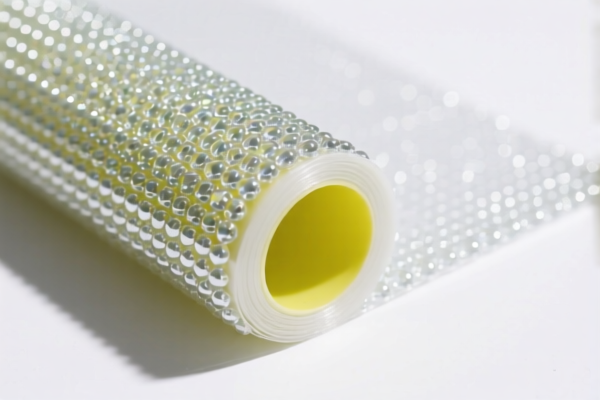
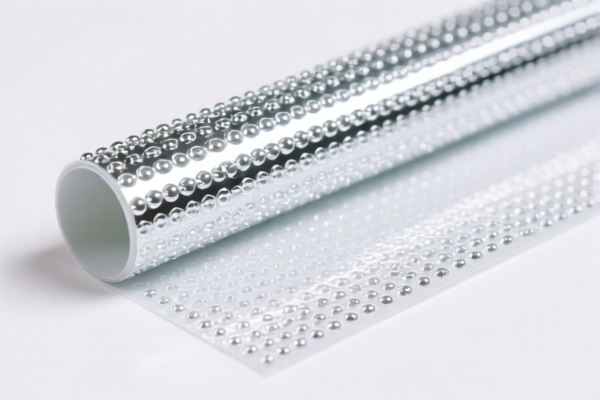

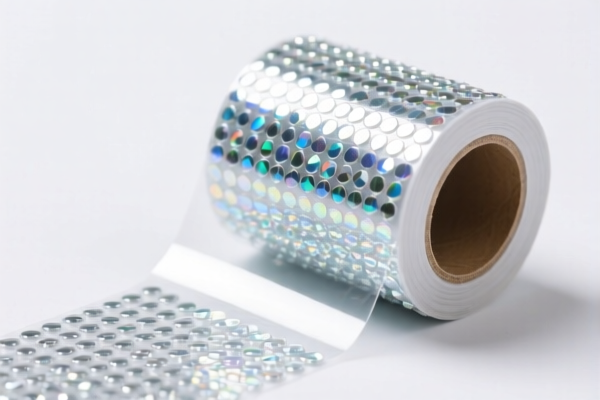
AI Analysis
🌟 Engineering Grade Glass Bead Reflective Plastic Film
---
🌐 HS Code Classification & Customs Clearance Guide | 2026 Latest Tariff Analysis | Professional Strategy
📌 1. Product Definition: What is "Engineering Grade Reflective Film"?
Engineering Grade Reflective Film is a high-performance material used primarily in traffic signs, road markings, and safety apparel. It relies on glass beads embedded in a plastic/polymer substrate to reflect light back to its source (retroreflection).
In international trade, classification depends heavily on the physical form (flat sheet vs. roll/film) and the specific composition. Misclassification can lead to severe tariff penalties due to differing duty rates (ranging from 22.8% to 41.5%).
⚠️ Key Distinction: - 3926.90: General "Other articles of plastics" – Lower duty (22.8%). - 3920.99: "Other plates, sheets, film..." – Higher duty (41.0%). - 3919.90: "Self-adhesive plates, sheets, film..." – Highest duty risk (40.8%-41.5%).
📦 2. HS Code Classification Matrix (Authoritative对照)
| HS Code | Product Description Summary | Key Characteristics | Total Tax Rate |
|---|---|---|---|
3926.90.99.25 |
Engineering Grade Reflective Film | Material: Plastic/Polymer substrate. Classified as Other Plastic Articles. | 22.8% |
3926.90.99.89 |
Engineering Grade Reflective Film | Material: Mainly Plastic (Polymer) substrate. Classified as Other Plastic Articles. | 22.8% |
3920.99.10.00 |
Engineering Grade Reflective Film | Form: Plastic Film. Material: Polyester or Plastic. Matches "Other Plastic Plates/Sheets/Film". | 41.0% |
3919.90.50.10 |
Engineering Grade Reflective Film | Use: Reflective Sheet. Form: Flat. Material: Plastic-based. | 40.8% |
3919.90.10.00 |
Engineering Grade Reflective Film | Form: Reflective Surface Product. Material: Plastic + Glass Beads. | 41.5% |
🔍 Critical Note: - Chapter 39 covers plastics. - Section X (Articles of Plastic) vs. Section XXII (Works of Art/Collector's Pieces - N/A here) vs. Chapter 39 vs Chapter 32/90: Reflective films are generally plastics unless they contain optical elements defining Chapter 90. However, standard engineering grade films remain in Chapter 39. - The difference between
3926(Articles) and3919/3920(Sheets/Film) is crucial for cost optimization.
💰 3. 2026 Tariff Rate Breakdown (Detailed Tax Clauses)
✅ Applicable Region: USA (US)
✅ Origin: China (CN)
✅ Effective Date: Current trade policies include Section 301 and Section 122 tariffs.
🎯 A. Low Tariff Tier: HS Code 3926.90.99.25 & 3926.90.99.89
🏆 Most Cost-Effective Classification (22.8%)
| Item | Details |
|---|---|
| Base Tariff | 5.3% (General Rate) |
| Section 301 Tariff | 7.5% (List 4B/Additional Duties) |
| Section 122 Tariff | 10% (Specific duty on certain Chinese imports) |
| Total Effective Rate | 22.8% |
| Calculation | CIF Value × 22.8% |
| De Minimis Eligibility | ❌ No (Not eligible for $800 de minimis exemption) |
| Legal Basis | USITC HTSUS 3926.90.99 + Footnotes for Sec 301/122 |
📌 Why this rate?
These codes classify the film as an "Article of Plastic" rather than a raw "Sheet/Film." This categorization bypasses the higher duties applied to structural plastic sheets.
🎯 B. High Tariff Tier: HS Code 3920.99.10.00
⚠️ High Duty Risk (41.0%)
| Item | Details |
|---|---|
| Base Tariff | 6.0% |
| Section 301 Tariff | 25.0% (High impact duty on plastic sheets) |
| Section 122 Tariff | 10% |
| Total Effective Rate | 41.0% |
| Calculation | CIF Value × 41.0% |
| De Minimis Eligibility | ❌ No |
| Legal Basis | USITC HTSUS 3920.99.10 |
📌 Why this rate?
This code treats the product as a "Plastic Plate, Sheet, or Film." The 25% Section 301 duty is significantly higher than the 7.5% applied to general plastic articles.
🎯 C. Premium Tier: HS Codes 3919.90.50.10 & 3919.90.10.00
🔴 Highest Duty Risk (40.8% - 41.5%)
| HS Code | Base | Sec 301 | Sec 122 | Total Rate |
|---|---|---|---|---|
3919.90.50.10 |
5.8% | 25.0% | 10% | 40.8% |
3919.10.10.00 |
6.5% | 25.0% | 10% | 41.5% |
📌 Why this rate?
Code3919covers Self-Adhesive Plates, Sheets, and Film. Many reflective films are self-adhesive for sign mounting. If customs determines the product is primarily a "self-adhesive plastic sheet," the 25% Section 301 duty applies, pushing the total to ~41%.
🛠️ 4. Customs Clearance Operational Advice
✅ 1. Documentation Checklist (Must-Have)
| Document | Required? | Purpose |
|---|---|---|
| Product Specification Sheet | ✔️ | Must specify: Base Material (Polyester/PE), Bead Type (Glass), Reflectivity (CPD/CPS), Thickness. |
| Structure Diagram | ✔️ | Shows layers: Surface Coating, Glass Beads, Adhesive Layer, Release Liner. |
| Photos (Clear & Detailed) | ✔️ | Show product in roll form, cross-section (if available), and labeling. |
| Commercial Invoice | ✔️ | Must state: "Engineering Grade Reflective Film, Polyester Base, Glass Bead Reflector." |
| Packing List | ✔️ | Detail net/gross weight, dimensions of rolls. |
| Origin Certificate | ✔️ | Confirm China origin to calculate correct Sec 301/122 duties. |
| Testing Report | Optional but Recommended | ASTM D4956 compliance report to prove "Engineering Grade" status. |
✅ 2. Classification Strategy & Tips
🔥 Golden Rule: "Define by Function, Not Just Form!"
| Scenario | Recommended HS Code | Reasoning |
|---|---|---|
| Finished Reflective Sheet for Signs | 3926.90.99.25 |
Best to argue it is an "Article of Plastic" used for safety signage, avoiding the "Sheet/Film" high-duty categories. |
| Raw Reflective Film Roll (Self-Adhesive) | 3919.90.10.00 |
If heavily marketed as self-adhesive backing, customs may force this. Expect 41.5%. |
| Non-Adhesive Plastic Film with Beads | 3920.99.10.00 |
If it's a bare film without adhesive backing, it falls under "Plastic Film." Expect 41.0%. |
| Custom/Complex Multi-Layer | 3926.90.99.89 |
If the structure is complex and doesn't fit simple film definitions, use general article code. |
💡 Pro Tip:
If your film is not self-adhesive, explicitly state "Non-Adhesive" on the invoice. This helps argue against3919(Self-Adhesive) and potentially supports3920or3926. However,3926(22.8%) is still the best case if it can be classified as a general article.
✅ 3. Special Considerations
| Issue | Handling Advice |
|---|---|
| Glass Beads Content | Ensure the description mentions "Glass Beads" but emphasizes the Plastic Substrate. Do not over-emphasize optical properties to avoid Chapter 90 scrutiny. |
| Section 122 Tariff | This 10% duty applies to specific Chinese imports. Check if your product is on the exclusion list. If not, budget for it. |
| De Minimis ($800) | ❌ Not Available. Reflective films are explicitly excluded from Section 321 de minimis relief for Chinese origin goods. |
| Pre-Ruling | 🚀 Highly Recommended. Apply for a US Customs Border Protection (CBP) Binding Ruling before shipping. Pay ~$500 for the ruling fee vs. thousands in potential duty differences (22.8% vs 41.5%). |
🌍 5. Global Market Comparison (Quick Reference)
| Market | Likely HS Code | Est. Duty Rate | Notes |
|---|---|---|---|
| 🇺🇸 USA | 3926.90.99.25 |
22.8% | Best case. Avoid 3919/3920 to save ~18%. |
| 🇨🇳 China | 3919.90.90.00 |
~5-10% | Import duty low, but VAT applies. |
| 🇪🇺 EU | 3919.90.90 |
~6-7% | No Section 301 equivalents, but anti-dumping may apply in some sectors. |
| 🇨🇦 Canada | 3919.90.90 |
~5% | MFN rate. No high Section 301 style tariffs. |
📌 6. Common Pitfalls & How to Avoid Them
❌ Pitfall 1: Declaring as "Reflective Tape" (3919) when it's a wide film.
👉 Result: 40.8% duty.
✅ Fix: Use "Reflective Film" and classify under 3926 if possible.
❌ Pitfall 2: Ignoring the "Adhesive" component.
👉 Result: If the adhesive is the primary feature, customs insists on 3919.
✅ Fix: Highlight the "Engineering Grade Reflective Surface" as the primary function, not the adhesive.
❌ Pitfall 3: Misdeclaring Origin.
👉 Result: If you claim Vietnam origin but goods are Chinese, penalties + back taxes.
✅ Fix: Provide genuine Certificate of Origin. If re-exported, ensure substantial transformation proof.
🎯 7. Conclusion: Strategic Clearance Plan
🚀 Action Plan: 1. Verify Structure: Is it self-adhesive? If YES, expect higher duty. 2. Apply for Ruling: Submit samples and specs to CBP for a binding ruling on
3926.90.99.25. 3. Document Precision: Ensure invoice says "Engineering Grade Reflective Film, Polyester Base, Non-Adhesive (if true)." 4. Cost Planning: Budget for 22.8% duty if successful, or 41.5% if classified as self-adhesive film.💼 Professional Tip:
The difference between 22.8% and 41.5% is nearly double the duty cost. Investing in a Customs Pre-Ruling is essential for high-volume shipments.
✨ Smart Classification Saves Money!
💡 Your Border: Our Expertise.
Customer Reviews
About HS Code Classification
The Harmonized System (HS) is an internationally standardized nomenclature developed by the World Customs Organization (WCO) to classify traded products. Over 200 countries use the HS system as the basis for customs tariffs, trade statistics, and import/export regulations.
Each HS code follows a hierarchical structure:
- Chapter (2 digits) — Broad category of goods (e.g., Chapter 84: Machinery and Mechanical Appliances)
- Heading (4 digits) — More specific grouping within the chapter
- Subheading (6 digits) — Internationally standardized breakdown, used by all WCO member countries
- National subdivisions (8-10 digits) — Country-specific extensions for further classification, such as US HTSUS 10-digit codes
Correct HS code classification is essential for smooth customs clearance, accurate duty payment, and compliance with trade regulations. Misclassification can lead to customs delays, overpayment of duties, or penalties.
When importing from CN to US, the applicable tariff rates may include:
- Most-Favored-Nation (MFN) rate — The standard duty rate applied to WTO members
- General rate — Applied to countries without trade agreements
- Trade remedy duties — Additional tariffs such as Section 301 (anti-dumping), Section 232 (national security), or countervailing duties
The information provided on this page is for reference purposes only. For official classification, please consult with your local customs authority or a licensed customs broker.