Epoxy Powder
CN → US| HS编码 | 关税税率 | 原产国 | 目的国 | 文档 |
|---|---|---|---|---|
| 6810195000 | 38.9% | CN | US | 官方文档 |
| 3907300000 | 41.1% | CN | US | 官方文档 |
| 3907995050 | 41.5% | CN | US | 官方文档 |
| 6810990080 | 35.0% | CN | US | 官方文档 |
| 3824500010 | 35.0% | CN | US | 官方文档 |
商品图片
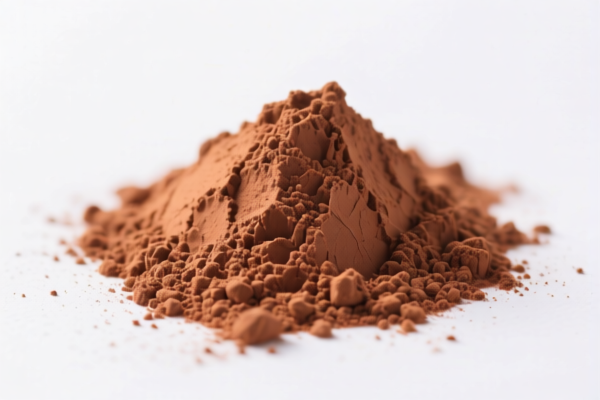
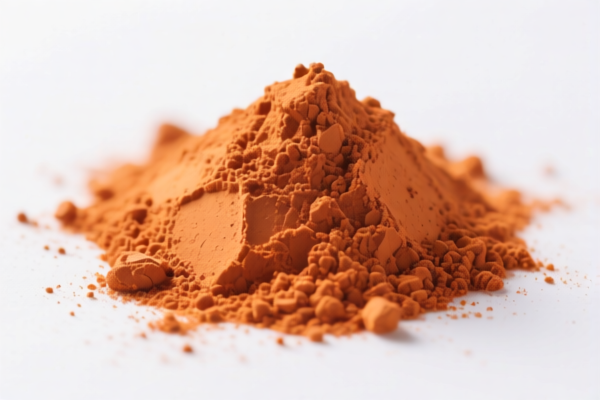
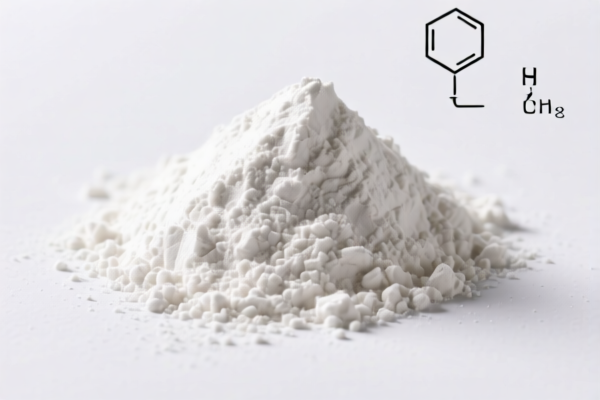

AI分析
🧪 Epoxy Powder (Resin-Based Coatings & Adhesives)
🌐 HS Code Reference & Clearance Guide | 2026 Latest Tariff Analysis | Strategic Classification for Importers
📌 I. Product Definition: What Exactly is "Epoxy Powder"?
Epoxy Powder refers to a dry, free-flowing thermosetting polymer powder. Unlike liquid epoxies (which consist of resin and hardener mixed separately), epoxy powder is a complete formulation where the resin, hardener, and additives are pre-mixed in solid form. It is primarily used in two major industries:
1. Powder Coatings (Surface Protection): Applied via electrostatic spraying and cured under heat. Used for metal finishing, automotive parts, appliances, and infrastructure (fences, railings) to provide durable, corrosion-resistant finishes.
2. Structural Adhesives & Grouts (Construction & Industrial): Used as high-strength bonding agents for concrete repair, flooring (industrial warehouses), or anchoring systems. In this context, it may be referred to as "epoxy mortar" or "grout."
⚠️ Key Classification Distinction:
- If the product is primarily for painting/protecting surfaces (coating) → Look at Chapter 39 (Plastics) or Chapter 38 (Miscellaneous Chemical Products).
- If the product is primarily for cementitious applications (mortar/grout with resin as binder) → Look at Chapter 68 (Mineral Products) or Chapter 38.
- Crucial Note: The provided data highlights a conflict between "Chemical Resin" (Ch 39) and "Mineral/Cementitious Product" (Ch 68). The final classification depends on the ** predominant function and physical form** (pure powder vs. resin-mixed mineral aggregate).
📦 II. HS Code Classification Details (Based on Provided Data)
The following HS Codes are derived strictly from the provided <DATA> set. Note that tax rates vary significantly based on whether the product is classified as a chemical resin or a mineral construction product.
| HS Code | Product Description & Summary | Total Tax Rate | Tax Detail Breakdown |
|---|---|---|---|
| 6810.19.50.00 | Artificial Stone/Mineral Product: Material: Epoxy resin (resin category). Form: Mortar (man-made stone/cement-like). Matches "Artificial stone products" and "Other" categories. |
38.9% | Base: 3.9% Additional: 25.0% Section 122: 10% |
| 3907.30.00.00 | Polyacetals (Primary Forms): Summary: Match success. "Epoxy" matches material "Epoxy Resin". "Mortar" is seen as resin as binding material, no conflict with "Primary Forms". |
41.1% | Base: 6.1% Additional: 25.0% Section 122: 10% |
| 3907.99.50.50 | Other Polymers (Resin): Summary: Explicitly contains "Epoxy Resin" material, fits the category of Epoxy and other polyesters. |
41.5% | Base: 6.5% Additional: 25.0% Section 122: 10% |
| 6810.99.00.80 | Other Mineral Products: Summary: Material is Epoxy Resin (man-made resin/stone). Form is Mortar (cement/concrete/artificial stone category). Consistent with "Artificial stone products". |
35.0% | Base: 0.0% Additional: 25.0% Section 122: 10% |
| 3824.50.00.10 | Prepared Binders/Chemicals: Summary: Material is "Epoxy Resin" (chemical preparation). Form is "Mortar", fits "Non-refractory mortar and concrete" attributes. |
35.0% | Base: 0.0% Additional: 25.0% Section 122: 10% |
🔍 Critical Analysis of Tax Discrepancy:
- Lowest Tax (35.0%): Codes6810.99.00.80and3824.50.00.10have 0% Base Duty. This is likely because they are classified as specific mineral preparations or prepared chemical binders where the base rate is exempt, but subject to the 25% (Section 301) and 10% (Section 122) surcharges.
- Highest Tax (41.5%): Code3907.99.50.50has a 6.5% Base Duty, leading to the highest total. This classifies it strictly as a plastic resin.
- Strategy: If your product is technically a "powder coating" or "chemical binder," aiming for the 35.0% bracket (via Ch 68 or Ch 38) is financially superior to the 41.5% bracket (Ch 39), provided you can justify the classification with technical data sheets showing it is used as a mortar/binder/mineral composite rather than a pure plastic primary form.
💰 III. 2026 Latest Tariff Rate Breakdown (US Import from China)
✅ Applicable Country: United States (US)
✅ Origin: China (CN)
✅ Effective Date: November 10, 2025 (and subsequent imports)
🎯 1. The "Low Base" Advantage: 6810.99.00.80 & 3824.50.00.10
These codes offer the lowest total tariff burden among the options.
| Item | Content |
|---|---|
| Base Duty Rate | 0.0% (Ad Valorem) |
| USITC Additional Duty (Section 301) | +25% |
| IEEPA Additional Duty (Section 122) | +10% |
| Total Effective Rate | 35.0% |
| Tax Calculation | CIF Value × 35% |
| De Minimis Exemption | ❌ Not Eligible (Deny De Minimis) |
| Legal Basis Path | IEEPA:9903.01.24 → USITC:6810.99.00.80 OR IEEPA:9903.01.24 → USITC:3824.50.00.10 |
📌 Explanation:
- The 0% base rate is the key savings factor.
- However, the 35% total is still very high due to the mandatory 35% combined surcharge (25% + 10%).
- Justification Required: You must prove the product is a "prepared binder" or "mineral product" and not a "primary plastic resin" to avoid the higher 41%+ rates.
🎯 2. The "High Base" Risk: 3907.30.00.00 & 3907.99.50.50
Classification as pure plastic resin triggers base duties.
| Item | Content |
|---|---|
| Base Duty Rate | 6.1% - 6.5% |
| USITC Additional Duty (Section 301) | +25% |
| IEEPA Additional Duty (Section 122) | +10% |
| Total Effective Rate | 41.1% - 41.5% |
| Tax Calculation | CIF Value × ~41.3% |
| De Minimis Exemption | ❌ Not Eligible |
📌 Warning:
- If customs determines the product is primarily a "plastic resin in primary form" (even if powdered), they may shift you to Ch 39.
- The difference between 35% and 41.5% is 6.5% on the total value, which is significant for high-volume shipments.
🛠️ IV. Clearance Practical Advice (Battle-Tested Guide)
✅ 1. Documentation Checklist (Non-Negotiable)
| Document | Required | Explanation |
|---|---|---|
| ✅ Technical Data Sheet (TDS) | ✔️ | Must specify: "Epoxy Powder," "Thermosetting," "Used for: Coating/Adhesive/Mortar." Highlight that it is NOT a liquid epoxy. |
| ✅ Composition Breakdown | ✔️ | List percentages of Resin, Hardener, Fillers, Pigments. If fillers (minerals) are high, argue for Ch 68/38. |
| ✅ Product Photos | ✔️ | Show powder form. If packaged with hardener, clarify if it's a 2-part system or pre-mixed 1-part. |
| ✅ Commercial Invoice | ✔️ | Description: "Epoxy Powder Coating" or "Epoxy Grout/Mortar." Do NOT use vague terms like "Chemical." |
| ✅ Statement of Use | ✔️ | Explicitly state: "Used for surface protection on metal" or "Used as bonding mortar for concrete." |
| ✅ Certificate of Origin (CO) | ✔️ | Essential for tracking Section 301 applicability. |
✅ 2. Classification Strategy (Key Mantra)
🔥 "Form Determines Function, Function Determines Duty!"
| Scenario | Recommended HS Code | Reasoning |
|---|---|---|
| Epoxy Powder for Metal Coating | 3824.50.00.10 or 6810.99.00.80 |
Argue as "Prepared Binders" or "Artificial Stone/Mineral Composites" to get 0% Base Duty. |
| Epoxy Grout/Mortar (Construction) | 6810.19.50.00 or 6810.99.00.80 |
Explicitly "Mortar" or "Artificial Stone." Fits Chapter 68 well. |
| Pure Epoxy Resin Powder (Raw Material) | 3907.30.00.00 or 3907.99.50.50 |
Only if it is a raw chemical intermediate with no mineral fillers and used solely for further chemical processing. |
⚠️ Avoid: Declaring "Epoxy Powder" without context. Customs may default to Ch 39 (Plastics), leading to higher taxes and potential penalties for misclassification.
✅ 3. Special Considerations
| Situation | Advice |
|---|---|
| Pre-Mixed vs. Two-Part | If it's a 2-part system (Resin + Hardener) shipped separately, classify each part. If pre-mixed, classify as one unit. Pre-mixed is more likely to be "Prepared Chemical" (Ch 38). |
| Mineral Fillers > 50% | If the powder contains significant mineral fillers (silica, calcium carbonate), strongly argue for Ch 68 (Mineral Products). The resin is just the binder. |
| Section 122 (10%) | This is mandatory for Chinese-origin goods. No exemption available. Plan for this in your cost model. |
| De Minimis (800 USD) | ❌ Blocked. Since Nov 2025, Section 122 goods do not qualify for de minimis entry. All shipments require formal entry and tax payment. |
🌍 V. Global Market Comparison (2026 Context)
| Country/Region | Recommended HS Code | Approx. Total Tariff | Key Requirements | Notes |
|---|---|---|---|---|
| 🇺🇸 USA | 3824.50.00.10 / 6810.99.00.80 |
35.0% | IEEPA + Section 301 | 35% Base Duty is critical. Avoid Ch 39 (41%+). |
| 🇨🇳 China | 3824.50.00.10 |
~0-5% (Check Latest) | CCC (if applicable) | Low import duty, but check VAT. |
| 🇪🇺 EU | 3824.50 or 3907.30 |
~4.5-6.5% | REACH Compliance | No Section 301/122 surcharges. REACH registration is key. |
| 🇨🇦 Canada | 3824.50 |
~5-6% | CFIA/Health Canada | Generally lower tariffs than US. |
| 🇲🇽 Mexico | 3824.50 |
~5-10% | NOM Standards | USMCA may apply if rules of origin met. |
📌 Conclusion:
- USA is the most expensive market due to the 35% combined surcharge.
- EU/Canada/Mexico are significantly cheaper if you can manage compliance (REACH, etc.).
- Optimization: For US imports, ensuring the product is classified under Ch 38 or Ch 68 (35% total) rather than Ch 39 (41%+ total) saves 6.5% of the shipment value.
📌 VI. Common Errors & Pitfalls (Lessons Learned)
❌ Error 1: Declaring "Epoxy Powder" as "Paint" or "Liquid Epoxy"
👉 Consequence: Misclassification → Seizure or Heavy Penalties. Powder coatings are NOT liquids.
❌ Error 2: Using HS Code 3907.30.00.00 without proof of "Primary Form"
👉 Consequence: If it’s a prepared mixture (with fillers/hardeners), it’s NOT a primary form. Custom may adjust to 3824 or 6810, causing delays.
❌ Error 3: Assuming De Minimis Applies
👉 Consequence: Small shipments (<$800) will be held and taxed at 35-41%. No exemptions.
❌ Error 4: Ignoring Section 122 (10%)
👉 Consequence: Underpayment → Interest and Penalties. This is a new/additional duty not always in older tariff databases.
✅ Correct Practice:
"Epoxy Powder Coating, Pre-mixed, Thermosetting, For Electrostatic Application on Metal Surfaces, Model XYZ, Non-Toxic"
🎯 VII. Conclusion: Strategic Cost Saving
🎯 Remember the Mantra:
🔹 "Mineral Binder = 0% Base (35% Total)"
🔹 "Pure Resin = 6.5% Base (41.5% Total)"
🔹 "Declare Function, Not Just Material!"
📌 Pro Tip:
If you have high mineral content (fillers) or use it for construction/adhesion, prioritize 3824.50.00.10 or 6810.99.00.80. Provide TDS that highlights the "Prepared Binder" or "Mineral Composite" nature. This saves 6.5% on every dollar shipped to the US.
📣 Immediate Action:
📞 Consult Customs Broker + Provide TDS + Request Advance Ruling if shipment value is high.
🚀 Optimize your supply chain to absorb the 35% tariff or consider third-party manufacturing (Vietnam/Mexico) for US-bound goods.
✨ Professional Clearance, Start with Accurate Classification!
💼 Every Percentage Point Saved is Pure Profit!
用户评价
关于 HS 编码归类
协调制度(HS)是由世界海关组织(WCO)制定的国际贸易商品分类标准。全球 200 多个国家采用 HS 系统作为海关关税、贸易统计和进出口监管的基础。
每个 HS 编码遵循以下层级结构:
- 章(2 位)——商品大类(例如:第 84 章:机器和机械设备)
- 品目(4 位)——章内的更具体分类
- 子目(6 位)——国际通用细分,所有 WCO 成员国统一使用
- 本国细分(8-10 位)——各国自行扩展的细分编码,如美国 HTSUS 10 位编码
正确的 HS 编码归类对于顺利通关、准确缴纳关税和遵守贸易法规至关重要。错误归类可能导致海关延误、多缴关税或罚款。
从CN进口到US时,适用的关税税率可能包括:
- 最惠国(MFN)税率——适用于 WTO 成员国的标准关税税率
- 普通税率——适用于无贸易协定国家
- 贸易救济关税——附加关税,如 301 条款(反倾销)、232 条款(国家安全)或反补贴税
本页内容仅供参考。如需正式归类,请咨询当地海关或持牌报关代理。