Epoxy Powder
CN → US| HS Code | Tariff Rate | Origin | Destination | Doc |
|---|---|---|---|---|
| 6810195000 | 38.9% | CN | US | Official Doc |
| 3907300000 | 41.1% | CN | US | Official Doc |
| 3907995050 | 41.5% | CN | US | Official Doc |
| 6810990080 | 35.0% | CN | US | Official Doc |
| 3824500010 | 35.0% | CN | US | Official Doc |
Product Images
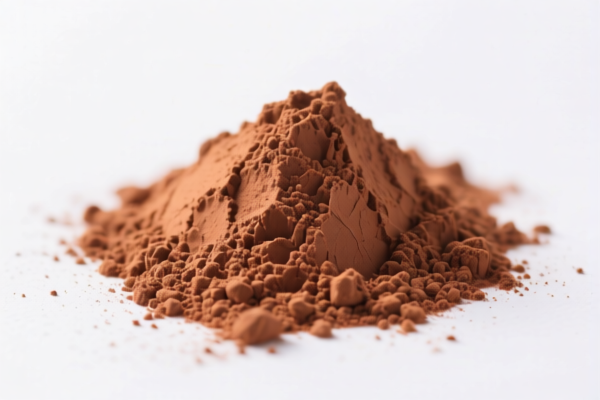
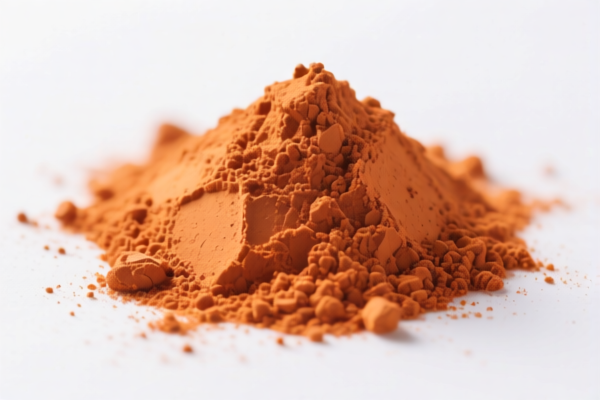
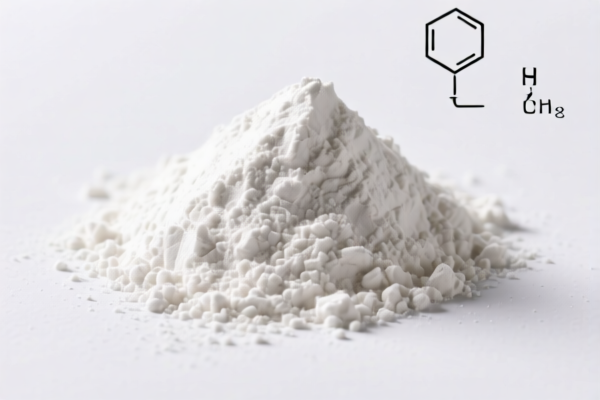

AI Analysis
🧪 Epoxy Powder (Resin-Based Coatings & Adhesives)
🌐 HS Code Reference & Clearance Guide | 2026 Latest Tariff Analysis | Strategic Classification for Importers
📌 I. Product Definition: What Exactly is "Epoxy Powder"?
Epoxy Powder refers to a dry, free-flowing thermosetting polymer powder. Unlike liquid epoxies (which consist of resin and hardener mixed separately), epoxy powder is a complete formulation where the resin, hardener, and additives are pre-mixed in solid form. It is primarily used in two major industries:
1. Powder Coatings (Surface Protection): Applied via electrostatic spraying and cured under heat. Used for metal finishing, automotive parts, appliances, and infrastructure (fences, railings) to provide durable, corrosion-resistant finishes.
2. Structural Adhesives & Grouts (Construction & Industrial): Used as high-strength bonding agents for concrete repair, flooring (industrial warehouses), or anchoring systems. In this context, it may be referred to as "epoxy mortar" or "grout."
⚠️ Key Classification Distinction:
- If the product is primarily for painting/protecting surfaces (coating) → Look at Chapter 39 (Plastics) or Chapter 38 (Miscellaneous Chemical Products).
- If the product is primarily for cementitious applications (mortar/grout with resin as binder) → Look at Chapter 68 (Mineral Products) or Chapter 38.
- Crucial Note: The provided data highlights a conflict between "Chemical Resin" (Ch 39) and "Mineral/Cementitious Product" (Ch 68). The final classification depends on the ** predominant function and physical form** (pure powder vs. resin-mixed mineral aggregate).
📦 II. HS Code Classification Details (Based on Provided Data)
The following HS Codes are derived strictly from the provided <DATA> set. Note that tax rates vary significantly based on whether the product is classified as a chemical resin or a mineral construction product.
| HS Code | Product Description & Summary | Total Tax Rate | Tax Detail Breakdown |
|---|---|---|---|
| 6810.19.50.00 | Artificial Stone/Mineral Product: Material: Epoxy resin (resin category). Form: Mortar (man-made stone/cement-like). Matches "Artificial stone products" and "Other" categories. |
38.9% | Base: 3.9% Additional: 25.0% Section 122: 10% |
| 3907.30.00.00 | Polyacetals (Primary Forms): Summary: Match success. "Epoxy" matches material "Epoxy Resin". "Mortar" is seen as resin as binding material, no conflict with "Primary Forms". |
41.1% | Base: 6.1% Additional: 25.0% Section 122: 10% |
| 3907.99.50.50 | Other Polymers (Resin): Summary: Explicitly contains "Epoxy Resin" material, fits the category of Epoxy and other polyesters. |
41.5% | Base: 6.5% Additional: 25.0% Section 122: 10% |
| 6810.99.00.80 | Other Mineral Products: Summary: Material is Epoxy Resin (man-made resin/stone). Form is Mortar (cement/concrete/artificial stone category). Consistent with "Artificial stone products". |
35.0% | Base: 0.0% Additional: 25.0% Section 122: 10% |
| 3824.50.00.10 | Prepared Binders/Chemicals: Summary: Material is "Epoxy Resin" (chemical preparation). Form is "Mortar", fits "Non-refractory mortar and concrete" attributes. |
35.0% | Base: 0.0% Additional: 25.0% Section 122: 10% |
🔍 Critical Analysis of Tax Discrepancy:
- Lowest Tax (35.0%): Codes6810.99.00.80and3824.50.00.10have 0% Base Duty. This is likely because they are classified as specific mineral preparations or prepared chemical binders where the base rate is exempt, but subject to the 25% (Section 301) and 10% (Section 122) surcharges.
- Highest Tax (41.5%): Code3907.99.50.50has a 6.5% Base Duty, leading to the highest total. This classifies it strictly as a plastic resin.
- Strategy: If your product is technically a "powder coating" or "chemical binder," aiming for the 35.0% bracket (via Ch 68 or Ch 38) is financially superior to the 41.5% bracket (Ch 39), provided you can justify the classification with technical data sheets showing it is used as a mortar/binder/mineral composite rather than a pure plastic primary form.
💰 III. 2026 Latest Tariff Rate Breakdown (US Import from China)
✅ Applicable Country: United States (US)
✅ Origin: China (CN)
✅ Effective Date: November 10, 2025 (and subsequent imports)
🎯 1. The "Low Base" Advantage: 6810.99.00.80 & 3824.50.00.10
These codes offer the lowest total tariff burden among the options.
| Item | Content |
|---|---|
| Base Duty Rate | 0.0% (Ad Valorem) |
| USITC Additional Duty (Section 301) | +25% |
| IEEPA Additional Duty (Section 122) | +10% |
| Total Effective Rate | 35.0% |
| Tax Calculation | CIF Value × 35% |
| De Minimis Exemption | ❌ Not Eligible (Deny De Minimis) |
| Legal Basis Path | IEEPA:9903.01.24 → USITC:6810.99.00.80 OR IEEPA:9903.01.24 → USITC:3824.50.00.10 |
📌 Explanation:
- The 0% base rate is the key savings factor.
- However, the 35% total is still very high due to the mandatory 35% combined surcharge (25% + 10%).
- Justification Required: You must prove the product is a "prepared binder" or "mineral product" and not a "primary plastic resin" to avoid the higher 41%+ rates.
🎯 2. The "High Base" Risk: 3907.30.00.00 & 3907.99.50.50
Classification as pure plastic resin triggers base duties.
| Item | Content |
|---|---|
| Base Duty Rate | 6.1% - 6.5% |
| USITC Additional Duty (Section 301) | +25% |
| IEEPA Additional Duty (Section 122) | +10% |
| Total Effective Rate | 41.1% - 41.5% |
| Tax Calculation | CIF Value × ~41.3% |
| De Minimis Exemption | ❌ Not Eligible |
📌 Warning:
- If customs determines the product is primarily a "plastic resin in primary form" (even if powdered), they may shift you to Ch 39.
- The difference between 35% and 41.5% is 6.5% on the total value, which is significant for high-volume shipments.
🛠️ IV. Clearance Practical Advice (Battle-Tested Guide)
✅ 1. Documentation Checklist (Non-Negotiable)
| Document | Required | Explanation |
|---|---|---|
| ✅ Technical Data Sheet (TDS) | ✔️ | Must specify: "Epoxy Powder," "Thermosetting," "Used for: Coating/Adhesive/Mortar." Highlight that it is NOT a liquid epoxy. |
| ✅ Composition Breakdown | ✔️ | List percentages of Resin, Hardener, Fillers, Pigments. If fillers (minerals) are high, argue for Ch 68/38. |
| ✅ Product Photos | ✔️ | Show powder form. If packaged with hardener, clarify if it's a 2-part system or pre-mixed 1-part. |
| ✅ Commercial Invoice | ✔️ | Description: "Epoxy Powder Coating" or "Epoxy Grout/Mortar." Do NOT use vague terms like "Chemical." |
| ✅ Statement of Use | ✔️ | Explicitly state: "Used for surface protection on metal" or "Used as bonding mortar for concrete." |
| ✅ Certificate of Origin (CO) | ✔️ | Essential for tracking Section 301 applicability. |
✅ 2. Classification Strategy (Key Mantra)
🔥 "Form Determines Function, Function Determines Duty!"
| Scenario | Recommended HS Code | Reasoning |
|---|---|---|
| Epoxy Powder for Metal Coating | 3824.50.00.10 or 6810.99.00.80 |
Argue as "Prepared Binders" or "Artificial Stone/Mineral Composites" to get 0% Base Duty. |
| Epoxy Grout/Mortar (Construction) | 6810.19.50.00 or 6810.99.00.80 |
Explicitly "Mortar" or "Artificial Stone." Fits Chapter 68 well. |
| Pure Epoxy Resin Powder (Raw Material) | 3907.30.00.00 or 3907.99.50.50 |
Only if it is a raw chemical intermediate with no mineral fillers and used solely for further chemical processing. |
⚠️ Avoid: Declaring "Epoxy Powder" without context. Customs may default to Ch 39 (Plastics), leading to higher taxes and potential penalties for misclassification.
✅ 3. Special Considerations
| Situation | Advice |
|---|---|
| Pre-Mixed vs. Two-Part | If it's a 2-part system (Resin + Hardener) shipped separately, classify each part. If pre-mixed, classify as one unit. Pre-mixed is more likely to be "Prepared Chemical" (Ch 38). |
| Mineral Fillers > 50% | If the powder contains significant mineral fillers (silica, calcium carbonate), strongly argue for Ch 68 (Mineral Products). The resin is just the binder. |
| Section 122 (10%) | This is mandatory for Chinese-origin goods. No exemption available. Plan for this in your cost model. |
| De Minimis (800 USD) | ❌ Blocked. Since Nov 2025, Section 122 goods do not qualify for de minimis entry. All shipments require formal entry and tax payment. |
🌍 V. Global Market Comparison (2026 Context)
| Country/Region | Recommended HS Code | Approx. Total Tariff | Key Requirements | Notes |
|---|---|---|---|---|
| 🇺🇸 USA | 3824.50.00.10 / 6810.99.00.80 |
35.0% | IEEPA + Section 301 | 35% Base Duty is critical. Avoid Ch 39 (41%+). |
| 🇨🇳 China | 3824.50.00.10 |
~0-5% (Check Latest) | CCC (if applicable) | Low import duty, but check VAT. |
| 🇪🇺 EU | 3824.50 or 3907.30 |
~4.5-6.5% | REACH Compliance | No Section 301/122 surcharges. REACH registration is key. |
| 🇨🇦 Canada | 3824.50 |
~5-6% | CFIA/Health Canada | Generally lower tariffs than US. |
| 🇲🇽 Mexico | 3824.50 |
~5-10% | NOM Standards | USMCA may apply if rules of origin met. |
📌 Conclusion:
- USA is the most expensive market due to the 35% combined surcharge.
- EU/Canada/Mexico are significantly cheaper if you can manage compliance (REACH, etc.).
- Optimization: For US imports, ensuring the product is classified under Ch 38 or Ch 68 (35% total) rather than Ch 39 (41%+ total) saves 6.5% of the shipment value.
📌 VI. Common Errors & Pitfalls (Lessons Learned)
❌ Error 1: Declaring "Epoxy Powder" as "Paint" or "Liquid Epoxy"
👉 Consequence: Misclassification → Seizure or Heavy Penalties. Powder coatings are NOT liquids.
❌ Error 2: Using HS Code 3907.30.00.00 without proof of "Primary Form"
👉 Consequence: If it’s a prepared mixture (with fillers/hardeners), it’s NOT a primary form. Custom may adjust to 3824 or 6810, causing delays.
❌ Error 3: Assuming De Minimis Applies
👉 Consequence: Small shipments (<$800) will be held and taxed at 35-41%. No exemptions.
❌ Error 4: Ignoring Section 122 (10%)
👉 Consequence: Underpayment → Interest and Penalties. This is a new/additional duty not always in older tariff databases.
✅ Correct Practice:
"Epoxy Powder Coating, Pre-mixed, Thermosetting, For Electrostatic Application on Metal Surfaces, Model XYZ, Non-Toxic"
🎯 VII. Conclusion: Strategic Cost Saving
🎯 Remember the Mantra:
🔹 "Mineral Binder = 0% Base (35% Total)"
🔹 "Pure Resin = 6.5% Base (41.5% Total)"
🔹 "Declare Function, Not Just Material!"
📌 Pro Tip:
If you have high mineral content (fillers) or use it for construction/adhesion, prioritize 3824.50.00.10 or 6810.99.00.80. Provide TDS that highlights the "Prepared Binder" or "Mineral Composite" nature. This saves 6.5% on every dollar shipped to the US.
📣 Immediate Action:
📞 Consult Customs Broker + Provide TDS + Request Advance Ruling if shipment value is high.
🚀 Optimize your supply chain to absorb the 35% tariff or consider third-party manufacturing (Vietnam/Mexico) for US-bound goods.
✨ Professional Clearance, Start with Accurate Classification!
💼 Every Percentage Point Saved is Pure Profit!
Customer Reviews
About HS Code Classification
The Harmonized System (HS) is an internationally standardized nomenclature developed by the World Customs Organization (WCO) to classify traded products. Over 200 countries use the HS system as the basis for customs tariffs, trade statistics, and import/export regulations.
Each HS code follows a hierarchical structure:
- Chapter (2 digits) — Broad category of goods (e.g., Chapter 84: Machinery and Mechanical Appliances)
- Heading (4 digits) — More specific grouping within the chapter
- Subheading (6 digits) — Internationally standardized breakdown, used by all WCO member countries
- National subdivisions (8-10 digits) — Country-specific extensions for further classification, such as US HTSUS 10-digit codes
Correct HS code classification is essential for smooth customs clearance, accurate duty payment, and compliance with trade regulations. Misclassification can lead to customs delays, overpayment of duties, or penalties.
When importing from CN to US, the applicable tariff rates may include:
- Most-Favored-Nation (MFN) rate — The standard duty rate applied to WTO members
- General rate — Applied to countries without trade agreements
- Trade remedy duties — Additional tariffs such as Section 301 (anti-dumping), Section 232 (national security), or countervailing duties
The information provided on this page is for reference purposes only. For official classification, please consult with your local customs authority or a licensed customs broker.