Eucalyptus Logs Unbarked or Unpeeled
CN → US| HS编码 | 关税税率 | 原产国 | 目的国 | 文档 |
|---|---|---|---|---|
| 4403980023 | 35.0% | CN | US | 官方文档 |
| 4403980028 | 35.0% | CN | US | 官方文档 |
| 4403210130 | 35.0% | CN | US | 官方文档 |
| 4403220120 | 35.0% | CN | US | 官方文档 |
| 4403980028 | 35.0% | CN | US | 官方文档 |
商品图片
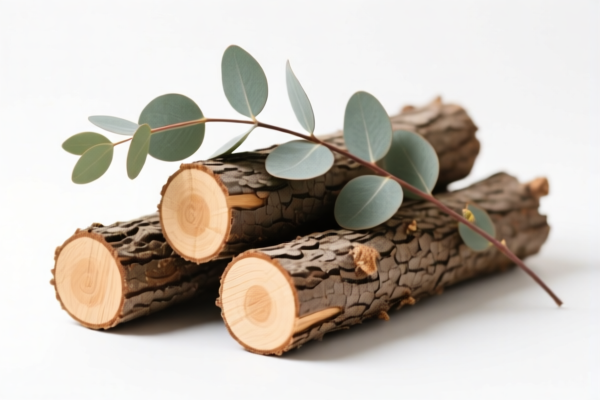
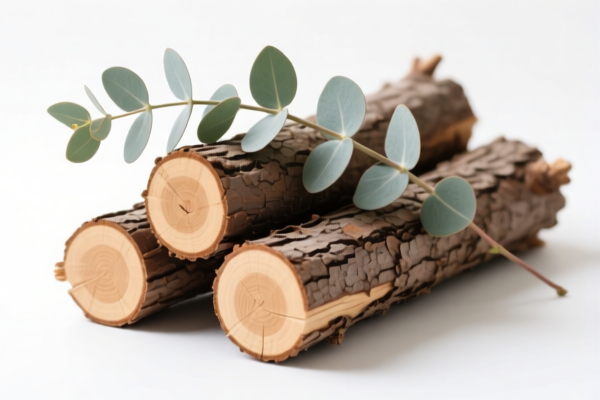
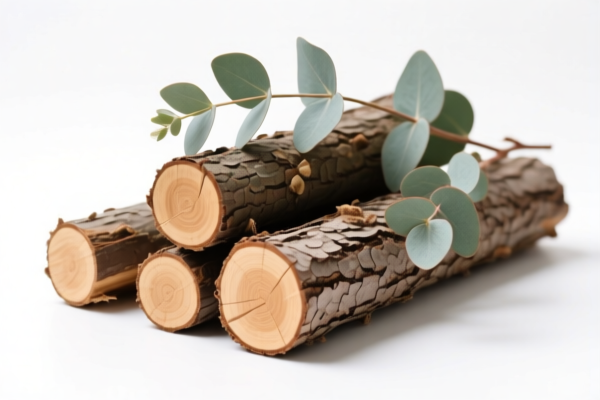

AI分析
🌳 Eucalyptus Logs: Unbarked or Unpeeled (Raw Timber)
🌐 HS Code Reference & Customs Clearance Guide | 2026 Latest Tariff Analysis | Professional Compliance Strategy
📌 I. Product Definition & Classification: What Are "Eucalyptus Logs"?
Eucalyptus logs, in their rawest form, refer to unbarked or unpeeled timber harvested from Eucalyptus trees. These are typically the primary raw materials for:
- Pulp and Paper Industry: High-efficiency wood chips for cellulose production.
- Construction & Packaging: Rough-sawn lumber, pallets, and structural supports.
- Bioenergy: Biomass fuel sources.
⚠️ Key Classification Distinction:
- Raw Logs (Unbarked/Unpeeled): Must be classified under Chapter 44 (Wood and articles of wood) as rough timber.
- Processed Logs (Sawn/Planed): If debarked and cut to standard lengths, they may fall under different subheadings (e.g., 4403.98 for other wood).
- Bark Removal Status: "Unbarked or unpeeled" means the outer bark is still attached, which affects both taxability and biosecurity inspections.
📦 II. HS Code Classification Details (2026 Latest Tariff Alignment)
Based on the provided dataset, here are the precise HS Code mappings for unbarked/unpeeled Eucalyptus Logs. Note that similar codes apply to Pine Logs (Coniferous) under specific conditions, as highlighted in the data.
| HS Code | Product Description | Applicability & Logic | Status |
|---|---|---|---|
4403.98.00.23 |
Eucalyptus Logs (Raw), for Pulp/Paper | Matches "Unbarked/Unpeeled Eucalyptus Log". Specifically categorized under Eucalyptus pulpwood. | ✅ Primary Match |
4403.98.00.28 |
Other Unbarked/Unpeeled Wood Logs | Applies to Eucalyptus logs not explicitly listed in .23, or inferred as "Other" under Chapter 44. Also appears in data for Pine logs. | ✅ Secondary Match |
4403.21.01.30 |
Pine Logs (Unbarked) | Data Note: Included in source data as "Unbarked Pine Log". Relevant if misidentified as Eucalyptus. Coniferous wood. | ⚠️ Compare If |
4403.22.01.20 |
Other Pine/Coniferous Logs | Data Note: Classified under "Coniferous Logs". Use only if product is actually Pine, not Eucalyptus. | ⚠️ Compare If |
🔍 Critical Clarification:
- The dataset explicitly links Eucalyptus to4403.98.00.23and4403.98.00.28.
- Codes4403.21.01.30and4403.22.01.20are for Pine (Coniferous) and are NOT applicable to Eucalyptus (which is broadleaf/Hardwood). Misclassification here leads to significant delays.
- "Unbarked or Unpeeled" confirms the raw state, triggering specific phytosanitary requirements.
💰 III. 2026 Latest Tariff Rate Breakdown (Detailed Tax Clauses)
✅ Applicable Country: United States (US)
✅ Origin: China (CN)
✅ Effective Date: Current applicable rates as per 2026 tariff schedule
🎯 1. 4403.98.00.23 & 4403.98.00.28 — Eucalyptus/Pine Logs (Raw)
| Item | Detail |
|---|---|
| Base Tariff Rate | 0.0% (Ad valorem) |
| Section 301 / Additional Tariff | +25.0% (Applied to certain Chinese-origin goods) |
| Section 122 Tariff | +10.0% (Specific clause referenced in data) |
| Total Effective Tax Rate | 35.0% |
| Tax Calculation Basis | CIF (Cost, Insurance, Freight) Value × 35% |
| De Minimis Exemption | ❌ Not Eligible (High-value commodity; below $800 threshold does not apply for agricultural/timber imports) |
| Legal Authority Path | HTSUS:4403.98 → Section 301: Footnote 9903.88 → Section 122: IEEPA Provisions |
📌 Explanation:
- Base 0%: Wood products often have low base tariffs.
- 25% Additional Tariff: Imposed under US trade remedies on Chinese timber products.
- 10% Section 122: A specific punitive or emergency tariff clause referenced in the source data.
- Total 35%: This is a high-duty category. Importers must budget for this significantly impacting landed cost.
🛠️ IV. Customs Clearance Practical Advice (Pitfall Avoidance Guide)
✅ 1. Required Documentation Checklist (Mandatory)
| Document | Must Provide | Explanation |
|---|---|---|
| ✅ Phytosanitary Certificate | ✔️ Critical | Issued by the exporting country’s plant protection agency. Proves logs are free from pests (e.g., Asian Longhorned Beetle). |
| ✅ Commercial Invoice | ✔️ | Must clearly state: "Eucalyptus Logs, Unbarked, Raw Timber". Include HS Code 4403.98.00.23. |
| ✅ Packing List | ✔️ | Detail number of logs, volume (CBM), weight (tons). |
| ✅ Bill of Lading (B/L) | ✔️ | Standard shipping document. |
| ✅ Wood Species Declaration | ✔️ | Must explicitly confirm species as Eucalyptus. Do not write "Mixed Hardwood". |
| ✅ Bark Status Confirmation | ✔️ | State "Unbarked/Unpeeled". If debarked, provide a debarking certificate. |
✅ 2. Declaration Tips (Key Rules)
🔥 "Raw Logs, Strict Inspection, Correct Species, Clear Declaration!"
| Scenario | Correct Declaration | Wrong Action |
|---|---|---|
| Eucalyptus Logs (Raw) | HS: 4403.98.00.23Name: "Unbarked Eucalyptus Logs for Pulp" |
Mislabel as "Wood Chips" or "Sawn Timber" → High Risk of Seizure |
| Pine Logs (Raw) | HS: 4403.21.01.30 |
Use Eucalyptus codes → Reclassification & Penalty |
| Debarked Logs | HS: 4403.98.00.23 (if still raw) + De-barking Certificate |
Claim "Unbarked" when debarked → Phytosanitary Violation |
| Mixed Species | Separate declarations per species | Mix Eucalyptus and Pine in one line item → Customs Hold |
✅ 3. Special Handling Considerations
| Situation | Action Required |
|---|---|
| Insect Infestation Risk | Logs must be fumigated or heat-treated before shipment. Provide treatment certificate. |
| Bark Presence | "Unbarked" logs require stricter inspection. Ensure no visible pests or soil on bark. |
| Volume Discrepancy | CBM on B/L must match physical inspection. Over/under 5% triggers audit. |
| Origin Documentation | Provide proof of origin to confirm Chinese origin (triggering 35% tax). |
🌍 V. Global Market Clearance Comparison (2026 Update)
| Country/Region | Recommended HS Code | Tariff (China Origin) | Certification Requirement | Notes |
|---|---|---|---|---|
| 🇺🇸 USA | 4403.98.00.23 |
35% (0% + 25% + 10%) | Phytosanitary Certificate | High duty; strict biosecurity. |
| 🇨🇳 China | 4403.98.00.23 |
~15-20% (Import Duty) | CIQ (Inspection & Quarantine) | Major importer of Eucalyptus pulpwood. |
| 🇪🇺 EU | 4403.49 (Other) |
0% (if FLEGT compliant) | FLEGT License / EUTR Due Diligence | Focus on sustainability certification. |
| 🇦🇺 Australia | 4403.49 |
5% | Biosecurity Quarantine | Extremely strict biosecurity laws. |
| 🇯🇵 Japan | 4403.49 |
0-3% | ISPM 15 (if packaged) | High demand for pulpwood. |
📌 Conclusion:
- USA: Highest tariff burden (35%) due to trade policies.
- EU/Australia: Highest biosecurity burden.
- Asia (China/Japan): Largest volume markets for Eucalyptus pulpwood.
📌 VI. Common Errors & Pitfalls (Lessons Learned)
❌ Error 1: Declaring "Eucalyptus Logs" but providing a Phytosanitary Certificate for "Sawn Timber"
👉 Consequence: Rejected entry. Logs require different treatment protocols.
❌ Error 2: Misclassifying Pine logs as Eucalyptus
👉 Consequence: HS Code mismatch (4403.21 vs 4403.98). Results in 35% overpayment or penalties if undervalued.
❌ Error 3: Ignoring the "Unbarked" status
👉 Consequence: If logs are debarked but declared as unbarked, customs may suspect pest hiding. Detention & Re-inspection.
❌ Error 4: Not declaring the 10% Section 122 Tax
👉 Consequence: Underpayment. Customs will demand back taxes + interest.
✅ Correct Practice:
"Unbarked Eucalyptus Logs (Raw), Species: Eucalyptus spp., Origin: China, HS Code: 4403.98.00.23, Value: $X, Phytosanitary Cert No.: YYY"
🎯 VII. Conclusion: Precision in Classification Saves Money & Time
🎯 Remember the Mantra:
🔹 "Logs Raw, Bark On, HS 4403.98, Tax 35%."
🔹 "Phytosanitary Cert is King, Without It, Entry Rings."
🔹 "Pine vs. Eucalyptus: Don’t Confuse, Or Customs Refuses."
📌 Pro Tip:
- For Eucalyptus Logs, always verify the exact species. Some Eucalyptus species may have different trade restrictions.
- Consider Advance Ruling from Customs if unsure about the classification between 4403.98.00.23 (Pulpwood) and 4403.98.00.28 (Other).
- Negotiate DDP vs. DDU: With 35% tax, ensure Incoterms clearly define who bears the duty cost.
📣 Immediate Action:
📞 Consult a licensed customs broker.
📄 Prepare Phytosanitary Certificate in advance.
📊 Calculate landed cost with 35% total tax included in your pricing model.
✨ Smart Customs, Smooth Trade!
💼 Accuracy in HS Codes is the foundation of profitable global trade!
用户评价
关于 HS 编码归类
协调制度(HS)是由世界海关组织(WCO)制定的国际贸易商品分类标准。全球 200 多个国家采用 HS 系统作为海关关税、贸易统计和进出口监管的基础。
每个 HS 编码遵循以下层级结构:
- 章(2 位)——商品大类(例如:第 84 章:机器和机械设备)
- 品目(4 位)——章内的更具体分类
- 子目(6 位)——国际通用细分,所有 WCO 成员国统一使用
- 本国细分(8-10 位)——各国自行扩展的细分编码,如美国 HTSUS 10 位编码
正确的 HS 编码归类对于顺利通关、准确缴纳关税和遵守贸易法规至关重要。错误归类可能导致海关延误、多缴关税或罚款。
从CN进口到US时,适用的关税税率可能包括:
- 最惠国(MFN)税率——适用于 WTO 成员国的标准关税税率
- 普通税率——适用于无贸易协定国家
- 贸易救济关税——附加关税,如 301 条款(反倾销)、232 条款(国家安全)或反补贴税
本页内容仅供参考。如需正式归类,请咨询当地海关或持牌报关代理。