Eucalyptus Logs Unbarked or Unpeeled
CN → US| HS Code | Tariff Rate | Origin | Destination | Doc |
|---|---|---|---|---|
| 4403980023 | 35.0% | CN | US | Official Doc |
| 4403980028 | 35.0% | CN | US | Official Doc |
| 4403210130 | 35.0% | CN | US | Official Doc |
| 4403220120 | 35.0% | CN | US | Official Doc |
| 4403980028 | 35.0% | CN | US | Official Doc |
Product Images
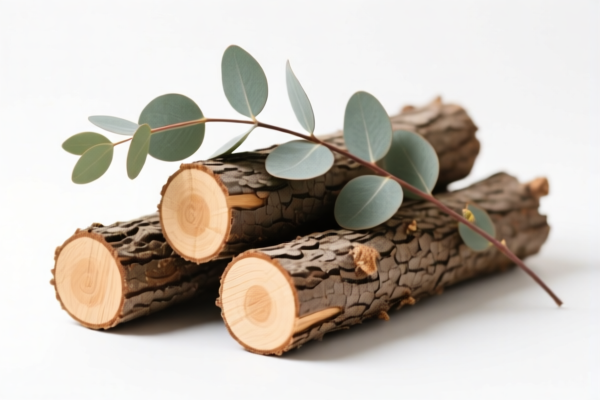
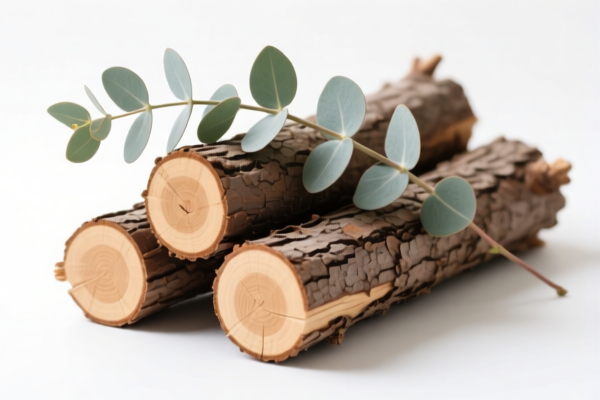
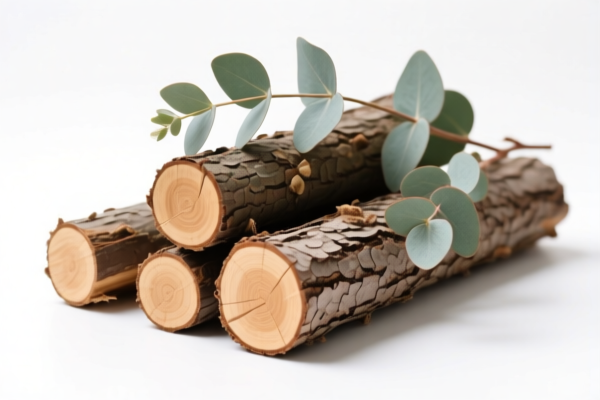

AI Analysis
🌳 Eucalyptus Logs: Unbarked or Unpeeled (Raw Timber)
🌐 HS Code Reference & Customs Clearance Guide | 2026 Latest Tariff Analysis | Professional Compliance Strategy
📌 I. Product Definition & Classification: What Are "Eucalyptus Logs"?
Eucalyptus logs, in their rawest form, refer to unbarked or unpeeled timber harvested from Eucalyptus trees. These are typically the primary raw materials for:
- Pulp and Paper Industry: High-efficiency wood chips for cellulose production.
- Construction & Packaging: Rough-sawn lumber, pallets, and structural supports.
- Bioenergy: Biomass fuel sources.
⚠️ Key Classification Distinction:
- Raw Logs (Unbarked/Unpeeled): Must be classified under Chapter 44 (Wood and articles of wood) as rough timber.
- Processed Logs (Sawn/Planed): If debarked and cut to standard lengths, they may fall under different subheadings (e.g., 4403.98 for other wood).
- Bark Removal Status: "Unbarked or unpeeled" means the outer bark is still attached, which affects both taxability and biosecurity inspections.
📦 II. HS Code Classification Details (2026 Latest Tariff Alignment)
Based on the provided dataset, here are the precise HS Code mappings for unbarked/unpeeled Eucalyptus Logs. Note that similar codes apply to Pine Logs (Coniferous) under specific conditions, as highlighted in the data.
| HS Code | Product Description | Applicability & Logic | Status |
|---|---|---|---|
4403.98.00.23 |
Eucalyptus Logs (Raw), for Pulp/Paper | Matches "Unbarked/Unpeeled Eucalyptus Log". Specifically categorized under Eucalyptus pulpwood. | ✅ Primary Match |
4403.98.00.28 |
Other Unbarked/Unpeeled Wood Logs | Applies to Eucalyptus logs not explicitly listed in .23, or inferred as "Other" under Chapter 44. Also appears in data for Pine logs. | ✅ Secondary Match |
4403.21.01.30 |
Pine Logs (Unbarked) | Data Note: Included in source data as "Unbarked Pine Log". Relevant if misidentified as Eucalyptus. Coniferous wood. | ⚠️ Compare If |
4403.22.01.20 |
Other Pine/Coniferous Logs | Data Note: Classified under "Coniferous Logs". Use only if product is actually Pine, not Eucalyptus. | ⚠️ Compare If |
🔍 Critical Clarification:
- The dataset explicitly links Eucalyptus to4403.98.00.23and4403.98.00.28.
- Codes4403.21.01.30and4403.22.01.20are for Pine (Coniferous) and are NOT applicable to Eucalyptus (which is broadleaf/Hardwood). Misclassification here leads to significant delays.
- "Unbarked or Unpeeled" confirms the raw state, triggering specific phytosanitary requirements.
💰 III. 2026 Latest Tariff Rate Breakdown (Detailed Tax Clauses)
✅ Applicable Country: United States (US)
✅ Origin: China (CN)
✅ Effective Date: Current applicable rates as per 2026 tariff schedule
🎯 1. 4403.98.00.23 & 4403.98.00.28 — Eucalyptus/Pine Logs (Raw)
| Item | Detail |
|---|---|
| Base Tariff Rate | 0.0% (Ad valorem) |
| Section 301 / Additional Tariff | +25.0% (Applied to certain Chinese-origin goods) |
| Section 122 Tariff | +10.0% (Specific clause referenced in data) |
| Total Effective Tax Rate | 35.0% |
| Tax Calculation Basis | CIF (Cost, Insurance, Freight) Value × 35% |
| De Minimis Exemption | ❌ Not Eligible (High-value commodity; below $800 threshold does not apply for agricultural/timber imports) |
| Legal Authority Path | HTSUS:4403.98 → Section 301: Footnote 9903.88 → Section 122: IEEPA Provisions |
📌 Explanation:
- Base 0%: Wood products often have low base tariffs.
- 25% Additional Tariff: Imposed under US trade remedies on Chinese timber products.
- 10% Section 122: A specific punitive or emergency tariff clause referenced in the source data.
- Total 35%: This is a high-duty category. Importers must budget for this significantly impacting landed cost.
🛠️ IV. Customs Clearance Practical Advice (Pitfall Avoidance Guide)
✅ 1. Required Documentation Checklist (Mandatory)
| Document | Must Provide | Explanation |
|---|---|---|
| ✅ Phytosanitary Certificate | ✔️ Critical | Issued by the exporting country’s plant protection agency. Proves logs are free from pests (e.g., Asian Longhorned Beetle). |
| ✅ Commercial Invoice | ✔️ | Must clearly state: "Eucalyptus Logs, Unbarked, Raw Timber". Include HS Code 4403.98.00.23. |
| ✅ Packing List | ✔️ | Detail number of logs, volume (CBM), weight (tons). |
| ✅ Bill of Lading (B/L) | ✔️ | Standard shipping document. |
| ✅ Wood Species Declaration | ✔️ | Must explicitly confirm species as Eucalyptus. Do not write "Mixed Hardwood". |
| ✅ Bark Status Confirmation | ✔️ | State "Unbarked/Unpeeled". If debarked, provide a debarking certificate. |
✅ 2. Declaration Tips (Key Rules)
🔥 "Raw Logs, Strict Inspection, Correct Species, Clear Declaration!"
| Scenario | Correct Declaration | Wrong Action |
|---|---|---|
| Eucalyptus Logs (Raw) | HS: 4403.98.00.23Name: "Unbarked Eucalyptus Logs for Pulp" |
Mislabel as "Wood Chips" or "Sawn Timber" → High Risk of Seizure |
| Pine Logs (Raw) | HS: 4403.21.01.30 |
Use Eucalyptus codes → Reclassification & Penalty |
| Debarked Logs | HS: 4403.98.00.23 (if still raw) + De-barking Certificate |
Claim "Unbarked" when debarked → Phytosanitary Violation |
| Mixed Species | Separate declarations per species | Mix Eucalyptus and Pine in one line item → Customs Hold |
✅ 3. Special Handling Considerations
| Situation | Action Required |
|---|---|
| Insect Infestation Risk | Logs must be fumigated or heat-treated before shipment. Provide treatment certificate. |
| Bark Presence | "Unbarked" logs require stricter inspection. Ensure no visible pests or soil on bark. |
| Volume Discrepancy | CBM on B/L must match physical inspection. Over/under 5% triggers audit. |
| Origin Documentation | Provide proof of origin to confirm Chinese origin (triggering 35% tax). |
🌍 V. Global Market Clearance Comparison (2026 Update)
| Country/Region | Recommended HS Code | Tariff (China Origin) | Certification Requirement | Notes |
|---|---|---|---|---|
| 🇺🇸 USA | 4403.98.00.23 |
35% (0% + 25% + 10%) | Phytosanitary Certificate | High duty; strict biosecurity. |
| 🇨🇳 China | 4403.98.00.23 |
~15-20% (Import Duty) | CIQ (Inspection & Quarantine) | Major importer of Eucalyptus pulpwood. |
| 🇪🇺 EU | 4403.49 (Other) |
0% (if FLEGT compliant) | FLEGT License / EUTR Due Diligence | Focus on sustainability certification. |
| 🇦🇺 Australia | 4403.49 |
5% | Biosecurity Quarantine | Extremely strict biosecurity laws. |
| 🇯🇵 Japan | 4403.49 |
0-3% | ISPM 15 (if packaged) | High demand for pulpwood. |
📌 Conclusion:
- USA: Highest tariff burden (35%) due to trade policies.
- EU/Australia: Highest biosecurity burden.
- Asia (China/Japan): Largest volume markets for Eucalyptus pulpwood.
📌 VI. Common Errors & Pitfalls (Lessons Learned)
❌ Error 1: Declaring "Eucalyptus Logs" but providing a Phytosanitary Certificate for "Sawn Timber"
👉 Consequence: Rejected entry. Logs require different treatment protocols.
❌ Error 2: Misclassifying Pine logs as Eucalyptus
👉 Consequence: HS Code mismatch (4403.21 vs 4403.98). Results in 35% overpayment or penalties if undervalued.
❌ Error 3: Ignoring the "Unbarked" status
👉 Consequence: If logs are debarked but declared as unbarked, customs may suspect pest hiding. Detention & Re-inspection.
❌ Error 4: Not declaring the 10% Section 122 Tax
👉 Consequence: Underpayment. Customs will demand back taxes + interest.
✅ Correct Practice:
"Unbarked Eucalyptus Logs (Raw), Species: Eucalyptus spp., Origin: China, HS Code: 4403.98.00.23, Value: $X, Phytosanitary Cert No.: YYY"
🎯 VII. Conclusion: Precision in Classification Saves Money & Time
🎯 Remember the Mantra:
🔹 "Logs Raw, Bark On, HS 4403.98, Tax 35%."
🔹 "Phytosanitary Cert is King, Without It, Entry Rings."
🔹 "Pine vs. Eucalyptus: Don’t Confuse, Or Customs Refuses."
📌 Pro Tip:
- For Eucalyptus Logs, always verify the exact species. Some Eucalyptus species may have different trade restrictions.
- Consider Advance Ruling from Customs if unsure about the classification between 4403.98.00.23 (Pulpwood) and 4403.98.00.28 (Other).
- Negotiate DDP vs. DDU: With 35% tax, ensure Incoterms clearly define who bears the duty cost.
📣 Immediate Action:
📞 Consult a licensed customs broker.
📄 Prepare Phytosanitary Certificate in advance.
📊 Calculate landed cost with 35% total tax included in your pricing model.
✨ Smart Customs, Smooth Trade!
💼 Accuracy in HS Codes is the foundation of profitable global trade!
Customer Reviews
About HS Code Classification
The Harmonized System (HS) is an internationally standardized nomenclature developed by the World Customs Organization (WCO) to classify traded products. Over 200 countries use the HS system as the basis for customs tariffs, trade statistics, and import/export regulations.
Each HS code follows a hierarchical structure:
- Chapter (2 digits) — Broad category of goods (e.g., Chapter 84: Machinery and Mechanical Appliances)
- Heading (4 digits) — More specific grouping within the chapter
- Subheading (6 digits) — Internationally standardized breakdown, used by all WCO member countries
- National subdivisions (8-10 digits) — Country-specific extensions for further classification, such as US HTSUS 10-digit codes
Correct HS code classification is essential for smooth customs clearance, accurate duty payment, and compliance with trade regulations. Misclassification can lead to customs delays, overpayment of duties, or penalties.
When importing from CN to US, the applicable tariff rates may include:
- Most-Favored-Nation (MFN) rate — The standard duty rate applied to WTO members
- General rate — Applied to countries without trade agreements
- Trade remedy duties — Additional tariffs such as Section 301 (anti-dumping), Section 232 (national security), or countervailing duties
The information provided on this page is for reference purposes only. For official classification, please consult with your local customs authority or a licensed customs broker.