Extension Cord
CN → US| HS编码 | 关税税率 | 原产国 | 目的国 | 文档 |
|---|---|---|---|---|
| 8544429010 | 87.6% | CN | US | 官方文档 |
| 8536904000 | 35.0% | CN | US | 官方文档 |
| 8543906800 | 35.0% | CN | US | 官方文档 |
| 8543706000 | 35.0% | CN | US | 官方文档 |
| 8536698000 | 37.7% | CN | US | 官方文档 |
商品图片
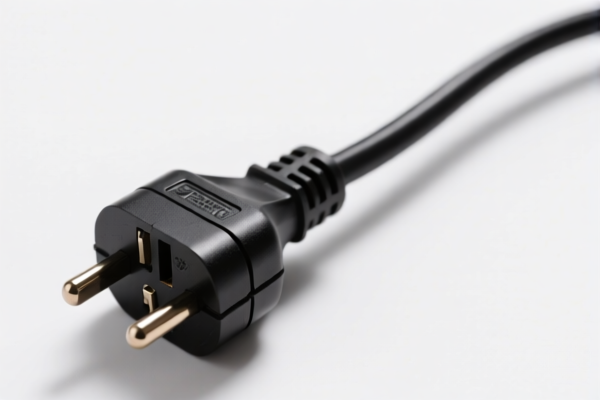
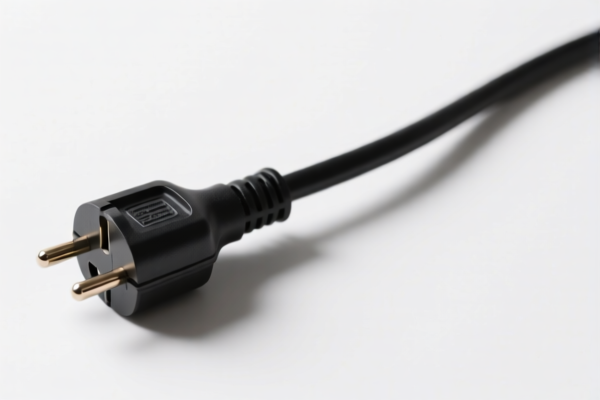
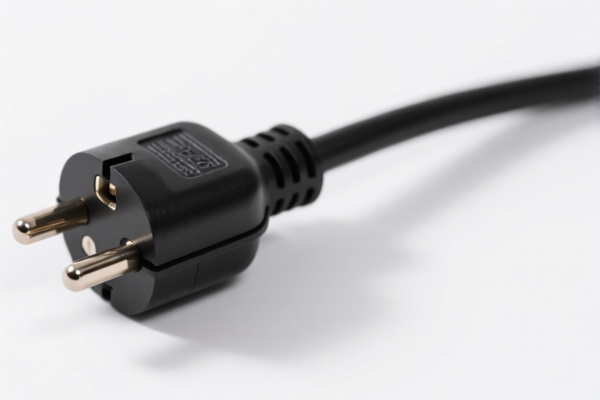
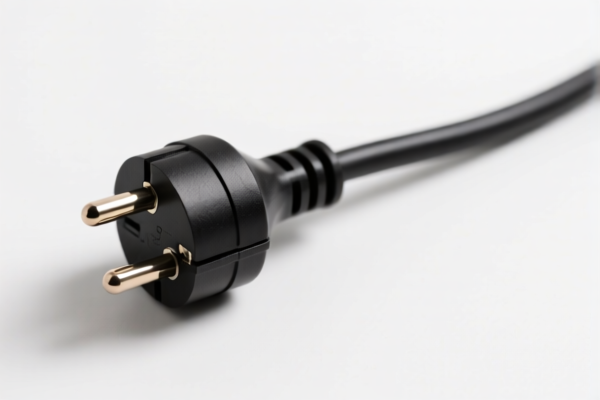
AI分析
🔌 Extension Cords (Power Strip & Outlet Extenders)
🌐 HS Code Reference & Customs Clearance Guide | 2026 Latest Tariff Analysis | Professional-Level Compliance Strategy
📌 I. Product Definition & Classification: Do You Really Understand "Extension Cords"?
An extension cord (or power strip/outlet extender) is a flexible electrical cable with connectors at both ends, used to extend the reach of a power outlet. In international trade, classification depends heavily on material composition, specific electrical function, and connection type.
⚠️ Key Distinction Points:
- If it is primarily a simple wire/cable assembly → Classified under 8544 (Insulated Wires/Cables);
- If it includes outlets/sockets/plugs for circuit connection → Classified under 8536 (Electrical Apparatus for Switching/Protecting Circuits);
- If it serves as a generic electrical component without specific switching function → Might fall under 8543 (Other Electrical Machines/Apparatus).
📦 II. HS Code Classification Details (2026 Latest Tariff Authority Comparison)
| HS Code | Product Description | Applicable Scenario | Key Classification Logic |
|---|---|---|---|
8544.42.90.10 |
Extension cables or outlet extenders, as electrical conductors; form and use match; no material conflict. | Simple extension wires, flexible cables with connectors, primarily for conducting electricity. | Primary Material: Conductive wire + insulation. Function: Conduction. |
8536.90.40.00 |
Extension cords, inferred material as wires/conductors, used for connecting circuits, fits the category of electrical connection equipment. | Cords with multiple outlets/plugs designed to bridge circuits. | Function: Circuit connection device. |
8543.90.68.00 |
Extension cords, belonging to electrical connection-type electrical device components, matching the "other categories" fallback principle. | Generic electrical components that don't fit neatly into standard switch/protective categories. | Fallback: General electrical apparatus. |
8543.70.60.00 |
Extension cords, belonging to electrical connection equipment, designed to connect to networks or devices, no material conflict. | Smart extension cords or those with network/interface capabilities. | Special Function: Network/Device connection. |
8536.69.80.00 |
Extension cords, purpose is to connect electrical circuits (outlet/plug type apparatus), material is conductive metal and insulated plastic. | Standard household extension cords with sockets/plugs. | Structure: Sockets/Plugs + Insulation. |
🔍 Important Reminder:
- 8544.42.90.10 is often the most accurate for standard extension cords viewed as conductive assemblies.
- 8536.69.80.00 applies if the item is emphasized as outlets/sockets (switching/protection function).
- Misclassification can lead to significant tariff differences due to the "Section 301" and "122 Clause" additions.
💰 III. 2026 Latest Tariff Rate Breakdown (Including Additional Taxes & Policy Surcharges)
✅ Applicable Country: United States (US)
✅ Origin: China (CN)
✅ Effective Time: Ongoing (as per 2025-2026 trade policies)
🎯 1. 8544.42.90.10 —— Extension Cables/Outlets (Conductive Assemblies)
| Item | Content |
|---|---|
| Base Tariff | 2.6% (ad valorem) |
| Section 301 Surcharge | +25.0% |
| Section 122 Surcharge | +50% (For Steel, Aluminum, Copper Products) |
| Total Tariff | 87.6% |
| Tax Calculation | CIF Value × 87.6% |
| De Minimis Exemption? | ❌ No (Deny De Minimis) |
| Legal Basis Path | Base: 2.6% → Section 301: 25% → 122 Clause (Cu/Al/Steel): 50% |
📌 Explanation:
- This is the highest tax bracket among the options.
- The 50% surcharge under "Section 122" applies if the cord contains copper, aluminum, or steel components (which most do).
- Total 87.6% makes this product extremely costly for US importers from China.
🎯 2. 8536.90.40.00 —— Extension Cords (Electrical Connection Equipment)
| Item | Content |
|---|---|
| Base Tariff | 0.0% |
| Section 301 Surcharge | +25.0% |
| Section 122 Surcharge | +10% |
| Total Tariff | 35.0% |
| Tax Calculation | CIF Value × 35.0% |
| De Minimis Exemption? | ❌ No |
| Legal Basis Path | Base: 0.0% → Section 301: 25% → 122 Clause: 10% |
📌 Note:
- This classification assumes the cord is an electrical connection apparatus but does not trigger the higher 122 Clause rate for metals (perhaps classified differently or exempted in this subheading).
- 35% is significantly lower than 87.6%, making this a preferred classification if justifiable.
🎯 3. 8543.90.68.00 —— Extension Cords (Generic Electrical Components)
| Item | Content |
|---|---|
| Base Tariff | 0.0% |
| Section 301 Surcharge | +25.0% |
| Section 122 Surcharge | +10% |
| Total Tariff | 35.0% |
| Tax Calculation | CIF Value × 35.0% |
| De Minimis Exemption? | ❌ No |
| Legal Basis Path | Base: 0.0% → Section 301: 25% → 122 Clause: 10% |
📌 Note:
- Same rate as8536.90.40.00.
- Used when the product is seen as a generic electrical component rather than a specific switch/outlet.
🎯 4. 8543.70.60.00 —— Extension Cords (Network/Device Connection)
| Item | Content |
|---|---|
| Base Tariff | 0.0% |
| Section 301 Surcharge | +25.0% |
| Section 122 Surcharge | +10% |
| Total Tariff | 35.0% |
| Tax Calculation | CIF Value × 35.0% |
| De Minimis Exemption? | ❌ No |
| Legal Basis Path | Base: 0.0% → Section 301: 25% → 122 Clause: 10% |
📌 Note:
- Applies if the extension cord is designed for network or data-device connection (e.g., smart power strips with USB/data ports).
- 35% total rate.
🎯 5. 8536.69.80.00 —— Extension Cords (Outlets/Plugs, Metal/Plastic)
| Item | Content |
|---|---|
| Base Tariff | 2.7% |
| Section 301 Surcharge | +25.0% |
| Section 122 Surcharge | +10% |
| Total Tariff | 37.7% |
| Tax Calculation | CIF Value × 37.7% |
| De Minimis Exemption? | ❌ No |
| Legal Basis Path | Base: 2.7% → Section 301: 25% → 122 Clause: 10% |
📌 Note:
- Slightly higher than 35% due to a 2.7% base tariff.
- Applies to standard outlet/plug assemblies with conductive metal and insulated plastic.
🛠️ IV. Customs Clearance Practical Advice (Real-World Pitfall Guide)
✅ 1. Preparation Checklist (Essential)
| Material | Required? | Explanation |
|---|---|---|
| ✅ Product Specifications | ✔️ | Include voltage, amperage, wire gauge (AWG), length, connector type. |
| ✅ Circuit Diagram/Structure | ✔️ | To prove whether it is a simple conductor (8544) or a connection device (8536). |
| ✅ Product Photos (Label) | ✔️ | Clear view of model, brand, input/output parameters, certifications. |
| ✅ Third-Party Test Report | ✔️ | UL, CE, RoHS, FCC (if applicable). Crucial for electrical safety. |
| ✅ Commercial Invoice | ✔️ | Must accurately describe the item as "Extension Cord" or "Power Strip." |
| ✅ Certificate of Origin (CO) | ✔️ | Required for tariff determination; if non-China origin, may qualify for exemptions. |
| ✅ Packing List | ✔️ | Detail components (cable, plug, socket) to avoid misclassification. |
✅ 2. Declaration Tips (Key Mnemonics)
🔥 "Wire vs. Socket, Choose Wisely! 8544 is Conductive, 8536 is Switching."
| Scenario | Correct Declaration | Wrong Practice |
|---|---|---|
| Simple extension cord (wire + plug) | 8544.42.90.10 |
Misclassify as 8536 → Potential 35% vs 87.6% risk. |
| Power strip with multiple outlets | 8536.69.80.00 or 8536.90.40.00 |
Misclassify as 8544 → Risk of higher base tax. |
| Smart cord with USB/Network | 8543.70.60.00 |
Misclassify as 8536 → Misses special function classification. |
| All from China | Expect 35%-87.6% Tariff | Assuming 0% duty → Huge Cost Overrun! |
⚠️ Critical Warning:
- 8544.42.90.10 carries a 50% Section 122 surcharge for copper/aluminum products.
- If you can justify classification under 8536.90.40.00 or 8543.90.68.00, you save ~50% in tariffs.
- However, misclassification is risky. Ensure your product description supports the lower-tax HS Code.
✅ 3. Special Case Handling
| Scenario | Handling Advice |
|---|---|
| OEM/Custom Cables | Provide client design specs to justify specific classification. |
| High-Current Industrial Cords | Emphasize "Conductor" aspect (8544) if simple, or "Connection Device" (8536) if complex. |
| Smart Power Strips | Use 8543.70.60.00 if network/device connection is primary feature. |
| Non-Chinese Origin | Apply for IEEPA Exemption if sourced from Vietnam/Mexico/etc. → 0%~5% duty. |
🌍 V. Global Market Comparison (2026 Latest)
| Country/Region | Recommended HS Code | Tariff (China Origin) | Certification | Notes |
|---|---|---|---|---|
| 🇺🇸 USA | 8536.90.40.00 (Preferred) |
35.0% | UL + FCC | Avoid 8544.42.90.10 (87.6%) if possible. |
| 🇨🇳 China | 8544.42.90.10 |
5%-7% | CCC | Lower impact of US surcharges. |
| 🇪🇺 EU | 8536.69.80.00 |
0%-2% | CE + RoHS | No Section 301. |
| 🇬🇧 UK | 8536.69.80.00 |
0%-2% | UKCA + RoHS | Post-Brexit rules apply. |
| 🇯🇵 Japan | 8536.69.80.00 |
0%-3% | PSE | No major surcharges. |
📌 Conclusion:
- USA is the only market with punitive surcharges for Chinese electrical accessories.
- Tariff Arbitrage: Classifying under 8536 or 8543 instead of 8544 can save ~50% in US duties.
- Supply Chain Shift: Consider sourcing from Vietnam, Mexico, or Thailand to avoid Section 301/122 tariffs entirely.
📌 VI. Common Mistakes & Pitfall Guide (Blood-Teaching Lessons)
❌ Mistake 1: Classifying all extension cords as 8544.42.90.10
👉 Consequence: Paying 87.6% tariff due to 50% Section 122 surcharge on copper/aluminum.
👉 Fix: Argue for 8536 (Connection Device) if the cord has multiple outlets/switches.
❌ Mistake 2: Under-declaring value or splitting shipments to avoid de minimis
👉 Consequence: Deny De Minimis applies anyway. Seizure, fines, and delays.
👉 Fix: Properly declare and plan for 35-87% tariffs.
❌ Mistake 3: Ignoring Section 122 Classification
👉 Consequence: Unexpected 50% surcharge on conductive materials.
👉 Fix: Analyze material composition. If primarily copper, expect higher tax under 8544.
❌ Mistake 4: Using "Extension Cord" generically without HS Code specificity
👉 Consequence: Customs officer discretion may lead to highest possible rate.
👉 Fix: Use precise descriptions: "Power Strip, 6 Outlets, 15A, UL Listed, Model XYZ."
✅ Correct Approach:
"Power Strip, 6 Outlets, 15A, 10FT, UL Listed, Model XYZ, Designed for Home Office Use"
🎯 VII. Conclusion: Precise Classification Saves Money!
🎯 Remember the Mnemonic:
🔹 "8544 = 87.6% (Ouch!), 8536/8543 = 35% (Better)."
🔹 "If it's a simple wire, 8544 is right. If it's a socket, 8536 is light."
🔹 "Think twice before importing from China, or move supply chain!"
📌 Pro Tip:
If your extension cords are sourced from Vietnam, Mexico, Thailand, or Malaysia, apply for IEEPA Exemption → 0%~5% duty.
Strongly recommend applying for an Advance Ruling from US Customs to secure the lower 35% rate under8536.90.40.00or8543.90.68.00.
📣 Take Action Now:
📞 Contact a Professional Customs Broker + Provide Product Specs + Apply for HS Code Advance Ruling
🚀 Let your extension cords clear smoothly, minimize costs, and maximize profits!
✨ Professional Clearance Starts with Accurate Classification!
💼 Every Cent Saved is Profit Gained!
用户评价
关于 HS 编码归类
协调制度(HS)是由世界海关组织(WCO)制定的国际贸易商品分类标准。全球 200 多个国家采用 HS 系统作为海关关税、贸易统计和进出口监管的基础。
每个 HS 编码遵循以下层级结构:
- 章(2 位)——商品大类(例如:第 84 章:机器和机械设备)
- 品目(4 位)——章内的更具体分类
- 子目(6 位)——国际通用细分,所有 WCO 成员国统一使用
- 本国细分(8-10 位)——各国自行扩展的细分编码,如美国 HTSUS 10 位编码
正确的 HS 编码归类对于顺利通关、准确缴纳关税和遵守贸易法规至关重要。错误归类可能导致海关延误、多缴关税或罚款。
从CN进口到US时,适用的关税税率可能包括:
- 最惠国(MFN)税率——适用于 WTO 成员国的标准关税税率
- 普通税率——适用于无贸易协定国家
- 贸易救济关税——附加关税,如 301 条款(反倾销)、232 条款(国家安全)或反补贴税
本页内容仅供参考。如需正式归类,请咨询当地海关或持牌报关代理。