Extension Cord
CN → US| HS Code | Tariff Rate | Origin | Destination | Doc |
|---|---|---|---|---|
| 8544429010 | 87.6% | CN | US | Official Doc |
| 8536904000 | 35.0% | CN | US | Official Doc |
| 8543906800 | 35.0% | CN | US | Official Doc |
| 8543706000 | 35.0% | CN | US | Official Doc |
| 8536698000 | 37.7% | CN | US | Official Doc |
Product Images
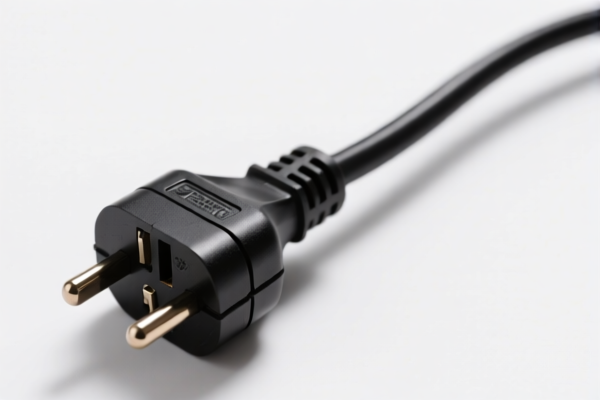
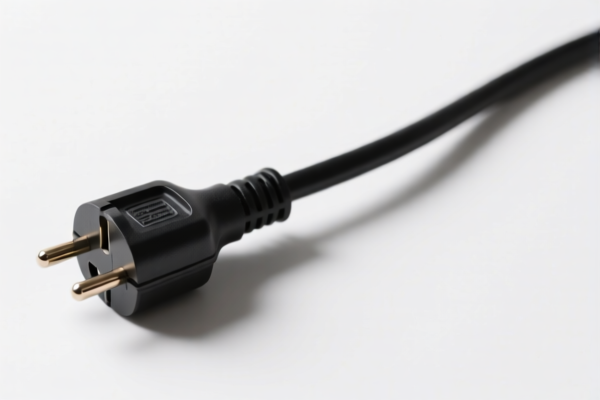
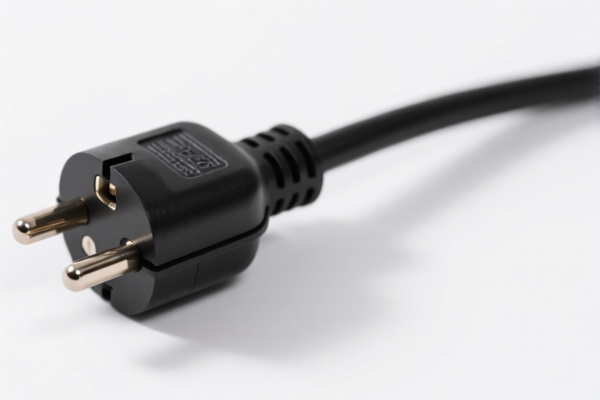
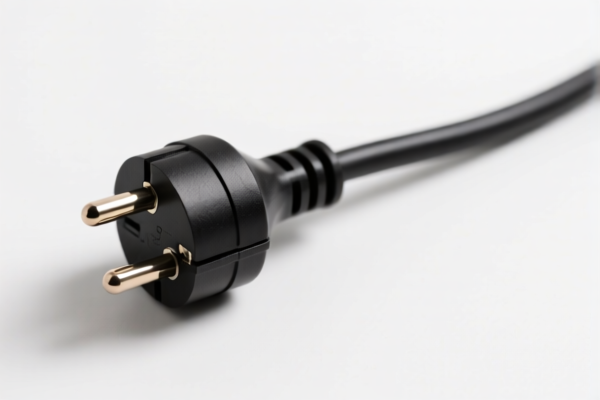
AI Analysis
🔌 Extension Cords (Power Strip & Outlet Extenders)
🌐 HS Code Reference & Customs Clearance Guide | 2026 Latest Tariff Analysis | Professional-Level Compliance Strategy
📌 I. Product Definition & Classification: Do You Really Understand "Extension Cords"?
An extension cord (or power strip/outlet extender) is a flexible electrical cable with connectors at both ends, used to extend the reach of a power outlet. In international trade, classification depends heavily on material composition, specific electrical function, and connection type.
⚠️ Key Distinction Points:
- If it is primarily a simple wire/cable assembly → Classified under 8544 (Insulated Wires/Cables);
- If it includes outlets/sockets/plugs for circuit connection → Classified under 8536 (Electrical Apparatus for Switching/Protecting Circuits);
- If it serves as a generic electrical component without specific switching function → Might fall under 8543 (Other Electrical Machines/Apparatus).
📦 II. HS Code Classification Details (2026 Latest Tariff Authority Comparison)
| HS Code | Product Description | Applicable Scenario | Key Classification Logic |
|---|---|---|---|
8544.42.90.10 |
Extension cables or outlet extenders, as electrical conductors; form and use match; no material conflict. | Simple extension wires, flexible cables with connectors, primarily for conducting electricity. | Primary Material: Conductive wire + insulation. Function: Conduction. |
8536.90.40.00 |
Extension cords, inferred material as wires/conductors, used for connecting circuits, fits the category of electrical connection equipment. | Cords with multiple outlets/plugs designed to bridge circuits. | Function: Circuit connection device. |
8543.90.68.00 |
Extension cords, belonging to electrical connection-type electrical device components, matching the "other categories" fallback principle. | Generic electrical components that don't fit neatly into standard switch/protective categories. | Fallback: General electrical apparatus. |
8543.70.60.00 |
Extension cords, belonging to electrical connection equipment, designed to connect to networks or devices, no material conflict. | Smart extension cords or those with network/interface capabilities. | Special Function: Network/Device connection. |
8536.69.80.00 |
Extension cords, purpose is to connect electrical circuits (outlet/plug type apparatus), material is conductive metal and insulated plastic. | Standard household extension cords with sockets/plugs. | Structure: Sockets/Plugs + Insulation. |
🔍 Important Reminder:
- 8544.42.90.10 is often the most accurate for standard extension cords viewed as conductive assemblies.
- 8536.69.80.00 applies if the item is emphasized as outlets/sockets (switching/protection function).
- Misclassification can lead to significant tariff differences due to the "Section 301" and "122 Clause" additions.
💰 III. 2026 Latest Tariff Rate Breakdown (Including Additional Taxes & Policy Surcharges)
✅ Applicable Country: United States (US)
✅ Origin: China (CN)
✅ Effective Time: Ongoing (as per 2025-2026 trade policies)
🎯 1. 8544.42.90.10 —— Extension Cables/Outlets (Conductive Assemblies)
| Item | Content |
|---|---|
| Base Tariff | 2.6% (ad valorem) |
| Section 301 Surcharge | +25.0% |
| Section 122 Surcharge | +50% (For Steel, Aluminum, Copper Products) |
| Total Tariff | 87.6% |
| Tax Calculation | CIF Value × 87.6% |
| De Minimis Exemption? | ❌ No (Deny De Minimis) |
| Legal Basis Path | Base: 2.6% → Section 301: 25% → 122 Clause (Cu/Al/Steel): 50% |
📌 Explanation:
- This is the highest tax bracket among the options.
- The 50% surcharge under "Section 122" applies if the cord contains copper, aluminum, or steel components (which most do).
- Total 87.6% makes this product extremely costly for US importers from China.
🎯 2. 8536.90.40.00 —— Extension Cords (Electrical Connection Equipment)
| Item | Content |
|---|---|
| Base Tariff | 0.0% |
| Section 301 Surcharge | +25.0% |
| Section 122 Surcharge | +10% |
| Total Tariff | 35.0% |
| Tax Calculation | CIF Value × 35.0% |
| De Minimis Exemption? | ❌ No |
| Legal Basis Path | Base: 0.0% → Section 301: 25% → 122 Clause: 10% |
📌 Note:
- This classification assumes the cord is an electrical connection apparatus but does not trigger the higher 122 Clause rate for metals (perhaps classified differently or exempted in this subheading).
- 35% is significantly lower than 87.6%, making this a preferred classification if justifiable.
🎯 3. 8543.90.68.00 —— Extension Cords (Generic Electrical Components)
| Item | Content |
|---|---|
| Base Tariff | 0.0% |
| Section 301 Surcharge | +25.0% |
| Section 122 Surcharge | +10% |
| Total Tariff | 35.0% |
| Tax Calculation | CIF Value × 35.0% |
| De Minimis Exemption? | ❌ No |
| Legal Basis Path | Base: 0.0% → Section 301: 25% → 122 Clause: 10% |
📌 Note:
- Same rate as8536.90.40.00.
- Used when the product is seen as a generic electrical component rather than a specific switch/outlet.
🎯 4. 8543.70.60.00 —— Extension Cords (Network/Device Connection)
| Item | Content |
|---|---|
| Base Tariff | 0.0% |
| Section 301 Surcharge | +25.0% |
| Section 122 Surcharge | +10% |
| Total Tariff | 35.0% |
| Tax Calculation | CIF Value × 35.0% |
| De Minimis Exemption? | ❌ No |
| Legal Basis Path | Base: 0.0% → Section 301: 25% → 122 Clause: 10% |
📌 Note:
- Applies if the extension cord is designed for network or data-device connection (e.g., smart power strips with USB/data ports).
- 35% total rate.
🎯 5. 8536.69.80.00 —— Extension Cords (Outlets/Plugs, Metal/Plastic)
| Item | Content |
|---|---|
| Base Tariff | 2.7% |
| Section 301 Surcharge | +25.0% |
| Section 122 Surcharge | +10% |
| Total Tariff | 37.7% |
| Tax Calculation | CIF Value × 37.7% |
| De Minimis Exemption? | ❌ No |
| Legal Basis Path | Base: 2.7% → Section 301: 25% → 122 Clause: 10% |
📌 Note:
- Slightly higher than 35% due to a 2.7% base tariff.
- Applies to standard outlet/plug assemblies with conductive metal and insulated plastic.
🛠️ IV. Customs Clearance Practical Advice (Real-World Pitfall Guide)
✅ 1. Preparation Checklist (Essential)
| Material | Required? | Explanation |
|---|---|---|
| ✅ Product Specifications | ✔️ | Include voltage, amperage, wire gauge (AWG), length, connector type. |
| ✅ Circuit Diagram/Structure | ✔️ | To prove whether it is a simple conductor (8544) or a connection device (8536). |
| ✅ Product Photos (Label) | ✔️ | Clear view of model, brand, input/output parameters, certifications. |
| ✅ Third-Party Test Report | ✔️ | UL, CE, RoHS, FCC (if applicable). Crucial for electrical safety. |
| ✅ Commercial Invoice | ✔️ | Must accurately describe the item as "Extension Cord" or "Power Strip." |
| ✅ Certificate of Origin (CO) | ✔️ | Required for tariff determination; if non-China origin, may qualify for exemptions. |
| ✅ Packing List | ✔️ | Detail components (cable, plug, socket) to avoid misclassification. |
✅ 2. Declaration Tips (Key Mnemonics)
🔥 "Wire vs. Socket, Choose Wisely! 8544 is Conductive, 8536 is Switching."
| Scenario | Correct Declaration | Wrong Practice |
|---|---|---|
| Simple extension cord (wire + plug) | 8544.42.90.10 |
Misclassify as 8536 → Potential 35% vs 87.6% risk. |
| Power strip with multiple outlets | 8536.69.80.00 or 8536.90.40.00 |
Misclassify as 8544 → Risk of higher base tax. |
| Smart cord with USB/Network | 8543.70.60.00 |
Misclassify as 8536 → Misses special function classification. |
| All from China | Expect 35%-87.6% Tariff | Assuming 0% duty → Huge Cost Overrun! |
⚠️ Critical Warning:
- 8544.42.90.10 carries a 50% Section 122 surcharge for copper/aluminum products.
- If you can justify classification under 8536.90.40.00 or 8543.90.68.00, you save ~50% in tariffs.
- However, misclassification is risky. Ensure your product description supports the lower-tax HS Code.
✅ 3. Special Case Handling
| Scenario | Handling Advice |
|---|---|
| OEM/Custom Cables | Provide client design specs to justify specific classification. |
| High-Current Industrial Cords | Emphasize "Conductor" aspect (8544) if simple, or "Connection Device" (8536) if complex. |
| Smart Power Strips | Use 8543.70.60.00 if network/device connection is primary feature. |
| Non-Chinese Origin | Apply for IEEPA Exemption if sourced from Vietnam/Mexico/etc. → 0%~5% duty. |
🌍 V. Global Market Comparison (2026 Latest)
| Country/Region | Recommended HS Code | Tariff (China Origin) | Certification | Notes |
|---|---|---|---|---|
| 🇺🇸 USA | 8536.90.40.00 (Preferred) |
35.0% | UL + FCC | Avoid 8544.42.90.10 (87.6%) if possible. |
| 🇨🇳 China | 8544.42.90.10 |
5%-7% | CCC | Lower impact of US surcharges. |
| 🇪🇺 EU | 8536.69.80.00 |
0%-2% | CE + RoHS | No Section 301. |
| 🇬🇧 UK | 8536.69.80.00 |
0%-2% | UKCA + RoHS | Post-Brexit rules apply. |
| 🇯🇵 Japan | 8536.69.80.00 |
0%-3% | PSE | No major surcharges. |
📌 Conclusion:
- USA is the only market with punitive surcharges for Chinese electrical accessories.
- Tariff Arbitrage: Classifying under 8536 or 8543 instead of 8544 can save ~50% in US duties.
- Supply Chain Shift: Consider sourcing from Vietnam, Mexico, or Thailand to avoid Section 301/122 tariffs entirely.
📌 VI. Common Mistakes & Pitfall Guide (Blood-Teaching Lessons)
❌ Mistake 1: Classifying all extension cords as 8544.42.90.10
👉 Consequence: Paying 87.6% tariff due to 50% Section 122 surcharge on copper/aluminum.
👉 Fix: Argue for 8536 (Connection Device) if the cord has multiple outlets/switches.
❌ Mistake 2: Under-declaring value or splitting shipments to avoid de minimis
👉 Consequence: Deny De Minimis applies anyway. Seizure, fines, and delays.
👉 Fix: Properly declare and plan for 35-87% tariffs.
❌ Mistake 3: Ignoring Section 122 Classification
👉 Consequence: Unexpected 50% surcharge on conductive materials.
👉 Fix: Analyze material composition. If primarily copper, expect higher tax under 8544.
❌ Mistake 4: Using "Extension Cord" generically without HS Code specificity
👉 Consequence: Customs officer discretion may lead to highest possible rate.
👉 Fix: Use precise descriptions: "Power Strip, 6 Outlets, 15A, UL Listed, Model XYZ."
✅ Correct Approach:
"Power Strip, 6 Outlets, 15A, 10FT, UL Listed, Model XYZ, Designed for Home Office Use"
🎯 VII. Conclusion: Precise Classification Saves Money!
🎯 Remember the Mnemonic:
🔹 "8544 = 87.6% (Ouch!), 8536/8543 = 35% (Better)."
🔹 "If it's a simple wire, 8544 is right. If it's a socket, 8536 is light."
🔹 "Think twice before importing from China, or move supply chain!"
📌 Pro Tip:
If your extension cords are sourced from Vietnam, Mexico, Thailand, or Malaysia, apply for IEEPA Exemption → 0%~5% duty.
Strongly recommend applying for an Advance Ruling from US Customs to secure the lower 35% rate under8536.90.40.00or8543.90.68.00.
📣 Take Action Now:
📞 Contact a Professional Customs Broker + Provide Product Specs + Apply for HS Code Advance Ruling
🚀 Let your extension cords clear smoothly, minimize costs, and maximize profits!
✨ Professional Clearance Starts with Accurate Classification!
💼 Every Cent Saved is Profit Gained!
Customer Reviews
About HS Code Classification
The Harmonized System (HS) is an internationally standardized nomenclature developed by the World Customs Organization (WCO) to classify traded products. Over 200 countries use the HS system as the basis for customs tariffs, trade statistics, and import/export regulations.
Each HS code follows a hierarchical structure:
- Chapter (2 digits) — Broad category of goods (e.g., Chapter 84: Machinery and Mechanical Appliances)
- Heading (4 digits) — More specific grouping within the chapter
- Subheading (6 digits) — Internationally standardized breakdown, used by all WCO member countries
- National subdivisions (8-10 digits) — Country-specific extensions for further classification, such as US HTSUS 10-digit codes
Correct HS code classification is essential for smooth customs clearance, accurate duty payment, and compliance with trade regulations. Misclassification can lead to customs delays, overpayment of duties, or penalties.
When importing from CN to US, the applicable tariff rates may include:
- Most-Favored-Nation (MFN) rate — The standard duty rate applied to WTO members
- General rate — Applied to countries without trade agreements
- Trade remedy duties — Additional tariffs such as Section 301 (anti-dumping), Section 232 (national security), or countervailing duties
The information provided on this page is for reference purposes only. For official classification, please consult with your local customs authority or a licensed customs broker.