Extreme Pressure Anti wear Lubricant Additive
CN → US| HS编码 | 关税税率 | 原产国 | 目的国 | 文档 |
|---|---|---|---|---|
| 3811210000 | 41.5% | CN | US | 官方文档 |
| 3403191000 | 35.2% | CN | US | 官方文档 |
| 3811290000 | 41.5% | CN | US | 官方文档 |
| 3403112000 | 35.2% | CN | US | 官方文档 |
商品图片
AI分析
⛽ Extreme Pressure Anti-Wear Lubricant Additive
🌐 HS Code Reference & Customs Clearance Guide | 2026 Latest Tariff Analysis | Professional Entry Strategy
📌 I. Product Definition & Classification: What Exactly Is This Product?
Extreme Pressure (EP) Anti-Wear Lubricant Additive refers to a concentrated chemical compound designed to be added to base oils or lubricants. Its primary functions are: 1. Extreme Pressure (EP) Protection: Prevents welding and severe wear under high-load conditions (e.g., gears, heavy machinery). 2. Anti-Wear (AW) Protection: Reduces friction and wear under moderate loads.
In international trade, these additives are primarily classified under Chapter 38 (Miscellaneous Chemical Products) or Chapter 34 (Soap, Organic Surface-Active Agents, Washing Preparations, Lubricating Preparations). The specific HS Code depends on whether the product is viewed as a "prepared lubricant" or a "chemical additive" for lubricants.
⚠️ Key Distinction Point:
- If the product is explicitly a "preparation" for lubricating or treating materials, it often falls under 3403.
- If the product is considered a "chemical additive" or "mixing agent" for lubricants, it often falls under 3811.
- Crucial Note: The presence of petroleum distillates vs. pure chemical compounds can influence classification between 3403 and 3811.
📦 II. HS Code Classification Details (2026 Latest Tariff Authority Comparison)
| HS Code | Product Description | Application Scenario | Primary Function |
|---|---|---|---|
3811.21.00.00 |
Anti-knock preparations and other prepared additives for internal combustion engines or other spark-ignition or compression-ignition engines | Additives for engine oils, gear oils, where the focus is on performance enhancement including EP/AW | ✅ EP & AW additives for engines |
3811.29.00.00 |
Other anti-knock preparations and other prepared additives for internal combustion engines | General purpose lubricant additives not specifically for engines (e.g., industrial gear oils) | ✅ General EP/AW additives |
3403.11.20.00 |
Preparations for treating textile materials, leather, furskins, rubber or plastics, containing ≥70% by weight of petroleum oils or oils obtained from bituminous minerals | Lubricant additives where the base is predominantly petroleum-based, used in textile/industrial processing | ✅ Petroleum-based lubricant prep |
3403.19.10.00 |
Other lubricating preparations containing ≥70% by weight of petroleum oils or oils obtained from bituminous minerals | General industrial lubricants/additives with high petroleum content | ✅ Petroleum-based lubricant prep |
🔍 Key Reminder:
- Chapter 3811 is typically preferred for pure chemical additives (like zinc dialkyldithiophosphate, molybdenum disulfide concentrates) regardless of the base oil.
- Chapter 3403 is often used for finished lubricating preparations or mixtures where petroleum oil is the primary carrier/component.
- Misclassification Risk: Declaring a chemical additive as a "lubricant preparation" (3403) when it is technically an "additive" (3811) can lead to customs queries, though the tariff impact may be similar due to trade wars.
💰 III. 2026 Latest Tariff Rate Breakdown (Including Surcharges & Policy Add-ons)
✅ Applicable Country: United States (US)
✅ Origin: China (CN)
✅ Effective Date: From November 10, 2025 onwards (including subsequent imports)
🎯 1. 3811.21.00.00 —— Prepared Additives for Spark-Ignition Engines (EP/AW)
| Item | Content |
|---|---|
| Basic Tariff Rate | 6.5% (ad valorem) |
| USITC Surcharge | +25.0% (Under USITC Footnote 9903.88.01 / Section 301) |
| IEEPA Surcharge | +10.0% (Targeting China/HK products, effective Nov 10, 2025) |
| Total Tax Rate | 41.5% |
| Tax Calculation | CIF Value × 41.5% |
| De Minimis Exemption? | ❌ Not Eligible (deny_de_minimis) |
| Legal Basis Path | IEEPA:9903.01.25 → IEEPA:9903.01.24 → USITC:3811.21.00.00 → FOOTNOTE:9903.88.01 |
📌 Explanation:
- The 25% Section 301 tariff is a standard punitive tariff on many Chinese chemical products.
- The 10% IEEPA tariff is a new layer added specifically targeting Chinese imports effective late 2025.
- Combined Rate of 41.5% is extremely high. This significantly impacts profit margins for chemical exporters.
🎯 2. 3811.29.00.00 —— Other Prepared Additives (General EP/AW)
| Item | Content |
|---|---|
| Basic Tariff Rate | 6.5% |
| USITC Surcharge | +25.0% |
| IEEPA Surcharge | +10.0% |
| Total Tax Rate | 41.5% |
| Tax Calculation | CIF Value × 41.5% |
| De Minimis Exemption? | ❌ Not Eligible |
| Legal Basis Path | Same as above |
📌 Note:
- Even if the additive is not strictly for "engines" (e.g., for industrial gears), it falls under the same high-tax bracket if classified under 3811.29.
- The tax burden is identical to 3811.21.00.
🎯 3. 3403.11.20.00 —— Lubricating Preparations (Petroleum-based, Textile/Industrial)
| Item | Content |
|---|---|
| Basic Tariff Rate | 0.2% |
| USITC Surcharge | +25.0% |
| IEEPA Surcharge | +10.0% |
| Total Tax Rate | 35.2% |
| Tax Calculation | CIF Value × 35.2% |
| De Minimis Exemption? | ❌ Not Eligible |
| Legal Basis Path | IEEPA:9903.01.25 → IEEPA:9903.01.24 → USITC:3403.11.20.00 → FOOTNOTE:9903.88.01 |
📌 Note:
- This code has a very low basic tariff (0.2%), but still bears the 35% surcharges.
- Total rate is 35.2%, which is 6.3% lower than the 3811 classification.
- Risk: Customs may challenge this classification if the product is a "pure additive" rather than a "lubricating preparation." Misclassification penalties can be severe.
🎯 4. 3403.19.10.00 —— Other Lubricating Preparations (Petroleum-based)
| Item | Content |
|---|---|
| Basic Tariff Rate | 0.2% |
| USITC Surcharge | +25.0% |
| > IEEPA Surcharge | +10.0% |
| Total Tax Rate | 35.2% |
| Tax Calculation | CIF Value × 35.2% |
| De Minimis Exemption? | ❌ Not Eligible |
| Legal Basis Path | IEEPA:9903.01.25 → IEEPA:9903.01.24 → USITC:3403.19.10.00 → FOOTNOTE:9903.88.01 |
📌 Note:
- Similar to 3403.11.20.00, this is for general petroleum-based lubricants/additives.
- Total Rate: 35.2%.
- Caution: This classification requires the product to be a "preparation" with significant petroleum content. If it's a concentrate powder or non-petroleum base, this code is invalid.
🛠️ IV. Customs Clearance Practical Advice (Battle-Tested Pitfall Guide)
✅ 1. Required Documentation Checklist (Non-negotiable)
| Document | Required? | Explanation |
|---|---|---|
| ✅ Product Specification Sheet | ✔️ | Must detail chemical composition, function (EP/AW), and usage. |
| ✅ Safety Data Sheet (SDS) | ✔️ | Critical for classification. Shows if it's hazardous, petroleum-based, or pure chemical. |
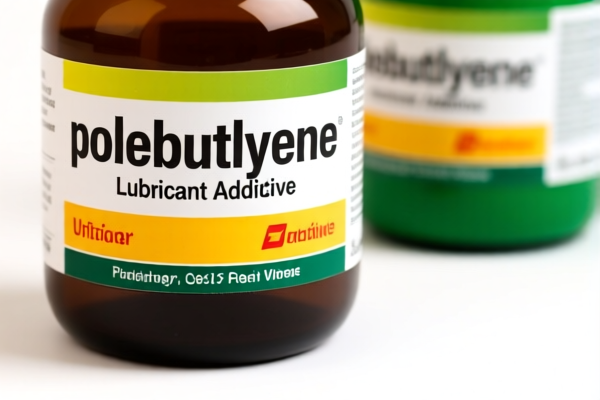
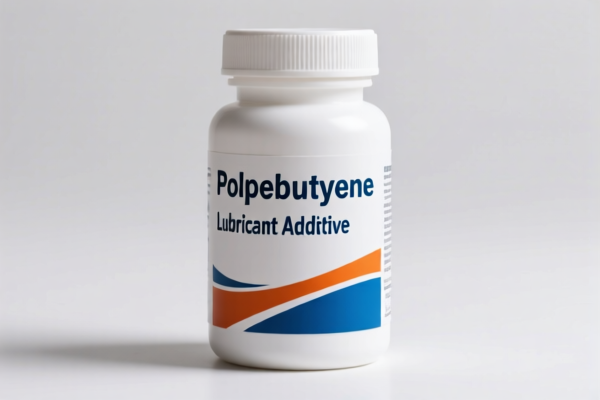
| ✅ Product Photos (Label & Container) | ✔️ | Clear view of ingredients, warnings, and manufacturer info. |
| ✅ Certificate of Origin (CO) | ✔️ | To prove China origin (if applicable) for tariff calculation. |
| ✅ Commercial Invoice | ✔️ | Must clearly state "Lubricant Additive" or "Prepared Lubricant," not vague terms like "Chemical." |
| ✅ Packing List | ✔️ | Net/Gross weight, dimensions. |
| ✅ Third-Party Test Report | ✔️ | Proof of EP/AW performance (e.g., ASTM D4172, D2783). |
✅ 2. Declaration Tips (Critical Mnemonics)
🔥 "Know Your Base, Know Your Function, Avoid 'Chemical' Ambiguity!"
| Scenario | Correct Declaration | Wrong Practice |
|---|---|---|
| Pure Chemical Additive (e.g., ZDDP concentrate) | 3811.21.00.00 or 3811.29.00.00Desc: "Chemical Additive for Lubricants" |
Misdeclare as "Lubricant" → 3403.00 (Lower risk of penalty, but wrong) |
| Petroleum-Based Lubricant Mix | 3403.11.20.00 or 3403.19.10.00Desc: "Prepared Lubricating Preparation" |
Declare as "Additive" → 3811.00 (Higher tax, potential audit) |
| Vague Name ("Lube Oil Additive") | Never use. Use specific functional description. | Vague description → Customs Query, Delay, or Rejection |
| OEM Custom Blend | Provide Formula/Composition Summary | No formula → Customs assumes worst-case classification |
✅ 3. Special Situation Handling
| Situation | Handling Advice |
|---|---|
| Is it a "Preparation" or an "Additive"? | If it's >70% petroleum oil, lean towards 3403. If it's a chemical concentrate (<70% oil or oil-free), lean towards 3811. |
| Can I use De Minimis (Section 321)? | ❌ NO. All these codes are subject to IEEPA/301 surcharges, which explicitly deny de minimis exemptions for Chinese goods. |
| High Tax Impact (35-41%) | Consider HTSUS Advanced Rulings before shipping. Or, explore if the product can be classified under a non-surveyed country (e.g., Vietnam, Malaysia) if re-exported, though "Substantial Transformation" rules are strict. |
| Petroleum Content < 70% | If your additive is water-based or synthetic with <70% petroleum, 3403 is invalid. Use 3811 to avoid fraud accusations. |
🌍 V. Global Market Comparison (2026 Latest)
| Country/Region | Recommended HS Code | Total Tariff (China Origin) | Certification Req. | Notes |
|---|---|---|---|---|
| 🇺🇸 USA | 3811.21.00.00 / 3403.19.10.00 |
35.2% - 41.5% | SDS, TSCA Compliance | Highest burden due to 301/IEEPA. |
| 🇨🇳 China | 3811.21.00.00 / 3403.19.10.00 |
6.5% - 0.2% | REACH (if exported to EU) | No surcharges for domestic trade. |
| 🇪🇺 EU | 3811.21.00 / 3403.10 |
~2.5% - 6.5% | REACH, CLP | No anti-dumping surcharges for this category. |
| 🇨🇦 Canada | 3811.21.00 / 3403.10 |
~5% | SDS, WHMIS | Lower tariffs, but strict SDS requirements. |
| 🇦🇺 Australia | 3811.21.00 / 3403.10 |
~5% | ACSG | Moderate tariffs, no US-style surcharges. |
📌 Conclusion:
- The US market is uniquely expensive for Chinese lubricant additives due to 301 & IEEPA tariffs.
- EU/Canada/Australia offer much better tariff rates (~2.5-6.5%).
- If targeting the US, cost optimization or supply chain diversification is critical.
📌 VI. Common Mistakes & Pitfall Guide (Lessons from the Field)
❌ Mistake 1: Declaring "Lubricant Additive" without specifying if it's petroleum-based.
👉 Consequence: Customs may default to the higher-tax 3811 code if petroleum content is unclear, or demand additional docs causing delays.
❌ Mistake 2: Assuming "De Minimis" applies because it's a small bottle.
👉 Consequence: Shipment seized or returned. IEEPA/301 surcharges apply to all values, regardless of size.
❌ Mistake 3: Using "Chemical" as the only description.
👉 Consequence: Customs may classify under a random chemical code with higher duties or require a full formula disclosure.
❌ Mistake 4: Misclassifying a 100% chemical additive as a "Petroleum Lubricant" (3403).
👉 Consequence: Fraud penalty. If petroleum content is <70%, 3403 is illegal. Stick to 3811.
✅ Correct Approach:
"Extreme Pressure Anti-Wear Lubricant Additive, Concentrate, Chemical Base (Non-Petroleum), for Industrial Gears, Model XYZ, SDS Attached"
🎯 VII. Conclusion: Professional Declaration, Save Time & Money!
🎯 Remember the Mantras:
🔹 "Petroleum >70%? Think 3403. Pure Chemical? Think 3811."
🔹 "US Market: 35-41% Tax. No De Minimis. Plan Ahead!"
🔹 "Vague Description = Customs Nightmare."
📌 Pro Tip:
If your product is re-packaged or blended in Vietnam/Malaysia, you might qualify for origin benefits, but you must meet substantial transformation criteria (not just simple blending). Consult a local customs broker for Advanced Ruling before shipping to the US.
📣 Immediate Action:
📞 Contact a licensed US customs broker.
📄 Prepare a detailed Technical Data Sheet (TDS) and SDS.
🚀 Verify your HS Code with an Advance Ruling to avoid surprise tariffs at the port.
✨ Professional Clearance Starts with Precise Classification!
💼 Your every dollar in tariffs is worth calculating correctly!
用户评价
关于 HS 编码归类
协调制度(HS)是由世界海关组织(WCO)制定的国际贸易商品分类标准。全球 200 多个国家采用 HS 系统作为海关关税、贸易统计和进出口监管的基础。
每个 HS 编码遵循以下层级结构:
- 章(2 位)——商品大类(例如:第 84 章:机器和机械设备)
- 品目(4 位)——章内的更具体分类
- 子目(6 位)——国际通用细分,所有 WCO 成员国统一使用
- 本国细分(8-10 位)——各国自行扩展的细分编码,如美国 HTSUS 10 位编码
正确的 HS 编码归类对于顺利通关、准确缴纳关税和遵守贸易法规至关重要。错误归类可能导致海关延误、多缴关税或罚款。
从CN进口到US时,适用的关税税率可能包括:
- 最惠国(MFN)税率——适用于 WTO 成员国的标准关税税率
- 普通税率——适用于无贸易协定国家
- 贸易救济关税——附加关税,如 301 条款(反倾销)、232 条款(国家安全)或反补贴税
本页内容仅供参考。如需正式归类,请咨询当地海关或持牌报关代理。