Extreme Pressure Anti wear Lubricant Additive
CN → US| HS Code | Tariff Rate | Origin | Destination | Doc |
|---|---|---|---|---|
| 3811210000 | 41.5% | CN | US | Official Doc |
| 3403191000 | 35.2% | CN | US | Official Doc |
| 3811290000 | 41.5% | CN | US | Official Doc |
| 3403112000 | 35.2% | CN | US | Official Doc |
Product Images
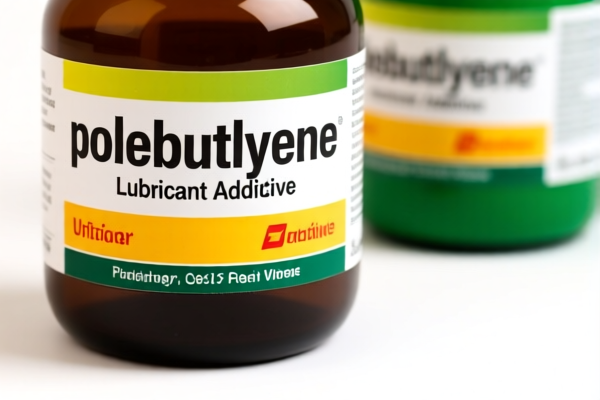
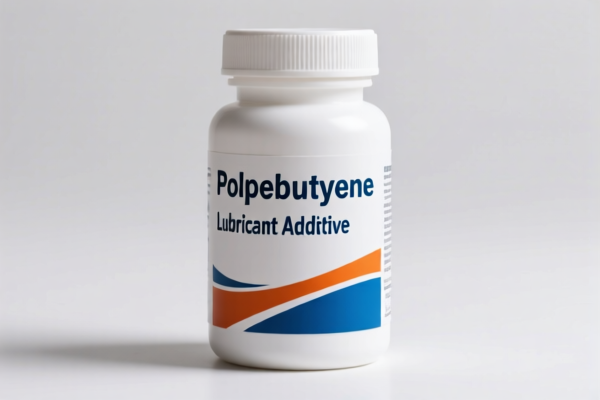
AI Analysis
⛽ Extreme Pressure Anti-Wear Lubricant Additive
🌐 HS Code Reference & Customs Clearance Guide | 2026 Latest Tariff Analysis | Professional Entry Strategy
📌 I. Product Definition & Classification: What Exactly Is This Product?
Extreme Pressure (EP) Anti-Wear Lubricant Additive refers to a concentrated chemical compound designed to be added to base oils or lubricants. Its primary functions are: 1. Extreme Pressure (EP) Protection: Prevents welding and severe wear under high-load conditions (e.g., gears, heavy machinery). 2. Anti-Wear (AW) Protection: Reduces friction and wear under moderate loads.
In international trade, these additives are primarily classified under Chapter 38 (Miscellaneous Chemical Products) or Chapter 34 (Soap, Organic Surface-Active Agents, Washing Preparations, Lubricating Preparations). The specific HS Code depends on whether the product is viewed as a "prepared lubricant" or a "chemical additive" for lubricants.
⚠️ Key Distinction Point:
- If the product is explicitly a "preparation" for lubricating or treating materials, it often falls under 3403.
- If the product is considered a "chemical additive" or "mixing agent" for lubricants, it often falls under 3811.
- Crucial Note: The presence of petroleum distillates vs. pure chemical compounds can influence classification between 3403 and 3811.
📦 II. HS Code Classification Details (2026 Latest Tariff Authority Comparison)
| HS Code | Product Description | Application Scenario | Primary Function |
|---|---|---|---|
3811.21.00.00 |
Anti-knock preparations and other prepared additives for internal combustion engines or other spark-ignition or compression-ignition engines | Additives for engine oils, gear oils, where the focus is on performance enhancement including EP/AW | ✅ EP & AW additives for engines |
3811.29.00.00 |
Other anti-knock preparations and other prepared additives for internal combustion engines | General purpose lubricant additives not specifically for engines (e.g., industrial gear oils) | ✅ General EP/AW additives |
3403.11.20.00 |
Preparations for treating textile materials, leather, furskins, rubber or plastics, containing ≥70% by weight of petroleum oils or oils obtained from bituminous minerals | Lubricant additives where the base is predominantly petroleum-based, used in textile/industrial processing | ✅ Petroleum-based lubricant prep |
3403.19.10.00 |
Other lubricating preparations containing ≥70% by weight of petroleum oils or oils obtained from bituminous minerals | General industrial lubricants/additives with high petroleum content | ✅ Petroleum-based lubricant prep |
🔍 Key Reminder:
- Chapter 3811 is typically preferred for pure chemical additives (like zinc dialkyldithiophosphate, molybdenum disulfide concentrates) regardless of the base oil.
- Chapter 3403 is often used for finished lubricating preparations or mixtures where petroleum oil is the primary carrier/component.
- Misclassification Risk: Declaring a chemical additive as a "lubricant preparation" (3403) when it is technically an "additive" (3811) can lead to customs queries, though the tariff impact may be similar due to trade wars.
💰 III. 2026 Latest Tariff Rate Breakdown (Including Surcharges & Policy Add-ons)
✅ Applicable Country: United States (US)
✅ Origin: China (CN)
✅ Effective Date: From November 10, 2025 onwards (including subsequent imports)
🎯 1. 3811.21.00.00 —— Prepared Additives for Spark-Ignition Engines (EP/AW)
| Item | Content |
|---|---|
| Basic Tariff Rate | 6.5% (ad valorem) |
| USITC Surcharge | +25.0% (Under USITC Footnote 9903.88.01 / Section 301) |
| IEEPA Surcharge | +10.0% (Targeting China/HK products, effective Nov 10, 2025) |
| Total Tax Rate | 41.5% |
| Tax Calculation | CIF Value × 41.5% |
| De Minimis Exemption? | ❌ Not Eligible (deny_de_minimis) |
| Legal Basis Path | IEEPA:9903.01.25 → IEEPA:9903.01.24 → USITC:3811.21.00.00 → FOOTNOTE:9903.88.01 |
📌 Explanation:
- The 25% Section 301 tariff is a standard punitive tariff on many Chinese chemical products.
- The 10% IEEPA tariff is a new layer added specifically targeting Chinese imports effective late 2025.
- Combined Rate of 41.5% is extremely high. This significantly impacts profit margins for chemical exporters.
🎯 2. 3811.29.00.00 —— Other Prepared Additives (General EP/AW)
| Item | Content |
|---|---|
| Basic Tariff Rate | 6.5% |
| USITC Surcharge | +25.0% |
| IEEPA Surcharge | +10.0% |
| Total Tax Rate | 41.5% |
| Tax Calculation | CIF Value × 41.5% |
| De Minimis Exemption? | ❌ Not Eligible |
| Legal Basis Path | Same as above |
📌 Note:
- Even if the additive is not strictly for "engines" (e.g., for industrial gears), it falls under the same high-tax bracket if classified under 3811.29.
- The tax burden is identical to 3811.21.00.
🎯 3. 3403.11.20.00 —— Lubricating Preparations (Petroleum-based, Textile/Industrial)
| Item | Content |
|---|---|
| Basic Tariff Rate | 0.2% |
| USITC Surcharge | +25.0% |
| IEEPA Surcharge | +10.0% |
| Total Tax Rate | 35.2% |
| Tax Calculation | CIF Value × 35.2% |
| De Minimis Exemption? | ❌ Not Eligible |
| Legal Basis Path | IEEPA:9903.01.25 → IEEPA:9903.01.24 → USITC:3403.11.20.00 → FOOTNOTE:9903.88.01 |
📌 Note:
- This code has a very low basic tariff (0.2%), but still bears the 35% surcharges.
- Total rate is 35.2%, which is 6.3% lower than the 3811 classification.
- Risk: Customs may challenge this classification if the product is a "pure additive" rather than a "lubricating preparation." Misclassification penalties can be severe.
🎯 4. 3403.19.10.00 —— Other Lubricating Preparations (Petroleum-based)
| Item | Content |
|---|---|
| Basic Tariff Rate | 0.2% |
| USITC Surcharge | +25.0% |
| > IEEPA Surcharge | +10.0% |
| Total Tax Rate | 35.2% |
| Tax Calculation | CIF Value × 35.2% |
| De Minimis Exemption? | ❌ Not Eligible |
| Legal Basis Path | IEEPA:9903.01.25 → IEEPA:9903.01.24 → USITC:3403.19.10.00 → FOOTNOTE:9903.88.01 |
📌 Note:
- Similar to 3403.11.20.00, this is for general petroleum-based lubricants/additives.
- Total Rate: 35.2%.
- Caution: This classification requires the product to be a "preparation" with significant petroleum content. If it's a concentrate powder or non-petroleum base, this code is invalid.
🛠️ IV. Customs Clearance Practical Advice (Battle-Tested Pitfall Guide)
✅ 1. Required Documentation Checklist (Non-negotiable)
| Document | Required? | Explanation |
|---|---|---|
| ✅ Product Specification Sheet | ✔️ | Must detail chemical composition, function (EP/AW), and usage. |
| ✅ Safety Data Sheet (SDS) | ✔️ | Critical for classification. Shows if it's hazardous, petroleum-based, or pure chemical. |
| ✅ Product Photos (Label & Container) | ✔️ | Clear view of ingredients, warnings, and manufacturer info. |
| ✅ Certificate of Origin (CO) | ✔️ | To prove China origin (if applicable) for tariff calculation. |
| ✅ Commercial Invoice | ✔️ | Must clearly state "Lubricant Additive" or "Prepared Lubricant," not vague terms like "Chemical." |
| ✅ Packing List | ✔️ | Net/Gross weight, dimensions. |
| ✅ Third-Party Test Report | ✔️ | Proof of EP/AW performance (e.g., ASTM D4172, D2783). |
✅ 2. Declaration Tips (Critical Mnemonics)
🔥 "Know Your Base, Know Your Function, Avoid 'Chemical' Ambiguity!"
| Scenario | Correct Declaration | Wrong Practice |
|---|---|---|
| Pure Chemical Additive (e.g., ZDDP concentrate) | 3811.21.00.00 or 3811.29.00.00Desc: "Chemical Additive for Lubricants" |
Misdeclare as "Lubricant" → 3403.00 (Lower risk of penalty, but wrong) |
| Petroleum-Based Lubricant Mix | 3403.11.20.00 or 3403.19.10.00Desc: "Prepared Lubricating Preparation" |
Declare as "Additive" → 3811.00 (Higher tax, potential audit) |
| Vague Name ("Lube Oil Additive") | Never use. Use specific functional description. | Vague description → Customs Query, Delay, or Rejection |
| OEM Custom Blend | Provide Formula/Composition Summary | No formula → Customs assumes worst-case classification |
✅ 3. Special Situation Handling
| Situation | Handling Advice |
|---|---|
| Is it a "Preparation" or an "Additive"? | If it's >70% petroleum oil, lean towards 3403. If it's a chemical concentrate (<70% oil or oil-free), lean towards 3811. |
| Can I use De Minimis (Section 321)? | ❌ NO. All these codes are subject to IEEPA/301 surcharges, which explicitly deny de minimis exemptions for Chinese goods. |
| High Tax Impact (35-41%) | Consider HTSUS Advanced Rulings before shipping. Or, explore if the product can be classified under a non-surveyed country (e.g., Vietnam, Malaysia) if re-exported, though "Substantial Transformation" rules are strict. |
| Petroleum Content < 70% | If your additive is water-based or synthetic with <70% petroleum, 3403 is invalid. Use 3811 to avoid fraud accusations. |
🌍 V. Global Market Comparison (2026 Latest)
| Country/Region | Recommended HS Code | Total Tariff (China Origin) | Certification Req. | Notes |
|---|---|---|---|---|
| 🇺🇸 USA | 3811.21.00.00 / 3403.19.10.00 |
35.2% - 41.5% | SDS, TSCA Compliance | Highest burden due to 301/IEEPA. |
| 🇨🇳 China | 3811.21.00.00 / 3403.19.10.00 |
6.5% - 0.2% | REACH (if exported to EU) | No surcharges for domestic trade. |
| 🇪🇺 EU | 3811.21.00 / 3403.10 |
~2.5% - 6.5% | REACH, CLP | No anti-dumping surcharges for this category. |
| 🇨🇦 Canada | 3811.21.00 / 3403.10 |
~5% | SDS, WHMIS | Lower tariffs, but strict SDS requirements. |
| 🇦🇺 Australia | 3811.21.00 / 3403.10 |
~5% | ACSG | Moderate tariffs, no US-style surcharges. |
📌 Conclusion:
- The US market is uniquely expensive for Chinese lubricant additives due to 301 & IEEPA tariffs.
- EU/Canada/Australia offer much better tariff rates (~2.5-6.5%).
- If targeting the US, cost optimization or supply chain diversification is critical.
📌 VI. Common Mistakes & Pitfall Guide (Lessons from the Field)
❌ Mistake 1: Declaring "Lubricant Additive" without specifying if it's petroleum-based.
👉 Consequence: Customs may default to the higher-tax 3811 code if petroleum content is unclear, or demand additional docs causing delays.
❌ Mistake 2: Assuming "De Minimis" applies because it's a small bottle.
👉 Consequence: Shipment seized or returned. IEEPA/301 surcharges apply to all values, regardless of size.
❌ Mistake 3: Using "Chemical" as the only description.
👉 Consequence: Customs may classify under a random chemical code with higher duties or require a full formula disclosure.
❌ Mistake 4: Misclassifying a 100% chemical additive as a "Petroleum Lubricant" (3403).
👉 Consequence: Fraud penalty. If petroleum content is <70%, 3403 is illegal. Stick to 3811.
✅ Correct Approach:
"Extreme Pressure Anti-Wear Lubricant Additive, Concentrate, Chemical Base (Non-Petroleum), for Industrial Gears, Model XYZ, SDS Attached"
🎯 VII. Conclusion: Professional Declaration, Save Time & Money!
🎯 Remember the Mantras:
🔹 "Petroleum >70%? Think 3403. Pure Chemical? Think 3811."
🔹 "US Market: 35-41% Tax. No De Minimis. Plan Ahead!"
🔹 "Vague Description = Customs Nightmare."
📌 Pro Tip:
If your product is re-packaged or blended in Vietnam/Malaysia, you might qualify for origin benefits, but you must meet substantial transformation criteria (not just simple blending). Consult a local customs broker for Advanced Ruling before shipping to the US.
📣 Immediate Action:
📞 Contact a licensed US customs broker.
📄 Prepare a detailed Technical Data Sheet (TDS) and SDS.
🚀 Verify your HS Code with an Advance Ruling to avoid surprise tariffs at the port.
✨ Professional Clearance Starts with Precise Classification!
💼 Your every dollar in tariffs is worth calculating correctly!
Customer Reviews
About HS Code Classification
The Harmonized System (HS) is an internationally standardized nomenclature developed by the World Customs Organization (WCO) to classify traded products. Over 200 countries use the HS system as the basis for customs tariffs, trade statistics, and import/export regulations.
Each HS code follows a hierarchical structure:
- Chapter (2 digits) — Broad category of goods (e.g., Chapter 84: Machinery and Mechanical Appliances)
- Heading (4 digits) — More specific grouping within the chapter
- Subheading (6 digits) — Internationally standardized breakdown, used by all WCO member countries
- National subdivisions (8-10 digits) — Country-specific extensions for further classification, such as US HTSUS 10-digit codes
Correct HS code classification is essential for smooth customs clearance, accurate duty payment, and compliance with trade regulations. Misclassification can lead to customs delays, overpayment of duties, or penalties.
When importing from CN to US, the applicable tariff rates may include:
- Most-Favored-Nation (MFN) rate — The standard duty rate applied to WTO members
- General rate — Applied to countries without trade agreements
- Trade remedy duties — Additional tariffs such as Section 301 (anti-dumping), Section 232 (national security), or countervailing duties
The information provided on this page is for reference purposes only. For official classification, please consult with your local customs authority or a licensed customs broker.