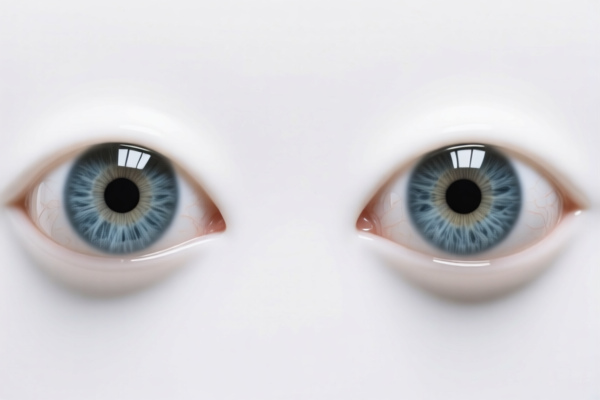
Eye Simulation Toy
CN → US| HS编码 | 关税税率 | 原产国 | 目的国 | 文档 |
|---|---|---|---|---|
| 9503000073 | 10.0% | CN | US | 官方文档 |
| 9503000071 | 10.0% | CN | US | 官方文档 |
| 3926400090 | 15.3% | CN | US | 官方文档 |
| 3926909989 | 22.8% | CN | US | 官方文档 |
| 9018902000 | 35.0% | CN | US | 官方文档 |
商品图片


AI分析
👁️ Eye Simulation Toy (Simulated Eye Props)
🌐 HS Code Reference & Customs Clearance Guide | 2026 Latest Tariff Analysis | Professional通关 Strategy
📌 Part 1: Product Definition & Classification – What Exactly is an "Eye Simulation Toy"?
An Eye Simulation Toy typically refers to realistic-looking artificial eyes used for medical training, theatrical makeup, Halloween costumes, or collectible items. In international trade, the classification hinges on material, function, and intended use.
Key distinctions: * As a Toy/Model: If marketed as a prop, costume accessory, or children's toy, it falls under Chapter 95. * As a Plastic Article: If made of plastic and deemed a "general article," it falls under Chapter 39. * As a Medical/Optical Device: If intended for medical training or optical demonstration, it may fall under Chapter 90.
⚠️ Critical Distinction:
- If it is explicitly sold as a "toy" or "model", it usually avoids high "plastic article" tariffs but may still face specific US trade restrictions.
- If the material is plastic/resin and it is not clearly a toy, customs may classify it as a "plastic ornament" or "other plastic article," triggering different tax bases.
- Visual/Optical Use: If intended for optical training, it might be misclassified under optical instruments, leading to significantly higher duties.
📦 Part 2: HS Code Classification Details (2026 Latest Tariff Authority Comparison)
| HS Code | Product Description | Applicable Scenario | Material Inference | Total Tax Rate (US/China) |
|---|---|---|---|---|
9503.00.00.73 |
Toys (Catch-all): Other toys, including simulated animals/plants, classified under the "other" residual category. | General simulation toys, costume props, Halloween items. | Plastic or Rubber | 10.0% |
9503.00.00.71 |
Models/Entertainment Toys: Toys specifically resembling realistic forms (like eyeballs), with no material conflict. | Realistic eye models for entertainment, props, or collectors. | Plastic or Rubber | 10.0% |
3926.40.00.90 |
Plastic Ornaments: Plastic decorative items, fitting the realistic appearance and toy-like material. | Decorative eyes, resin crafts, non-toy decorative replicas. | Plastic | 15.3% |
3926.90.99.89 |
Other Plastic Articles: Other plastic products, fitting common simulation toy materials. | General plastic simulation items not classified as ornaments. | Plastic | 22.8% |
9018.90.20.00 |
Optical Devices: Extended optical appliances, based on visual display purpose and plastic/resin material. | Medical training eyes, optical demonstration tools. | Plastic or Resin | 35.0% |
🔍 Key Insight:
- Chapters 95 (Toys) offer the lowest tax rate (10%).
- Chapter 39 (Plastics) ranges from 15.3% to 22.8%, depending on whether it's an "ornament" or "other."
- Chapter 90 (Optical) carries the highest burden (35.0%) due to Section 301 (25%) + IEEPA (10%) + base tariffs.
- Misclassification Risk: Declaring a "toy" as an "optical device" will triple your duty costs. Conversely, declaring a "medical device" as a "toy" may lead to compliance issues.
💰 Part 3: 2026 Latest Tariff Rate Breakdown (Including Surcharges & Policy Add-ons)
✅ Applicable Country: United States (US)
✅ Origin: China (CN)
✅ Effective Time: 2025/2026 (Current Trade Policy)
🎯 1. 9503.00.00.73 & 9503.00.00.71 —— Toys / Models (Recommended)
| Item | Detail |
|---|---|
| Base Tariff | 0.0% (ad valorem) |
| USITC Surcharge (Section 301) | 0.0% (Many toys under 9503 are exempt or have lower rates, but see below) |
| IEEPA Surcharge (Section 122/EO) | +10.0% (Targeting Chinese products) |
| Total Tax Rate | 10.0% |
| Tax Calculation | CIF Value × 10% |
| De Minimis Eligibility | ❌ No (Deny de minimis for Chinese goods under certain thresholds) |
| Legal Basis Path | IEEPA:122 → USITC:9503.00.00.7X |
📌 Explanation:
- Although base tariffs for toys are often 0%, the IEEPA 10% surcharge applies to Chinese-origin toys.
- Section 301 (25%) is typically not applied to most HS 9503 items in the latest adjustments, making this the most cost-effective classification if the product is clearly a toy/model.
- Total Cost: Only 10% additional duty on top of CIF.
🎯 2. 3926.40.00.90 —— Plastic Ornaments
| Item | Detail |
|---|---|
| Base Tariff | 5.3% |
| USITC Surcharge (Section 301) | 0.0% |
| IEEPA Surcharge | +10.0% |
| Total Tax Rate | 15.3% |
| Tax Calculation | CIF Value × 15.3% |
| De Minimis Eligibility | ❌ No |
📌 Explanation:
- If customs determines the item is not a toy but a "plastic ornament" (e.g., for display), the base duty of 5.3% applies.
- Plus 10% IEEPA surcharge.
- Total: 15.3%. Higher than toys, but lower than other plastic articles.
🎯 3. 3926.90.99.89 —— Other Plastic Articles
| Item | Detail |
|---|---|
| Base Tariff | 5.3% |
| USITC Surcharge (Section 301) | +7.5% |
| IEEPA Surcharge | +10.0% |
| Total Tax Rate | 22.8% |
| Tax Calculation | CIF Value × 22.8% |
| De Minimis Eligibility | ❌ No |
📌 Explanation:
- This is the "catch-all" for plastic products.
- Section 301 adds 7.5% on top of base and IEEPA.
- Total: 22.8%. Significantly more expensive than toy classification.
🎯 4. 9018.90.20.00 —— Optical Devices (Highest Risk)
| Item | Detail |
|---|---|
| Base Tariff | 0.0% |
| USITC Surcharge (Section 301) | +25.0% |
| IEEPA Surcharge | +10.0% |
| Total Tax Rate | 35.0% |
| Tax Calculation | CIF Value × 35.0% |
| De Minimis Eligibility | ❌ No |
📌 Explanation:
- If misclassified as an optical device (e.g., for medical training), it attracts the full 25% Section 301 tariff.
- Plus 10% IEEPA.
- Total: 35.0%. Avoid this classification unless strictly for medical/optical use with proper documentation.
🛠️ Part 4: Customs Clearance Practical Advice (Avoid Pitfalls)
✅ 1. Required Documentation Checklist
| Document | Mandatory? | Description |
|---|---|---|
| ✅ Product Specification Sheet | ✔️ | Must clearly state: "Toy," "Model," or "Prop." Include dimensions, material (PLA/PVC/Rubber), and intended use. |
| ✅ Product Photos | ✔️ | Clear images showing the item in a playful/entertainment context (not medical training context). |
| ✅ Labeling/Marking | ✔️ | Labels should say "Toy," "Simulation Eye," or "Costume Prop." Avoid medical terms like "Ophthalmic Trainer." |
| ✅ Material Declaration | ✔️ | Specify if it contains PVC, Silicone, or Rubber. |
| ✅ Commercial Invoice | ✔️ | Use precise descriptions: "Plastic Simulation Eye Toy for Costume/Entertainment" |
✅ 2. Declaration Strategy (Key Mantras)
🔥 "Classify as Toy, Avoid Optics, Specify Material, Save 25%!"
| Scenario | Correct Declaration | Risk of Incorrect Declaration |
|---|---|---|
| Halloween/Costume Use | 9503.00.00.73 (Toy) |
Misclassified as 3926 → +5.3% extra |
| Realistic Model/Prop | 9503.00.00.71 (Model Toy) |
Misclassified as 9018 → +25% Section 301 penalty |
| Medical Training Aid | 9018.90.20.00 (Optical) |
Only if strictly for medical use; otherwise, high tax. |
| Decorative Display Item | 3926.40.00.90 (Ornament) |
If declared as toy, risk of audit for misclassification. |
✅ 3. Special Considerations
| Situation | Handling Advice |
|---|---|
| OEM Custom Props | Provide design files showing "entertainment use." Avoid medical imagery in catalogs. |
| Mixed Materials | If the eye has a rubber base and plastic iris, still classify under 9503 (Toy) if the primary function is entertainment. |
| Medical Training Kits | If selling to hospitals, declare as 9018, but be prepared for 35% duty. Consider shipping from non-China origin to avoid IEEPA/301 if possible. |
| Children's Toys | Ensure compliance with CPSIA (US) if marketed to children under 12. |
🌍 Part 5: Global Market Clearance Comparison (2026)
| Country/Region | Recommended HS Code | Total Duty (China Origin) | Key Requirements | Notes |
|---|---|---|---|---|
| 🇺🇸 USA | 9503.00.00.73 |
10.0% | CPSIA, Prop 65 | Avoid 9018 (35%) and 3926 (15-22%) |
| 🇨🇳 China | 9503.00.00.73 |
5.0% | CCC (if applicable) | Low duty, high volume |
| 🇪🇺 EU | 9503.00.00.00 |
4.5% | CE, EN71 | No Section 301/IEEPA |
| 🇬🇧 UK | 9503.00.00.00 |
4.5% | UKCA, EN71 | Post-Brexit rules apply |
| 🇯🇵 Japan | 9503.00.00.00 |
0%~8% | PSE, Safety Standards | No extra surcharges |
📌 Conclusion:
- USA is the most complex due to IEEPA (10%) and Section 301 (0-25%).
- Classification as Toy (9503) is critical to minimize duties in the US market.
- Europe and Japan have more stable and lower tariffs for toys.
📌 Part 6: Common Mistakes & Pitfalls (Lessons Learned)
❌ Mistake 1: Declaring a "Toy Eye" as an "Optical Device" (9018)
👉 Consequence: 35% duty instead of 10%. Loss of $25 per $100 value!
❌ Mistake 2: Declaring a "Plastic Ornament" as a "Toy" (9503)
👉 Consequence: Customs audit for misclassification. Potential penalties + retroactive duties.
❌ Mistake 3: Using vague descriptions like "Medical Prop"
👉 Consequence: Triggers Chapter 90 scrutiny. Delays in clearance.
❌ Mistake 4: Ignoring Material Composition
👉 Consequence: If rubber content is high, some "toy" subcategories may still face plastic-based surcharges. Specify Material Clearly.
✅ Correct Approach:
"Plastic Simulation Eye Toy, for Costume Use, Non-Medical, HS 9503.00.00.73, CPC IEEPA 10%"
🎯 Part 7: Conclusion – Precise Classification Saves Money!
🎯 Remember the Mantra:
🔹 "Toy = 10%, Ornament = 15%, Optical = 35%."
🔹 "Classify as Toy, Avoid Optics, Save 25%!"
🔹 "HS Code is King, Misclassification is Costly."
📌 Pro Tip:
If your product is strictly for medical training, consider sourcing from Vietnam or Mexico to avoid IEEPA (10%) and potentially Section 301 duties, even if classified under 9018.
For toys/props, China origin under 9503 is the most cost-effective.
📣 Immediate Action:
📞 Consult a customs broker to confirm toy vs. ornament status.
📸 Provide clear "entertainment use" photos to customs.
📄 Apply for a Pre-Ruling if volume is high.
✨ Professional Clearance Starts with Accurate Classification!
💼 Every Percent Saved is Profit Earned!
用户评价
关于 HS 编码归类
协调制度(HS)是由世界海关组织(WCO)制定的国际贸易商品分类标准。全球 200 多个国家采用 HS 系统作为海关关税、贸易统计和进出口监管的基础。
每个 HS 编码遵循以下层级结构:
- 章(2 位)——商品大类(例如:第 84 章:机器和机械设备)
- 品目(4 位)——章内的更具体分类
- 子目(6 位)——国际通用细分,所有 WCO 成员国统一使用
- 本国细分(8-10 位)——各国自行扩展的细分编码,如美国 HTSUS 10 位编码
正确的 HS 编码归类对于顺利通关、准确缴纳关税和遵守贸易法规至关重要。错误归类可能导致海关延误、多缴关税或罚款。
从CN进口到US时,适用的关税税率可能包括:
- 最惠国(MFN)税率——适用于 WTO 成员国的标准关税税率
- 普通税率——适用于无贸易协定国家
- 贸易救济关税——附加关税,如 301 条款(反倾销)、232 条款(国家安全)或反补贴税
本页内容仅供参考。如需正式归类,请咨询当地海关或持牌报关代理。