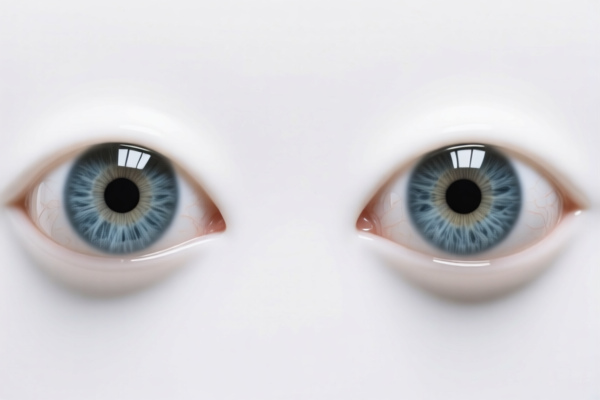
Eye Simulation Toy
CN → US| HS Code | Tariff Rate | Origin | Destination | Doc |
|---|---|---|---|---|
| 9503000073 | 10.0% | CN | US | Official Doc |
| 9503000071 | 10.0% | CN | US | Official Doc |
| 3926400090 | 15.3% | CN | US | Official Doc |
| 3926909989 | 22.8% | CN | US | Official Doc |
| 9018902000 | 35.0% | CN | US | Official Doc |
Product Images


AI Analysis
👁️ Eye Simulation Toy (Simulated Eye Props)
🌐 HS Code Reference & Customs Clearance Guide | 2026 Latest Tariff Analysis | Professional通关 Strategy
📌 Part 1: Product Definition & Classification – What Exactly is an "Eye Simulation Toy"?
An Eye Simulation Toy typically refers to realistic-looking artificial eyes used for medical training, theatrical makeup, Halloween costumes, or collectible items. In international trade, the classification hinges on material, function, and intended use.
Key distinctions: * As a Toy/Model: If marketed as a prop, costume accessory, or children's toy, it falls under Chapter 95. * As a Plastic Article: If made of plastic and deemed a "general article," it falls under Chapter 39. * As a Medical/Optical Device: If intended for medical training or optical demonstration, it may fall under Chapter 90.
⚠️ Critical Distinction:
- If it is explicitly sold as a "toy" or "model", it usually avoids high "plastic article" tariffs but may still face specific US trade restrictions.
- If the material is plastic/resin and it is not clearly a toy, customs may classify it as a "plastic ornament" or "other plastic article," triggering different tax bases.
- Visual/Optical Use: If intended for optical training, it might be misclassified under optical instruments, leading to significantly higher duties.
📦 Part 2: HS Code Classification Details (2026 Latest Tariff Authority Comparison)
| HS Code | Product Description | Applicable Scenario | Material Inference | Total Tax Rate (US/China) |
|---|---|---|---|---|
9503.00.00.73 |
Toys (Catch-all): Other toys, including simulated animals/plants, classified under the "other" residual category. | General simulation toys, costume props, Halloween items. | Plastic or Rubber | 10.0% |
9503.00.00.71 |
Models/Entertainment Toys: Toys specifically resembling realistic forms (like eyeballs), with no material conflict. | Realistic eye models for entertainment, props, or collectors. | Plastic or Rubber | 10.0% |
3926.40.00.90 |
Plastic Ornaments: Plastic decorative items, fitting the realistic appearance and toy-like material. | Decorative eyes, resin crafts, non-toy decorative replicas. | Plastic | 15.3% |
3926.90.99.89 |
Other Plastic Articles: Other plastic products, fitting common simulation toy materials. | General plastic simulation items not classified as ornaments. | Plastic | 22.8% |
9018.90.20.00 |
Optical Devices: Extended optical appliances, based on visual display purpose and plastic/resin material. | Medical training eyes, optical demonstration tools. | Plastic or Resin | 35.0% |
🔍 Key Insight:
- Chapters 95 (Toys) offer the lowest tax rate (10%).
- Chapter 39 (Plastics) ranges from 15.3% to 22.8%, depending on whether it's an "ornament" or "other."
- Chapter 90 (Optical) carries the highest burden (35.0%) due to Section 301 (25%) + IEEPA (10%) + base tariffs.
- Misclassification Risk: Declaring a "toy" as an "optical device" will triple your duty costs. Conversely, declaring a "medical device" as a "toy" may lead to compliance issues.
💰 Part 3: 2026 Latest Tariff Rate Breakdown (Including Surcharges & Policy Add-ons)
✅ Applicable Country: United States (US)
✅ Origin: China (CN)
✅ Effective Time: 2025/2026 (Current Trade Policy)
🎯 1. 9503.00.00.73 & 9503.00.00.71 —— Toys / Models (Recommended)
| Item | Detail |
|---|---|
| Base Tariff | 0.0% (ad valorem) |
| USITC Surcharge (Section 301) | 0.0% (Many toys under 9503 are exempt or have lower rates, but see below) |
| IEEPA Surcharge (Section 122/EO) | +10.0% (Targeting Chinese products) |
| Total Tax Rate | 10.0% |
| Tax Calculation | CIF Value × 10% |
| De Minimis Eligibility | ❌ No (Deny de minimis for Chinese goods under certain thresholds) |
| Legal Basis Path | IEEPA:122 → USITC:9503.00.00.7X |
📌 Explanation:
- Although base tariffs for toys are often 0%, the IEEPA 10% surcharge applies to Chinese-origin toys.
- Section 301 (25%) is typically not applied to most HS 9503 items in the latest adjustments, making this the most cost-effective classification if the product is clearly a toy/model.
- Total Cost: Only 10% additional duty on top of CIF.
🎯 2. 3926.40.00.90 —— Plastic Ornaments
| Item | Detail |
|---|---|
| Base Tariff | 5.3% |
| USITC Surcharge (Section 301) | 0.0% |
| IEEPA Surcharge | +10.0% |
| Total Tax Rate | 15.3% |
| Tax Calculation | CIF Value × 15.3% |
| De Minimis Eligibility | ❌ No |
📌 Explanation:
- If customs determines the item is not a toy but a "plastic ornament" (e.g., for display), the base duty of 5.3% applies.
- Plus 10% IEEPA surcharge.
- Total: 15.3%. Higher than toys, but lower than other plastic articles.
🎯 3. 3926.90.99.89 —— Other Plastic Articles
| Item | Detail |
|---|---|
| Base Tariff | 5.3% |
| USITC Surcharge (Section 301) | +7.5% |
| IEEPA Surcharge | +10.0% |
| Total Tax Rate | 22.8% |
| Tax Calculation | CIF Value × 22.8% |
| De Minimis Eligibility | ❌ No |
📌 Explanation:
- This is the "catch-all" for plastic products.
- Section 301 adds 7.5% on top of base and IEEPA.
- Total: 22.8%. Significantly more expensive than toy classification.
🎯 4. 9018.90.20.00 —— Optical Devices (Highest Risk)
| Item | Detail |
|---|---|
| Base Tariff | 0.0% |
| USITC Surcharge (Section 301) | +25.0% |
| IEEPA Surcharge | +10.0% |
| Total Tax Rate | 35.0% |
| Tax Calculation | CIF Value × 35.0% |
| De Minimis Eligibility | ❌ No |
📌 Explanation:
- If misclassified as an optical device (e.g., for medical training), it attracts the full 25% Section 301 tariff.
- Plus 10% IEEPA.
- Total: 35.0%. Avoid this classification unless strictly for medical/optical use with proper documentation.
🛠️ Part 4: Customs Clearance Practical Advice (Avoid Pitfalls)
✅ 1. Required Documentation Checklist
| Document | Mandatory? | Description |
|---|---|---|
| ✅ Product Specification Sheet | ✔️ | Must clearly state: "Toy," "Model," or "Prop." Include dimensions, material (PLA/PVC/Rubber), and intended use. |
| ✅ Product Photos | ✔️ | Clear images showing the item in a playful/entertainment context (not medical training context). |
| ✅ Labeling/Marking | ✔️ | Labels should say "Toy," "Simulation Eye," or "Costume Prop." Avoid medical terms like "Ophthalmic Trainer." |
| ✅ Material Declaration | ✔️ | Specify if it contains PVC, Silicone, or Rubber. |
| ✅ Commercial Invoice | ✔️ | Use precise descriptions: "Plastic Simulation Eye Toy for Costume/Entertainment" |
✅ 2. Declaration Strategy (Key Mantras)
🔥 "Classify as Toy, Avoid Optics, Specify Material, Save 25%!"
| Scenario | Correct Declaration | Risk of Incorrect Declaration |
|---|---|---|
| Halloween/Costume Use | 9503.00.00.73 (Toy) |
Misclassified as 3926 → +5.3% extra |
| Realistic Model/Prop | 9503.00.00.71 (Model Toy) |
Misclassified as 9018 → +25% Section 301 penalty |
| Medical Training Aid | 9018.90.20.00 (Optical) |
Only if strictly for medical use; otherwise, high tax. |
| Decorative Display Item | 3926.40.00.90 (Ornament) |
If declared as toy, risk of audit for misclassification. |
✅ 3. Special Considerations
| Situation | Handling Advice |
|---|---|
| OEM Custom Props | Provide design files showing "entertainment use." Avoid medical imagery in catalogs. |
| Mixed Materials | If the eye has a rubber base and plastic iris, still classify under 9503 (Toy) if the primary function is entertainment. |
| Medical Training Kits | If selling to hospitals, declare as 9018, but be prepared for 35% duty. Consider shipping from non-China origin to avoid IEEPA/301 if possible. |
| Children's Toys | Ensure compliance with CPSIA (US) if marketed to children under 12. |
🌍 Part 5: Global Market Clearance Comparison (2026)
| Country/Region | Recommended HS Code | Total Duty (China Origin) | Key Requirements | Notes |
|---|---|---|---|---|
| 🇺🇸 USA | 9503.00.00.73 |
10.0% | CPSIA, Prop 65 | Avoid 9018 (35%) and 3926 (15-22%) |
| 🇨🇳 China | 9503.00.00.73 |
5.0% | CCC (if applicable) | Low duty, high volume |
| 🇪🇺 EU | 9503.00.00.00 |
4.5% | CE, EN71 | No Section 301/IEEPA |
| 🇬🇧 UK | 9503.00.00.00 |
4.5% | UKCA, EN71 | Post-Brexit rules apply |
| 🇯🇵 Japan | 9503.00.00.00 |
0%~8% | PSE, Safety Standards | No extra surcharges |
📌 Conclusion:
- USA is the most complex due to IEEPA (10%) and Section 301 (0-25%).
- Classification as Toy (9503) is critical to minimize duties in the US market.
- Europe and Japan have more stable and lower tariffs for toys.
📌 Part 6: Common Mistakes & Pitfalls (Lessons Learned)
❌ Mistake 1: Declaring a "Toy Eye" as an "Optical Device" (9018)
👉 Consequence: 35% duty instead of 10%. Loss of $25 per $100 value!
❌ Mistake 2: Declaring a "Plastic Ornament" as a "Toy" (9503)
👉 Consequence: Customs audit for misclassification. Potential penalties + retroactive duties.
❌ Mistake 3: Using vague descriptions like "Medical Prop"
👉 Consequence: Triggers Chapter 90 scrutiny. Delays in clearance.
❌ Mistake 4: Ignoring Material Composition
👉 Consequence: If rubber content is high, some "toy" subcategories may still face plastic-based surcharges. Specify Material Clearly.
✅ Correct Approach:
"Plastic Simulation Eye Toy, for Costume Use, Non-Medical, HS 9503.00.00.73, CPC IEEPA 10%"
🎯 Part 7: Conclusion – Precise Classification Saves Money!
🎯 Remember the Mantra:
🔹 "Toy = 10%, Ornament = 15%, Optical = 35%."
🔹 "Classify as Toy, Avoid Optics, Save 25%!"
🔹 "HS Code is King, Misclassification is Costly."
📌 Pro Tip:
If your product is strictly for medical training, consider sourcing from Vietnam or Mexico to avoid IEEPA (10%) and potentially Section 301 duties, even if classified under 9018.
For toys/props, China origin under 9503 is the most cost-effective.
📣 Immediate Action:
📞 Consult a customs broker to confirm toy vs. ornament status.
📸 Provide clear "entertainment use" photos to customs.
📄 Apply for a Pre-Ruling if volume is high.
✨ Professional Clearance Starts with Accurate Classification!
💼 Every Percent Saved is Profit Earned!
Customer Reviews
About HS Code Classification
The Harmonized System (HS) is an internationally standardized nomenclature developed by the World Customs Organization (WCO) to classify traded products. Over 200 countries use the HS system as the basis for customs tariffs, trade statistics, and import/export regulations.
Each HS code follows a hierarchical structure:
- Chapter (2 digits) — Broad category of goods (e.g., Chapter 84: Machinery and Mechanical Appliances)
- Heading (4 digits) — More specific grouping within the chapter
- Subheading (6 digits) — Internationally standardized breakdown, used by all WCO member countries
- National subdivisions (8-10 digits) — Country-specific extensions for further classification, such as US HTSUS 10-digit codes
Correct HS code classification is essential for smooth customs clearance, accurate duty payment, and compliance with trade regulations. Misclassification can lead to customs delays, overpayment of duties, or penalties.
When importing from CN to US, the applicable tariff rates may include:
- Most-Favored-Nation (MFN) rate — The standard duty rate applied to WTO members
- General rate — Applied to countries without trade agreements
- Trade remedy duties — Additional tariffs such as Section 301 (anti-dumping), Section 232 (national security), or countervailing duties
The information provided on this page is for reference purposes only. For official classification, please consult with your local customs authority or a licensed customs broker.