Fake Battery
CN → US| HS编码 | 关税税率 | 原产国 | 目的国 | 文档 |
|---|---|---|---|---|
| 3926904000 | 12.8% | CN | US | 官方文档 |
| 3926400090 | 15.3% | CN | US | 官方文档 |
| 8507908000 | 38.4% | CN | US | 官方文档 |
| 8507904000 | 38.5% | CN | US | 官方文档 |
| 8506800090 | 37.7% | CN | US | 官方文档 |
| 8506800010 | 37.7% | CN | US | 官方文档 |
商品图片

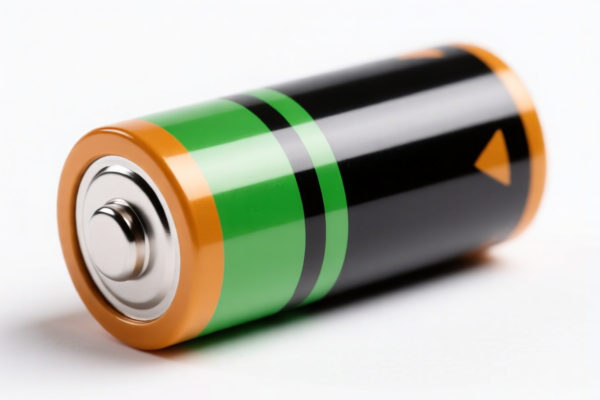
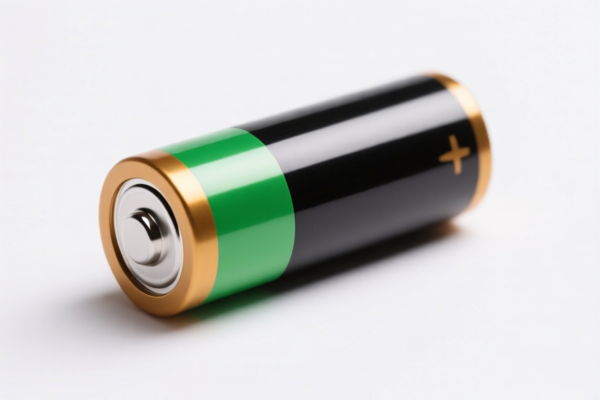
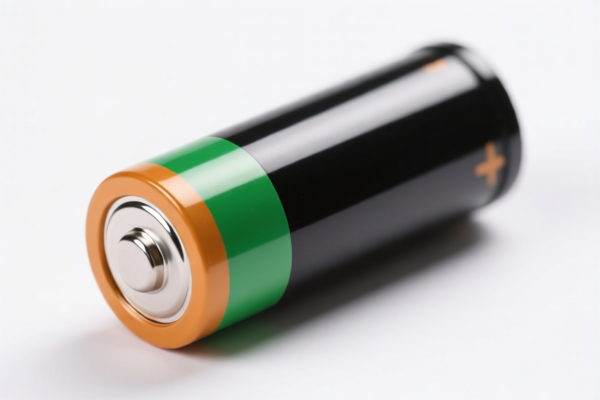
AI分析
🔋 "Fake Battery" Classification Guide: Primary Cells vs. Storage Batteries
🌐 HS Code Reference & Customs Clearance Strategy | 2026 Latest Tariff Analysis | Professional Level Compliance Strategy
📌 Part 1: Product Definition & Classification – What Exactly is a "Fake Battery"?
In international trade, the term "Fake Battery" is ambiguous and dangerous for customs clearance. It usually refers to one of two scenarios: 1. Non-functional Replicas/Props: Objects shaped like batteries but containing no electrochemical cells (e.g., plastic props, decorations, or costume accessories). 2. Defective/Counterfeit Functional Batteries: Actual batteries that fail to meet safety/quality standards, or batteries from unauthorized brands (still contain active materials).
⚠️ Key Distinction:
- If it is purely plastic/solid with no chemical power source → It is NOT a battery but an article of plastics or other materials.
- If it contains active chemical components (even if counterfeit/defective) → It is classified as a Battery.
📦 Part 2: HS Code Classification Matrix (Based on Provided Data)
Based on the input data, here are the precise classifications for items mistakenly or technically labeled as "Fake Batteries."
| HS Code | Product Description | Applicable Scenario | Key Characteristic |
|---|---|---|---|
8506.80.00.90 |
Other primary cells and primary batteries | Actual primary batteries (non-rechargeable) that do not fit other specific categories. | Contains active chemicals; functional power source. |
8506.80.00.10 |
Button and coin cell batteries | Small, flat primary batteries used in watches, calculators, etc. | Small form factor; specific primary battery type. |
8507.90.80.00 |
Parts of electric storage batteries (Other) | Components used for rechargeable batteries (e.g., separators, casings) that are not specific to lead-acid. | Spare parts, not complete functional units. |
8507.90.40.00 |
Parts of Lead-acid storage batteries | Specific components for lead-acid batteries (e.g., automotive battery plates, jars). | Specific to lead-acid technology. |
3926.90.40.00 |
Imitation gemstones | CRITICAL FOR "PROPS": Plastic/resin objects shaped like batteries but used as decorations/jewelry. | No electrical function; decorative purpose. |
3926.40.00.90 |
Statuettes and other ornamental articles (Other plastics) | Plastic items shaped like batteries used as collectibles, decorations, or toys. | No electrical function; ornamental purpose. |
🔍 Critical Note for "Fake" (Non-Functional) Items:
If the item is not a battery (i.e., it’s a plastic prop, toy, or decoration), it MUST NOT be declared under Chapter 85 (Electrical Machinery). Instead, it falls under Chapter 39 (Plastics).
- If it looks like a "gem" or decorative piece →3926.90.40.00
- If it looks like a "statue/decoration" →3926.40.00.90
Misdeclaring plastic props as batteries under HS 8506/8507 will lead to severe penalties for misclassification.
💰 Part 3: Tariff Rate Breakdown (2026 Latest Tariffs)
✅ Applicable Country: United States (US)
✅ Origin: China (CN)
✅ Effective Time: Current tariffs apply (including Section 301 additional tariffs where applicable)
🎯 1. 8506.80.00.90 – Other Primary Cells and Primary Batteries
| Item | Detail |
|---|---|
| Base Tariff | 2.7% (ad valorem) |
| Additional Tariff (Section 301) | +25.0% |
| Total Tariff Rate | 27.7% |
| Tax Calculation | CIF Value × 27.7% |
| De Minimis Exemption | ❌ Not Applicable (Valued items > $800 are subject to full duty) |
| Legal Path | HTSUS:8506.80.00.90 → Section 301 Footnote 9903.03.03 |
📌 Explanation:
- This is the default category for standard disposable batteries (AA, AAA, C, D, 9V) that are not button cells.
- The 25% additional tariff is applied due to Section 301 measures against Chinese goods.
- Total effective duty is high (27.7%). Importers must account for this in cost models.
🎯 2. 8506.80.00.10 – Button and Coin Cell Batteries
| Item | Detail |
|---|---|
| Base Tariff | 0.0% |
| Additional Tariff | 0.0% |
| Total Tariff Rate | 0.0% |
| Tax Calculation | $0 |
| De Minimis Exemption | ✅ Eligible if value ≤ $800 (subject to de minimis rules) |
| Legal Path | HTSUS:8506.80.00.10 |
📌 Explanation:
- Button/coin cells are duty-free under current US-China trade terms.
- This is a significant advantage if your "fake" batteries are actually small primary cells.
- Ensure accurate declaration: Must specify "Button" or "Coin" type to qualify for 0% rate.
🎯 3. 8507.90.80.00 & 8507.90.40.00 – Parts of Electric Storage Batteries
| Item | Detail |
|---|---|
| Base Tariff | 0.0% |
| Additional Tariff | 0.0% |
| Total Tariff Rate | 0.0% |
| Tax Calculation | $0 |
| De Minimis Exemption | ✅ Eligible if value ≤ $800 |
| Legal Path | HTSUS:8507.90.xx.xx |
📌 Explanation:
- Battery parts (e.g., separators, casings, plates) are duty-free.
- Warning: This only applies if the item is a part, not a complete battery. Declaring a complete battery as a "part" is fraud.
🎯 4. 3926.90.40.00 – Imitation Gemstones
| Item | Detail |
|---|---|
| Base Tariff | 0.0% |
| Additional Tariff | 0.0% |
| Total Tariff Rate | 0.0% |
| Tax Calculation | $0 |
| De Minimis Exemption | ✅ Eligible if value ≤ $800 |
| Legal Path | HTSUS:3926.90.40.00 |
📌 Explanation:
- If the "fake battery" is a plastic decorative item (e.g., a battery-shaped necklace pendant), it may be classified here.
- Must prove non-functional: Provide photos stating "Decorative Item, Non-Electrical."
🎯 5. 3926.40.00.90 – Statuettes and Ornamental Articles
| Item | Detail |
|---|---|
| Base Tariff | 5.3% |
| Additional Tariff | 0.0% |
| Total Tariff Rate | 5.3% |
| Tax Calculation | CIF Value × 5.3% |
| De Minimis Exemption | ✅ Eligible if value ≤ $800 |
| Legal Path | HTSUS:3926.40.00.90 |
📌 Explanation:
- If the "fake battery" is a plastic collectible, toy, or decoration (not jewelry), this is the correct code.
- 5.3% tariff is much lower than the 27.7% for actual primary batteries.
🛠️ Part 4: Customs Clearance Practical Advice
✅ 1. Preparation Checklist (Must-Have Documents)
| Document | Required? | Description |
|---|---|---|
| ✅ Product Photos | ✔️ | Show internal structure (if possible) to prove it’s plastic or contains chemicals. |
| ✅ Commercial Invoice | ✔️ | Clearly describe as: "Plastic Battery Prop, Decorative" or "Primary Battery, AA, Alkaline." |
| ✅ Material Declaration | ✔️ | Specify if it contains no chemicals (plastic/resin only) or chemical cells. |
| ✅ FCC Statement (if electrical) | ✔️ | If it’s a real battery, FCC compliance may be required. If plastic, state "No Radio Frequency Emission." |
| ✅ Certificate of Origin | ✔️ | For potential tariff exemptions (if applicable). |
✅ 2. Declaration Strategy (Critical Do’s and Don’ts)
| Scenario | Correct Declaration | Incorrect Declaration | Consequence |
|---|---|---|---|
| Plastic Prop/Toy | 3926.40.00.90 – "Plastic Ornamental Article, Battery-Shaped, Non-Functional" |
8506.80.00.90 – "Primary Battery" |
Penalty for Misclassification; Potential seizure. |
| Jewelry/Decor | 3926.90.40.00 – "Imitation Gemstone, Plastic, Decorative" |
8506.80.00.90 |
Penalty for Misclassification. |
| Real Disposable Battery | 8506.80.00.90 – "Primary Cell, Alkaline, AA" |
3926.40.00.90 |
Higher Duty (5.3% vs 27.7%? No, 27.7% is higher. Wait, 27.7% is higher. So misdeclaring real battery as plastic prop is smuggling). |
| Real Button Cell | 8506.80.00.10 – "Button Cell, Primary" |
8506.80.00.90 |
Overpaying Duty (27.7% vs 0%). |
🔥 Golden Rule:
- If it powers a device → Chapter 85 (Electrical).
- If it’s only for looks → Chapter 39 (Plastics).
- Never declare a real battery as a plastic prop. This is fraud.
- Never declare a plastic prop as a battery. This leads to unnecessary high duties (27.7%) and inspection delays.
✅ 3. Special Cases & Risk Mitigation
| Case | Advice |
|---|---|
| "Fake" as in Counterfeit Brand | If it’s a real battery with a fake logo, it’s still a battery (HS 8506). However, trademark infringement may lead to seizure by CBP. |
| "Fake" as in Non-Functional Prop | Clearly label as "Non-Functional, Decorative Item". Include a statement: "Does not contain chemical cells." |
| Mixed Shipment | If you ship both real batteries and plastic props, separate them in the commercial invoice and packing list to avoid confusion. |
🌍 Part 5: Global Market Comparison (2026)
| Market | HS Code for "Fake" (Plastic Prop) | Tariff | Key Risk |
|---|---|---|---|
| 🇺🇸 USA | 3926.40.00.90 or 3926.90.40.00 |
0%–5.3% | Misclassification if not clearly non-functional. |
| 🇪🇺 EU | 3926.90 |
~4.5% | CE marking not required for non-electrical items. |
| 🇨🇳 China | 3926.90 |
0%–6% | Low duty, but ensure no hazardous materials. |
📌 Conclusion:
- US Tariffs are sensitive to classification.
- Plastic props are much cheaper to import (0–5.3%) than real primary batteries (27.7%).
- Accuracy is key: Prove non-functionality to avoid 27.7% duty.
📌 Part 6: Common Mistakes & Pitfalls
❌ Mistake 1: Calling a plastic prop a "Battery" to make it look professional.
👉 Result: 27.7% duty + inspection delay.
❌ Mistake 2: Declaring a real battery as a "Plastic Part" to avoid duty.
👉 Result: Fraud charges, seizure, and fines.
❌ Mistake 3: Not specifying "Non-Functional" on the invoice for plastic props.
👉 Result: CBP assumes it’s a real battery and applies 27.7% duty.
✅ Correct Approach:
Invoice Description:
"Decorative Plastic Item, Shaped like Battery, Non-Functional, No Electrical Components, Model: DEC-BAT-01"
HS Code:3926.40.00.90
🎯 Part 7: Conclusion – Professional Declaration for Cost Optimization
🎯 Key Takeaway:
🔹 "Fake Battery" is not a HS Code.
🔹 If it’s real → HS 8506 (Duty: 0–27.7%).
🔹 If it’s plastic/prop → HS 3926 (Duty: 0–5.3%).
📌 Action Plan:
1. Determine Functionality: Does it produce electricity?
2. Choose Correct Chapter: 85 for electrical, 39 for plastic.
3. Declare Accurately: Use clear descriptions like "Non-Functional Decorative Item."
4. Submit Proof: Provide photos and material specs to CBP if requested.
📣 Immediate Action:
📞 Consult a Customs Broker before shipping.
📸 Take Clear Photos of the product (showing no internal chemicals).
📄 Update Invoice with precise, non-misleading descriptions.
✨ Professional Customs Clearance Starts with Accurate Classification!
💼 Save Up to 27.7% in Duties by Declaring Correctly!
用户评价
关于 HS 编码归类
协调制度(HS)是由世界海关组织(WCO)制定的国际贸易商品分类标准。全球 200 多个国家采用 HS 系统作为海关关税、贸易统计和进出口监管的基础。
每个 HS 编码遵循以下层级结构:
- 章(2 位)——商品大类(例如:第 84 章:机器和机械设备)
- 品目(4 位)——章内的更具体分类
- 子目(6 位)——国际通用细分,所有 WCO 成员国统一使用
- 本国细分(8-10 位)——各国自行扩展的细分编码,如美国 HTSUS 10 位编码
正确的 HS 编码归类对于顺利通关、准确缴纳关税和遵守贸易法规至关重要。错误归类可能导致海关延误、多缴关税或罚款。
从CN进口到US时,适用的关税税率可能包括:
- 最惠国(MFN)税率——适用于 WTO 成员国的标准关税税率
- 普通税率——适用于无贸易协定国家
- 贸易救济关税——附加关税,如 301 条款(反倾销)、232 条款(国家安全)或反补贴税
本页内容仅供参考。如需正式归类,请咨询当地海关或持牌报关代理。