Fake Battery
CN → US| HS Code | Tariff Rate | Origin | Destination | Doc |
|---|---|---|---|---|
| 3926904000 | 12.8% | CN | US | Official Doc |
| 3926400090 | 15.3% | CN | US | Official Doc |
| 8507908000 | 38.4% | CN | US | Official Doc |
| 8507904000 | 38.5% | CN | US | Official Doc |
| 8506800090 | 37.7% | CN | US | Official Doc |
| 8506800010 | 37.7% | CN | US | Official Doc |
Product Images

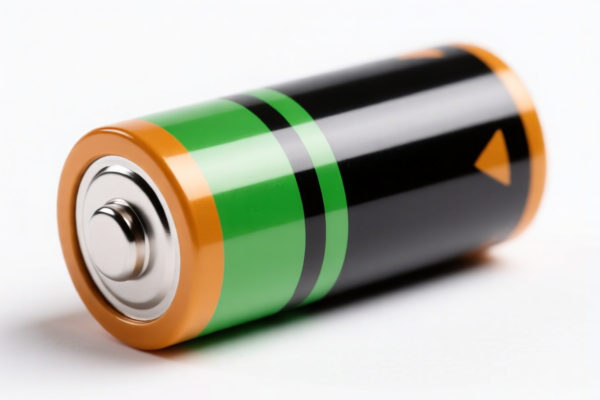
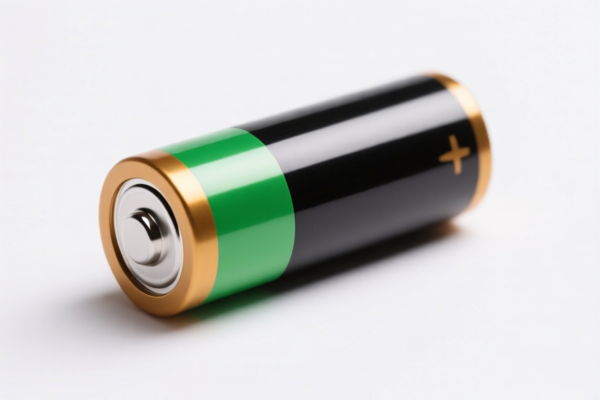
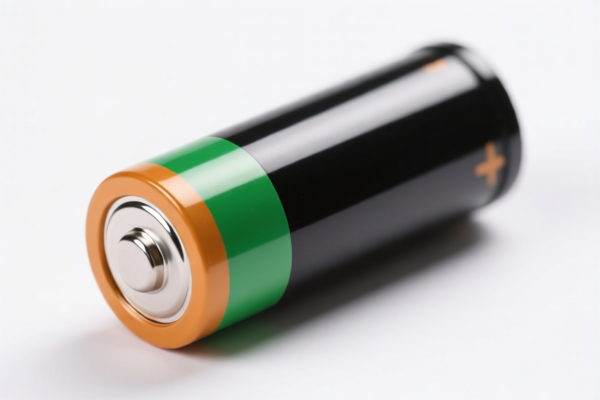
AI Analysis
🔋 "Fake Battery" Classification Guide: Primary Cells vs. Storage Batteries
🌐 HS Code Reference & Customs Clearance Strategy | 2026 Latest Tariff Analysis | Professional Level Compliance Strategy
📌 Part 1: Product Definition & Classification – What Exactly is a "Fake Battery"?
In international trade, the term "Fake Battery" is ambiguous and dangerous for customs clearance. It usually refers to one of two scenarios: 1. Non-functional Replicas/Props: Objects shaped like batteries but containing no electrochemical cells (e.g., plastic props, decorations, or costume accessories). 2. Defective/Counterfeit Functional Batteries: Actual batteries that fail to meet safety/quality standards, or batteries from unauthorized brands (still contain active materials).
⚠️ Key Distinction:
- If it is purely plastic/solid with no chemical power source → It is NOT a battery but an article of plastics or other materials.
- If it contains active chemical components (even if counterfeit/defective) → It is classified as a Battery.
📦 Part 2: HS Code Classification Matrix (Based on Provided Data)
Based on the input data, here are the precise classifications for items mistakenly or technically labeled as "Fake Batteries."
| HS Code | Product Description | Applicable Scenario | Key Characteristic |
|---|---|---|---|
8506.80.00.90 |
Other primary cells and primary batteries | Actual primary batteries (non-rechargeable) that do not fit other specific categories. | Contains active chemicals; functional power source. |
8506.80.00.10 |
Button and coin cell batteries | Small, flat primary batteries used in watches, calculators, etc. | Small form factor; specific primary battery type. |
8507.90.80.00 |
Parts of electric storage batteries (Other) | Components used for rechargeable batteries (e.g., separators, casings) that are not specific to lead-acid. | Spare parts, not complete functional units. |
8507.90.40.00 |
Parts of Lead-acid storage batteries | Specific components for lead-acid batteries (e.g., automotive battery plates, jars). | Specific to lead-acid technology. |
3926.90.40.00 |
Imitation gemstones | CRITICAL FOR "PROPS": Plastic/resin objects shaped like batteries but used as decorations/jewelry. | No electrical function; decorative purpose. |
3926.40.00.90 |
Statuettes and other ornamental articles (Other plastics) | Plastic items shaped like batteries used as collectibles, decorations, or toys. | No electrical function; ornamental purpose. |
🔍 Critical Note for "Fake" (Non-Functional) Items:
If the item is not a battery (i.e., it’s a plastic prop, toy, or decoration), it MUST NOT be declared under Chapter 85 (Electrical Machinery). Instead, it falls under Chapter 39 (Plastics).
- If it looks like a "gem" or decorative piece →3926.90.40.00
- If it looks like a "statue/decoration" →3926.40.00.90
Misdeclaring plastic props as batteries under HS 8506/8507 will lead to severe penalties for misclassification.
💰 Part 3: Tariff Rate Breakdown (2026 Latest Tariffs)
✅ Applicable Country: United States (US)
✅ Origin: China (CN)
✅ Effective Time: Current tariffs apply (including Section 301 additional tariffs where applicable)
🎯 1. 8506.80.00.90 – Other Primary Cells and Primary Batteries
| Item | Detail |
|---|---|
| Base Tariff | 2.7% (ad valorem) |
| Additional Tariff (Section 301) | +25.0% |
| Total Tariff Rate | 27.7% |
| Tax Calculation | CIF Value × 27.7% |
| De Minimis Exemption | ❌ Not Applicable (Valued items > $800 are subject to full duty) |
| Legal Path | HTSUS:8506.80.00.90 → Section 301 Footnote 9903.03.03 |
📌 Explanation:
- This is the default category for standard disposable batteries (AA, AAA, C, D, 9V) that are not button cells.
- The 25% additional tariff is applied due to Section 301 measures against Chinese goods.
- Total effective duty is high (27.7%). Importers must account for this in cost models.
🎯 2. 8506.80.00.10 – Button and Coin Cell Batteries
| Item | Detail |
|---|---|
| Base Tariff | 0.0% |
| Additional Tariff | 0.0% |
| Total Tariff Rate | 0.0% |
| Tax Calculation | $0 |
| De Minimis Exemption | ✅ Eligible if value ≤ $800 (subject to de minimis rules) |
| Legal Path | HTSUS:8506.80.00.10 |
📌 Explanation:
- Button/coin cells are duty-free under current US-China trade terms.
- This is a significant advantage if your "fake" batteries are actually small primary cells.
- Ensure accurate declaration: Must specify "Button" or "Coin" type to qualify for 0% rate.
🎯 3. 8507.90.80.00 & 8507.90.40.00 – Parts of Electric Storage Batteries
| Item | Detail |
|---|---|
| Base Tariff | 0.0% |
| Additional Tariff | 0.0% |
| Total Tariff Rate | 0.0% |
| Tax Calculation | $0 |
| De Minimis Exemption | ✅ Eligible if value ≤ $800 |
| Legal Path | HTSUS:8507.90.xx.xx |
📌 Explanation:
- Battery parts (e.g., separators, casings, plates) are duty-free.
- Warning: This only applies if the item is a part, not a complete battery. Declaring a complete battery as a "part" is fraud.
🎯 4. 3926.90.40.00 – Imitation Gemstones
| Item | Detail |
|---|---|
| Base Tariff | 0.0% |
| Additional Tariff | 0.0% |
| Total Tariff Rate | 0.0% |
| Tax Calculation | $0 |
| De Minimis Exemption | ✅ Eligible if value ≤ $800 |
| Legal Path | HTSUS:3926.90.40.00 |
📌 Explanation:
- If the "fake battery" is a plastic decorative item (e.g., a battery-shaped necklace pendant), it may be classified here.
- Must prove non-functional: Provide photos stating "Decorative Item, Non-Electrical."
🎯 5. 3926.40.00.90 – Statuettes and Ornamental Articles
| Item | Detail |
|---|---|
| Base Tariff | 5.3% |
| Additional Tariff | 0.0% |
| Total Tariff Rate | 5.3% |
| Tax Calculation | CIF Value × 5.3% |
| De Minimis Exemption | ✅ Eligible if value ≤ $800 |
| Legal Path | HTSUS:3926.40.00.90 |
📌 Explanation:
- If the "fake battery" is a plastic collectible, toy, or decoration (not jewelry), this is the correct code.
- 5.3% tariff is much lower than the 27.7% for actual primary batteries.
🛠️ Part 4: Customs Clearance Practical Advice
✅ 1. Preparation Checklist (Must-Have Documents)
| Document | Required? | Description |
|---|---|---|
| ✅ Product Photos | ✔️ | Show internal structure (if possible) to prove it’s plastic or contains chemicals. |
| ✅ Commercial Invoice | ✔️ | Clearly describe as: "Plastic Battery Prop, Decorative" or "Primary Battery, AA, Alkaline." |
| ✅ Material Declaration | ✔️ | Specify if it contains no chemicals (plastic/resin only) or chemical cells. |
| ✅ FCC Statement (if electrical) | ✔️ | If it’s a real battery, FCC compliance may be required. If plastic, state "No Radio Frequency Emission." |
| ✅ Certificate of Origin | ✔️ | For potential tariff exemptions (if applicable). |
✅ 2. Declaration Strategy (Critical Do’s and Don’ts)
| Scenario | Correct Declaration | Incorrect Declaration | Consequence |
|---|---|---|---|
| Plastic Prop/Toy | 3926.40.00.90 – "Plastic Ornamental Article, Battery-Shaped, Non-Functional" |
8506.80.00.90 – "Primary Battery" |
Penalty for Misclassification; Potential seizure. |
| Jewelry/Decor | 3926.90.40.00 – "Imitation Gemstone, Plastic, Decorative" |
8506.80.00.90 |
Penalty for Misclassification. |
| Real Disposable Battery | 8506.80.00.90 – "Primary Cell, Alkaline, AA" |
3926.40.00.90 |
Higher Duty (5.3% vs 27.7%? No, 27.7% is higher. Wait, 27.7% is higher. So misdeclaring real battery as plastic prop is smuggling). |
| Real Button Cell | 8506.80.00.10 – "Button Cell, Primary" |
8506.80.00.90 |
Overpaying Duty (27.7% vs 0%). |
🔥 Golden Rule:
- If it powers a device → Chapter 85 (Electrical).
- If it’s only for looks → Chapter 39 (Plastics).
- Never declare a real battery as a plastic prop. This is fraud.
- Never declare a plastic prop as a battery. This leads to unnecessary high duties (27.7%) and inspection delays.
✅ 3. Special Cases & Risk Mitigation
| Case | Advice |
|---|---|
| "Fake" as in Counterfeit Brand | If it’s a real battery with a fake logo, it’s still a battery (HS 8506). However, trademark infringement may lead to seizure by CBP. |
| "Fake" as in Non-Functional Prop | Clearly label as "Non-Functional, Decorative Item". Include a statement: "Does not contain chemical cells." |
| Mixed Shipment | If you ship both real batteries and plastic props, separate them in the commercial invoice and packing list to avoid confusion. |
🌍 Part 5: Global Market Comparison (2026)
| Market | HS Code for "Fake" (Plastic Prop) | Tariff | Key Risk |
|---|---|---|---|
| 🇺🇸 USA | 3926.40.00.90 or 3926.90.40.00 |
0%–5.3% | Misclassification if not clearly non-functional. |
| 🇪🇺 EU | 3926.90 |
~4.5% | CE marking not required for non-electrical items. |
| 🇨🇳 China | 3926.90 |
0%–6% | Low duty, but ensure no hazardous materials. |
📌 Conclusion:
- US Tariffs are sensitive to classification.
- Plastic props are much cheaper to import (0–5.3%) than real primary batteries (27.7%).
- Accuracy is key: Prove non-functionality to avoid 27.7% duty.
📌 Part 6: Common Mistakes & Pitfalls
❌ Mistake 1: Calling a plastic prop a "Battery" to make it look professional.
👉 Result: 27.7% duty + inspection delay.
❌ Mistake 2: Declaring a real battery as a "Plastic Part" to avoid duty.
👉 Result: Fraud charges, seizure, and fines.
❌ Mistake 3: Not specifying "Non-Functional" on the invoice for plastic props.
👉 Result: CBP assumes it’s a real battery and applies 27.7% duty.
✅ Correct Approach:
Invoice Description:
"Decorative Plastic Item, Shaped like Battery, Non-Functional, No Electrical Components, Model: DEC-BAT-01"
HS Code:3926.40.00.90
🎯 Part 7: Conclusion – Professional Declaration for Cost Optimization
🎯 Key Takeaway:
🔹 "Fake Battery" is not a HS Code.
🔹 If it’s real → HS 8506 (Duty: 0–27.7%).
🔹 If it’s plastic/prop → HS 3926 (Duty: 0–5.3%).
📌 Action Plan:
1. Determine Functionality: Does it produce electricity?
2. Choose Correct Chapter: 85 for electrical, 39 for plastic.
3. Declare Accurately: Use clear descriptions like "Non-Functional Decorative Item."
4. Submit Proof: Provide photos and material specs to CBP if requested.
📣 Immediate Action:
📞 Consult a Customs Broker before shipping.
📸 Take Clear Photos of the product (showing no internal chemicals).
📄 Update Invoice with precise, non-misleading descriptions.
✨ Professional Customs Clearance Starts with Accurate Classification!
💼 Save Up to 27.7% in Duties by Declaring Correctly!
Customer Reviews
About HS Code Classification
The Harmonized System (HS) is an internationally standardized nomenclature developed by the World Customs Organization (WCO) to classify traded products. Over 200 countries use the HS system as the basis for customs tariffs, trade statistics, and import/export regulations.
Each HS code follows a hierarchical structure:
- Chapter (2 digits) — Broad category of goods (e.g., Chapter 84: Machinery and Mechanical Appliances)
- Heading (4 digits) — More specific grouping within the chapter
- Subheading (6 digits) — Internationally standardized breakdown, used by all WCO member countries
- National subdivisions (8-10 digits) — Country-specific extensions for further classification, such as US HTSUS 10-digit codes
Correct HS code classification is essential for smooth customs clearance, accurate duty payment, and compliance with trade regulations. Misclassification can lead to customs delays, overpayment of duties, or penalties.
When importing from CN to US, the applicable tariff rates may include:
- Most-Favored-Nation (MFN) rate — The standard duty rate applied to WTO members
- General rate — Applied to countries without trade agreements
- Trade remedy duties — Additional tariffs such as Section 301 (anti-dumping), Section 232 (national security), or countervailing duties
The information provided on this page is for reference purposes only. For official classification, please consult with your local customs authority or a licensed customs broker.