Fashion Cotton Handbag
CN → US| HS编码 | 关税税率 | 原产国 | 目的国 | 文档 |
|---|---|---|---|---|
| 6305200000 | 23.7% | CN | US | 官方文档 |
| 4202224020 | 42.4% | CN | US | 官方文档 |
| 6305900000 | 23.7% | CN | US | 官方文档 |
| 4202228930 | 52.6% | CN | US | 官方文档 |
商品图片
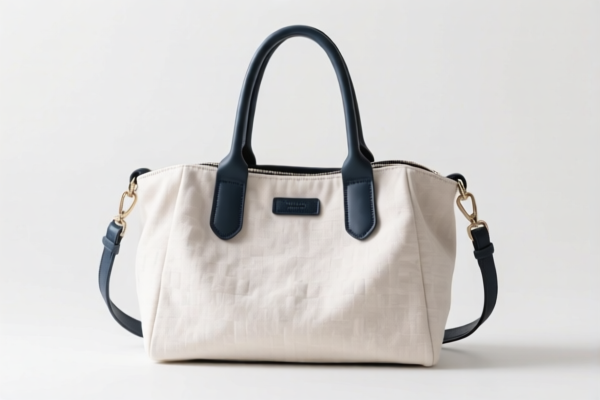
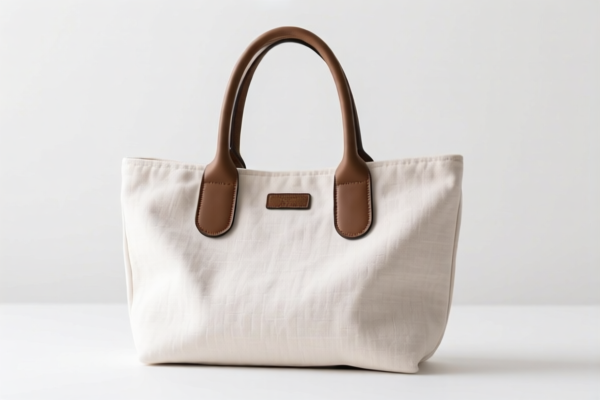
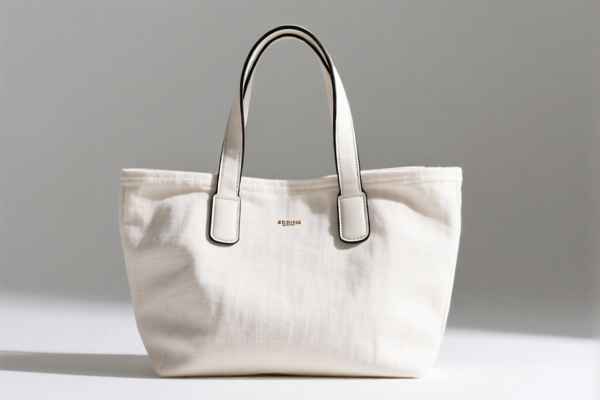
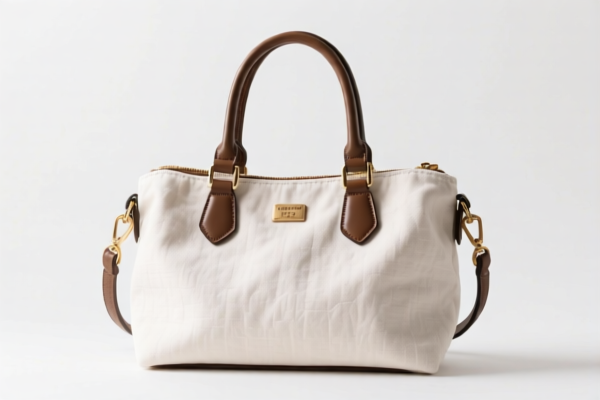
AI分析
👜 Fashion Cotton Handbag (纯棉面料手提包)
🌐 HS Code Reference & Customs Clearance Guide | 2026 Latest Tariff Analysis | Professional Entry Strategy
📌 Part 1: Product Definition & Classification – Do You Know Your Bag?
A "Fashion Cotton Handbag" is a versatile accessory defined by its material (100% cotton/textile) and its form (handheld bag/pouch). In international trade, it is often confused between Chapter 63 (Miscellaneous Textile Articles) and Chapter 42 (Articles of Leather/Travel Goods). The critical distinction lies in the primary function and external surface material.
Textile Bags (Chapter 63): Generally used for general carrying, shopping, or storage; often simpler in structure.
Handbags (Chapter 42): Fashion accessories, typically structured, with defined handles/straps, designed for personal carry of valuables.
⚠️ Key Distinction Point:
- If the bag is primarily a "sack" or "pouch" without rigid structure → Likely Chapter 63 (Lower Duty).
- If the bag is structured, with handles/straps, and marketed as "fashion" → Likely Chapter 42 (Higher Duty).
- Material: Since it is "Cotton" (Textile), it falls under Textile Handbags in Ch. 42 or Textile Bags in Ch. 63.
📦 Part 2: HS Code Classification Details (2026 Latest Tariff Authority Comparison)
Based on the provided data, here are the four possible HS Codes for a Cotton Handbag, with corresponding tax implications.
| HS Code | Product Description | Classification Logic | Applicable Scenario |
|---|---|---|---|
6305.20.00.00 |
Bags, made of cotton (Sacks & Pouches) | Classified as "Miscellaneous Textile Articles" rather than "Handbags". Often used for bulk storage, simple tote, or sack-like forms. | Simple cotton sacks, shopping bags, or unstructured pouches. |
4202.22.40.20 |
Handbags with outer surface of textile materials, of cotton | Classified as "Handbags" (Travel Goods). Outer surface is cotton. Specific subheading for textile handbags. | Standard fashion handbags, shoulder bags with cotton exterior. |
6305.90.00.00 |
Other sacks and pouches, of textile materials | Used when the bag doesn't fit specific cotton descriptions in 6305.20 but is still a "sack/pouch" form. | Less common for fashion handbags; used for generic textile pouches. |
4202.22.89.30 |
Handbags with outer surface of textile materials, of pure cotton | "Other" textile handbags. Often the catch-all for pure cotton fashion handbags not covered by 4202.22.40.20. |
Premium pure cotton fashion bags, structured handbags. |
🔍 Critical Reminder:
- Chapter 42 (4202) items are significantly more expensive in duties due to "Additional Tariffs" (Section 301 & IEEPA).
- Chapter 63 (6305) items are treated as "Other textile articles" and have much lower additional tariffs.
- Misclassification Risk: Declaring a structured "Fashion Handbag" as a "Sack/Pouch" (6305) to save duty is a high-risk audit target. The structure, handles, and marketing must support the 6305 classification.
💰 Part 3: 2026 Latest Tariff Rate Breakdown (Including Additional Taxes & Policies)
✅ Applicable Country: United States (US)
✅ Origin: China (CN)
✅ Effective Time: 2025/2026 (Current Policy)
🎯 1. 6305.20.00.00 – Cotton Sacks/Pouches (The "Low Duty" Option)
| Item | Content |
|---|---|
| Base Tariff | 6.2% (Ad Valorem) |
| Section 301 Additional Tariff | +7.5% (From HTSUS Footnote 4) |
| IEEPA Additional Tariff | +10% (For China/HK products, from 2025-11-10) |
| Total Tax Rate | 23.7% |
| Tax Calculation | CIF Value × 23.7% |
| De Minimis Eligibility | ❌ No (Subject to Section 301 & IEEPA) |
| Legal Basis Path | HTSUS: 6305.20.00.00 → Footnote 4 → IEEPA: 9903.01.24 |
📌 Explanation:
- 6.2% is the standard MFN rate for cotton sacks.
- 7.5% is the Section 301 tariff on Chapter 63 items (reduced from earlier 25% phases in some contexts, but current data shows 7.5%).
- 10% is the IEEPA tariff on all Chinese textile goods.
- Total 23.7% is significantly lower than Chapter 42.
🎯 2. 4202.22.40.20 – Textile Handbags (Cotton) (The "High Duty" Option)
| Item | Content |
|---|---|
| Base Tariff | 7.4% (Ad Valorem) |
| Section 301 Additional Tariff | +25.0% (From HTSUS Footnote 4) |
| IEEPA Additional Tariff | +10% (For China/HK products) |
| Total Tax Rate | 42.4% |
| Tax Calculation | CIF Value × 42.4% |
| De Minimis Eligibility | ❌ No (Subject to Section 301 & IEEPA) |
| Legal Basis Path | HTSUS: 4202.22.40.20 → Footnote 4 → IEEPA: 9903.01.24 |
📌 Note:
- 7.4% is the base rate for textile handbags.
- 25% is the maximum Section 301 tariff rate for Chapter 42 (Handbags).
- 10% IEEPA applies.
- Total 42.4% makes this a high-cost item. Profit margins will be severely impacted.
🎯 3. 6305.90.00.00 – Other Textile Pouches (The "Medium Duty" Option)
| Item | Content |
|---|---|
| Base Tariff | 6.2% |
| Section 301 Additional Tariff | +7.5% |
| IEEPA Additional Tariff | +10% |
| Total Tax Rate | 23.7% |
| Tax Calculation | CIF Value × 23.7% |
| De Minimis Eligibility | ❌ No |
| Legal Basis Path | HTSUS: 6305.90.00.00 → Footnote 4 → IEEPA: 9903.01.24 |
📌 Note:
- Same tax structure as6305.20.00.00.
- Used if the cotton sack/pouch doesn't fit the specific "6305.20" cotton description perfectly but is still a "sack/pouch".
🎯 4. 4202.22.89.30 – Other Pure Cotton Handbags (The "Highest Duty" Option)
| Item | Content |
|---|---|
| Base Tariff | 17.6% |
| Section 301 Additional Tariff | +25.0% |
| IEEPA Additional Tariff | +10% |
| Total Tax Rate | 52.6% |
| Tax Calculation | CIF Value × 52.6% |
| De Minimis Eligibility | ❌ No |
| Legal Basis Path | HTSUS: 4202.22.89.30 → Footnote 4 → IEEPA: 9903.01.24 |
📌 Warning:
- 17.6% is a very high base rate for "Other" handbags.
- 25% Section 301 applies.
- 10% IEEPA applies.
- Total 52.6% is extremely high. This classification should be avoided unless the product is undeniably a "handbag" and cannot be classified under4202.22.40.20.
🛠️ Part 4: Customs Clearance Practical Advice (Battle-Tested Pitfall Guide)
✅ 1. Documentation Checklist (Missing Any = Delay)
| Document | Required | Notes |
|---|---|---|
| ✅ Product Photos | ✔️ | Show exterior, interior, handles, labels. |
| ✅ Material Composition | ✔️ | Must state "100% Cotton" or "Cotton Blend". |
| ✅ Commercial Invoice | ✔️ | Describe as "Cotton Tote Bag" or "Cotton Sack" if using Ch. 63. |
| ✅ Packing List | ✔️ | Weight and dimensions critical for valuation. |
| ✅ Origin Certificate | ✔️ | Proof of Chinese origin (triggers additional tariffs). |
✅ 2. Declaration Strategy (Key Mantra)
🔥 "Structure Defines Chapter! Don't Declare a Handbag as a Sack!"
| Scenario | Correct Declaration | Risk of Error |
|---|---|---|
| Simple, Unstructured Cotton Bag | 6305.20.00.00 (Cotton Sack) |
Low risk if no handles/structure. |
| Fashion Handbag with Handles | 4202.22.40.20 or 4202.22.89.30 |
High risk of audit if declared as 6305. |
| Cotton Bag with Rigid Bottom/Handles | 4202.22.40.20 |
Misclassifying as 6305 leads to underpayment penalties. |
| Generic Textile Pouch (No Handles) | 6305.90.00.00 |
Acceptable if it's a "pouch". |
📌 Why it matters:
- Section 301 Duty: Chapter 42 has a 25% add-on, while Chapter 63 has 7.5%.
- Difference: 17.5% savings on6305vs4202.
- But: If CBP determines it's a "handbag" (Chapter 42) but you declared it as "sack" (Chapter 63), they will assess back duties + penalties + interest.
✅ 3. Special Situations
| Situation | Handling Advice |
|---|---|
| OEM Custom Bags | Provide design specs. If handles are attached, CBP leans toward Ch. 42. |
| Bag + Insert Pouch | Declare separately. Main bag as Ch. 63 or 42; insert as textile pouch. |
| Pure Cotton vs. Cotton Blend | "100% Cotton" may trigger 4202.22.89.30 (17.6% base). "Cotton Blend" might fall under 4202.22.40.20 (7.4% base). Check composition carefully! |
| "Sack" vs. "Handbag" | A "sack" has no handles or simple ties. A "handbag" has rigid or fixed handles. This is the #1 audit trigger. |
🌍 Part 5: Global Market Comparison (2026)
| Country/Region | Recommended HS Code | Total Duty (China Origin) | Notes |
|---|---|---|---|
| 🇺🇸 USA | 4202.22.40.20 |
42.4% | High due to Section 301 & IEEPA. |
| 🇺🇸 USA | 6305.20.00.00 |
23.7% | Only if truly a "sack/pouch". |
| 🇪🇺 EU | 4202.22.40 |
~12% | No Section 301 equivalent. Lower duty. |
| 🇨🇳 China | 4202.22.40 |
~10% | Import duty only, no additional tariffs. |
📌 Conclusion:
- The US market is punitive for Chinese textile handbags.
- Strategic Option: If your product is structurally a "tote" or "sack" (no rigid handles, open top), declare under Chapter 63 to save ~19% in taxes.
- Risk: Ensure the product description and physical form support this. If it's a structured handbag, accept the 42.4%-52.6% duty.
📌 Part 6: Common Mistakes & Pitfalls (Lessons Learned)
❌ Mistake 1: Declaring a structured handbag with handles as "Cotton Sack" (6305)
👉 Consequence: CBP reclassifies to 4202, charges 25% difference in Section 301 + penalties.
👉 Fix: Use 4202.22.40.20 if handles are present.
❌ Mistake 2: Assuming all cotton bags are "Textile Handbags" (4202)
👉 Consequence: Overpaying duties by ~19%.
👉 Fix: If it's a simple pouch/tote, try 6305.20.00.00.
❌ Mistake 3: Ignoring IEEPA 10% Tariff
👉 Consequence: Underpayment on all Chinese textile goods.
👉 Fix: Always add 10% to base + Section 301 rates.
✅ Correct Approach:
"Cotton Tote Bag, 100% Cotton, Open Top, No Rigid Handles, For Shopping Use" →
6305.20.00.00
"Fashion Handbag, 100% Cotton, Structured, With Leather Handle" →4202.22.89.30
🎯 Part 7: Conclusion – Smart Classification, Higher Margins!
🎯 Remember the Mantra:
🔹 "Handles = Handbag (Ch. 42, High Tax)"
🔹 "No Handles/Sack = Textile Article (Ch. 63, Low Tax)"
🔹 "IEEPA 10% is Always On for China"
🔹 "Section 301: 25% vs 7.5% – Choose Wisely!"
📌 Pro Tip:
- For US Imports: If your product can be argued as a "Sack" or "Pouch" (e.g., simple cotton tote), classify under
6305.20.00.00to save ~19% in total taxes.- Document Everything: Photos showing lack of rigid structure/handles support Ch. 63.
- Pre-Ruling: Consider filing an Advance Ruling with CBP if your product is borderline.
📣 Take Action Now:
📞 Consult a Customs Broker + Provide Product Photos + Classify Correctly
🚀 Reduce Tax Liability, Ensure Compliance, Boost Profits!
✨ Professional Customs Clearance Starts with Accurate Classification!
💼 Every Percentage Point Counts in Your Profit Margin!
用户评价
关于 HS 编码归类
协调制度(HS)是由世界海关组织(WCO)制定的国际贸易商品分类标准。全球 200 多个国家采用 HS 系统作为海关关税、贸易统计和进出口监管的基础。
每个 HS 编码遵循以下层级结构:
- 章(2 位)——商品大类(例如:第 84 章:机器和机械设备)
- 品目(4 位)——章内的更具体分类
- 子目(6 位)——国际通用细分,所有 WCO 成员国统一使用
- 本国细分(8-10 位)——各国自行扩展的细分编码,如美国 HTSUS 10 位编码
正确的 HS 编码归类对于顺利通关、准确缴纳关税和遵守贸易法规至关重要。错误归类可能导致海关延误、多缴关税或罚款。
从CN进口到US时,适用的关税税率可能包括:
- 最惠国(MFN)税率——适用于 WTO 成员国的标准关税税率
- 普通税率——适用于无贸易协定国家
- 贸易救济关税——附加关税,如 301 条款(反倾销)、232 条款(国家安全)或反补贴税
本页内容仅供参考。如需正式归类,请咨询当地海关或持牌报关代理。