Feather Edge Scarf
CN → US| HS编码 | 关税税率 | 原产国 | 目的国 | 文档 |
|---|---|---|---|---|
| 6117101000 | 27.1% | CN | US | 官方文档 |
| 6117102010 | 21.3% | CN | US | 官方文档 |
| 6214200000 | 24.2% | CN | US | 官方文档 |
| 6214900090 | 28.8% | CN | US | 官方文档 |
| 5111117030 | 60.0% | CN | US | 官方文档 |
商品图片
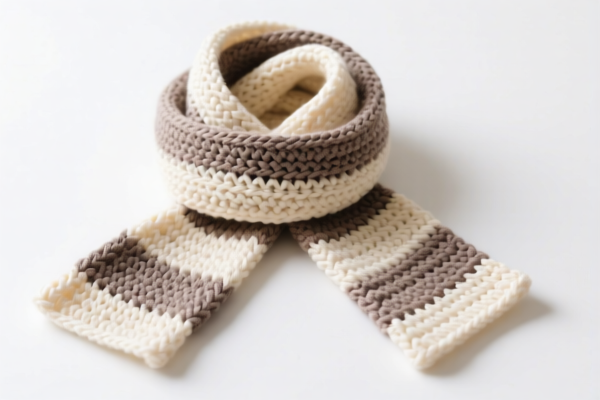
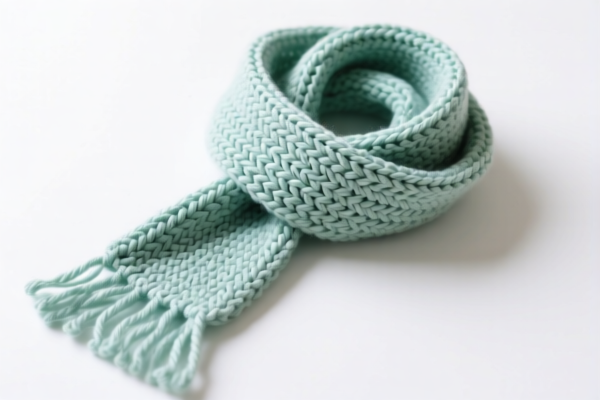
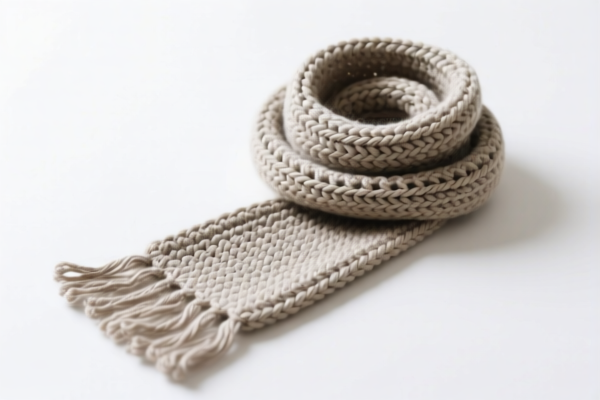
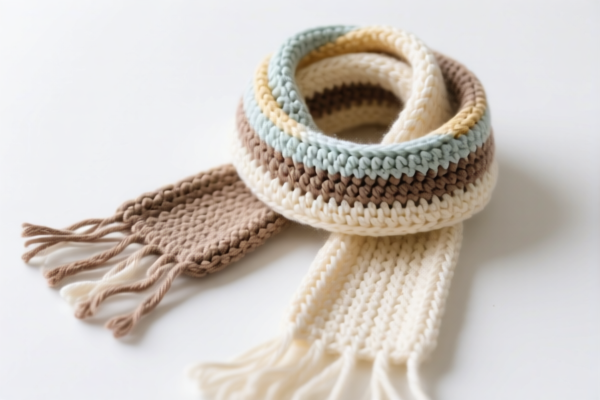
AI分析
🧣 Feather Edge Scarf (毛线/羊毛围巾)
🌐 HS Code Reference & Customs Clearance Guide | 2026 Latest Tariff Analysis | Professional Entry Strategy
📌 1. Product Definition & Classification: Do You Really Understand "Feather Edge Scarf"?
A Feather Edge Scarf is a textile accessory, typically made of knitted or woven fabric, featuring a delicate, serrated, or cut-edge finish that resembles bird feathers. In international trade, its classification hinges on two critical factors: 1. Material Composition: Is it primarily wool/kind hair (Chapter 61/62) or other fibers (Chapter 51/60)? 2. Manufacturing Process: Is it a knitted/crocheted good (Chapter 61) or a non-knitted woven good (Chapter 62)?
⚠️ Key Distinction:
- If the scarf is Knitted or Crocheted (e.g., typical wool knit scarves): Look at Chapter 61.
- If the scarf is Non-Knitted/Woven (e.g., wool tweed, shawl-style weaves): Look at Chapter 62.
- The "Feather Edge" is a finishing technique, not a defining classification characteristic. The material and knitting structure determine the HS Code.
📦 2. HS Code Classification Details (Based on Provided Data Analysis)
The following HS Codes are derived directly from the analysis of the product name "Feather Edge Scarf," considering material (Wool/Yarn) and form (Scarf).
| HS Code | Product Description | Logic & Justification | Total Tax Rate |
|---|---|---|---|
6117.10.10.00 |
Other Made-Up Accessories, Knitted or Crocheted: Scarves | Match Success. Form (Scarf) matches category purpose; Material (Yarn/Wool) reasonably inferred as "Wool or Fine Animal Hair." | 27.1% |
6117.10.20.10 |
Other Made-Up Accessories, Knitted or Crocheted: Scarves (Specific Subheading) | Match Success. Form matches (Scarf); Material matches (Contains wool, meeting weight/content requirements). | 21.3% |
6214.20.00.00 |
Shawls, Scarves, Mufflers, Mantilla, Veils, and the Like: Of Wool | Exact Match. Product name "Wool" + "Scarf" perfectly fits the classification requirement for "Scarves made of wool." | 24.2% |
6214.90.00.90 |
Shawls, Scarves, Mufflers, etc.: Of Other Textile Materials | Logical Match. Form (Scarf) + Material (Wool is a non-cotton textile material) fits the "Other Textile Materials" logic. | 28.8% |
5111.11.70.30 |
Woven Fabric of Fine Animal Hair, Weight > 200g/m²: Other | High Tariff Risk. Matches "Wool" material requirement; Scarf as a finished woven application aligns with woven fabric logic, but likely misclassified as raw fabric vs. made-up article. | 60.0% |
💰 3. Detailed Tax Rate Breakdown (Including Additional Tariffs & Policies)
✅ Applicable Country: United States (US)
✅ Origin: China (CN)
✅ Effective Date: Includes imports from Nov 10, 2025 (and subsequent periods)
🎯 1. 6117.10.20.10 – Most Favorable Knitted Wool Scarf
| Item | Content |
|---|---|
| Base Tariff | 11.3% |
| Section 301 Additional Tariff | 0.0% |
| Section 122 Tariff (De Minimis Crackdown) | 10.0% |
| Total Tax Rate | 21.3% |
| Tax Calculation | CIF Value × 21.3% |
| De Minimis Exemption | ❌ Not Applicable (Section 122 targets low-value shipments directly) |
| Legal Basis Path | HTSUS:6117.10.20.10 → USITC:Section 301 Exclusion (if any) → CBP:Section 122 Enforcement |
📌 Interpretation:
- This code offers the lowest total tax rate (21.3%) among the knitted options.
- Zero Section 301 tariff makes this the most competitive if the product qualifies for this specific subheading.
- However, Section 122 (10%) still applies, reflecting the US crackdown on de minimis entries for textiles.
🎯 2. 6117.10.10.00 – Standard Knitted Scarf
| Item | Content |
|---|---|
| Base Tariff | 9.6% |
| Section 301 Additional Tariff | 7.5% |
| Section 122 Tariff | 10.0% |
| Total Tax Rate | 27.1% |
| Tax Calculation | CIF Value × 27.1% |
| De Minimis Exemption | ❌ Not Applicable |
| Legal Basis Path | HTSUS:6117.10.10.00 → USITC:Footnote 9903.88.01 → IEEPA:9903.01.24 |
📌 Interpretation:
- Higher total rate (27.1%) due to the addition of 7.5% Section 301 tariff.
- Commonly applied to general knitted accessories where specific exclusions or subheadings do not apply.
🎯 3. 6214.20.00.00 – Woven Wool Scarf
| Item | Content |
|---|---|
| Base Tariff | 6.7% |
| Section 301 Additional Tariff | 7.5% |
| Section 122 Tariff | 10.0% |
| Total Tax Rate | 24.2% |
| Tax Calculation | CIF Value × 24.2% |
| De Minimis Exemption | ❌ Not Applicable |
| Legal Basis Path | HTSUS:6214.20.00.00 → USITC:Footnote 9903.88.01 |
📌 Interpretation:
- Lowest base tariff (6.7%) but increased by Section 301 and Section 122.
- Only applicable if the scarf is non-knitted/woven. If your "Feather Edge Scarf" is knitted, do not use this code.
🎯 4. 6214.90.00.90 – Other Textile Scarf
| Item | Content |
|---|---|
| Base Tariff | 11.3% |
| Section 301 Additional Tariff | 7.5% |
| Section 122 Tariff | 10.0% |
| Total Tax Rate | 28.8% |
| Tax Calculation | CIF Value × 28.8% |
| De Minimis Exemption | ❌ Not Applicable |
📌 Interpretation:
- Used when the material is not primarily wool (e.g., synthetic blend) or doesn't fit specific wool categories.
- Higher total cost than wool-specific codes.
🎯 5. 5111.11.70.30 – Woven Fabric of Fine Animal Hair
| Item | Content |
|---|---|
| Base Tariff | 25.0% |
| Section 301 Additional Tariff | 25.0% |
| Section 122 Tariff | 10.0% |
| Total Tax Rate | 60.0% |
| Tax Calculation | CIF Value × 60.0% |
| De Minimis Exemption | ❌ Not Applicable |
📌 Warning:
- Highest Tax Rate (60.0%).
- This code classifies the product as fabric, not a made-up article (scarf). Misclassifying a finished scarf as raw fabric leads to severe penalties and high taxes. Avoid this unless you are importing unfinished woven wool fabric.
🛠️ 4. Customs Clearance Practical Advice (Real-World Pitfall Guide)
✅ 1. Preparation Checklist (All Documents Required)
| Document | Mandatory | Description |
|---|---|---|
| ✅ Product Specification Sheet | ✔️ | Must specify: Knitted vs. Woven, Material Composition (e.g., 100% Wool, 80% Wool/20% Acrylic), Dimensions. |
| ✅ Product Photos (With Feather Edge Detail) | ✔️ | Show the "feather edge" finishing to prove it's a finished accessory, not raw fabric. |
| ✅ Commercial Invoice | ✔️ | Clearly state: "Knitted Wool Scarf, Feather Edge Finish, Model XYZ." Avoid vague terms like "Textile Accessory." |
| ✅ Certificate of Origin (CO) | ✔️ | If applicable for non-China origins to avoid Section 301/122 tariffs. |
| ✅ Packaging List | ✔️ | Ensure items are packaged as finished goods (not rolled fabric). |
✅ 2. Declaration Tips (Key Mantra)
🔥 "Knit it's 61, Weave it's 62; Material is King, Edge is Just Style!"
| Situation | Correct Declaration | Error to Avoid |
|---|---|---|
| Knitted Wool Scarf | 6117.10.20.10 or 6117.10.10.00 |
Declaring as 6214 (Woven) → Misclassification Risk |
| Woven Wool Scarf | 6214.20.00.00 |
Declaring as 5111 (Fabric) → 60% Tax Risk |
| Synthetic Blend Scarf | 6117.10.10.00 or 6214.90.00.90 |
Declaring as 6214.20 (Wool) → False Declaration |
| Feather Edge Finish | Describe as "Finished Edge" | Do not classify as "Cut Edge Fabric" unless it's raw material |
✅ 3. Special Scenarios
| Scenario | Handling Advice |
|---|---|
| Mixed Material (Wool + Synthetic) | If wool content > 10% by weight, it may still qualify for wool-specific codes, but check exact HTSUS rules. If synthetic dominates, use 6117.10.10.00. |
| De Minimis Shipments (< $800) | ⚠️ Critical: Section 122 tariffs (10%) still apply. Do not assume $800 exemption means tax-free. |
| OEM Custom Scarves | Provide buyer’s design sheet to prove it’s a finished accessory, not fabric. |
| Pre-裁定 (Advance Ruling) | Highly recommended for high-volume imports. Submit samples and specs to CBP for binding classification. |
🌍 5. Global Market Comparison (2026 Latest)
| Country/Region | Recommended HS Code | Tax Rate (China Origin) | Certification | Notes |
|---|---|---|---|---|
| 🇺🇸 USA | 6117.10.20.10 |
21.3% | No special certs | Best for knitted wool. Section 122 applies. |
| 🇺🇸 USA | 6214.20.00.00 |
24.2% | No special certs | Best for woven wool. |
| 🇨🇳 China | 6117.10.10.00 |
15% (Import) | N/A | Domestic consumption tax may apply. |
| 🇪🇺 EU | 6117.10.10.00 |
6.5% | CE (if functional) | No Section 301/122 equivalent. |
| 🇬🇧 UK | 6117.10.10.00 |
12% | UKCA | Post-Brexit rules apply. |
📌 Conclusion:
- USA has the most complex tariff structure due to Section 301 and Section 122.
- Knitted Wool Scarves (6117.10.20.10) offer the lowest tax entry point at 21.3%.
- Woven Wool Scarves (6214.20.00.00) are competitive at 24.2%.
- Avoid5111.11.70.30(60%) unless importing raw fabric.
📌 6. Common Errors & Pitfalls (Lessons Learned)
❌ Error 1: Classifying a Knitted Scarf as 6214 (Woven).
👉 Consequence: Audit risk, potential penalty for misclassification.
👉 Solution: Check the fabric structure. Knitted = stretchy, looped. Woven = tight, grid-like.
❌ Error 2: Declaring Finished Scarves as 5111 (Fabric).
👉 Consequence: 60% Tax Rate + heavy penalties.
👉 Solution: Emphasize "Finished Product" in description.
❌ Error 3: Assuming De Minimis ($800) exempts Section 122 Tariffs.
👉 Consequence: Customs holds shipment, applies 10% + 0% base, but delays clearance.
👉 Solution: Account for Section 122 in all low-value shipments.
❌ Error 4: Vague Description "Wool Accessory".
👉 Consequence: Customs assigns highest default rate.
👉 Solution: Use precise terms: "Knitted Wool Scarf, Feather Edge."
✅ Correct Declaration Example:
"Knitted Wool Scarf, 100% Wool, Feather Edge Finish, 200x50cm, Model SC-2026, Made in China."
🎯 7. Conclusion: Precise Classification for Cost Savings
🎯 Key Takeaway:
🔹 "Knitted = 61, Woven = 62; Wool Specifics Save Tax!"
🔹 "Section 122 Kills De Minimis Dreams for Textiles!"📌 Action Plan:
1. Confirm Material: Is it 100% Wool or a blend?
2. Confirm Structure: Is it Knitted or Woven?
3. Select Code:
- Knitted + Wool →6117.10.20.10(21.3%) ✅ Best Option
- Woven + Wool →6214.20.00.00(24.2%)
4. Document Everything: Photos, specs, and origin certificates.
📣 Immediate Action:
📞 Contact a Licensed Customs Broker for an Advance Ruling if importing >$10k/month.
🚀 Optimize supply chain to use6117.10.20.10for maximum savings.
✨ Professional Clearance Starts with Accurate Classification!
💼 Every Percentage Point of Tax Saved is Pure Profit!
用户评价
关于 HS 编码归类
协调制度(HS)是由世界海关组织(WCO)制定的国际贸易商品分类标准。全球 200 多个国家采用 HS 系统作为海关关税、贸易统计和进出口监管的基础。
每个 HS 编码遵循以下层级结构:
- 章(2 位)——商品大类(例如:第 84 章:机器和机械设备)
- 品目(4 位)——章内的更具体分类
- 子目(6 位)——国际通用细分,所有 WCO 成员国统一使用
- 本国细分(8-10 位)——各国自行扩展的细分编码,如美国 HTSUS 10 位编码
正确的 HS 编码归类对于顺利通关、准确缴纳关税和遵守贸易法规至关重要。错误归类可能导致海关延误、多缴关税或罚款。
从CN进口到US时,适用的关税税率可能包括:
- 最惠国(MFN)税率——适用于 WTO 成员国的标准关税税率
- 普通税率——适用于无贸易协定国家
- 贸易救济关税——附加关税,如 301 条款(反倾销)、232 条款(国家安全)或反补贴税
本页内容仅供参考。如需正式归类,请咨询当地海关或持牌报关代理。