Feather Edge Scarf
CN → US| HS Code | Tariff Rate | Origin | Destination | Doc |
|---|---|---|---|---|
| 6117101000 | 27.1% | CN | US | Official Doc |
| 6117102010 | 21.3% | CN | US | Official Doc |
| 6214200000 | 24.2% | CN | US | Official Doc |
| 6214900090 | 28.8% | CN | US | Official Doc |
| 5111117030 | 60.0% | CN | US | Official Doc |
Product Images
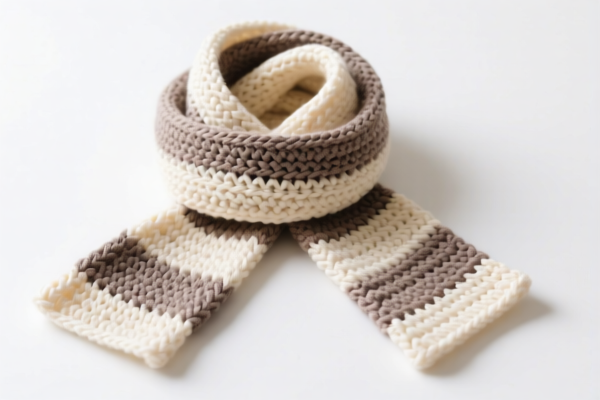
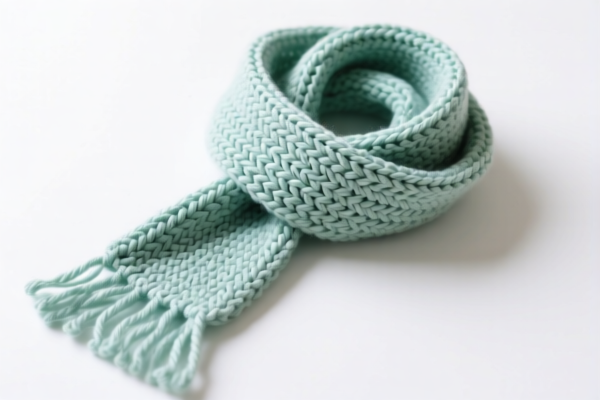
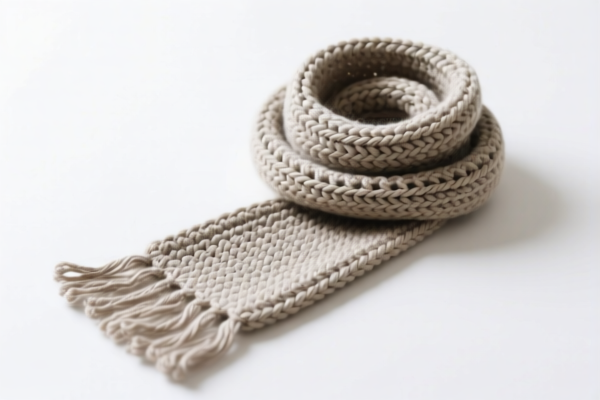
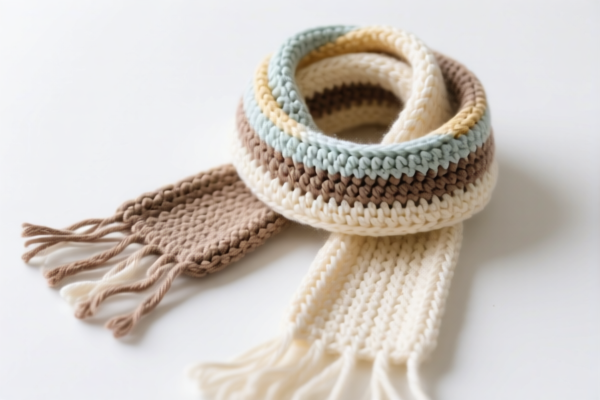
AI Analysis
🧣 Feather Edge Scarf (毛线/羊毛围巾)
🌐 HS Code Reference & Customs Clearance Guide | 2026 Latest Tariff Analysis | Professional Entry Strategy
📌 1. Product Definition & Classification: Do You Really Understand "Feather Edge Scarf"?
A Feather Edge Scarf is a textile accessory, typically made of knitted or woven fabric, featuring a delicate, serrated, or cut-edge finish that resembles bird feathers. In international trade, its classification hinges on two critical factors: 1. Material Composition: Is it primarily wool/kind hair (Chapter 61/62) or other fibers (Chapter 51/60)? 2. Manufacturing Process: Is it a knitted/crocheted good (Chapter 61) or a non-knitted woven good (Chapter 62)?
⚠️ Key Distinction:
- If the scarf is Knitted or Crocheted (e.g., typical wool knit scarves): Look at Chapter 61.
- If the scarf is Non-Knitted/Woven (e.g., wool tweed, shawl-style weaves): Look at Chapter 62.
- The "Feather Edge" is a finishing technique, not a defining classification characteristic. The material and knitting structure determine the HS Code.
📦 2. HS Code Classification Details (Based on Provided Data Analysis)
The following HS Codes are derived directly from the analysis of the product name "Feather Edge Scarf," considering material (Wool/Yarn) and form (Scarf).
| HS Code | Product Description | Logic & Justification | Total Tax Rate |
|---|---|---|---|
6117.10.10.00 |
Other Made-Up Accessories, Knitted or Crocheted: Scarves | Match Success. Form (Scarf) matches category purpose; Material (Yarn/Wool) reasonably inferred as "Wool or Fine Animal Hair." | 27.1% |
6117.10.20.10 |
Other Made-Up Accessories, Knitted or Crocheted: Scarves (Specific Subheading) | Match Success. Form matches (Scarf); Material matches (Contains wool, meeting weight/content requirements). | 21.3% |
6214.20.00.00 |
Shawls, Scarves, Mufflers, Mantilla, Veils, and the Like: Of Wool | Exact Match. Product name "Wool" + "Scarf" perfectly fits the classification requirement for "Scarves made of wool." | 24.2% |
6214.90.00.90 |
Shawls, Scarves, Mufflers, etc.: Of Other Textile Materials | Logical Match. Form (Scarf) + Material (Wool is a non-cotton textile material) fits the "Other Textile Materials" logic. | 28.8% |
5111.11.70.30 |
Woven Fabric of Fine Animal Hair, Weight > 200g/m²: Other | High Tariff Risk. Matches "Wool" material requirement; Scarf as a finished woven application aligns with woven fabric logic, but likely misclassified as raw fabric vs. made-up article. | 60.0% |
💰 3. Detailed Tax Rate Breakdown (Including Additional Tariffs & Policies)
✅ Applicable Country: United States (US)
✅ Origin: China (CN)
✅ Effective Date: Includes imports from Nov 10, 2025 (and subsequent periods)
🎯 1. 6117.10.20.10 – Most Favorable Knitted Wool Scarf
| Item | Content |
|---|---|
| Base Tariff | 11.3% |
| Section 301 Additional Tariff | 0.0% |
| Section 122 Tariff (De Minimis Crackdown) | 10.0% |
| Total Tax Rate | 21.3% |
| Tax Calculation | CIF Value × 21.3% |
| De Minimis Exemption | ❌ Not Applicable (Section 122 targets low-value shipments directly) |
| Legal Basis Path | HTSUS:6117.10.20.10 → USITC:Section 301 Exclusion (if any) → CBP:Section 122 Enforcement |
📌 Interpretation:
- This code offers the lowest total tax rate (21.3%) among the knitted options.
- Zero Section 301 tariff makes this the most competitive if the product qualifies for this specific subheading.
- However, Section 122 (10%) still applies, reflecting the US crackdown on de minimis entries for textiles.
🎯 2. 6117.10.10.00 – Standard Knitted Scarf
| Item | Content |
|---|---|
| Base Tariff | 9.6% |
| Section 301 Additional Tariff | 7.5% |
| Section 122 Tariff | 10.0% |
| Total Tax Rate | 27.1% |
| Tax Calculation | CIF Value × 27.1% |
| De Minimis Exemption | ❌ Not Applicable |
| Legal Basis Path | HTSUS:6117.10.10.00 → USITC:Footnote 9903.88.01 → IEEPA:9903.01.24 |
📌 Interpretation:
- Higher total rate (27.1%) due to the addition of 7.5% Section 301 tariff.
- Commonly applied to general knitted accessories where specific exclusions or subheadings do not apply.
🎯 3. 6214.20.00.00 – Woven Wool Scarf
| Item | Content |
|---|---|
| Base Tariff | 6.7% |
| Section 301 Additional Tariff | 7.5% |
| Section 122 Tariff | 10.0% |
| Total Tax Rate | 24.2% |
| Tax Calculation | CIF Value × 24.2% |
| De Minimis Exemption | ❌ Not Applicable |
| Legal Basis Path | HTSUS:6214.20.00.00 → USITC:Footnote 9903.88.01 |
📌 Interpretation:
- Lowest base tariff (6.7%) but increased by Section 301 and Section 122.
- Only applicable if the scarf is non-knitted/woven. If your "Feather Edge Scarf" is knitted, do not use this code.
🎯 4. 6214.90.00.90 – Other Textile Scarf
| Item | Content |
|---|---|
| Base Tariff | 11.3% |
| Section 301 Additional Tariff | 7.5% |
| Section 122 Tariff | 10.0% |
| Total Tax Rate | 28.8% |
| Tax Calculation | CIF Value × 28.8% |
| De Minimis Exemption | ❌ Not Applicable |
📌 Interpretation:
- Used when the material is not primarily wool (e.g., synthetic blend) or doesn't fit specific wool categories.
- Higher total cost than wool-specific codes.
🎯 5. 5111.11.70.30 – Woven Fabric of Fine Animal Hair
| Item | Content |
|---|---|
| Base Tariff | 25.0% |
| Section 301 Additional Tariff | 25.0% |
| Section 122 Tariff | 10.0% |
| Total Tax Rate | 60.0% |
| Tax Calculation | CIF Value × 60.0% |
| De Minimis Exemption | ❌ Not Applicable |
📌 Warning:
- Highest Tax Rate (60.0%).
- This code classifies the product as fabric, not a made-up article (scarf). Misclassifying a finished scarf as raw fabric leads to severe penalties and high taxes. Avoid this unless you are importing unfinished woven wool fabric.
🛠️ 4. Customs Clearance Practical Advice (Real-World Pitfall Guide)
✅ 1. Preparation Checklist (All Documents Required)
| Document | Mandatory | Description |
|---|---|---|
| ✅ Product Specification Sheet | ✔️ | Must specify: Knitted vs. Woven, Material Composition (e.g., 100% Wool, 80% Wool/20% Acrylic), Dimensions. |
| ✅ Product Photos (With Feather Edge Detail) | ✔️ | Show the "feather edge" finishing to prove it's a finished accessory, not raw fabric. |
| ✅ Commercial Invoice | ✔️ | Clearly state: "Knitted Wool Scarf, Feather Edge Finish, Model XYZ." Avoid vague terms like "Textile Accessory." |
| ✅ Certificate of Origin (CO) | ✔️ | If applicable for non-China origins to avoid Section 301/122 tariffs. |
| ✅ Packaging List | ✔️ | Ensure items are packaged as finished goods (not rolled fabric). |
✅ 2. Declaration Tips (Key Mantra)
🔥 "Knit it's 61, Weave it's 62; Material is King, Edge is Just Style!"
| Situation | Correct Declaration | Error to Avoid |
|---|---|---|
| Knitted Wool Scarf | 6117.10.20.10 or 6117.10.10.00 |
Declaring as 6214 (Woven) → Misclassification Risk |
| Woven Wool Scarf | 6214.20.00.00 |
Declaring as 5111 (Fabric) → 60% Tax Risk |
| Synthetic Blend Scarf | 6117.10.10.00 or 6214.90.00.90 |
Declaring as 6214.20 (Wool) → False Declaration |
| Feather Edge Finish | Describe as "Finished Edge" | Do not classify as "Cut Edge Fabric" unless it's raw material |
✅ 3. Special Scenarios
| Scenario | Handling Advice |
|---|---|
| Mixed Material (Wool + Synthetic) | If wool content > 10% by weight, it may still qualify for wool-specific codes, but check exact HTSUS rules. If synthetic dominates, use 6117.10.10.00. |
| De Minimis Shipments (< $800) | ⚠️ Critical: Section 122 tariffs (10%) still apply. Do not assume $800 exemption means tax-free. |
| OEM Custom Scarves | Provide buyer’s design sheet to prove it’s a finished accessory, not fabric. |
| Pre-裁定 (Advance Ruling) | Highly recommended for high-volume imports. Submit samples and specs to CBP for binding classification. |
🌍 5. Global Market Comparison (2026 Latest)
| Country/Region | Recommended HS Code | Tax Rate (China Origin) | Certification | Notes |
|---|---|---|---|---|
| 🇺🇸 USA | 6117.10.20.10 |
21.3% | No special certs | Best for knitted wool. Section 122 applies. |
| 🇺🇸 USA | 6214.20.00.00 |
24.2% | No special certs | Best for woven wool. |
| 🇨🇳 China | 6117.10.10.00 |
15% (Import) | N/A | Domestic consumption tax may apply. |
| 🇪🇺 EU | 6117.10.10.00 |
6.5% | CE (if functional) | No Section 301/122 equivalent. |
| 🇬🇧 UK | 6117.10.10.00 |
12% | UKCA | Post-Brexit rules apply. |
📌 Conclusion:
- USA has the most complex tariff structure due to Section 301 and Section 122.
- Knitted Wool Scarves (6117.10.20.10) offer the lowest tax entry point at 21.3%.
- Woven Wool Scarves (6214.20.00.00) are competitive at 24.2%.
- Avoid5111.11.70.30(60%) unless importing raw fabric.
📌 6. Common Errors & Pitfalls (Lessons Learned)
❌ Error 1: Classifying a Knitted Scarf as 6214 (Woven).
👉 Consequence: Audit risk, potential penalty for misclassification.
👉 Solution: Check the fabric structure. Knitted = stretchy, looped. Woven = tight, grid-like.
❌ Error 2: Declaring Finished Scarves as 5111 (Fabric).
👉 Consequence: 60% Tax Rate + heavy penalties.
👉 Solution: Emphasize "Finished Product" in description.
❌ Error 3: Assuming De Minimis ($800) exempts Section 122 Tariffs.
👉 Consequence: Customs holds shipment, applies 10% + 0% base, but delays clearance.
👉 Solution: Account for Section 122 in all low-value shipments.
❌ Error 4: Vague Description "Wool Accessory".
👉 Consequence: Customs assigns highest default rate.
👉 Solution: Use precise terms: "Knitted Wool Scarf, Feather Edge."
✅ Correct Declaration Example:
"Knitted Wool Scarf, 100% Wool, Feather Edge Finish, 200x50cm, Model SC-2026, Made in China."
🎯 7. Conclusion: Precise Classification for Cost Savings
🎯 Key Takeaway:
🔹 "Knitted = 61, Woven = 62; Wool Specifics Save Tax!"
🔹 "Section 122 Kills De Minimis Dreams for Textiles!"📌 Action Plan:
1. Confirm Material: Is it 100% Wool or a blend?
2. Confirm Structure: Is it Knitted or Woven?
3. Select Code:
- Knitted + Wool →6117.10.20.10(21.3%) ✅ Best Option
- Woven + Wool →6214.20.00.00(24.2%)
4. Document Everything: Photos, specs, and origin certificates.
📣 Immediate Action:
📞 Contact a Licensed Customs Broker for an Advance Ruling if importing >$10k/month.
🚀 Optimize supply chain to use6117.10.20.10for maximum savings.
✨ Professional Clearance Starts with Accurate Classification!
💼 Every Percentage Point of Tax Saved is Pure Profit!
Customer Reviews
About HS Code Classification
The Harmonized System (HS) is an internationally standardized nomenclature developed by the World Customs Organization (WCO) to classify traded products. Over 200 countries use the HS system as the basis for customs tariffs, trade statistics, and import/export regulations.
Each HS code follows a hierarchical structure:
- Chapter (2 digits) — Broad category of goods (e.g., Chapter 84: Machinery and Mechanical Appliances)
- Heading (4 digits) — More specific grouping within the chapter
- Subheading (6 digits) — Internationally standardized breakdown, used by all WCO member countries
- National subdivisions (8-10 digits) — Country-specific extensions for further classification, such as US HTSUS 10-digit codes
Correct HS code classification is essential for smooth customs clearance, accurate duty payment, and compliance with trade regulations. Misclassification can lead to customs delays, overpayment of duties, or penalties.
When importing from CN to US, the applicable tariff rates may include:
- Most-Favored-Nation (MFN) rate — The standard duty rate applied to WTO members
- General rate — Applied to countries without trade agreements
- Trade remedy duties — Additional tariffs such as Section 301 (anti-dumping), Section 232 (national security), or countervailing duties
The information provided on this page is for reference purposes only. For official classification, please consult with your local customs authority or a licensed customs broker.